Plot Explained Spoilers guaranteed!
Plot Explained

Browse by genre

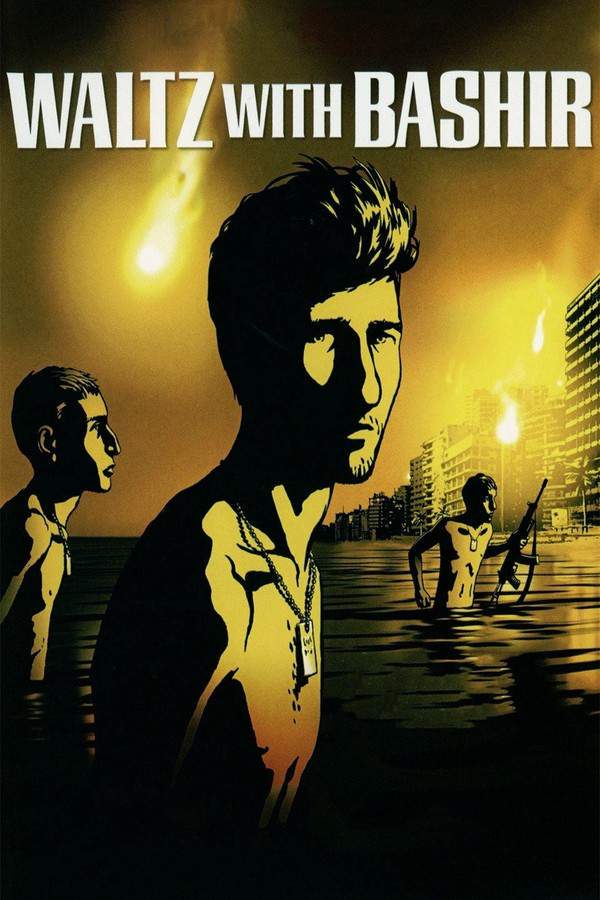
Waltz with Bashir (2008) movie poster

Timeline

Waltz with Bashir (2008) Timeline Explained – Every Event in Order

Release, runtime and language
2008 · 90 min · Hebrew
Loading streaming availability…
Starring
Ari Folman, Ron Ben-Yishai, Ronny Dayag

Haunted by fragmented memories of his service in the Lebanon War, filmmaker Ari Folman sets out to recover his lost recollections. A recurring dream of 26 dogs triggers a journey of self-discovery and a quest to find former comrades. Through surreal animation and unsettling encounters, Ari confronts the buried trauma of his past and attempts to piece together the events he has forgotten, ultimately exploring the complexities of memory and the impact of war.

On this page (6)
  1. 1 Where to watch
  2. 2 Events in order (15)
  3. 3 Timeline questions answered
  4. 4 Movie threads
  5. 5 Movies like Waltz with Bashir
  6. 6 Every angle
Loading streaming availability…

15 events in order · contains spoilers

Waltz with Bashir Timeline: Events in Chronological Order

Every key event of Waltz with Bashir (2008) in order, scene by scene, with when and where it takes place. Use it to untangle flashbacks, time jumps and parallel storylines, to refresh your memory before the sequel or to find the exact scene you are thinking of.

  1. Reconnection with Boaz

    In 2006, filmmaker Ari Folman reconnects with his old friend Boaz, who shares his haunting nightmares. Boaz is troubled by visions of 26 furious dogs racing through Tel Aviv, symbolizing deeper trauma from their past.

    When
    2006
    Where
    Tel Aviv
  2. The 1982 Lebanon War

    Boaz recounts his terrifying experience during the 1982 Lebanon War, where he was forced to kill dogs to prevent them from alerting villagers. This grim reality highlights the harrowing choices soldiers had to make during wartime.

    When
    1982
  3. Ari's Lost Memories

    Ari, who also served in the Lebanon War, is disturbed to discover he has no recollection of his experiences from that time. This leads him to explore the possibility of hidden memories related to the war.

  4. Troubling Visions

    That night, Ari has a disturbing vision of himself and two comrades playing in the Mediterranean waters near Beirut. The vision is illuminated by flares, triggering a haunting but unclear memory connected to the Sabra and Shatila massacre.

    Where
    Beirut
  5. Seeking Therapy

    Ari visits a childhood friend who is now a therapist, seeking help to understand his troubling visions. The therapist advises Ari to connect with fellow soldiers who were present in Beirut, emphasizing the unreliable nature of memory.

  6. Interviews with Veterans

    Ari interviews friends and fellow soldiers to piece together his fragmented memories from the war. These conversations begin to reveal the larger narrative surrounding the events he witnessed during the conflict.

  7. Consulting Ron Ben-Yishai

    Ari also consults Israeli TV reporter Ron Ben-Yishai, who documented the war in Beirut. This adds another layer to Ari's understanding of the events, providing real-world accounts of the atrocities.

    Where
    Beirut
  8. Realization of His Role

    As Ari pieces together his past, he realizes he was positioned to support the Israeli-allied Lebanese Christian Phalange militia. He acknowledges their involvement in the massacre that he only learned about after the fact.

  9. Confronting Responsibility

    Ari grapples with his feelings of responsibility for the actions taken during the massacre, despite not being directly involved. This internal conflict highlights the psychological burden carried by veterans.

  10. Ari's Defense Mechanism

    Ari concludes that the gaps in his memory serve as a defense mechanism against the trauma of his past. This realization is bittersweet, as it underscores the complexity of memory and survival in war.

  11. Culmination of Revelations

    The film culminates in a poignant scene where animated sequences blend with actual news footage. This powerful combination captures the tragic aftermath of the Sabra and Shatila massacre, leaving a lasting impression on the viewer.

  12. Understanding of Past Events

    Through his journey, Ari begins to understand the broader context of the events that unfolded during the war. Each revelation layers his understanding of both personal and collective trauma experienced by soldiers.

  13. The Burden of Memory

    As the story draws to a close, Ari faces the burden of what he has unearthed. The act of recalling memories forces both him and others to confront the horrors of their past, no matter how painful.

  14. Reflections on War's Impact

    The film leaves viewers reflecting on the impact of war on individuals and society. By exploring personal stories, it highlights how collective trauma affects both soldiers and the communities involved.

  15. Final Thoughts

    Ultimately, Ari’s journey represents the struggle to reconcile past trauma with present reality. The narrative emphasizes that understanding one's history is essential for healing and moving forward.

Last updated: November 16, 2024 at 18:37

Was this helpful?

Timeline questions answered

Waltz with Bashir Timeline Explained: Your Questions Answered

When does it happen, and why in that order? The questions people ask about the chronology of Waltz with Bashir (2008): time jumps, flashbacks, cause and effect between scenes and the correct order of events, each answered with spoilers.

Q1

Why does Ari have no memory of his experiences during the Lebanon War?

Ari cannot remember his time in the Lebanon War because his mind has blocked out these traumatic memories as a psychological defense mechanism. The film reveals that Ari was stationed in Beirut during the 1982 Sabra and Shatila massacre, and his memory gaps represent his subconscious attempt to protect himself from the guilt and horror of what occurred. His therapist explains that memory can be unreliable, and the brain often erases experiences that are too painful to process.

Foreshadowing: The film opens with Ari's disturbing vision of Beirut flares, hinting at buried memories surfacing.

  • memory loss
  • Lebanon war
  • PTSD
  • psychological defense
  • trauma
  • Ari Folman
Q2

What was the Sabra and Shatila massacre?

The Sabra and Shatila massacre was a brutal two-day slaughter in September 1982 where Lebanese Christian Phalange militia forces entered the Sabra and Shatila refugee camps in Beirut and killed hundreds of Palestinian civilians. The massacre was carried out as revenge for the assassination of Bachir Gemayel, the newly elected Lebanese President. Although Israeli forces surrounded the camps and provided support to the Phalange, they did not intervene to stop the killings.

  • sabra
  • shatila
  • massacre
  • Beirut
  • 1982
  • Phalange
  • Bachir Gemayel
  • refugee camp
Q3

What do the 26 dogs in Boaz's dream represent?

The 26 dogs in Boaz's recurring nightmare represent the 26 dogs he was ordered to kill during the 1982 Lebanon War. His unit needed to silence the dogs to prevent them from alerting villagers while they infiltrated a location at night. Each dog he killed stayed with him as a traumatic memory, symbolizing the moral weight of the terrible choices soldiers were forced to make. The dogs in his dream are described as furious, representing his guilt and the violence he was compelled to commit.

  • 26 dogs
  • nightmare
  • Boaz
  • Lebanon war
  • trauma
  • soldiers
  • killing dogs
Q4

Where was Ari positioned during the Sabra and Shatila massacre?

Ari was positioned in what he describes as the "second or third ring" of soldiers, meaning he was positioned further away from the actual refugee camps where the massacre occurred. His unit was providing support to the Israeli-allied Lebanese Christian Phalange militia, but he did not witness the killings directly. He only learned about the massacre after it had already happened, though he remained haunted by his proximity to such a horrific event.

  • Ari position
  • Beirut
  • Phalange
  • massacre ring
  • soldiers
  • support unit
Q5

Why does the film switch from animation to real footage at the end?

The film transitions from Ari's surreal animation to actual news footage of the Sabra and Shatila massacre to blur the line between memory and reality, and to confront viewers with the actual horror that occurred. This stylistic choice serves as a powerful moment of reckoning, everything Ari has been trying to remember and reconstruct is finally grounded in documented truth. The animation had been depicting his subjective, fragmented memories, but the real footage confirms the devastating reality he has been avoiding.

  • animation
  • real footage
  • ending
  • news footage
  • Sabra Shatila
  • documentary
  • style
Q6

Who was Bachir Gemayel and why was his assassination significant?

Bachir Gemayel was a Lebanese Christian Phalange militia leader who was elected President of Lebanon in 1982. His assassination just weeks before the Sabra and Shatila massacre fueled the tragedy that unfolded. The Phalange carried out the massacre in revenge for his death, believing Palestinian refugees in the camps were responsible. His assassination created a power vacuum and intense anger that directly led to the retaliatory violence against civilians.

  • Bachir Gemayel
  • assassination
  • Phalange
  • Lebanon president
  • revenge
  • 1982
Q7

What is a psychological defense mechanism in the context of war trauma?

A psychological defense mechanism is the mind's way of protecting itself from emotional pain or trauma by unconsciously distorting reality. In Ari's case, his complete memory loss of his time in Beirut represents his brain's attempt to shield him from the guilt and horror of being associated with the massacre, even though he didn't directly participate, his proximity and sense of responsibility proved too traumatic to consciously retain. The film suggests this forgetting is not a choice but a survival mechanism.

  • defense mechanism
  • memory
  • trauma
  • psychology
  • PTSD
  • war
  • unconscious
  • guilt
Q8

What was the relationship between the Israeli military and the Phalange militia?

During the 1982 Lebanon War, the Israeli military was allied with the Lebanese Christian Phalange militia. Israeli forces invaded Lebanon and occupied Beirut, placing Bachir Gemayel's Phalange forces in positions of power. When the massacre occurred, Israeli soldiers surrounded the refugee camps but allowed Phalange fighters to enter and carry out the killings. The film shows Ari's unit providing support to these forces, establishing the connection that haunts Ari's memory.

  • Israel
  • Phalange
  • militia
  • alliance
  • Lebanon war
  • military
  • support
  • Christian
Q9

How does the animation style reflect the nature of memory in the film?

The animation in the film uses surreal, fluid visuals to represent how memory actually works, fragmented, distorted, and sometimes dreamlike. Ari's memories don't return as clear, chronological events but as disturbing images and sensations: the 26 dogs, flares over Beirut, soldiers playing in water. This visual approach reinforces the film's theme that memory is unreliable and subjective, and that reconstructing the past is an imperfect, emotional process rather than a factual recounting.

  • animation
  • memory
  • surreal
  • dreams
  • visual style
  • subjective
  • fragmented
  • unreliable
Q10

Does Ari feel responsible for the massacre even though he wasn't directly involved?

Yes, Ari struggles with a profound sense of responsibility despite not directly participating in the killings. He concludes that his memory gaps stem from a defense mechanism driven by his feeling of guilt, similar to those who carried out the massacre directly. Being part of the supporting unit that enabled the Phalange to enter the camps, and being physically present in Beirut during the atrocity, creates a moral weight that his conscious mind cannot fully process, resulting in his memory loss.

  • responsibility
  • guilt
  • participation
  • complicity
  • moral
  • Ari
  • soldiers
  • atrocity

Movie threads

More Movies Like Waltz with Bashir, by Mood & Story

Curated lists built around what makes Waltz with Bashir tick: the same mood, the same kind of story or the same emotional payoff. Each list explains why these movies belong together.

Movies about fragmented memory like Waltz with Bashir

Unreliable protagonists piece together a traumatic past using surreal and dreamlike logic. If you were fascinated by Waltz with Bashir's exploration of memory and trauma, this list features similar movies where characters grapple with unreliable recollections. These films use inventive storytelling and visual styles to depict the process of uncovering a painful past, perfect for viewers who like psychological depth and complex narratives.

  • haunting
  • introspective
  • dreamlike
  • unsettling
  • psychological
  • cathartic
  • Tone: melancholic, unsettling, introspective
  • Pacing: steady, methodical
Why these movies?

The story pattern: The narrative typically involves a character, often haunted by a sense of guilt or unease, actively investigating their own past. They seek out witnesses or triggers to reconstruct events, leading to revelations that challenge their self-perception. The story unfolds not as a simple flashback, but as a subjective and often surreal excavation of a repressed truth.

Why they belong together: These films are grouped by their shared focus on the unreliable nature of memory as a central plot device. They create a specific, introspective mood by using visual and narrative techniques—like animation, distorted sound, or disjointed editing—to mirror the protagonist's psychological state, resulting in a deeply immersive and often unsettling experience.

War dramas about psychological trauma like Waltz with Bashir

Soldiers and witnesses grapple with guilt and trauma long after the conflict has ended. For viewers who appreciated Waltz with Bashir's heavy focus on PTSD and moral responsibility, this selection highlights similar war movies that prioritize psychological impact over combat spectacle. These films explore the long-term effects of conflict on soldiers and journalists, ideal for those seeking thoughtful and emotionally demanding stories.

  • heavy
  • melancholic
  • tense
  • cathartic
  • unsettling
  • thought-provoking
  • Tone: melancholic, bleak, heavy
  • Pacing: steady, reflective
Why these movies?

The story pattern: The plot follows characters in the aftermath of war as they attempt to reintegrate into civilian life, only to be plagued by flashbacks, nightmares, and a fragmented sense of self. Their journey is one of reckoning, often involving conversations with fellow veterans or a return to the site of trauma to confront the truth and achieve a painful form of clarity.

Why they belong together: These films are united by their unflinching examination of war's human cost beyond physical injury. They share a melancholic and heavy tone, a steady pacing that allows for deep reflection, and a commitment to portraying the complex burden of moral responsibility carried by those who have witnessed or participated in atrocities.

If you liked this

Movies Like Waltz with Bashir

Similar movies to Waltz with Bashir: the same genre, themes or kind of story. Each one comes with its own plot summary, timeline and ending explained.

Browse all movie summaries

Every angle

Waltz with Bashir (2008) Explained: Plot, Timeline & Characters

Everything about Waltz with Bashir in one place: what happens in the plot summary, the timeline in chronological order, the characters and meaning and a spoiler-free summary. What's After the Movie adds the cast, box office and post-credit scenes.

Coming soon on iOS and Android

The Plot Explained Movie Summary App

Plot summaries, endings explained and timelines on your phone. Catch up on any movie in minutes, save your favorites and never miss a twist again.

Be the first to know when we launch. Your email stays private, always.

Learn more about the app