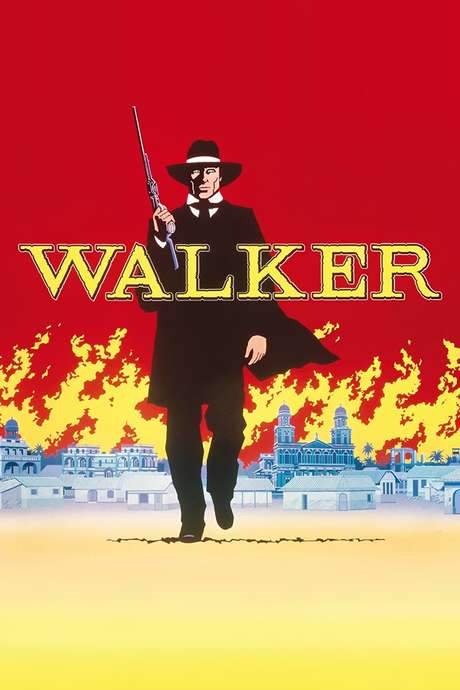
Walker

Walker

JustWatch#3,50726

Year: 1987

Runtime: 94 mins

Language: English

Director: Alex Cox

DramaHistoryWestern

Set before the era of Rambo or Oliver North, the story follows 19th‑century adventurer William Walker and his mercenary corps as they cross into Nicaragua, intent on staging a coup d’état to install a new government amid the turbulent politics of mid‑19th‑century Central America.

Where to Watch Walker?

Find where to stream, rent, or buy Walker (1987) in the US with current JustWatch availability, up-to-date pricing, and platform listings for subscription, rental, and digital purchase options.

Warning: spoilers below!

Haven’t seen Walker yet? This summary contains major spoilers. Bookmark the page, watch the movie, and come back for the full breakdown. If you're ready, scroll on and relive the story!

Timeline & Setting – Walker (1987)

Explore the full timeline and setting of Walker (1987). Follow every major event in chronological order and see how the environment shapes the story, characters, and dramatic tension.

Time period

1853-1857

The story unfolds in the mid-19th century, beginning in 1853 with Walker’s escape from Mexico and culminating in his execution in 1857. It spans his rise during a chaotic period of civil war in Nicaragua, the manipulation of regional politics, and the broader context of American expansionism. The timeline highlights the clash between ambition, violence, and the quest for influence in Central America.

Location

Mexico, Nicaragua (Rivas, Granada)

The action shifts from Mexico to Central America, centering on Nicaragua's major cities of Rivas and Granada. The landscape evolves from frontier skirmishes to political machinations as Walker attempts to consolidate power and secure a critical overland trade route. The setting reflects 19th-century imperial ambitions and the volatility of Central American politics during this era.

🌎 Historical 🗺️ Central America

Last updated: November 29, 2025 at 00:43

Was this helpful?

Main Characters – Walker (1987)

Meet the key characters of Walker (1987), with detailed profiles, motivations, and roles in the plot. Understand their emotional journeys and what they reveal about the film’s deeper themes.

William Walker (Ed Harris)

A fearless yet increasingly delusional soldier-of-fortune who leads a mercenary force into Nicaragua. He climbs from insurrectionist to president through force and cunning, cherishing the belief that America’s destiny requires intervention abroad. His charisma masks a growing obsession with power, culminating in brutal acts and a fatal downfall on a beach.

❗ Ambitious 🔥 Charismatic 🧭 Imperialist

Ellen Martin (Marlee Matlin)

Walker’s fiancée whose death from cholera marks a pivotal blow to his plans and personal life. Her loss foreshadows the radical path Walker takes and intensifies the personal toll of his political ambitions. She embodies a life that might have been, now sacrificed to the march of history.

💔 Tragic ❤️ Compassionate 🌍 Stake in ordinary life

Cornelius Vanderbilt (Peter Boyle)

A wealth-driven magnate financing Walker’s Nicaragua venture to secure an overland shipping route. He uses Walker as a instrument to stabilize the country and advance his commercial empire, becoming increasingly wary as Walker’s actions threaten his interests. Vanderbilt’s money and influence symbolize the commercial motives behind imperial intervention.

💰 Wealth 🧭 Power broker 🏛️ Strategic investor

Yrena (Blanca Guerra)

Doña Yrena, the president’s mistress, weaves personal and political intrigue around Walker. Her seduction exposes Walker to manipulation, and her return culminates in a failed attempt to halt the carnage before she must flee. She represents the volatile blend of desire, loyalty, and ambition in a fragile regime.

💃 Seductive 👑 Power-catalyst 🗡️ Manipulative

Last updated: November 29, 2025 at 00:43

Was this helpful?

Major Themes – Walker (1987)

Explore the central themes of Walker (1987), from psychological, social, and emotional dimensions to philosophical messages. Understand what the film is really saying beneath the surface.

🧭 Imperialism

Walker’s campaigns are framed by a Manifest Destiny mindset, using military force to reshape Nicaragua for economic gain. The alliance with Vanderbilt underscores how wealth and power are leveraged to extend influence over distant territories. The narrative ties soldiering and conquest to the pursuit of strategic routes and resources in the region.

🔥 Power

The film follows Walker’s ascent from mercenary leader to self-proclaimed president, fueled by charisma and ruthless decision-making. A rigged election and decisive acts of violence demonstrate how power corrupts and isolates, even as supporters rally around a controversial figure. The ending juxtaposes old-world authority with modern military intervention.

💔 Tragedy

Ellen Martin’s death from cholera marks a turning point, converting personal loss into a driver for Walker’s relentless pursuit of dominance. The narrative threads tragedy through political ambition, showing how intimate losses ripple outward to shape historical events. The cost of ambition reverberates across relationships and nations alike.

⚖️ Law & Intervention

Walker’s trial under the Neutrality Act frames a clash between law, national interest, and personal defiance. The acquittal after a persuasive speech underscores how legal theater can obscure geopolitical agendas. The story also hints at how foreign powers and state actors intervene, blurring the line between justice and manipulation.

Last updated: November 29, 2025 at 00:43

Was this helpful?

Walker (1987) Character & Theme Questions Answered – Info FAQ

Browse frequently asked questions about Walker (1987) focused on characters, relationships, themes, symbols, setting, and story context. This movie info FAQ gives spoiler-aware explanations for character arcs, world details, and thematic interpretation so readers can better understand what the film is really about.

Q1

Where is the movie set?

A.

The film takes place primarily in Nicaragua, focusing on the cities of Rivas and Granada, with the story beginning in Mexico before shifting to Central America. These locations reflect the 19th-century political landscape of the region and the strategic importance of controlling trade routes through Nicaragua.

nicaraguarivasgranadasettingcentral americamexico
Q2

What time period does the film cover?

A.

Walker spans 1853 to 1857, depicting William Walker's actual historical campaign in Nicaragua. The story begins with Walker's escape from Mexico in 1853 and concludes with his execution in 1857, capturing the chaotic period of civil wars and American expansionism in Central America.

1853185719th centurytime periodhistoricalmid-1800s
Q3

Is the movie based on a true story?

A.

Yes, Walker is based on the real William Walker, an American mercenary who actually led filibustering expeditions into Central America. In 1856, he briefly became president of Nicaragua before his defeat and execution in 1857. The film stays largely faithful to these historical events while adding deliberate anachronisms for satirical effect.

based on true storyhistoricalwilliam walkerfilibusterreal events
Q4

What are the main themes explored in the film?

A.

The movie explores several interconnected themes: Imperialism and the Manifest Destiny mindset that drove American intervention abroad; the corruption of power as Walker rises from mercenary to self-proclaimed president; tragedy as personal losses fuel political ambition; and the relationship between law, justice, and geopolitical manipulation through Walker's trial under the Neutrality Act.

themesimperialismpowermanifest destinyambitioncorruption
Q5

Who is William Walker in the movie?

A.

William Walker (played by Ed Harris) is a charismatic but increasingly delusional soldier-of-fortune who leads a mercenary corps into Nicaragua to stage a coup. The film traces his transformation from insurrectionist to president, driven by a belief in America's destiny to intervene abroad. His journey illustrates how charisma can mask obsessive pursuit of power and the eventual isolation that follows.

william walkered harrisprotagonistmercenaryfilibusterpresident
Q6

What role does Cornelius Vanderbilt play?

A.

Cornelius Vanderbilt (played by Peter Boyle) is the wealthy magnate who finances Walker's Nicaragua venture. He aims to secure an overland shipping route to expand his commercial empire. Vanderbilt uses Walker as a tool to stabilize the country for economic gain, but grows wary as Walker's actions become increasingly unpredictable and threaten his investments. He represents the commercial motives behind imperial expansion.

cornelius vanderbiltpeter boylefinanciermagnatecommerceshipping route
Q7

Who is Ellen Martin and why is her death important?

A.

Ellen Martin (played by Marlee Matlin) is Walker's fiancée whose death from cholera marks a pivotal turning point in the film. Her loss represents the personal cost of Walker's ambitions, converting grief into a driver for his relentless pursuit of dominance. Her death foreshadows the radical path Walker will take and intensifies the personal toll of his political ambitions.

ellen martinmarlee matlinfianceedeathcholerapersonal loss
Q8

Who is Doña Yrena and what is her role?

A.

Doña Yrena (played by Blanca Guerra) is the former president's mistress who becomes involved with Walker. She represents the volatile mix of desire, loyalty, and ambition within Nicaragua's fragile political regime. Her seduction exposes Walker to manipulation, and she ultimately returns in a failed attempt to stop the violence before fleeing. Her character illustrates the personal and political intrigue surrounding Walker.

yrenablanca guerramistressseductionmanipulationpolitical intrigue
Q9

Why does the film include modern elements like helicopters?

A.

The film deliberately includes anachronistic elements such as modern helicopters, jeeps, and a gas station to create a satirical political allegory. Director Alex Cox uses these deliberate inconsistencies to emphasize that the story is not just historical, it's a commentary on American foreign intervention that remains relevant regardless of era. This technique creates deliberate unease and connects 19th-century filibustering to modern imperialism.

anachronismhelicoptermodern elementssatireallegorypolitical commentary
Q10

What is the film saying about US foreign policy?

A.

Walker functions as a critical allegory for American interventionism, drawing parallels between 19th-century filibustering and modern US involvement in Central America. The film contrasts Walker's self-righteous conviction with the violent reality of his campaigns, suggesting a cyclical pattern of American ambition, resource pursuit, and legal manipulation abroad. The inclusion of contemporary elements reinforces that this critique extends beyond the 1850s to ongoing political dynamics.

us foreign policyinterventionallegorycritiqueimperialismcentral america
Q11

What is the overall tone and emotional weight of the film?

A.

The film maintains a dark, intense tone driven by Walker's moral decay and the cynicism of American interventionism. The pacing moves rapidly from political machinations to violence, with few moments of respite. Key emotional beats include Walker's psychological deterioration, his killing of his own brother, and the bleak ending. The prevailing feeling is one of deliberate, critical unease designed to provoke thought about power and ambition.

tonedarkintenseemotionalpsychologicalviolencebleak
Mobile App Preview

Coming soon on iOS and Android

The Plot Explained Mobile App

From blockbusters to hidden gems - dive into movie stories anytime, anywhere. Save your favorites, discover plots faster, and never miss a twist again.

Sign up to be the first to know when we launch. Your email stays private, always.

Explore Movie Threads

Discover curated groups of movies connected by mood, themes, and story style. Browse collections built around emotion, atmosphere, and narrative focus to easily find films that match what you feel like watching right now.

Movies about delusional ambition and historical collapse like Walker

Stories where grand ambitions unravel into chaos and moral decay.If you liked the descent into madness in Walker, explore more movies about historical figures and conquerors whose grand designs lead to brutal failure. These films share a dark, cynical tone and a focus on the psychological unraveling of their protagonists amid violent political landscapes.

cynicalbrutaldelusionalunsettlinggrimchaoticsatiricalhubris

Narrative Summary

Narratives in this thread typically chart a linear path from ambitious inception to chaotic disintegration. The protagonist's unwavering belief in their cause blinds them to reality, leading to a series of increasingly violent and morally bankrupt decisions that culminate in a bleak, often historically resonant, downfall.

Why These Movies?

Movies are grouped here due to their shared focus on a specific character arc of delusional hubris, their dark and cynical political commentary, and their unflinching portrayal of the violence and chaos that follows imperialistic or revolutionary overreach. The tone is consistently grim and critical.

Fast-paced brutal political satires similar to Walker

Unflinching satires where power and violence fuel a rapid, chaotic narrative.For viewers who enjoyed the fast-paced, satirical critique of American imperialism in Walker, this list features similar movies that combine dark humor, high intensity, and violent political narratives. These films offer an intellectually challenging and viscerally engaging experience.

satiricalbrutalchaoticunsettlingcynicalpoliticalfast-pacedcritical

Narrative Summary

Stories in this thread unfold at a breakneck pace, mirroring the chaotic and relentless nature of the power struggles they depict. The plot is propelled by a series of violent confrontations and betrayals, while a layer of sharp, cynical satire provides a critical lens on the action, often leading to an intellectually bleak conclusion.

Why These Movies?

These films are united by their unique blend of a fast pacing and a darkly satirical tone. They share a high intensity driven by political violence and moral decay, creating a coherent vibe that is both intellectually stimulating and viscerally brutal.

Unlock the Full Story of Walker

Don't stop at just watching - explore Walker in full detail. From the complete plot summary and scene-by-scene timeline to character breakdowns, thematic analysis, and a deep dive into the ending - every page helps you truly understand what Walker is all about. Plus, discover what's next after the movie.

Walker Summary

Read a complete plot summary of Walker, including all key story points, character arcs, and turning points. This in-depth recap is ideal for understanding the narrative structure or reviewing what happened in the movie.

Walker Summary

Walker Timeline

Track the full timeline of Walker with every major event arranged chronologically. Perfect for decoding non-linear storytelling, flashbacks, or parallel narratives with a clear scene-by-scene breakdown.

Walker Timeline

Walker Spoiler-Free Summary

Get a quick, spoiler-free overview of Walker that covers the main plot points and key details without revealing any major twists or spoilers. Perfect for those who want to know what to expect before diving in.

Walker Spoiler-Free Summary

More About Walker

Visit What's After the Movie to explore more about Walker: box office results, cast and crew info, production details, post-credit scenes, and external links - all in one place for movie fans and researchers.

More About Walker

Similar Movies to Walker

Discover movies like Walker that share similar genres, themes, and storytelling elements. Whether you’re drawn to the atmosphere, character arcs, or plot structure, these curated recommendations will help you explore more films you’ll love.