Walker

Walker

JustWatch#3,50726

Year: 1987

Runtime: 94 mins

Language: English

Director: Alex Cox

DramaHistoryWestern

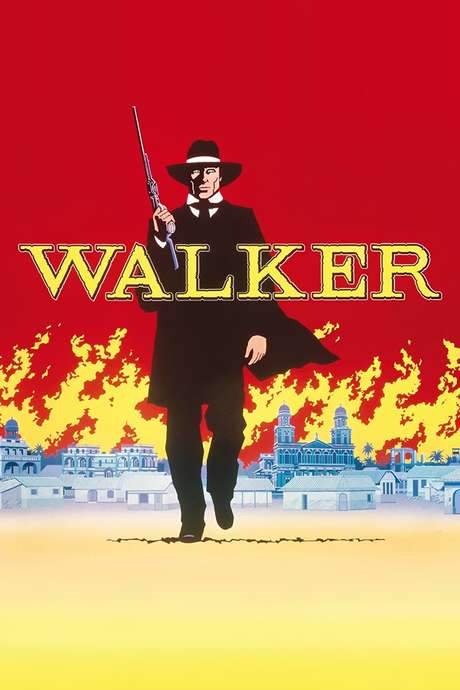
Set before the era of Rambo or Oliver North, the story follows 19th‑century adventurer William Walker and his mercenary corps as they cross into Nicaragua, intent on staging a coup d’état to install a new government amid the turbulent politics of mid‑19th‑century Central America.

Where to Watch Walker?

Find where to stream, rent, or buy Walker (1987) in the US with current JustWatch availability, up-to-date pricing, and platform listings for subscription, rental, and digital purchase options.

Warning: spoilers below!

Haven’t seen Walker yet? This summary contains major spoilers. Bookmark the page, watch the movie, and come back for the full breakdown. If you're ready, scroll on and relive the story!

Timeline – Walker (1987)

Trace every key event in Walker (1987) with our detailed, chronological timeline. Perfect for unpacking nonlinear stories, spotting hidden connections, and understanding how each scene builds toward the film’s climax. Whether you're revisiting or decoding for the first time, this timeline gives you the full picture.

1

Flees Mexico and faces trial in the United States

In 1853, Walker flees Mexico after a failed attempt to incite an armed insurrection. He is subsequently arrested and placed on trial by a US official for violating the Neutrality Act. He delivers a rousing speech to the jury and wins acquittal.

1853 Mexico and United States
2

Plans to settle down and start a newspaper

With his legal troubles behind him, Walker envisions a quieter life, planning to settle down and start a newspaper. He longs for stability away from constant conflict and looks to build a new chapter. The dream, however, is soon eclipsed by the opportunities beckoning him elsewhere.

1853-1854 United States
3

Ellen Martin dies of cholera

Walker's fiancée Ellen Martin dies of cholera, cutting short his hopes for a domestic life. The loss deepens his resolve to seek glory and action abroad. The tragedy marks a turning point toward the Nicaragua venture.

1853-1854 United States
4

Vanderbilt hires Walker to bring stability to Nicaragua

American millionaire Cornelius Vanderbilt offers Walker a job to stabilize Nicaragua by supporting the Democratic side in its civil war. He hires sixty mercenaries to join the mission, aligning with the broader goal of securing an overland route for trade. The deal marks the shift from personal ambition to international conflict.

1854-1855 United States / Nicaragua
5

First bloody victory at Rivas

Walker and his mercenaries score their first major victory in Nicaragua at Rivas, lifting their morale amid heavy losses. The battlefield tensions reveal Walker's calm presence as gunfire rages around him. The win paves the way for subsequent incursions into Conservative territory.

1855 Rivas, Nicaragua
6

Conquest of Granada and Yrena's seduction

The troops push into the Conservative capital Granada as the city falls. Amid the chaos, Doña Yrena, the president's mistress, seduces Walker, complicating his ambitions and personal loyalties. The episode blurs the lines between politics and desire.

1855 Granada, Nicaragua
7

Walker executes the President and seizes power

Discovering that the President plans to rally neighboring Central American states against the Americans, Walker orders the President's execution for treason. He then assumes the presidency through a rigged election, consolidating control over Nicaragua. The coup marks a turning point toward autocratic rule.

1855-1856 Granada, Nicaragua
8

Presidency becomes manic; clashes with Vanderbilt

From 1855 to 1857 Walker's rule becomes increasingly erratic and ruthless. He revokes Vanderbilt's license for the overland trade and seizes his ships, enraging his financier and destabilizing the economy. The strain worsens as supplies and reinforcements dwindle.

1855-1857 Nicaragua
9

Brother challenges authority; Walker kills him

A challenge to Walker's authority from within his own ranks escalates into deadly violence, and he kills his brother without hesitation. The act demonstrates the depths of his ruthlessness and the fragility of his regime. It foreshadows the empire's imminent collapse.

1855-1857 Nicaragua
10

Slavery introduced to win Southern support; deserters rise

Walker tries to attract support from Southern states by introducing slavery to Nicaragua, a controversial and incendiary move. In protest, African-American members of his legion quit the force, further eroding the cohesion of his army. The policy backfires by alienating his own troops and allies.

1855-1857 Nicaragua
11

Neighboring nations invade; Yrena returns

As neighboring countries invade Nicaragua, Yrena returns to challenge Walker's rule and attempts to persuade him to stop the carnage. He refuses her pleas, and she flee after a failed attempt on his life. The conflict intensifies as internal and external pressures mount.

1856-1857 Nicaragua
12

Destruction and final stand in the church

Walker orders the town burned as his numbers dwindle, taking refuge in a church with a few loyal soldiers and prisoners. He delivers one final speech asserting that the United States will never abandon Nicaragua and that conquest is its destiny. The speech riffs on grandiose nationalism in a bleak final stand.

Late 1857 Church, Nicaragua
13

Helicopter arrival and last defiant proclamation

A helicopter arrives with American troops, and a State Department agent orders all American citizens to be returned home. When asked his nationality, Walker proclaims, 'I'm William Walker, President of the Republic of Nicaragua,' and is left behind by the departing forces. The moment crystallizes his isolation and stubborn nationalism.

Late 1857 Church, Nicaragua
14

Walker is executed on the beach

With no backup and dwindling options, Walker is executed on the beach by Honduran soldiers. The act marks the definitive end of his short-lived attempt to reshape Nicaragua. The horizon closes on a career built on conquest and grandiose ambition.

Late 1857 Beach, Nicaragua
15

Credits montage with Reagan clips

As the credits roll, a television montage displays clips of Ronald Reagan discussing U.S. involvement in Nicaragua and related military actions. The montage reinforces the film's political undertones and offers a reflective coda to Walker's saga.

End Credits

Last updated: November 29, 2025 at 00:47

Was this helpful?

Walker (1987) Timeline Questions Answered – Chronology FAQ

Find frequently asked questions about the Walker (1987) timeline, including chronological order, nonlinear jumps, cause-and-effect links, and scene sequence clarifications. This timeline FAQ helps explain when key events happen, how moments connect, and why the story unfolds in that specific order.

Q1

Why did Cornelius Vanderbilt hire William Walker for Nicaragua?

A.

Vanderbilt needed someone to stabilize Nicaragua by supporting the Democratic Party in its civil war against the Legitimists. This would secure his rights to the critical overland shipping route across Central America, which was a vital trade corridor. Vanderbilt essentially hired Walker as a mercenary to further his own commercial interests in the region.

Earlier, Walker had demonstrated his willingness to incite armed insurrections in Mexico, making him Vanderbilt's ideal candidate for a covert military operation.

cornelius vanderbiltmercenaryNicaraguashipping routefinancing
Q2

Why did William Walker execute the President of Nicaragua?

A.

Walker discovered that the President planned to rally other Central American nations to expel the American mercenaries. Seeing this as an act of treason against his occupation, Walker ordered the President's execution to eliminate the threat and consolidate his own power. He then installed himself as president through a rigged election.

The President's earlier weakness, shown through his mistress Yrena seducing Walker while he remained in power, hinted at his inability to effectively resist the American incursion.

presidentexecutiontreasoncouppower grab
Q3

Why did William Walker kill his own brother?

A.

Walker killed his brother after the brother challenged his authority within his own ranks. This act demonstrated the depths of Walker's ruthlessness and paranoia as his regime grew more erratic. The murder signaled that he would eliminate anyone who questioned his leadership, even family, revealing his complete moral decay.

Walker's earlier calm stroll through battlefields while others died showed his willingness to treat human life carelessly.

brotherfamilymurderruthlessnessauthority
Q4

Why did Walker revoke Vanderbilt's license to the shipping route?

A.

Walker's rule became increasingly erratic between 1855 and 1857. He revoked Vanderbilt's license and seized his ships, straining the alliance with his former financier. This decision reflected Walker's growing detachment from reality and his willingness to burn bridges with the very people who had enabled his rise. The move also destabilized the economy and cut off his own supply lines.

The deal with Vanderbilt was transactional from the start, Walker was always driven by personal ambition rather than loyalty to his backers.

vanderbiltlicenseshippingbetrayaleconomy
Q5

Why did the African-American soldiers in Walker's legion desert?

A.

Walker tried to win backing from Southern US states by introducing slavery to Nicaragua. This inflammatory policy directly contradicted the interests of the African-American soldiers in his legion, who understandably refused to fight for a cause that would entrench slavery. Their desertion further eroded his already diminishing military strength.

The film establishes Walker's opportunism early, he will adopt any ideology or cause that serves his immediate ambitions.

slaverydesertionafrican american soldierssouthern statespolicy
Q6

Why did Doña Yrena return to Nicaragua?

A.

Yrena returned to try to stop Walker from causing further carnage as neighboring countries invaded and his forces dwindled. She attempted to persuade him to cease the violence and even tried to assassinate him. Her return represented a last-ditch effort by someone from within the power structure to reign in his destructive path, but Walker refused her pleas and she fled after the assassination attempt failed.

Earlier, Yrena had seduced Walker during the conquest of Granada, using her influence over him as a form of political manipulation.

yrenareturnpersuasionassassination attemptmercy
Q7

Why was Walker left behind when American troops evacuated?

A.

When the helicopter arrived with American forces to evacuate civilians, Walker declared himself as the President of the Republic of Nicaragua. This delusional claim, asserting legitimacy he clearly did not have, caused the departing forces to leave him behind. The moment crystallized how completely isolated and disconnected from reality Walker had become, choosing his grandiose self-image over survival.

Walker's earlier speech in the church, declaring it America's destiny to conquer Nicaragua, revealed his messianic delusions about his mission.

evacuationhelicopterleft behindpresident claimisolation
Q8

Why did Walker order the town burned?

A.

As Walker's numbers dwindled and neighboring countries invaded, he ordered the town burned in a final act of defiance and destruction. He took refuge in a church with remaining loyal soldiers and prisoners, choosing to raze the town rather than let it fall to the advancing enemy forces. This destructive act exemplified his refusal to accept defeat and his willingness to destroy rather than relinquish control.

Throughout the film, Walker's response to setbacks was always escalation rather than retreat.

town burningchurchdestructionfinal standdefiance
Q9

What was the significance of the Reagan clips at the end of the film?

A.

The closing montage features Ronald Reagan discussing US involvement in Nicaragua and military actions in the region, drawing a direct parallel between Walker's 19th-century mercenary intervention and 1980s American foreign policy. The film uses this anachronistic device to criticize US imperialism as a recurring pattern in American history, suggesting the country has never truly stopped intervening in Central American affairs.

Walker's final speech claiming America will never leave Nicaragua alone foreshadows this theme of endless American interventionism.

reaganmontagepolitical allegoryus interventionimperialism
Q10

Why does the film include a helicopter when the story is set in the 1850s?

A.

The anachronistic helicopter is a deliberate artistic choice to create a direct link between Walker's 1850s conquest and 1980s American foreign policy. By inserting modern military technology into the 19th-century narrative, the film emphasizes that the themes of American imperialism and intervention are timeless. It collapses the historical distance to make a pointed political statement about US behavior in Central America.

The inclusion of modern elements throughout signals that the film is as much about the Reagan era as it is about Walker.

helicopteranachronismtime periodmodern comparisonartistic choice
Q11

How did Ellen Martin's death affect Walker's decisions?

A.

Ellen Martin's death from cholera shattered Walker's hopes for a quiet domestic life and deepened his resolve to seek glory and action abroad. The tragedy marked a turning point that propelled him toward accepting Vanderbilt's offer to intervene in Nicaragua. Her loss made him more willing to embrace the violent path that led to his ultimate downfall.

Walker's earlier plan to start a newspaper represented his last attempt at a legitimate, peaceful life.

ellen martincholeradeathtransformationdomestic life
Q12

Why did Walker stroll through battle calmly while others died?

A.

Walker displayed an eerie, almost prophetic calm as he walked through chaotic battlefields in Rivas. This behavior reflected his detachment from the suffering around him and his belief in his own destiny or superiority. It established early on his willingness to risk others' lives while remaining seemingly invulnerable, a trait that would deepen into full-blown delusion.

This calm would evolve into the messianic certainty he displayed in his final speech about America's destiny.

battlecalmwalkingbattlefieldpsychological profile
Mobile App Preview

Coming soon on iOS and Android

The Plot Explained Mobile App

From blockbusters to hidden gems - dive into movie stories anytime, anywhere. Save your favorites, discover plots faster, and never miss a twist again.

Sign up to be the first to know when we launch. Your email stays private, always.

Explore Movie Threads

Discover curated groups of movies connected by mood, themes, and story style. Browse collections built around emotion, atmosphere, and narrative focus to easily find films that match what you feel like watching right now.

Movies about delusional ambition and historical collapse like Walker

Stories where grand ambitions unravel into chaos and moral decay.If you liked the descent into madness in Walker, explore more movies about historical figures and conquerors whose grand designs lead to brutal failure. These films share a dark, cynical tone and a focus on the psychological unraveling of their protagonists amid violent political landscapes.

cynicalbrutaldelusionalunsettlinggrimchaoticsatiricalhubris

Narrative Summary

Narratives in this thread typically chart a linear path from ambitious inception to chaotic disintegration. The protagonist's unwavering belief in their cause blinds them to reality, leading to a series of increasingly violent and morally bankrupt decisions that culminate in a bleak, often historically resonant, downfall.

Why These Movies?

Movies are grouped here due to their shared focus on a specific character arc of delusional hubris, their dark and cynical political commentary, and their unflinching portrayal of the violence and chaos that follows imperialistic or revolutionary overreach. The tone is consistently grim and critical.

Fast-paced brutal political satires similar to Walker

Unflinching satires where power and violence fuel a rapid, chaotic narrative.For viewers who enjoyed the fast-paced, satirical critique of American imperialism in Walker, this list features similar movies that combine dark humor, high intensity, and violent political narratives. These films offer an intellectually challenging and viscerally engaging experience.

satiricalbrutalchaoticunsettlingcynicalpoliticalfast-pacedcritical

Narrative Summary

Stories in this thread unfold at a breakneck pace, mirroring the chaotic and relentless nature of the power struggles they depict. The plot is propelled by a series of violent confrontations and betrayals, while a layer of sharp, cynical satire provides a critical lens on the action, often leading to an intellectually bleak conclusion.

Why These Movies?

These films are united by their unique blend of a fast pacing and a darkly satirical tone. They share a high intensity driven by political violence and moral decay, creating a coherent vibe that is both intellectually stimulating and viscerally brutal.

Unlock the Full Story of Walker

Don't stop at just watching - explore Walker in full detail. From the complete plot summary and scene-by-scene timeline to character breakdowns, thematic analysis, and a deep dive into the ending - every page helps you truly understand what Walker is all about. Plus, discover what's next after the movie.

Walker Summary

Read a complete plot summary of Walker, including all key story points, character arcs, and turning points. This in-depth recap is ideal for understanding the narrative structure or reviewing what happened in the movie.

Walker Summary

Characters, Settings & Themes in Walker

Discover the characters, locations, and core themes that shape Walker. Get insights into symbolic elements, setting significance, and deeper narrative meaning - ideal for thematic analysis and movie breakdowns.

Characters, Settings & Themes in Walker

Walker Spoiler-Free Summary

Get a quick, spoiler-free overview of Walker that covers the main plot points and key details without revealing any major twists or spoilers. Perfect for those who want to know what to expect before diving in.

Walker Spoiler-Free Summary

More About Walker

Visit What's After the Movie to explore more about Walker: box office results, cast and crew info, production details, post-credit scenes, and external links - all in one place for movie fans and researchers.

More About Walker

Similar Movies to Walker

Discover movies like Walker that share similar genres, themes, and storytelling elements. Whether you’re drawn to the atmosphere, character arcs, or plot structure, these curated recommendations will help you explore more films you’ll love.