Plot Explained Spoilers guaranteed!
Plot Explained

Browse by genre

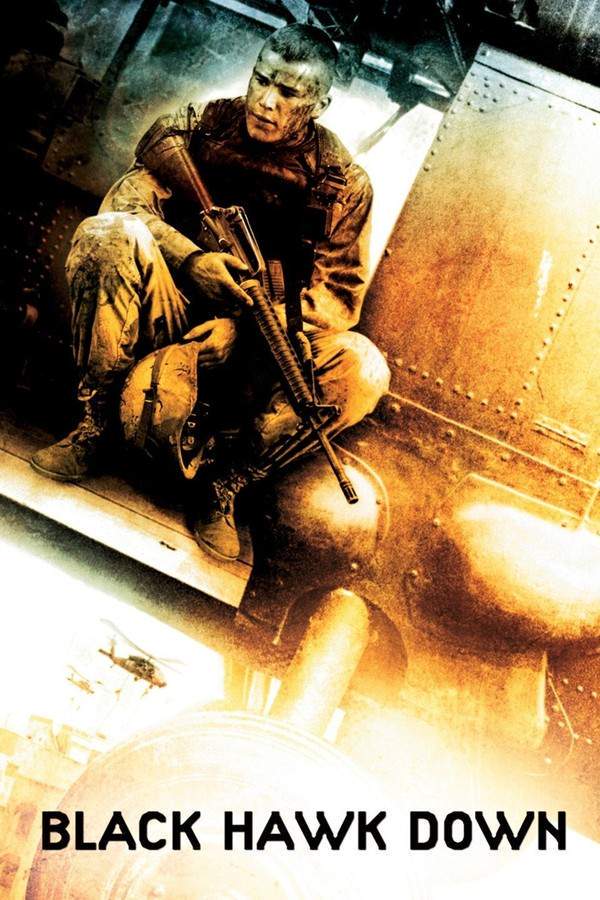
Black Hawk Down (2001) movie poster

Plot Summary

Black Hawk Down (2001) Plot Summary Explained

Release, runtime and language
2001 · 144 min · English
JustWatch #2,307 11
Directed by
Ridley Scott
Starring
Josh Hartnett
Budget
$92M

In 1993, a US military operation in Somalia aims to apprehend key targets, but the mission quickly turns disastrous when Somali militia unexpectedly attack, shooting down two Black Hawk helicopters. Stranded and facing overwhelming enemy fire in the dense streets of Mogadishu, a group of American soldiers must battle to regroup, reestablish control, and fight for their survival against a determined and resourceful enemy.

On this page (6)
  1. 1 Where to watch
  2. 2 What happens: full plot
  3. 3 Plot questions answered
  4. 4 Movie threads
  5. 5 Movies like Black Hawk Down
  6. 6 Every angle

Where to watch

Where to Watch Black Hawk Down (2001)

Where can you watch Black Hawk Down? Stream, rent or buy it in the US, including on Apple TV, MGM Plus and Fawesome: current JustWatch availability with up-to-date prices.

Streaming availability powered by JustWatch

Full plot summary · contains spoilers

What Happens in Black Hawk Down: Full Plot Summary

The whole story of Black Hawk Down (2001) explained, from the opening scene to the final frame: every key event, every twist and what it all adds up to. Read it as a quick recap before the sequel, to check a scene you missed, or to finally understand what really happened.

In 1992 Somalia, the nation is ravaged by famine and civil war, claiming more than 300,000 civilian lives due to starvation. In response, the United Nations deploys a massive peacekeeping operation involving 20,000 soldiers to the area, where Mohammed Farrah Aidid has declared himself the country's president. Aidid's forces capture vital food shipments at borders, wielding hunger as a strategic weapon against their own people.

By April 1993, as most peacekeepers have been withdrawn, the Somali militia declares war on the remaining UN personnel. In June, Aidid’s forces execute a brutal attack, killing 24 Pakistani soldiers and began targeting American troops. Consequently, in August 1993, U.S. Army Rangers, Delta Force, and the 160th SOAR (known as Nightstalkers) are dispatched to Mogadishu, aiming to capture Aidid. Initially planned as a three-week mission, it stretches into six weeks, creating rising impatience in Washington.

Aidid operates from a stronghold in Bakara market. Outside the city, U.S. forces capture Osman Ali Atto (George Harris), a warlord supplying arms to Aidid’s militia. Atto warns General Garrison that U.S. involvement is complicating what he views as a domestic issue. Within the ranks of the U.S. Army at the Mogadishu airport, Captain Steele perceives Delta operatives, such as SFC Jeff Sanderson (William Fichtner), as reckless and undisciplined.

Among the seasoned soldiers is PFC Todd Blackburn (Orlando Bloom), who faces his first mission with Staff Sergeant Matthew Eversmann (Josh Hartnett), who steps up to lead Ranger Chalk Four when LT John Beales ([Ioan Gruffudd]) is reassigned. SFC Norm "Hoot" Gibson ([Eric Bana]) is undercover in Mogadishu, gathering essential intelligence for the upcoming operation.

The mission commences on October 3, 1993, to apprehend two of Aidid's key advisors. Although Garrison requests light armored helicopters, the team must settle for Black Hawks and AH-6J Little Birds due to higher-profile concerns. Within moments of deployment, the U.S. troops face overwhelming resistance, with Yousuf Dahir Mo'Alim ([Razaaq Adoti]), commander of Aidid's forces, preemptively mobilizing his militia.

Initially successful in capturing the advisers, the situation rapidly deteriorates as SGT Eversmann and his team find themselves stranded amidst a fierce ambush when their intended drop zone is missed. Moreover, dispossessed support forces struggle against the onslaught, and critical errors lead to the downing of Black Hawk Super-Six One, resulting in the tragic call of “Black Hawk Down” echoing through the radio frequencies.

As the operation spirals out of control, SGT Dominick Pilla ([Danny Hoch]) is killed, adding to the dire scenario. The unity of U.S. forces becomes jeopardized; the Super-Six One and Super-Six Four crash sites become scenes of chaos and tragedy, culminating in heavy casualties on both sides. As night falls, relentless assaults from Somali militia persist, forcing the Rangers and Delta forces to hold their ground through relentless air support until the relief operations finally arrive.

In the aftermath, the raid results in the grim toll of 19 American soldiers dead and over 1,000 Somali casualties. The bravery of Delta snipers Gordon and Shughart posthumously earns them the Medal of Honor—the first such honors since the Vietnam War. Meanwhile, Aidid met his end in a battle years later, showcasing the prolonged impact of his violence on the region, just as General Garrison steps back from duty, marking an end to a pivotal chapter in modern military history.
Last updated: November 08, 2024 at 00:22

Was this helpful?

Plot questions answered

Black Hawk Down Plot Explained: Your Questions Answered

The questions people ask most about Black Hawk Down (2001): what happens in the confusing scenes, why the characters do what they do, the twists, hidden details and what the ending means. Each answer contains spoilers.

Q1

Why were US forces in Somalia in 1993

US forces were sent to Somalia in August 1993 to capture warlord Mohammed Farrah Aidid, who had declared himself president and was using starvation as a weapon against his own people. After Aidid's forces killed 24 Pakistani peacekeepers in June 1993 and began targeting American troops, the US deployed Army Rangers, Delta Force, and the 160th SOAR (Nightstalkers) to apprehend him. The mission was originally planned to last three weeks but extended to six weeks.

Foreshadowing: The earlier UN peacekeeping deployment of 20,000 soldiers in 1992 established the international presence that would later become the target of Aidid's escalating attacks.

  • us military
  • somalia
  • aidid
  • un peacekeeping
  • 1993
  • mission
Q2

Why were Black Hawks used instead of lighter armored helicopters

General Garrison requested light armored helicopters for the mission, but higher-ranking officials denied this request due to concerns about the visibility and profile of more heavily armed aircraft. The team was forced to use Black Hawks and AH-6J Little Birds instead, which provided less protection against the intense ground fire they would encounter in Mogadishu's dense urban environment.

Foreshadowing: The decision to use standard Black Hawks rather than properly armored aircraft would prove fatal when the Somali militia mounted their coordinated attack.

  • black hawk
  • helicopters
  • mission planning
  • armor
  • general garrison
Q3

Why did the mission go wrong so quickly

The mission unfolded rapidly because Aidid's commander, Yousuf Dahir Mo'Alim, had been tipped off and preemptively mobilized his militia before the US troops even reached their drop zone. The Somali forces knew the operation was coming and were waiting in overwhelming numbers. Additionally, critical navigation errors occurred when SGT Eversmann's team missed their intended drop zone, leaving them stranded in the middle of hostile territory.

Foreshadowing: SFC Norm Gibson had been operating undercover in Mogadishu gathering intelligence, but the Somali militia still managed to mount a coordinated and unexpected response.

  • ambush
  • mogadishu
  • somali militia
  • navigation error
  • mission failure
Q4

Why was Super Six One shot down

Super Six One was shot down because the Black Hawk was hit by RPG fire while providing cover for the stranded Ranger team. The helicopter was struck during its low-altitude orbit over the crash site of Super Six Four. The intense volume of enemy fire from the surrounding rooftops and streets made it impossible for the aircraft to escape once hit, leading to the devastating 'Black Hawk Down' call that echoed across radio frequencies.

Foreshadowing: The downed Super Six Four had already drawn the Somali militia into a concentrated attack zone, making any rescue or support aircraft a prime target.

  • super six one
  • rpg
  • black hawk down
  • shoot down
  • crash site
Q5

Why was SGT Eversmann's team stranded

SGT Eversmann's team became stranded because their pilot missed the intended drop zone during the initial insertion. This navigation error placed Chalk Four in the wrong location, far from their planned objective. When they realized their position, they attempted to regroup and move toward the target building, but immediately encountered heavy enemy fire that cut them off from the rest of the delta force and Rangers.

Foreshadowing: The timing of the insertion had already been thrown off by earlier resistance, and the missed drop zone compounded the chaos of the opening minutes.

  • eversmann
  • chalk four
  • stranded
  • drop zone
  • navigation
Q6

How did the Somali militia know about the US operation

The Somali militia was aware of the incoming US operation because their commander Yousuf Dahir Mo'Alim had established an extensive intelligence network within Mogadishu. Additionally, the capture of Osman Ali Atto, a warlord supplying arms to Aidid, may have inadvertently revealed some operational details during his interrogation. The militia was fully mobilized and waiting when US forces arrived, suggesting they hadadvance warning of the mission's timing and objectives.

Foreshadowing: SFC Norm Gibson had been working undercover in the city gathering intelligence, but the extent of the Somali intelligence network proved more effective than anticipated.

  • somali militia
  • intelligence network
  • yousuf dahir mo'alim
  • aidid
  • awareness
Q7

Why were Gordon and Shughart awarded the Medal of Honor

Delta snipers SFC Randy Shughart and SFC Gary Gordon were awarded the Medal of Honor for volunteering to defend the downed Super Six One crash site despite being vastly outnumbered. After the helicopter was shot down, they requested permission to be inserted to secure the perimeter and protect the wounded crew. Facing hundreds of Somali fighters, they fought bravely until they ran out of ammunition and were killed. Their actions allowed the surviving crew to be rescued and represented the most valorous defense of the crash site.

Foreshadowing: Their request to be inserted came after Super Six One crashed in the most dangerous sector, with enemy forces already converging on the location.

  • gary gordon
  • randy shughart
  • medal of honor
  • delta force
  • sniper
Q8

Why were casualties so high during the operation

Casualties were extremely high because the US forces were caught in a prolonged daylight engagement in dense urban terrain against an enemy that greatly outnumbered them. The mission was designed as a quick raid, not a sustained ground battle, so troops were not equipped for extended combat. When both Black Hawks were shot down, the surviving soldiers were forced to defend two separate crash sites throughout the day and night without adequate ammunition, reinforcements, or extraction vehicles. The Somali militia continuously reinforced from surrounding areas while US forces remained pinned down.

Foreshadowing: The failure to secure armored vehicles and proper extraction plans meant that once the mission turned chaotic, there was no quick way to withdraw or reinforce.

  • casualties
  • us soldiers
  • somali casualties
  • battle
  • mogadishu
Q9

What happened to General Garrison after the mission

General William Garrison stepped back from active duty following the disastrous Mogadishu raid. The mission he planned and commanded resulted in 19 American deaths and over 1,000 Somali casualties, making it one of the most costly US military operations since Vietnam. The outcome, combined with the intense scrutiny and political fallout, led Garrison to retire from military service shortly after the event.

Foreshadowing: Garrison had initially requested lighter armored helicopters and more ground support but was denied by higher headquarters, a decision that haunted the operation's outcome.

  • general garrison
  • retirement
  • mission commander
  • aftermath
  • accountability
Q10

What happened to Aidid after the Battle of Mogadishu

Mohammed Farrah Aidid continued his violent control over Somalia for several years after the 1993 battle. He maintained his grip on power and continued using food as a weapon against the Somali people. Aidid was eventually killed in 1996 during a battle with rival faction leaders, years after the US mission ended. His prolonged reign demonstrated the limited success of the 1993 intervention in bringing lasting stability to the region.

Foreshadowing: Osman Ali Atto had warned Garrison that US involvement was complicating a domestic issue, suggesting the mission would not resolve the underlying conflict.

  • aidid
  • death
  • somalia
  • warlord
  • aftermath
  • 1996
Q11

Why did the mission extend from three weeks to six weeks

The mission was originally planned as a three-week operation to capture Aidid and his key advisors, but it stretched to six weeks due to the difficulty of locating and apprehending the targets. Aidid operated from the heavily fortified Bakara market in central Mogadishu, and US intelligence struggled to pinpoint his exact location. The extended timeline created growing impatience in Washington and increased the likelihood of confrontations with Somali forces.

Foreshadowing: The longer the mission lasted, the more the Somali militia learned about US tactics and deployment patterns, contributing to their successful ambush.

  • mission duration
  • three weeks
  • six weeks
  • aidid
  • bakara market
Q12

Why had most UN peacekeepers withdrawn before the October 1993 mission

Most UN peacekeepers had withdrawn from Somalia by April 1993 because the mission had become increasingly dangerous and politically contentious. After the Somali militia declared war on remaining UN personnel, peacekeeping forces faced escalating attacks. The decision to withdraw left only a small US contingent, which then became the primary target for Aidid's forces. This reduced international presence made the remaining American troops more vulnerable and set the stage for the deadly October raid.

Foreshadowing: The withdrawal of peacekeepers emboldened Aidid's militia, which then focused their attacks on the remaining US forces.

  • un peacekeepers
  • withdrawal
  • united nations
  • somalia
  • 1993
  • deployment

Movie threads

More Movies Like Black Hawk Down, by Mood & Story

Curated lists built around what makes Black Hawk Down tick: the same mood, the same kind of story or the same emotional payoff. Each list explains why these movies belong together.

Relentless War Survival Films Like Black Hawk Down

Military missions that descend into desperate, chaotic battles for survival. Discover movies like Black Hawk Down that focus on the chaotic reality of combat survival. If you enjoyed the intense, desperate battle against overwhelming odds in Mogadishu, these films offer similar high-stakes military stories where missions go wrong and soldiers must fight to survive.

  • chaotic
  • desperate
  • intense
  • suspenseful
  • grim
  • claustrophobic
  • Tone: tense, bleak
  • Pacing: fast, chaotic
Why these movies?

The story pattern: Stories in this thread typically begin with a clear objective that quickly unravels due to unforeseen hostility or disaster. The narrative structure becomes a relentless series of escalating crises, focusing on the immediate, visceral struggle to regroup, defend a position, and simply survive the next wave of attacks, often with high casualties.

Why they belong together: These films are grouped by their shared high-intensity pacing, bleak tone, and heavy emotional weight derived from depicting a single, disastrous engagement. They create a cohesive experience of immersion in chaotic combat, prioritizing the visceral feel of survival over complex plotting.

Gritty Urban Combat Movies Similar to Black Hawk Down

Claustrophobic and visceral films about the chaos of fighting in a city. Explore films similar to Black Hawk Down that capture the grim and chaotic nature of modern urban warfare. These movies are for viewers who appreciated the claustrophobic tension of fighting in a hostile city, where every corner holds danger and survival depends on courage and cohesion under fire.

  • claustrophobic
  • chaotic
  • grim
  • intense
  • desperate
  • suspenseful
  • Tone: grim, tense
  • Pacing: fast, relentless
Why these movies?

The story pattern: Narratives focus on a group of soldiers or combatants trapped within a hostile urban environment. The plot is driven by the tactical challenges of navigating confined spaces, the constant threat of ambush, and the psychological toll of fighting an often unseen enemy that uses the city's terrain to its advantage.

Why they belong together: These films share a distinct mood defined by claustrophobia, chaos, and desperate courage. They are united by their setting and the specific type of tension it generates—a feeling of being surrounded and vulnerable despite superior training or technology, resulting in a consistently intense and heavy viewing experience.

If you liked this

Movies Like Black Hawk Down

Similar movies to Black Hawk Down: the same genre, themes or kind of story. Each one comes with its own plot summary, timeline and ending explained.
Browse all movie summaries

Every angle

Black Hawk Down (2001) Explained: Plot, Timeline & Characters

Everything about Black Hawk Down in one place: what happens in the plot summary, the timeline in chronological order, the characters and meaning and a spoiler-free summary. What's After the Movie adds the cast, box office and post-credit scenes.
Coming soon on iOS and Android

The Plot Explained Movie Summary App

Plot summaries, endings explained and timelines on your phone. Catch up on any movie in minutes, save your favorites and never miss a twist again.

Be the first to know when we launch. Your email stays private, always.

Learn more about the app