Plot Explained Spoilers guaranteed!
Plot Explained

Browse by genre

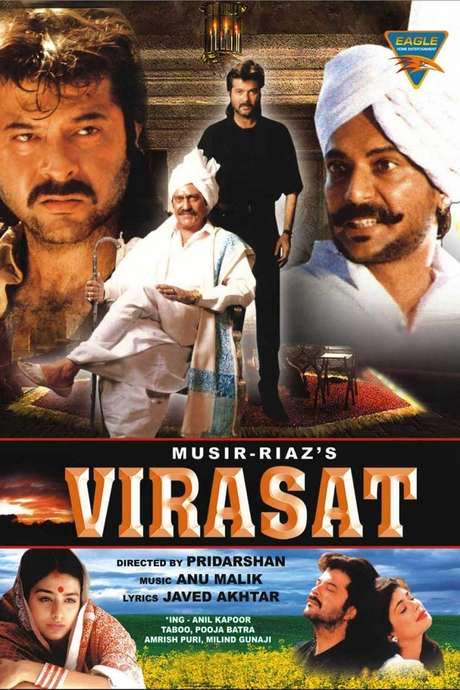
Virasat (1997) movie poster

Plot Summary

Virasat (1997) Plot Summary Explained

Release, runtime and language
1997 · 168 mins · Hindi
Directed by
Priyadarshan
Starring
Anil Kapoor, Tabu, Milind Gunaji, Pooja Batra, Sulabha Deshpande, Govind Namdeo

After completing his studies in London, England, Shakti Thakur returns home to India in a small town where his family resides.

On this page (6)
  1. 1 Where to watch
  2. 2 What happens: full plot
  3. 3 Plot questions answered
  4. 4 Movie threads
  5. 5 Movies like Virasat
  6. 6 Every angle

Where to watch

Where to Watch Virasat (1997)

Where can you watch Virasat? Stream, rent or buy it in the US, including on Amazon Video: current JustWatch availability with up-to-date prices.

Streaming availability powered by JustWatch

Full plot summary · contains spoilers

What Happens in Virasat: Full Plot Summary

The whole story of Virasat (1997) explained, from the opening scene to the final frame: every key event, every twist and what it all adds up to. Read it as a quick recap before the sequel, to check a scene you missed, or to finally understand what really happened.

Shakti Thakur [Anil Kapoor] returns to his ancestral village after completing his studies in London, bringing along his girlfriend, Anita [Pooja Batra], whom he deeply loves and intends to marry, despite his family's disapproval. The village, however, feels more like a stage for old feuds than a homecoming, and Shakti quickly senses that nothing has truly changed. He voices a bold plan: to sell his share of the family property and open a chain of restaurants, hoping to bring opportunity beyond the fields and temples that define the land. But his vision clashes with the advice of his father, Raja Thakur [Amrish Puri], the imposing zamindar who believes in duty over flight, reminding his son that education is meant to uplift uneducated brothers and society, not merely indulge personal ambitions. > A man gets an education not to become a selfish being but to uplift his uneducated brothers and society.

The stubborn rift between Raja Thakur and Zamindar Birju [Govind Namdeo], Shakti’s disabled uncle, plus Birju’s son Bali Thakur [Milind Gunaji], poisons any chance of harmony. The village splits along their lines, turning neighborly streets into potential battlegrounds as each faction guards its own piece of land and pride. Bali, obsessed with dominance, keeps pushing to outdo Raja Thakur, feeding a cycle of petty provocations that escalate into violence.

During a troubling excursion with his friends, Shakti revisits childhood memories and stumbles upon an old temple that Bali Thakur has ordered sealed. A reckless act by Bali’s men breaks the lock, and a brutal riot erupts between the two factions. Raja Thakur, determined to quell the flames, contemplates apologizing to his opponents, but Shakti insists that Surkhiya [Neeraj Vora], his ally, should be the one to seek reconciliation. The tension fractures quickly: Surkhiya loses a hand at the hands of Bali Thakur’s men, and homes in Bali’s village are set ablaze in retaliation. To prevent a broader bloodshed, Shakti, with his father’s permission, seeks to legitimize the temple's opening through government channels, restoring access for all villagers.

Bali Thakur responds with calculated vengeance, hiring goons to sabotage a dam that protects a portion of the village loyal to Raja Thakur. The resulting flood devastates the area, leaving many dead, including infants, and sending a wave of sorrow through Shakti. A goon who placed the explosives is spotted again, and Shakti pursues him, ultimately handing him over to the police. Yet fear for his family keeps the truth about Bali’s involvement from coming out.

In a parallel struggle over land access, Bali uses intimidation to keep a crucial route closed, making travel a daily hardship for many. To break the deadlock, Shakti and his father invite the antagonists to a village Panchayat. The accusations fly with neither side presenting solid evidence, and Bali lashes out at Raja Thakur, insulting him and deepening a wound that proves fatal when Raja Thakur collapses from a heart attack that very night. With his father gone, Shakti steps into the role of lead in the family’s affairs, trying to steer a fragile peace.

Time moves on, and the community negotiates a way to reopen the blocked land path, essential for shorter travel times. The landowner fears Bali’s backlash, especially because his daughter Gehna [Tabu] is involved. Shakti reassures him and even arranges a marriage pact with a well-to-do villager to secure safe passage. Eventually, the owner agrees to open the land, and Shakti proposes to Gehna’s family so the village can move forward. On the day of the wedding, the groom abandons the match under Bali’s intimidation; in a bold turn, Shakti marries Gehna himself, offering stability and acceptance to a cautious home. Anita, the original love of Shakti’s life, learns of the new arrangement, feels sorrow, and chooses to leave—understanding the complexities of duty and choice.

Bali, enraged by the land’s reopening, detonates a bomb during a village festival, causing fresh devastation and deaths on both sides. Shakti protects Bali Thakur’s innocent family, earning a reluctant respect from Birju Thakur, who finally begins to let go of his rancor. The hunt for Bali ends when Shakti finds him and urges surrender to the police to halt the bloodshed once and for all. Bali rejects the offer, and in the ensuing struggle, Shakti unintentionally decapitates him. Although others are willing to shoulder the blame, Shakti accepts responsibility and surrenders, choosing to break the cycle of violence.

In the end, the film presents a layered meditation on education—not as a mere credential but as a tool to uplift and unite a community fractured by pride, fear, and long-held grudges. It elevates the idea that knowledge should empower everyone, especially those who have been overlooked, and suggests that true leadership lies in choosing peace over vengeance.

Last updated: October 05, 2025 at 11:29

Was this helpful?

Plot questions answered

Virasat Plot Explained: Your Questions Answered

The questions people ask most about Virasat (1997): what happens in the confusing scenes, why the characters do what they do, the twists, hidden details and what the ending means. Each answer contains spoilers.

Q1

Why does Raja Thakur die of a heart attack?

Raja Thakur dies after being publicly humiliated at the village panchayat. During the meeting called to resolve the land dispute, Bali Thakur relentlessly insults and attacks Raja Thakur's character and honor. The stress and emotional trauma from theseverbal assaults trigger a heart attack that night, leading to his death. This event forces Shakti to step up as the new head of the family.

Foreshadowing: Earlier, Raja Thakur's strict adherence to duty and honor foreshadows his inability to withstand public disgrace.

  • Raja Thakur death
  • panchayat
  • heart attack
  • Bali Thakur insult
  • village elder
Q2

Why does Shakti marry Gehna instead of Anita?

Shakti marries Gehna after the original groom abandons her on their wedding day out of fear of Bali's retaliation. Since the marriage pact was meant to secure the landowner's cooperation in reopening the blocked road, Shakti decides to marry Gehna himself to maintain the agreement and ensure the village's access to the essential route. This sacrifice represents his shift from personal desires to communal duty.

Foreshadowing: Shakti's earlier conflict with his father about using education to uplift the village establishes his willingness to prioritize community needs over personal ambitions.

  • Shakti Gehna marriage
  • Anita leaves
  • marriage pact
  • village duty
  • landowner agreement
Q3

Why does Anita leave the village?

Anita leaves after learning that Shakti has married Gehna. She returns to the village expecting to marry Shakti, but discovers he has already wed Gehna as part of a strategic arrangement to secure the blocked road for the village. Though heartbroken, Anita understands the复杂 duty Shakti feels toward his community and chooses to leave gracefully rather than cause further conflict.

Foreshadowing: Anita's earlier reception into the village faced family disapproval, hinting at the cultural obstacles in their relationship.

  • Anita leaves
  • Shakti Anita break up
  • village departure
  • duty versus love
Q4

How does Bali Thakur's dam sabotage cause such devastation?

Bali Thakur hires goons to plant explosives on a dam that protects a portion of the village loyal to Raja Thakur. When the explosives detonate, the dam breaks and floods the downstream area, destroying homes and killing numerous villagers, including infants. This deliberate act of terrorism represents a major escalation in the feud, turning political conflict into mass murder.

Foreshadowing: Earlier warnings about Bali's escalating provocations and his obsession with outdoing Raja Thakur foreshadow this violent act.

  • dam explosion
  • Bali Thakur flood
  • village attack
  • goons sabotage
  • deaths
Q5

Why does Shakti surrender to the police after killing Bali?

Shakti surrenders to end the cycle of violence that has plagued the village for generations. Although his decapitation of Bali occurs during a struggle where Bali tries to kill him, Shakti chooses to take responsibility rather than let others blame themselves or escalate retaliation. By surrendering, he demonstrates the moral principle that violence must stop, even at personal cost.

Foreshadowing: The recurring pattern of revenge throughout the film builds toward this moment where breaking the cycle becomes more important than individual survival.

  • Shakti surrender
  • Bali death
  • police
  • cycle of violence
  • accountability
Q6

What started the feud between Raja Thakur and Birju Thakur?

The feud between Raja Thakur and his disabled brother Birju Thakur stems from long-held grudges over land, pride, and family status. This dispute splits the village into two opposing factions, with Birju's son Bali constantly seeking to outdo and challenge Raja Thakur. The conflict has persisted for years, turning neighbors into potential enemies and creating a toxic atmosphere of mistrust and violence.

Foreshadowing: The opening scenes establish the village as a place of old feuds, setting the stage for the escalating violence.

  • Raja Birju feud
  • village factions
  • Bali Thakur rivalry
  • land dispute
  • family grudge
Q7

Why does the temple incident spark a riot?

The riot begins when Shakti and his friend Surkhiya break open a temple that Bali Thakur had ordered sealed. This act is seen as a challenge to Bali's authority. In response, Bali's men violently attack Shakti's friends, igniting a brutal clash between the two village factions. The temple becomes a symbol of the deeper territorial and political conflict dividing the community.

Foreshadowing: Shakti's rediscovery of the sealed temple during a childhood memory excursion foreshadows his role in uncovering hidden tensions.

  • temple riot
  • Sealed temple
  • Bali Thakur
  • Shakti Surkhiya
  • village violence
Q8

Why does Birju Thakur finally reconcile with Shakti after the bomb attack?

Birju Thakur begins to let go of his enmity after witnessing Shakti's selfless act during the festival bomb attack. Despite Bali being responsible for the bombing, Shakti protects Bali's innocent family members and helps them escape the blast. This display of compassion and humanity from an enemy shocks Birju and makes him reconsider his long-standing hatred, marking the first step toward peace.

Foreshadowing: Shakti's consistent attempts at reconciliation throughout the film, even when opposed, plant seeds for this transformation.

  • Birju reconciliation
  • Bali family protection
  • bomb attack
  • village festival
  • compassion
Q9

Why does Shakti's restaurant plan conflict with his father's wishes?

Shakti wants to sell his share of the family property and open a chain of restaurants, representing his desire for personal success and escape from village life. However, his father Raja Thakur insists that Shakti use his education to uplift their community rather than pursue selfish ambitions. This ideological conflict highlights the film's theme that education should serve collective progress, not individual greed.

Foreshadowing: The opening scene establishes this tension between modern ambitions and traditional duty as a central thematic conflict.

  • restaurant plan
  • Raja Thakur education
  • duty versus ambition
  • village upliftment
  • family property
Q10

Why is the land road important and why does Bali block it?

Bali Thakur uses intimidation to keep a crucial route closed, forcing villagers to take long detours for daily travel. He blocks this road as another tactic in his ongoing battle against Raja Thakur's faction, making life difficult for those who support his rival. The road becomes essential to village connectivity and economic opportunity, making its reopening a key goal for Shakti.

Foreshadowing: The blocked road first appears as a minor inconvenience but develops into a major plot point requiring strategic negotiation.

  • blocked road
  • Bali intimidation
  • village access
  • landowner
  • travel hardship
Q11

Why does Shakti pursue the goon who planted the dam explosives?

Shakti pursues and captures one of the goons who planted explosives at the dam, hoping to expose Bali's involvement in the sabotage. However, the goon refuses to testify against Bali out of fear for his family's safety, keeping the truth hidden. Shakti keeps the evidence to protect his family from Bali's potential retaliation, showing the pervasive climate of fear in the village.

Foreshadowing: The earlier escalation of violence establishes Bali's ruthlessness, explaining the goon's terror.

  • dam goon capture
  • Bali Thakur evidence
  • police testimony
  • family threat
Q12

Why does Shakti protect Bali's family during the bomb attack?

Shakti protects Bali's innocent family members during the village festival bomb attack despite knowing they are connected to the perpetrator. This act demonstrates his commitment to distinguishing between perpetrators and innocent civilians, refusing to let the cycle of violence victimize those who bear no responsibility. It is this moral stance that eventually earns respect from Birju Thakur.

Foreshadowing: Shakti's earlier attempts at peaceful resolution and his opposition to senseless violence foreshadow this humanitarian choice.

  • Bali family protection
  • festival bomb
  • innocent civilians
  • moral stance
  • village attack

Movie threads

More Movies Like Virasat, by Mood & Story

Curated lists built around what makes Virasat tick: the same mood, the same kind of story or the same emotional payoff. Each list explains why these movies belong together.

Family inheritance dramas like Virasat

Protagonist torn between legacy and self in sprawling family dramas. If you liked Virasat, you'll find movies with similar themes of legacy, duty, and personal sacrifice. These stories explore the heavy burden inherited by a protagonist caught in a web of family expectations, rivalry, and the struggle to forge a new path.

  • dramatic
  • conflicted
  • oppressive
  • melancholic
  • tense
  • weighty
  • Tone: tense, dramatic, melancholic
  • Pacing: steady, escalating
Why these movies?

The story pattern: Stories typically begin with a protagonist returning to or being thrust into a complex family dynamic. They are forced to navigate deep-seated feuds and power struggles, often sacrificing their own ambitions or relationships to fulfill a greater duty and bring about a resolution, which is often bittersweet.

Why they belong together: These films are grouped by their central conflict between individual desire and familial obligation. They share a heavy emotional weight, a tense atmosphere from ongoing feuds, and a focus on the moral and emotional cost of upholding a legacy.

Movies about costly peace like Virasat

Stories where fragile peace comes at a profound personal cost. Discover movies like Virasat where the protagonist's journey to end a feud or conflict results in a bittersweet victory. These films focus on the heavy price of peace, where resolution is achieved but accompanied by deep personal sacrifice and emotional scars.

  • hopeful
  • anxious
  • melancholic
  • dramatic
  • tense
  • bittersweet
  • Tone: bittersweet, hopeful, tense
  • Pacing: steady, consequential
Why these movies?

The story pattern: The narrative follows a peacemaker who intervenes in a bitter, often multi-generational conflict. Their efforts lead to a cessation of hostility, but the path is paved with tragedy and sacrifice. The ending acknowledges the peace while mourning what was lost to achieve it.

Why they belong together: These movies share a powerful emotional arc centered on reconciliation. They are united by a steady, intense pacing that builds towards a resolution which feels earned yet somber, emphasizing that true peace often requires the highest personal price.

If you liked this

Movies Like Virasat

Similar movies to Virasat: the same genre, themes or kind of story. Each one comes with its own plot summary, timeline and ending explained.

Browse all movie summaries

Every angle

Virasat (1997) Explained: Plot, Timeline & Characters

Everything about Virasat in one place: what happens in the plot summary, the timeline in chronological order, the characters and meaning and a spoiler-free summary. What's After the Movie adds the cast, box office and post-credit scenes.

Coming soon on iOS and Android

The Plot Explained Movie Summary App

Plot summaries, endings explained and timelines on your phone. Catch up on any movie in minutes, save your favorites and never miss a twist again.

Be the first to know when we launch. Your email stays private, always.

Learn more about the app