Year: 2016
Runtime: 133 mins
Language: Russian
Director: Andrey Kravchuk
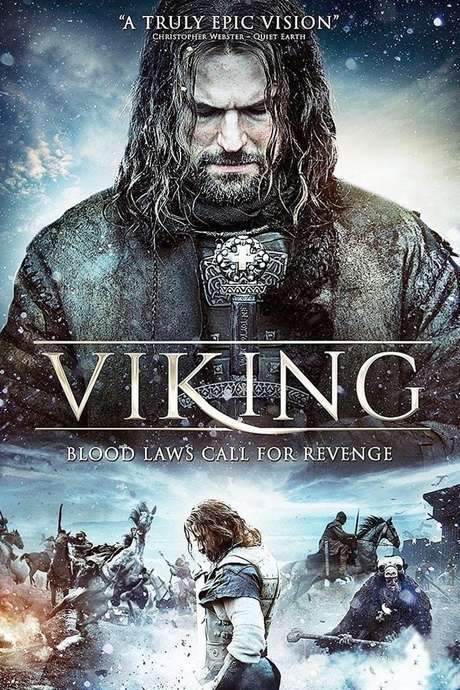
In the early Middle Ages, a clan is torn by discord following the accidental death of a brother. The Grand Duke bears the guilt, and the law dictates that revenge must be taken by his younger, illegitimate brother. Faced with a moral conflict, the younger brother risks losing everything for refusing to comply with the brutal tradition, highlighting the harsh realities of the time and the belief that maintaining peace often requires more violence than war.
Find where to stream, rent, or buy Viking (2016) in the US with current JustWatch availability, up-to-date pricing, and platform listings for subscription, rental, and digital purchase options.
Warning: spoilers below!
Haven’t seen Viking yet? This summary contains major spoilers. Bookmark the page, watch the movie, and come back for the full breakdown. If you're ready, scroll on and relive the story!
Explore the full timeline and setting of Viking (2016). Follow every major event in chronological order and see how the environment shapes the story, characters, and dramatic tension.
Last updated: October 04, 2025 at 07:58
Meet the key characters of Viking (2016), with detailed profiles, motivations, and roles in the plot. Understand their emotional journeys and what they reveal about the film’s deeper themes.
Last updated: October 04, 2025 at 07:58
Explore the central themes of Viking (2016), from psychological, social, and emotional dimensions to philosophical messages. Understand what the film is really saying beneath the surface.
Last updated: October 04, 2025 at 07:58
Browse frequently asked questions about Viking (2016) focused on characters, relationships, themes, symbols, setting, and story context. This movie info FAQ gives spoiler-aware explanations for character arcs, world details, and thematic interpretation so readers can better understand what the film is really about.
The film is set in the early Kievan Rus', primarily in the cities of Polotsk and Kyiv, with the Dnieper River serving as a strategic waterway that shapes military campaigns and the final mass baptism scene.
Viking is set in the 10th century, following the death of Prince Svyatoslav I, during the brutal power struggle among his sons Yaropolk, Oleg, and Vladimir for control of the Kievan Rus'.
The film explores several interconnected themes: the ruthless pursuit of power among brothers and factions, the brutal reality of war and mercenaries, the tension between violence and religious faith, and the question of who has the right to rule. These themes converge as Vladimir's ambition leads to betrayal and violence before his eventual spiritual awakening.
Vladimir is a volatile Rus prince portrayed by Danila Kozlovsky, driven by an appetite for power and reliant on Viking mercenaries to seize control of Polotsk and Kyiv. Throughout the film, he commits brutal acts including sieges and coercion, ultimately grappling with guilt as the story moves toward his spiritual awakening through Christian baptism.
The film depicts a brutal succession crisis after Svyatoslav I's death, with his three sons, Yaropolk, Oleg, and Vladimir, fighting for control of Kievan Rus. The conflict involves assassinations, sieges, shifting alliances, and mercenary warfare, culminating in Vladimir's violent ascent to power and his eventual turn toward faith and legitimacy.
Faith serves as a counterweight to the film's brutality. Christian bishop Anastas offers Vladimir spiritual absolution, challenging him to confront his sins. The narrative culminates in a mass baptism that signals both a possible moral rebirth for Vladimir and a turning point in the region's religious transformation, reframing political legitimacy as something beyond mere force.
Rogneda is the daughter of Rogvolod, lord of Polotsk, portrayed by Aleksandra Bortich. She becomes a political pawn in Vladimir's marriage politics, and her personal insult to Vladimir sparks both a personal and political conflict that reverberates through the siege of Polotsk and subsequent treaty negotiations.
Viking mercenaries are central to every major military confrontation in the film. These external warriors, including the Berserker attack, repeatedly tip the balance of power between rival factions. The film shows how alliances with mercenaries are bought, broken, or bent to survival demands, illustrating the brutal logic of rulership in the era.
Anastas is a Christian bishop portrayed by Paweł Deląg who plays a crucial spiritual role in the narrative. He offers Vladimir absolution for his sins and guides him toward repentance, serving as the moral compass whose intervention pivots the story from pure political brutality toward faith and moral reckoning.
Polotsk and Kyiv represent two power centers in early Kievan Rus. Polotsk serves as a fortified seat under Rogvolod and becomes the target of Vladimir's siege after his insult by Rogneda. Kyiv functions as the political capital where rival factions converge and where Vladimir ultimately consolidates his power, with the Dnieper River connecting both cities strategically.
The mass baptism at the film's end represents a turning point for Vladimir and the Kievan Rus. It signifies both his military victory and his attempt at spiritual rebirth through Christian conversion. The ending suggests a new governance model rooted in repentance and communal renewal, though this comes after immense personal and collective loss, creating a bittersweet tone.
The key characters include Vladimir (the ambitious prince seeking power), his brothers Yaropolk and Oleg (rivals in the succession), Rogvolod (Polotsk's lord and Rogneda's father), Sveneld (the veteran warrior navigating loyalties), Anastas (the Christian bishop offering spiritual guidance), and Irina (Yaropolk's Christian wife who brokers negotiations).
The film portrays 10th century Kievan Rus as a violent frontier world where power is seized through force, betrayal, and mercenary armies. It depicts the brutal realities of succession wars among princely brothers, the strategic importance of cities like Polotsk and Kyiv along the Dnieper, and the gradual transition from pagan traditions toward Christian faith.
Viking has a predominantly dark tone reflecting the harsh realities of early medieval politics. The film features relentless violence, betrayals, and brutal acts including siege warfare and personal tragedies. However, the ending introduces a bittersweet element as Vladimir's conversion offers a path to redemption, balancing the darkness with a message of possible moral rebirth.
Discover curated groups of movies connected by mood, themes, and story style. Browse collections built around emotion, atmosphere, and narrative focus to easily find films that match what you feel like watching right now.
Epic tales of violent succession and moral compromise in harsh historical settings.Looking for movies like Viking? This thread gathers historical epics defined by their brutal violence and morally complex power struggles. If you enjoyed the grim depiction of medieval succession wars and the high-stakes political tension in Viking, you'll find similar stories here.
The narrative typically follows a central figure thrust into a violent contest for a throne, kingdom, or legacy. The journey is linear and driven by conflict, forcing the protagonist to commit increasingly dark acts, questioning their own morality in the process. The story unfolds through epic battles, betrayals, and the harsh enforcement of tradition.
Movies are grouped here for their shared commitment to depicting the unvarnished brutality of historical conflict, their high emotional and violent intensity, and their exploration of the moral decay that often accompanies the pursuit of power.
Protagonists who achieve a hard-won spiritual peace after a path of bloodshed.Discover movies with endings similar to Viking, where victory comes at a great personal cost and is followed by a profound, bittersweet resolution. If you were moved by the protagonist's difficult path from brutal warlord to a figure seeking spiritual peace, explore these stories of hard-won redemption.
The narrative arc follows a protagonist who becomes deeply morally compromised by their actions, which are necessary within the context of their world's brutal rules. The story builds towards a final act where physical conquest is paired with a spiritual or ideological transformation, resulting in an ending that feels both hopeful and mournful for all that was destroyed to reach it.
These films are connected by a specific emotional and narrative pattern: a heavy, violent journey that culminates in a bittersweet ending where a form of peace or redemption is achieved, but the scars of the journey remain deeply felt.
Don't stop at just watching - explore Viking in full detail. From the complete plot summary and scene-by-scene timeline to character breakdowns, thematic analysis, and a deep dive into the ending - every page helps you truly understand what Viking is all about. Plus, discover what's next after the movie.
Read a complete plot summary of Viking, including all key story points, character arcs, and turning points. This in-depth recap is ideal for understanding the narrative structure or reviewing what happened in the movie.
Track the full timeline of Viking with every major event arranged chronologically. Perfect for decoding non-linear storytelling, flashbacks, or parallel narratives with a clear scene-by-scene breakdown.