




Plot Explained Spoilers guaranteed!
Plot Explained

Browse by genre

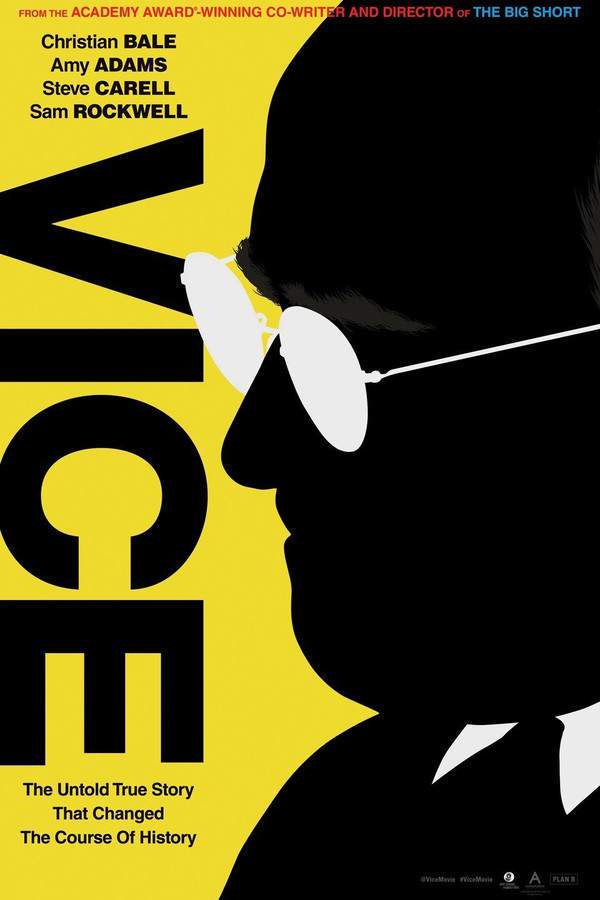
Vice (2018) movie poster

Timeline

Vice (2018) Timeline Explained – Every Event in Order

Release, runtime and language
2018 · 132 min · English
Echo score 65
JustWatch #4,040 66
Directed by
Adam McKay
Starring
LisaGay Hamilton, Eddie Marsan, Shea Whigham, Amy Adams, Christian Bale, Bill Camp
Budget
$60M

During the 2000 presidential election, Texas Governor George W. Bush chooses Halliburton CEO Dick Cheney as his running mate, an unexpected decision that sets in motion a chain of events with profound consequences. Cheney, a man with a distinguished political history, sees a chance to gain significant power and influence. The film explores how his ambition shapes the Bush presidency and significantly alters the course of American policy and its impact on the world stage.

On this page (6)
  1. 1 Where to watch
  2. 2 Events in order (15)
  3. 3 Timeline questions answered
  4. 4 Movie threads
  5. 5 Movies like Vice
  6. 6 Every angle

Where to watch

Where to Watch Vice (2018)

Where can you watch Vice? Stream, rent or buy it in the US, including on Apple TV Store, Google Play Movies and YouTube: current JustWatch availability with up-to-date prices.

Streaming availability powered by JustWatch

15 events in order · contains spoilers

Vice Timeline: Events in Chronological Order

Every key event of Vice (2018) in order, scene by scene, with when and where it takes place. Use it to untangle flashbacks, time jumps and parallel storylines, to refresh your memory before the sequel or to find the exact scene you are thinking of.

  1. September 11 Attacks

    The narrative begins with key figures in the White House, including Dick Cheney, grappling with the shocking events of the September 11 attacks. This moment serves as a critical turning point, shaping U.S. foreign policy and Cheney's future decisions.

    When
    September 11, 2001
    Where
    White House
  2. Cheney's Early Struggles

    Gliding back to 1963, a young Dick Cheney faces personal challenges as a lineman and battles alcoholism. After dropping out of Yale due to his struggles, his girlfriend Lynne encourages him to turn his life around, highlighting her own aspirations.

    When
    1963
    Where
    Wyoming
  3. Entering Politics

    In 1969, Cheney secures an internship under the Nixon Administration. Under Donald Rumsfeld's mentorship, he begins to hone his political skills while managing family responsibilities, gaining insight into the complexities of governance.

    When
    1969
    Where
    White House
  4. Overhearing a Secret

    During his internship, Cheney overhears a conversation between Henry Kissinger and Nixon about the clandestine bombing of Cambodia. This moment not only deepens Cheney's understanding of power dynamics but also exemplifies the executive branch's capacity for decisive military action.

    When
    1969
    Where
    White House
  5. Becoming Chief of Staff

    As Rumsfeld is reassigned, Cheney swiftly ascends to the role of White House Chief of Staff under President Gerald Ford. This role marks a significant step in his political career, establishing him as a key player in American politics during the 1970s.

    When
    1974
    Where
    White House
  6. Heart Attack and Recovery

    Cheney's ambitions lead him to run for Wyoming's representative. However, he suffers a heart attack after a disappointing campaign speech, leading to a period of recovery. During this time, Lynne steps up to campaign on his behalf, ultimately securing his political future.

    When
    1978
    Where
    Wyoming
  7. Secretary of Defense

    Under the Reagan Administration, Cheney's political career reaches new heights as he becomes Secretary of Defense. He plays a pivotal role during the Gulf War, overseeing military operations and shaping U.S. defense policies during a critical period in history.

    When
    1990
    Where
    Washington, D.C.
  8. CEO of Halliburton

    After leaving public office, Cheney becomes the CEO of Halliburton, further entrenching himself in the business world. This position allows him to maintain significant influence in the energy sector, showcasing his dual role in politics and business.

    When
    1995
  9. Vice Presidential Bid

    Cheney is approached to be George W. Bush's running mate in the 2000 presidential election. Despite initial hesitations, he agrees to the position, strategically negotiating the scope of his future responsibilities as Vice President.

    When
    2000
    Where
    Washington, D.C.
  10. War on Terror

    Following the September 11 attacks, Cheney and Rumsfeld advocate for the U.S. invasions of Afghanistan and Iraq. Their push for military action results in significant civilian casualties and raises questions about U.S. accountability and foreign policy.

    When
    2001
    Where
    Afghanistan, Iraq
  11. Health Challenges

    Throughout his vice presidency, Cheney experiences ongoing health issues, which add strain to his personal life and political decisions. His declining health becomes a recurring theme, affecting his ability to navigate significant political events.

  12. Controversial Incidents

    Cheney faces multiple controversies during his time in office, notably the Plame affair and the accidental shooting of Harry Whittington. These incidents draw significant media scrutiny and complicate his legacy as Vice President.

  13. Political Fallout

    By the end of the Bush administration, Cheney's approval ratings plummet as public discontent with his policies grows. The narrative highlights the long-term consequences of his decisions on both his own reputation and the political landscape.

    When
    2008
  14. Tragic End

    After another health crisis, Cheney experiences a poignant farewell with his family, signaling regret and reflection. In an unforeseen event, he dies in a traffic accident while jogging, which serves as a stark reminder of the fleeting nature of life.

  15. Legacy and Family Divide

    The aftermath of Cheney's death leads to political divisions within his family, particularly as Liz campaigns against same-sex marriage while vying for a Senate seat. This illustrates how Cheney's political legacy continues to influence family dynamics.

    When
    2012

Last updated: November 04, 2024 at 00:18

Was this helpful?

Timeline questions answered

Vice Timeline Explained: Your Questions Answered

When does it happen, and why in that order? The questions people ask about the chronology of Vice (2018): time jumps, flashbacks, cause and effect between scenes and the correct order of events, each answered with spoilers.

Q1

Why was Dick Cheney chosen as George W. Bush's running mate in 2000?

Bush selected Cheney because he needed an experienced political operator who could handle "mundane" executive duties like energy and foreign policy. Bush intended to focus on continuing his father's legacy, leaving the actual governance to Cheney. This arrangement gave Cheney unprecedented power as Vice President, allowing him to shape major policy decisions while appearing to operate behind the scenes.

Foreshadowing: Earlier in the film, Cheney's rise through the Nixon and Ford administrations established his talent for operating in the background while gaining influence.

  • cheney
  • bush
  • running mate
  • vice president
  • 2000 election
  • political deal
Q2

How did Dick Cheney's early alcoholism and dropping out of Yale shape his career?

Cheney dropped out of Yale due to alcoholism and poor academic performance in 1963. His girlfriend Lynne pushed him to turn his life around, and he eventually found steady work as a lineman in Wyoming. This transformation planted the seeds for his later ambition, Lynne's intelligence and drive directly motivated Cheney to pursue politics, giving him the discipline and drive that propelled him from a White House intern to one of the most powerful Vice Presidents in American history.

Foreshadowing: The film establishes early that Lynne's ambitions and intellect were instrumental in pushing Cheney toward success.

  • alcoholism
  • yale
  • cheney
  • lynn cheney
  • wyoming
  • career change
Q3

What was the significance of Cheney overhearing the Cambodia bombing conversation?

In 1969, as a White House intern, Cheney overheard Henry Kissinger and Nixon discussing the secret bombing of Cambodia. This moment revealed to Cheney the enormous power of the executive branch to make consequential decisions without public oversight. It fundamentally shaped his belief in strong presidential authority and set the ideological foundation for his later advocacy of the unitary executive theory.

Foreshadowing: This early exposure to covert presidential power foreshadows Cheney's later support for expansive executive powers during the War on Terror.

  • cambodia
  • bombing
  • kissinger
  • nixon
  • white house
  • secret
  • executive power
Q4

Why did Dick Cheney become such a powerful Vice President?

Cheney negotiated unprecedented control over executive duties when accepting the VP role, specifically taking charge of energy policy and foreign policy. Rather than a ceremonial position, he used this arrangement to wield substantial influence over the Bush administration's most consequential decisions, particularly the War on Terror. His experience as Secretary of Defense and his relationships with figures like Donald Rumsfeld allowed him to shape military and intelligence operations.

Foreshadowing: The 2000 campaign negotiation explicitly established that Cheney would handle substantive policy areas, not typical VP duties.

  • vice president
  • power
  • cheney
  • bush administration
  • executive authority
  • war on terror
Q5

Why did Dick Cheney and Donald Rumsfeld push for the Iraq War?

After the September 11 attacks, Cheney and Rumsfeld aggressively advocated for invading both Afghanistan and Iraq. They argued that Saddam Hussein possessed weapons of mass destruction and had ties to terrorist organizations. Cheney framed the invasions as necessary for American security, though the film portrays their push as partly driven by longstanding political ambitions and ideological goals rather than purely security concerns.

Foreshadowing: Cheney's earlier experience as Secretary of Defense during the Gulf War and his hawkish foreign policy stance under Reagan established his predisposition toward military intervention.

  • iraq war
  • afghanistan
  • rumsfeld
  • cheney
  • weapons of mass destruction
  • 9/11
  • invasion
Q6

What was the Plame affair and how did it involve Cheney?

The Plame affair was a 2003 scandal where Cheney's chief of staff, Scooter Libby, leaked the identity of CIA operative Valerie Plame to journalists. The leak was an act of retaliation against Plame's husband, Joseph Wilson, who had criticized the Bush administration's justifications for the Iraq War. The scandal raised questions about the administration's ethics and accountability.

Foreshadowing: The film's portrayal of Libby and Cheney's close working relationship establishes the context for how this leak occurred.

  • plame
  • cia
  • libby
  • scooter libby
  • leak
  • whistleblower
  • cheney administration
Q7

Why did Dick Cheney accidentally shoot Harry Whittington?

In 2006, while quail hunting in Texas, Cheney accidentally shot Harry Whittington, a 78-year-old attorney, during a shooting accident. The incident became controversial because the White House delayed publicly disclosing it for nearly 24 hours. Whittington survived but suffered a heart attack from the injury. The accident highlighted questions about Cheney's conduct and transparency.

  • shooting
  • hunting
  • accident
  • whittington
  • texas
  • cheney
Q8

How did Mary Cheney's coming out affect Dick Cheney's political decisions?

When Mary Cheney came out as a lesbian in the 1990s, Cheney reconsidered his political future to protect her from media scrutiny. This personal moment influenced his decision to leave politics temporarily and become CEO of Halliburton. Later, his daughter Liz's political campaign against same-sex marriage created a significant family divide, particularly as Liz pursued a Senate seat while advocating positions contrary to Mary's rights.

Foreshadowing: The film shows Cheney's protective instinct toward Mary, which temporarily altered his career trajectory.

  • mary cheney
  • coming out
  • lesbian
  • same sex marriage
  • liz cheney
  • family
  • daughter
Q9

What was the false epilogue in Vice about?

The film presents a false epilogue showing Cheney enjoying a healthy, happy retirement with his family, suggesting he lived a long, peaceful life. This is suddenly interrupted when the narrative resumes, revealing this was misleading, Cheney actually dies in a traffic accident while jogging after another health crisis. This narrative trick underscores the film's theme of how political figures' legacies are often presented in overly favorable light.

  • false epilogue
  • death
  • cheney
  • jogging
  • accident
  • deception
  • legacy
Q10

Why did Liz Cheney oppose her father on same-sex marriage?

Despite her sister Mary being a lesbian, Liz Cheney launched a political campaign that included opposing same-sex marriage while running for Senate in Wyoming. This created a major family rift, with Liz publicly advocating against the rights of her own sister. The film portrays this as a cynical political move to appeal to conservative voters, highlighting the tension between Cheney's protective instinct toward Mary and Liz's political ambitions.

Foreshadowing: The earlier scene of Mary coming out creates dramatic irony when Liz's political positions are revealed.

  • liz cheney
  • same sex marriage
  • wyoming
  • senate
  • family rift
  • political campaign
  • mary cheney
Q11

How did Dick Cheney die and get a heart transplant in the film?

In the film, Cheney dies in a traffic accident while jogging after experiencing another health crisis. His transplanted heart then goes to another person by March 2012. The film uses this dark irony to suggest that even in death, Cheney's legacy lives on in others, though the scene is presented with the film's characteristic satirical tone, questioning whether he deserved such a second chance.

Foreshadowing: Cheney's recurring health problems throughout the film build toward this final moment.

  • heart transplant
  • death
  • accident
  • jogging
  • health
  • cheney
Q12

Why does Dick Cheney say he has no regrets at the end of Vice?

In the film's defiant final moment, Cheney breaks the fourth wall and asserts he holds no regrets over his decisions as Vice President. This chilling conclusion suggests either genuine lack of remorse or deliberate refusal to acknowledge the consequences of his actions. The statement encompasses the Iraq War, the torture program, the Plame affair, and other controversial decisions, leaving viewers with an unsettling portrait of unapologetic political power.

  • ending
  • fourth wall
  • no regrets
  • cheney
  • iraq war
  • torture
  • accountability
Q13

What was the mid-credits focus group scene in Vice about?

The chaotic mid-credits scene shows a focus group in turmoil as people debate the film they just watched and discuss the latest Fast and Furious movie. This absurd, comedic conclusion reinforces the film's satirical tone, suggesting that audiences may engage more passionately with action entertainment than with serious political criticism, and that the real Cheney remains difficult to pin down or judge definitively.

  • mid credits
  • focus group
  • fast and furious
  • satire
  • audience
  • confusion

Movie threads

More Movies Like Vice, by Mood & Story

Curated lists built around what makes Vice tick: the same mood, the same kind of story or the same emotional payoff. Each list explains why these movies belong together.

Dark Political Dramas About Power Like Vice

Gripping dramas that dissect the ruthless pursuit of power and its moral cost. If you were fascinated by the critical examination of power in Vice, explore more movies like it. This collection features similar gripping dramas about political ascent, moral ambiguity, and the heavy consequences of ambition, perfect for fans of cynical historical narratives.

  • gripping
  • critical
  • unsettling
  • somber
  • ambitious
  • reflective
  • Tone: dark, cynical, critical
  • Pacing: variable, character-driven
Why these movies?

The story pattern: Stories in this thread typically follow a central figure's calculated rise within a powerful system, tracing the key decisions that grant them influence while eroding their ethical boundaries. The narrative structure often weaves together personal and political threads, building towards an ending that reflects the profound, often unsettling, impact of their actions.

Why they belong together: Movies are grouped here for their shared dark tone, high intensity, and complex exploration of ambition within systems of power. They create a similar viewing experience: intellectually stimulating, emotionally heavy, and critically reflective on leadership and its costs.
Complex and Critical Biopics Similar to Vice

Non-traditional biographies that challenge the myth and focus on legacy. For viewers who appreciated the unconventional and critical approach of Vice's biography, this list highlights similar movies. Discover complex biopics that use satire, nonlinear storytelling, and a dark tone to examine famous figures, perfect for those seeking thought-provoking historical dramas.

  • critical
  • unsettling
  • reflective
  • satirical
  • ambitious
  • somber
  • Tone: dark, satirical, reflective
  • Pacing: variable, nonlinear
Why these movies?

The story pattern: These biopics often employ nonlinear timelines, stylistic breaks from realism (like fourth-wall breaks or satirical segments), and a focus on defining controversies rather than a simple birth-to-death chronology. The emotional journey is mixed, leaving the viewer to grapple with the subject's impact rather than delivering a neat, uplifting conclusion.

Why they belong together: These films are united by their shared approach to the biography genre: complex narrative structures, a dark or satirical tone, and a focus on moral ambiguity over hagiography. They provide a similarly intellectually challenging and unconventional look at historical figures.

If you liked this

Movies Like Vice

Similar movies to Vice: the same genre, themes or kind of story. Each one comes with its own plot summary, timeline and ending explained.

Browse all movie summaries

Every angle

Vice (2018) Explained: Plot, Timeline & Characters

Everything about Vice in one place: what happens in the plot summary, the timeline in chronological order, the characters and meaning and a spoiler-free summary. What's After the Movie adds the cast, box office and post-credit scenes.

Coming soon on iOS and Android

The Plot Explained Movie Summary App

Plot summaries, endings explained and timelines on your phone. Catch up on any movie in minutes, save your favorites and never miss a twist again.

Be the first to know when we launch. Your email stays private, always.

Learn more about the app