Plot Explained Spoilers guaranteed!
Plot Explained

Browse by genre

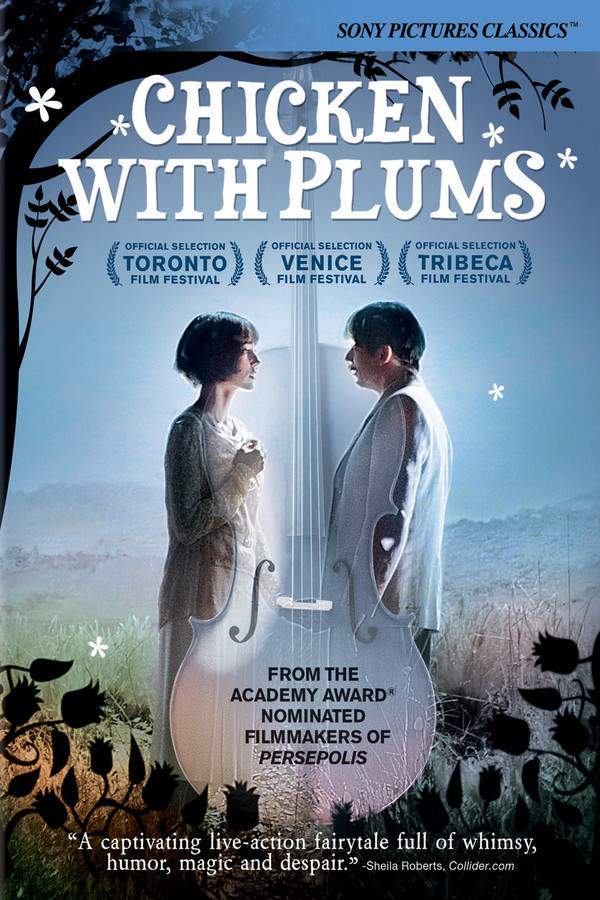
Chicken with Plums (2012) movie poster

Plot Summary

Chicken with Plums (2012) Plot Summary Explained

Release, runtime and language
2012 · 93 min · French
Loading streaming availability…
Directed by
Marjane Satrapi, Vincent Paronnaud
Starring
Golshifteh Farahani, Mathieu Amalric, Edouard Baer, Maria de Medeiros

In 1950s Tehran, the celebrated musician Nasser Ali Khan falls into despair when his treasured violin is irreparably damaged. Confined to his bed and anticipating his end, he experiences vivid flashbacks to his past. These memories reveal a mystical encounter with Azraël, the Angel of Death, and explore the profound secrets of his life, including a passionate love affair that inspired his artistry and music.

On this page (6)
  1. 1 Where to watch
  2. 2 What happens: full plot
  3. 3 Plot questions answered
  4. 4 The book behind the movie
  5. 5 Movie threads
  6. 6 Every angle
Loading streaming availability…

Full plot summary · contains spoilers

What Happens in Chicken with Plums: Full Plot Summary

The whole story of Chicken with Plums (2012) explained, from the opening scene to the final frame: every key event, every twist and what it all adds up to. Read it as a quick recap before the sequel, to check a scene you missed, or to finally understand what really happened.

After Faranguisse (Maria de Medeiros) becomes furious with her musician husband Nasser-Ali (Mathieu Amalric) for neglecting his parental duties, she takes his cherished violin and shatters it in a fit of rage. This act sends Nasser-Ali on a profound quest to find a new violin, but after acquiring a Stradivarius and attempting to play it, he comes to a heartbreaking realization: he has lost not just his instrument, but his desire to play and, ultimately, to live. Faced with despair, he explores various suicide methods before choosing to remain in bed, waiting for death to claim him.

As he lies there, Nasser-Ali begins to visualize his life—including poignant memories of his past and unsettling glimpses of the future. He envisions his eldest daughter Lili marrying a man her mother approves of, divorcing him, and embarking on a tumultuous affair with an actor. This affair ends tragically when the actor dies from a heart attack, leading Lili down a dark path of smoking, drinking, and gambling. Eventually, she suffers three heart attacks, with the devastating third taking her life. Meanwhile, Nasser-Ali's younger son finds his way to America, where he becomes a grandfather following the birth of a son named Jimmy-Nassar, after his overweight daughter faces a health scare.

As Nasser-Ali remains locked in his morose state, Faranguisse grows increasingly worried and prepares his favorite meal: chicken with plums. Through their interactions, it is revealed that Faranguisse harbored feelings for Nasser-Ali since childhood, patiently waiting as he rose to fame. His mother (Isabella Rossellini) pressured him into marrying her upon his return. When she tries to offer him the beloved dish, he coldly rejects it, unable to forgive her for the destruction of his violin.

On the fifth day of his self-imposed exile from the world, Nasser-Ali recalls a poignant moment from his past when his dying mother asked him to cease praying for her, as his prayers prolonged her suffering. Stopping the prayers allowed her spirit to escape as a wisp of smoke above her grave. It's then that he realizes his youngest son is praying for his own well-being.

By the sixth day, he is confronted by the angel of death. Though he expresses a desire to live, the angel regretfully informs him that it is too late for such wishes.

On the final day of his life, Nasser-Ali dreams of Irane (Golshifteh Farahani), a significant figure from his past. He first met Irane while studying the violin; though his technical skills were commendable, his teacher said he lacked the emotional depth known as soul in his music. Nasser-Ali later encounters her on the street, following her to her father's clock shop. He buys a clock and returns multiple times, manipulating opportunities to see her again. Ultimately, he proposes, but her father forbids the union, claiming Nasser-Ali will struggle to support her financially. Irane reluctantly yields to her father's wishes.

As the years pass, Nasser-Ali's heartache transforms him into a profound musician with true emotional resonance. He embarks on a global tour, while Irane, in compliance with her father's desires, marries another man, has children, and eventually becomes a grandmother. Fatefully, after Nasser-Ali replaces the broken violin, he unexpectedly encounters Irane once again, but she walks past him with her grandson, not recognizing him. Although she feels the memories surge, she hides her emotions as she turns the corner and quietly weeps.

Ultimately, Nasser-Ali meets his end on the eighth day, leaving behind a legacy of memories and music. Irane, still carrying the weight of their untold story, attends his funeral in secrecy, mourning the man who was once hers.
Last updated: November 15, 2024 at 15:35

Was this helpful?

Plot questions answered

Chicken with Plums Plot Explained: Your Questions Answered

The questions people ask most about Chicken with Plums (2012): what happens in the confusing scenes, why the characters do what they do, the twists, hidden details and what the ending means. Each answer contains spoilers.

Q1

Why does Nasser-Ali lose the will to live after finding a new violin?

When Nasser-Ali acquires a Stradivarius to replace his broken violin, he realizes the problem was never the instrument itself. His musical gift was tied to his emotional connection to life, which was lost when Irane left him. Playing the new violin makes him understand he has lost not just his instrument but his desire to create music and his will to live.

  • violin
  • music
  • despair
  • emotional connection
  • Irane
Q2

Why does Faranguisse shatter Nasser-Ali's violin?

Faranguisse destroys the violin in a fit of rage because Nasser-Ali has been neglecting his parental responsibilities. She is furious that his dedication to music has come at the expense of being a father, and destroying his beloved instrument is her way of expressing her anger and reclaiming his attention.

  • Faranguisse
  • violin
  • anger
  • family neglect
  • conflict
Q3

Why does Nasser-Ali reject the chicken with plums that Faranguisse prepares?

Nasser-Ali cannot forgive Faranguisse for destroying his violin, which represents his entire artistic identity. Despite her attempts at reconciliation by preparing his favorite dish, he coldly rejects it. The chicken with plums becomes a symbol of her love and regret, but his grief over losing his music outweighs any willingness to accept her gesture.

Foreshadowing: The title itself hints at this final meal he will never eat.

  • chicken with plums
  • Faranguisse
  • forgiveness
  • rejection
  • reconciliation
Q4

Who is Irane and why is she so important to Nasser-Ali?

Irane is the love of Nasser-Ali's life whom he met while studying the violin. Though he was technically skilled, his teacher said he lacked emotional depth in his music. After meeting Irane and falling in love, his music transformed with profound soul. Her father forbade their marriage due to financial concerns, forcing her to marry another man. This heartbreak became the source of his artistic genius and lifelong sorrow.

  • Irane
  • love
  • violin
  • music
  • heartbreak
  • soul
Q5

Why does Nasser-Ali see visions of his children's futures?

While lying in bed awaiting death, Nasser-Ali experiences vivid visions that blend past memories with imagined futures. He sees his daughter Lili marrying a man her mother approves of, then divorcing, having a tragic affair with an actor who dies of a heart attack, and eventually dying from three heart attacks herself. These visions represent both his prophetic ability and his guilt-ridden concerns about the consequences of his own despair affecting his family's fate.

  • Lili
  • children
  • visions
  • future
  • death
  • family
Q6

Why does the angel of death appear on the sixth day?

The angel of death visits Nasser-Ali on the sixth day of his self-imposed exile from the world. When Nasser-Ali expresses his desire to live, the angel regretfully tells him it is too late. The specific timing follows the film's eight-day structure, where each day represents a stage in his journey from despair to acceptance, with the sixth day marking the point of no return.

  • angel of death
  • death
  • sixth day
  • fate
  • Azrael
Q7

Why does Irane walk past Nasser-Ali without recognizing him?

Years after their forced separation, Nasser-Ali encounters Irane unexpectedly. She walks past him with her grandson and does not recognize him, though she feels the surge of old memories. She hides her emotions and turns the corner, where she quietly weeps. It is ambiguous whether she truly does not recognize him or chooses to suppress their shared history, honoring the decisions that kept them apart.

Foreshadowing: Their earlier separation foreshadows this final non-recognition, as both chose to move forward with their separate lives.

  • Irane
  • recognition
  • memory
  • encounter
  • past love
Q8

What is the meaning of Nasser-Ali's childhood memory about stopping his prayers for his mother?

On the fifth day, Nasser-Ali remembers his dying mother asking him to stop praying for her, because his prayers were prolonging her suffering. When he stopped, her spirit escaped as a wisp of smoke above her grave. This memory brings him clarity that his youngest son is now praying for his own well-being, mirroring the childhood cycle of prayer and release, suggesting his death is imminent and that his son's prayers, like his once did, are now for his peaceful passage.

  • mother
  • prayers
  • death
  • childhood
  • release
Q9

Why does Nasser-Ali become a great musician after losing Irane?

After Irane's father forbid their marriage and she married another man, Nasser-Ali's heartbreak transformed him from a technically skilled player into a musician with true emotional depth. His teacher had said he lacked soul in his music; losing Irane gave him that soul. His grief became the source of his artistic genius, and he toured the world as a celebrated musician, his pain fueling his art.

  • music
  • transformation
  • artistry
  • heartbreak
  • soul
  • fame
Q10

Why does Nasser-Ali choose to lie in bed rather than taking other suicide methods?

After contemplating various suicide methods, Nasser-Ali chooses to simply lie in bed and wait for death to claim him. This reflects his complete resignation and passive acceptance of fate. Rather than taking active action, he surrenders to despair, allowing the passage of time to bring what he believes is inevitable. This choice emphasizes the film's meditative, fatalistic tone.

  • despair
  • bed
  • death
  • resignation
  • suicide
Q11

Why does Irane attend Nasser-Ali's funeral in secret?

Irane attends Nasser-Ali's funeral in secrecy, mourning the man who profoundly impacted her life. Her secret presence signifies the lingering bond between them that never faded, despite decades of separation and各自的 marriages. She could not publicly acknowledge their relationship, but her quiet mourning at his funeral reveals she carried the weight of their untold story throughout her life.

  • Irane
  • funeral
  • secret mourning
  • love
  • loss

Movie threads

More Movies Like Chicken with Plums, by Mood & Story

Curated lists built around what makes Chicken with Plums tick: the same mood, the same kind of story or the same emotional payoff. Each list explains why these movies belong together.

Movies about memory and regret like Chicken with Plums

Melancholic stories where a character's past is revisited through poignant flashbacks. If you liked the reflective, memory-driven narrative of Chicken with Plums, you'll appreciate these movies. This collection features melancholic dramas where characters unravel their life stories through poignant flashbacks, exploring themes of lost love, artistic passion, and the heavy weight of the past.

  • melancholic
  • contemplative
  • nostalgic
  • regretful
  • poignant
  • somber
  • Tone: melancholic, contemplative
  • Pacing: slow, reflective
Why these movies?

The story pattern: The narrative typically unfolds from a static or contemplative present moment as the protagonist looks back on key events that shaped their life. The structure is often non-linear, weaving together past and present to build a complete, and often tragic, portrait of a life defined by a single pivotal loss or decision.

Why they belong together: Movies are grouped here for their shared focus on a character's internal journey through memory. They share a melancholic tone, a reflective, slow pace, and a heavy emotional weight centered on themes of grief, lost chances, and the irreversible passage of time.

Movies about artistic despair like Chicken with Plums

Stories of artists whose creative passion is tied to profound personal tragedy. For viewers who enjoyed the themes of artistic passion and loss in Chicken with Plums, this list features similar movies about musicians, painters, and writers. These stories explore how personal tragedy fuels creativity, resulting in deeply emotional dramas about the cost of artistic genius.

  • somber
  • poignant
  • tragic
  • passionate
  • introspective
  • romantic
  • Tone: somber, poignant
  • Pacing: slow, character-driven
Why these movies?

The story pattern: The plot follows an artist who experiences a catastrophic personal event—often the loss of a muse or the destruction of their instrument—that paralyzes their will to create and live. Their journey is an exploration of the intricate link between their suffering and their art, frequently culminating in a tragic but artistically resonant conclusion.

Why they belong together: These films are connected by their central theme of the tortured artist. They share a heavy emotional weight, a somber or melancholic mood, and a focus on the idea that great art can be born from immense personal pain and irreversible loss.

Every angle

Chicken with Plums (2012) Explained: Plot, Timeline & Characters

Everything about Chicken with Plums in one place: what happens in the plot summary, the timeline in chronological order, the characters and meaning and a spoiler-free summary. What's After the Movie adds the cast, box office and post-credit scenes.

Coming soon on iOS and Android

The Plot Explained Movie Summary App

Plot summaries, endings explained and timelines on your phone. Catch up on any movie in minutes, save your favorites and never miss a twist again.

Be the first to know when we launch. Your email stays private, always.

Learn more about the app