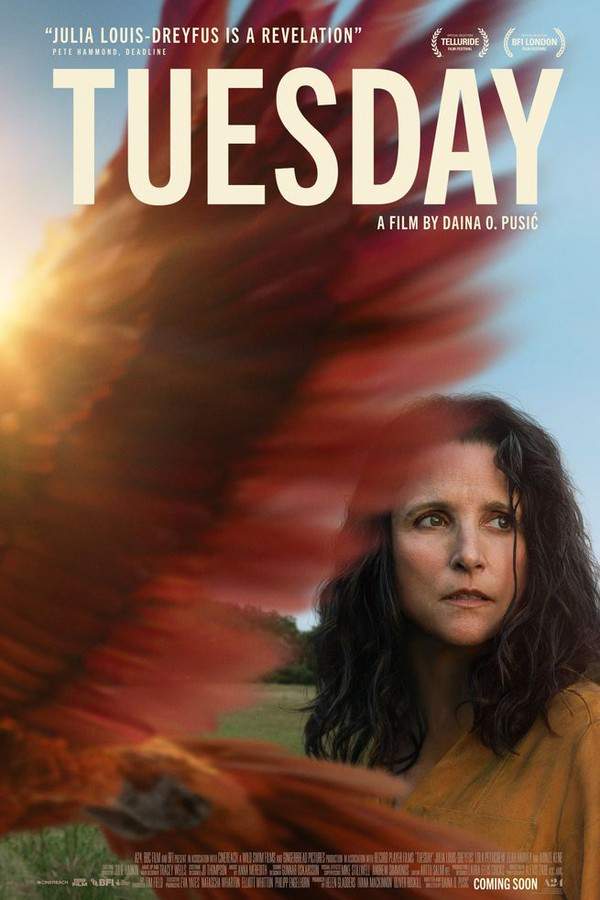
In a quiet, intimate, and almost fable-like drama, the story centers on Zora, Julia Louis-Dreyfus, and her 15-year-old daughter Tuesday, Lola Petticrew, who is bound to a wheelchair and battling an incurable terminal illness. The everyday rhythm of their lives is upended when Death, taking the form of a talking, size-shifting macaw, arrives with a stark message: deliverance from pain is at hand, but it will demand an ultimate sacrifice.
From the moment the bird appears, Tuesday recognizes the extraordinary creature for what it is, a personified force that can end suffering. She pleads with Death to wait until her mother returns home, a request that threads the emotional needle of their bond: love tethered to fear, and fear tethered to the knowledge that time is fragile. Zora’s first instinct is fear and instinctive control—she lunges to catch the macaw and, in a desperate turn, lures Death away to the garden. There, she wields a heavy book and, with a shuddering resolve, sets the bird alight. The moment is brutal and decisive, a turning point that reveals a mother’s fierce desire to shield her child from an unrelenting pain.
But Death has a stubborn persistence that cannot be extinguished so easily. When the macaw’s life is destroyed, Death somehow endures by taking shelter within Zora’s own body. This impossible reversal triggers a cascade of consequences: people and animals who would normally meet fatal ends begin to survive their injuries, wandering in a liminal, zombie-like state across the countryside. The world shifts into a kind of uneasy, post-traumatic limbo where the normal rules of life and death no longer apply, all because Death resides inside Zora, altering not only fate but her own sense of self.
Under the stress of Tuesday’s questions about Death’s whereabouts, Zora discovers that her body can shift in size, a surreal power that mirrors the upheaval roiling their lives. In this new dynamic, Tuesday pushes her mother to act as a stand-in for Death, granting relief to those—humans and animals alike—who continue to suffer. The daughter’s persistent bravery, alongside her mother’s awakening empathy, grows into a fragile and precious negotiation about mercy, timing, and the ethics of letting go. The film traces the emotional arc with a careful, almost clinical clarity, even as it embraces the fantastical cruelty and tenderness of its premise.
As the story progresses, Zora comes to understand the depth of her daughter’s pain. She ultimately regurgitates Death, and the two form a difficult, intimate pact about how to proceed. Tuesday passes away later that day, leaving Zora to confront an emptiness that is both personal and universal. The world feels dimmer, the air heavier, and the ordinary rhythms of life seem suddenly insufficient to hold the weight of their loss. Yet the film does not collapse into despair; it begins to ask what memory, duty, and love require of a person who has endured the impossible.
In the aftermath of Tuesday’s death, Death reappears for a visit, testing Zora’s resolve and inviting her to reckon with her own longing for release. She admits that living sometimes feels harder than dying, but Death offers a counterpoint: to keep living is to keep Tuesday’s memory alive. This exchange reframes Zora’s grief as a living obligation, a reason to rise again rather than surrender. The conclusion is hopeful, grounded in resilience and the extraordinary endurance of a mother’s love. As the film closes, Zora exhales deeply, gathers her resolve, and whispers to herself with quiet strength: Get up, woman.