


Plot Explained Spoilers guaranteed!
Plot Explained

Browse by genre

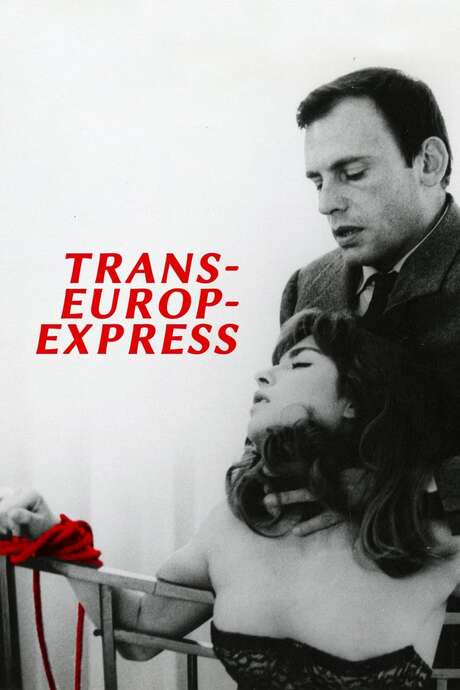
Trans-Europ-Express (1966) movie poster

Characters & Themes

Trans-Europ-Express (1966) Characters, Setting & Themes Explained

Release, runtime and language
1966 · 95 mins · French
Starring
Charles Millot, Daniel Emilfork, Marie-France Pisier, Jean-Louis Trintignant, Catherine Robbe-Grillet, Alain Robbe-Grillet

The film blurs genres, moving from erotic and serious to comic, tragic, mystery, game, paradox, neo‑sadism and detective tones. On the Trans‑Europ‑Express from Paris to Antwerp, a producer, a director and an assistant devise a movie about a drug smuggler on the train, and they begin shooting the script as they travel, merging reality with imagination.

On this page (8)
  1. 1 Where to watch
  2. 2 Characters explained (5)
  3. 3 Where & when it takes place
  4. 4 Themes & meaning (3)
  5. 5 Character & meaning questions
  6. 6 Movie threads
  7. 7 Movies like Trans-Europ-Express
  8. 8 Every angle

Where to watch

Where to Watch Trans-Europ-Express (1966)

Where can you watch Trans-Europ-Express? Stream, rent or buy it in the US, including on Kino Film Collection and Kanopy: current JustWatch availability with up-to-date prices.

Streaming availability powered by JustWatch

5 main characters · contains spoilers

Trans-Europ-Express Characters Explained: Who Is Who

The main characters of Trans-Europ-Express (1966), heroes and villains: what drives them, how they change over the course of the story and what each of them reveals about the film's bigger ideas.

  • Elias (Jean-Louis Trintignant)

    A calculating Frenchman who undertakes a cocaine run that is really a loyalty test. He maintains a cool exterior while engaging in power plays and increasingly dangerous fantasies, revealing a volatile need to control outcomes.

    • ❄️ Crime
    • 🎭 Manipulation
    • 🧭 Power
  • Eva (Marie-France Pisier)

    A prostitute tied into the transit network who becomes a pivotal link in the operation. She moves from being a target of Elias's fantasies to a betrayer of him to the police, driving the plot toward its violent twist.

    • 💃 Prostitution
    • 🕸️ Betrayal
    • 🎭 Power dynamics
  • Le policier (Daniel Emilfork)

    A police figure who follows the movement of Elias's crew, embodying the enforcement side of the criminal web and pressuring the narrative toward its resolution.

    • 👮 Investigation
    • 🕵️ Surveillance
  • L'inspecteur (Henri Lambert)

    An inspector who coordinates with others in the pursuit, representing bureaucratic oversight and the tension between formal investigation and illicit operations.

    • 🕵️ Bureaucracy
    • 🔎 Detection
  • Le jeune hôte (Gérard Palaprat)

    An intermediary who facilitates the journey, illustrating the casual, opportunistic figures who enable the crime network within the frame narrative.

    • 🚶 Intermediaries
    • 🗝️ Facilitation

Last updated: March 05, 2026 at 18:16

Was this helpful?

Setting

Where and When Does Trans-Europ-Express Take Place?

The setting of Trans-Europ-Express (1966): the year and time period, the places and locations, and how they shape the characters, the mood and the tension of the story.

Time period

Location

Paris, Antwerp, Trans-Europ-Express train

The action moves between Paris and Antwerp aboard the Trans-Europ-Express, with the train's corridors forming a constant backdrop for dealings. Paris provides the initial context and Eva's connections; Antwerp marks the key transit node where Elias meets the intermediaries. The train itself becomes a microcosm of Europe's modern crime network, a moving stage for power plays and deception.

  • 🚆 Train
  • 🌍 European setting
  • 🕵️ Crime in transit

Last updated: March 05, 2026 at 18:16

Was this helpful?

3 major themes

Trans-Europ-Express Meaning: Themes & Message Explained

What is Trans-Europ-Express (1966) really about? The emotional, social and philosophical themes the film keeps returning to, its symbolism and the message beneath the surface.

  • Betrayal

    Loyalty is tested as Elias is passed from one mysterious intermediary to another, and Eva betrays him to the police. The powdered sugar ruse reveals the fragility of trust in a world built on secret deals. The pursuit and punishment that follow underscore how quickly loyalties crumble under pressure.

  • Illusion

    The film-within-a-film structure blurs fantasy and reality, with Elias enacting sexual power fantasies that contrast with real-world consequences. The line between performers and actual outcomes dissolves as actions ripple outward. Identity and role-playing become tools for control in a high-stakes game.

  • Danger

    The operation spirals toward violence as Elias is hunted and shot by his contact, and police involvement heightens the sense of imminent peril. The ending newspaper report reinforces the idea that crime disrupts ordinary life and leaves traces in the public sphere. Tension is sustained through pursuit, confrontation, and sudden death.

Last updated: March 05, 2026 at 18:16

Was this helpful?

Character & theme questions

Trans-Europ-Express Characters & Meaning: Your Questions Answered

The questions people ask about Trans-Europ-Express (1966): who the characters really are, their relationships, what the symbols mean, where it takes place and what the movie is really about. Each answer contains spoilers.

Q1

Where does Trans-Europ-Express take place?

The film is set aboard the Trans-Europ-Express train traveling from Paris to Antwerp. Paris provides the initial context and introduces Eva's connections, while Antwerp serves as the key transit node where Elias meets his intermediaries. The train itself functions as a moving microcosm of Europe's modern crime network, with its corridors serving as the primary backdrop for the characters' dealings and power plays.

  • paris
  • antwerp
  • train
  • trans-europ-express
  • europe setting
Q2

What is the film-within-a-film structure about?

The movie features a producer, director, and assistant who devise a movie about a drug smuggler aboard the train as they travel. They begin shooting the script in real time, blurring the line between fantasy and reality. This structure allows Elias to enact sexual power fantasies that contrast with real-world consequences, as the line between performers and actual outcomes dissolves.

  • film within film
  • meta
  • fiction
  • reality
  • filmmaking
Q3

Who is Elias in Trans-Europ-Express?

Elias is a calculating Frenchman played by Jean-Louis Trintignant who undertakes what is actually a cocaine run designed as a loyalty test. He maintains a cool exterior while engaging in power plays and increasingly dangerous fantasies, revealing a volatile need to control outcomes. His character embodies the film's exploration of control and manipulation.

  • elias
  • jean-louis trintignant
  • protagonist
  • cocaine run
Q4

What role does Eva play in the story?

Eva is a prostitute connected to the transit network who becomes a pivotal link in the smuggling operation. She transitions from being a target of Elias's fantasies to betraying him to the police, driving the plot toward its violent conclusion. Her role highlights the themes of betrayal and the fragility of trust in a world built on secret deals.

  • eva
  • marie-france pisier
  • prostitute
  • betrayal
  • police
Q5

What does the betrayal theme represent in the film?

The theme of betrayal explores how loyalty is tested as Elias is passed between mysterious intermediaries. The powdered sugar ruse reveals the fragility of trust in a world built on secret deals. The pursuit and punishment that follow underscore how quickly loyalties crumble under pressure, ultimately leading to Elias being hunted and shot by his own contact.

  • betrayal
  • trust
  • loyalty
  • powdered sugar
  • intermediaries
Q6

How does the train setting represent crime in Europe?

The Trans-Europ-Express train functions as a microcosm of Europe's modern crime network. Its corridors serve as a moving stage for power plays and deception, with various intermediaries facilitating the operation between Paris and Antwerp. The train setting illustrates how crime operates in transit, with different characters enabling the network at each stop.

  • train
  • crime network
  • europe
  • transit
  • smuggling
Q7

How does the film explore illusion and identity?

The film-within-a-film structure blurs fantasy and reality, with identity and role-playing becoming tools for control in a high-stakes game. Characters constantly shift between being performers and actual participants, making it difficult for viewers to distinguish what is fiction within the film and what is 'real' within the story's frame narrative.

  • illusion
  • identity
  • role playing
  • fantasy
  • reality
  • control
Q8

What does the danger theme represent?

The danger theme manifests as the operation spirals toward violence, with Elias being hunted and shot by his contact. Police involvement heightens the sense of imminent peril, and the ending newspaper report reinforces how crime disrupts ordinary life and leaves traces in the public sphere. Tension is sustained through pursuit, confrontation, and sudden death.

  • danger
  • pursuit
  • violence
  • police
  • murder
  • crime
Q9

Why is Trans-Europ-Express considered complex?

The complexity stems from the central conceit of a film within a film, which deliberately merges the act of creation with the fictional narrative. Viewers must constantly question what is 'real' within the story, as the frame story suggesting a cyclical, unresolved nature to the fiction adds layers of interpretation. The detached, metafictional framing introduces analytical distance while exploring disturbing themes.

  • complexity
  • meta
  • fiction
  • narrative
  • interpretation
  • cyclical
Q10

What is the tone and ending like?

The film has a dark tone centered on murder, betrayal, and sadomasochistic fantasies. The ending is bleak as the protagonist is killed after committing a murder. While the subject matter is heavy, the detached metafictional framing prevents it from feeling relentlessly intense, creating a steady pacing that moves deliberately from one encounter to the next.

  • ending
  • bleak
  • dark tone
  • murder
  • conclusion
  • death

Movie threads

More Movies Like Trans-Europ-Express, by Mood & Story

Curated lists built around what makes Trans-Europ-Express tick: the same mood, the same kind of story or the same emotional payoff. Each list explains why these movies belong together.

Movies that blur reality and fiction like Trans-Europ-Express

Stories where the line between the creator, the story, and reality dissolves. If you liked the mind-bending narrative layers of Trans-Europ-Express, you'll find similar metafictional thrills here. This collection features films about filmmaking, stories within stories, and realities that collapse into one another, creating complex and thought-provoking cinematic experiences.

  • metafictional
  • cerebral
  • surreal
  • tense
  • clinical
  • mysterious
  • Tone: dark, intellectual, clinical
  • Pacing: steady, deliberate
Why these movies?

The story pattern: The narrative typically involves characters creating a fictional story that begins to influence or merge with their own reality. This creates a spiral where the fictional plot's stakes become real, often leading to dark or bleak conclusions about the nature of creation and obsession.

Why they belong together: These movies are grouped together because they share a fascination with deconstructing narrative form. They prioritize conceptual complexity, a detached analytical tone, and a constant state of questioning what is 'real' within the film's world.
Dark erotic crime journeys like in Trans-Europ-Express

Tense voyages where lust and crime lead characters towards a bleak fate. For viewers who appreciated the darkly erotic and tense atmosphere of Trans-Europ-Express, this thread collects movies about obsessive journeys into the underworld of crime and desire. These stories feature a steady build of suspense and often conclude with a bleak emotional impact.

  • erotic
  • tense
  • dangerous
  • mysterious
  • bleak
  • surreal
  • Tone: dark, tense, erotic
  • Pacing: steady, building
Why these movies?

The story pattern: A character, often an outsider or a pawn in a larger game, embarks on a journey that is both physical and descent into a darker self. Erotic encounters and criminal assignments escalate, revealing a world of betrayal and sadomasochistic power dynamics that ultimately consume the protagonist.

Why they belong together: The connection lies in a shared mood of surreal danger and a focus on the destructive combination of eroticism and crime. The pacing is deliberate, the tone is dark and clinical, and the emotional weight is heavy, leading to an inevitable sense of doom.

If you liked this

Movies Like Trans-Europ-Express

Similar movies to Trans-Europ-Express: the same genre, themes or kind of story. Each one comes with its own plot summary, timeline and ending explained.

Browse all movie summaries

Every angle

Trans-Europ-Express (1966) Explained: Plot, Timeline & Characters

Everything about Trans-Europ-Express in one place: what happens in the plot summary, the timeline in chronological order, the characters and meaning and a spoiler-free summary. What's After the Movie adds the cast, box office and post-credit scenes.

Coming soon on iOS and Android

The Plot Explained Movie Summary App

Plot summaries, endings explained and timelines on your phone. Catch up on any movie in minutes, save your favorites and never miss a twist again.

Be the first to know when we launch. Your email stays private, always.

Learn more about the app