





Plot Explained Spoilers guaranteed!
Plot Explained

Browse by genre

Too Big to Fail (2011) movie poster

Timeline

Too Big to Fail (2011) Timeline Explained – Every Event in Order

Release, runtime and language
2011 · 97 mins · English
JustWatch #16,045 16
Directed by
Curtis Hanson
Starring
Paul Giamatti, Topher Grace, William Hurt, Billy Crudup, Tony Shalhoub, John Heard

Through interviews and archival footage, the documentary follows how Main Street suffered while Wall Street profited, offering an intimate examination of the 2008 financial crisis. It concentrates on the powerful men and women whose swift decisions over a few weeks shaped the global economy and affected the lives of ordinary people.

On this page (5)
  1. 1 Where to watch
  2. 2 Events in order (12)
  3. 3 Timeline questions answered
  4. 4 Movie threads
  5. 5 Every angle

Where to watch

Where to Watch Too Big to Fail (2011)

Where can you watch Too Big to Fail? Stream, rent or buy it in the US, including on HBO Max, Amazon Video and Apple TV Store: current JustWatch availability with up-to-date prices.

Streaming availability powered by JustWatch

12 events in order · contains spoilers

Too Big to Fail Timeline: Events in Chronological Order

Every key event of Too Big to Fail (2011) in order, scene by scene, with when and where it takes place. Use it to untangle flashbacks, time jumps and parallel storylines, to refresh your memory before the sequel or to find the exact scene you are thinking of.

  1. Bear Stearns crisis marks start of crisis

    In 2008, news channels flood with reports about the mortgage crisis and Bear Stearns' forced sale to JPMorgan Chase. With Bear Stearns out of the picture, markets begin to fear the fate of other investment banks. Short sellers zero in on Lehman Brothers as the next vulnerable firm.

    When
    2008
    Where
    Global financial markets
  2. Lehman seeks a deal with Korean investors

    Lehman Brothers sees a potential buyer in Korea, but the deal hinges on excluding Lehman's toxic real estate assets. The auction stalls when CEO Dick Fuld insists the Koreans accept the real estate baggage. The lack of a clean asset package kills the deal.

    When
    Late 2008
    Where
    New York
  3. Bank of America hesitant without government backing

    Bank of America appears as the strongest US-based bidder, but buyers are wary without federal backing. Investors and banks want explicit government guarantees before underwriting a rescue. Paulson signals the government won't subsidize acquisitions.

    When
    2008
    Where
    Washington, D.C.
  4. Weekend bank meeting to back Lehman

    Paulson and Geithner convene the leaders of the largest US banks for a weekend session, urging them to back Lehman. The session looks like it could produce an agreement, but the outcome is uncertain. The sheer pressure reflects how close the system is to collapsing.

    When
    Weekend of September 2008
    Where
    Washington, D.C.
  5. Barclays deal blocked by regulators

    Paulson tries to broker a deal with Barclays as a backstop, but British banking regulators block their involvement. With no approval from abroad and no domestic buyers, Lehman loses its last option.

    When
    2008
    Where
    London
  6. Lehman Brothers declares bankruptcy

    With no buyers remaining, Lehman is forced into bankruptcy. The filing sends tremors through global markets and signals the depth of the crisis. The firm’s collapse triggers a broader financial panic.

    When
    September 2008
    Where
    New York
  7. Markets plunge; Lehman’s fall rattles confidence

    Paulson attempts to reassure the media that the decision to let Lehman fail was sound. Nonetheless, stock markets plunge as investors fear further disintegration of the financial system. The Lehman failure reverberates across every corner of the economy.

    When
    September 2008
    Where
    Global
  8. AIG bailout begins as crisis widens

    As Lehman falls, insurance giant AIG teeters and begins to fail. Christine Lagarde warns Paulson against letting AIG fail, underscoring the crisis's reach into Europe. The US Treasury steps in with an $85 billion loan to rescue AIG.

    When
    2008
    Where
    New York
  9. Bernanke and Paulson push for congressional rescue

    Ben Bernanke argues that Congress must authorize continued Fed and Treasury intervention. With credit drying up, the plan shifts toward buying toxic assets to free up cash for banks. The urgency grows as the financial system threatens to seize up.

    When
    2008-2009
    Where
    Washington, D.C.
  10. McCain suspends campaign to shape bailout

    Bernanke and Paulson lobby Congress while politics stall on the campaign trail. Senator McCain temporarily suspends his campaign to work on the bailout, prompting threats from Paulson to keep him from interfering. The political drama underscores the bailout's fragile path forward.

    When
    2008
    Where
    Washington, D.C.
  11. TARP legislation passes with capital injections

    After political turmoil, the Troubled Asset Relief Program is created on a second attempt. The plan shifts to mandatory capital injections to banks, with the FDIC chair Sheila Bair involved. Banks agree to the loans, though the legislation stops short of forcing them to use funds to restore consumer credit.

    When
    2008-2009
    Where
    Washington, D.C.
  12. Crisis subsides; signs of a new balance emerge

    The stock market stabilizes by 2009, signaling the end of the crisis phase. The epilogue notes banks made limited use of the loan money to ease credit conditions, while Wall Street compensation climbs to $135 billion by 2010. The economy begins a slow recovery, but the damages linger.

    When
    2009-2010
    Where
    Global

Last updated: October 09, 2025 at 15:34

Was this helpful?

Timeline questions answered

Too Big to Fail Timeline Explained: Your Questions Answered

When does it happen, and why in that order? The questions people ask about the chronology of Too Big to Fail (2011): time jumps, flashbacks, cause and effect between scenes and the correct order of events, each answered with spoilers.

Q1

Why was Bear Stearns forced to sell to JPMorgan Chase?

Bear Stearns collapsed due to its heavy exposure to subprime mortgages and the rapid devaluation of mortgage-backed securities. The company faced a liquidity crunch and lost the confidence of counterparties, forcing the Federal Reserve and Treasury to orchestrate a fire sale to JPMorgan Chase with government guarantees covering bad assets.

Foreshadowing: Earlier in 2008, the subprime mortgage crisis had already begun destabilizing financial institutions, making Bear Stearns vulnerable.

  • bear stearns
  • jpmorgan chase
  • forced sale
  • subprime mortgages
  • liquidity crisis
Q2

What led to Lehman Brothers filing for bankruptcy?

Lehman Brothers filed for bankruptcy after CEO Dick Fuld refused to separate toxic real estate assets from any sale, which scared off potential buyers including a Korean investment group and Bank of America. Without a buyer and facing mounting losses, Lehman was forced into bankruptcy in September 2008.

Foreshadowing: Earlier failed negotiations with Korean investors and Bank of America hinted at Lehman's precarious position.

  • lehman brothers
  • bankruptcy
  • dick fuld
  • real estate assets
  • 2008
Q3

Why didn't the government bail out Lehman Brothers?

Treasury Secretary Henry Paulson refused to bail out Lehman because he believed it would create 'moral hazard,' encouraging reckless behavior by making investors expect government rescues. Additionally, political and legal obstacles prevented federal backing of a private acquisition, and Paulson wanted to demonstrate that not every failing institution would be saved.

Foreshadowing: Earlier decisions to let Bear Stearns fail (with government support to buyers) established a precedent that constrained Paul's options.

  • lehman bailout
  • henry paulson
  • moral hazard
  • treasury
  • government guarantees
  • 2008
Q4

Why was AIG bailed out when Lehman was allowed to fail?

AIG's failure posed an immediate threat to the global financial system through its credit default swap obligations. Unlike Lehman, AIG's collapse would have triggered cascading defaults across banks and insurance companies worldwide. French Finance Minister Christine Lagarde warned that letting AIG fail would extend the crisis to Europe, prompting the $85 billion government loan.

Foreshadowing: Earlier in the crisis, the interconnected nature of financial institutions had become apparent with Bear Stearns' collapse.

  • aig bailout
  • $85 billion loan
  • credit default swaps
  • christine lagarde
  • systemic risk
Q5

What was TARP and why was it created?

TARP (Troubled Asset Relief Program) was a legislative package authorizing the Treasury to purchase troubled mortgage-backed securities and provide capital injections to banks. Created after Lehman's collapse triggered market panic, TARP aimed to remove toxic assets from bank balance sheets and restore confidence in the financial system.

Foreshadowing: Lehman's bankruptcy filing demonstrated the urgent need for a comprehensive government intervention mechanism.

  • tarp
  • troubled asset relief program
  • capital injections
  • toxic assets
  • congressional authorization
Q6

Why did Senator McCain suspend his presidential campaign during the crisis?

McCain suspended his campaign to return to Washington and participate in congressional negotiations over the $700 billion bailout legislation. His involvement added political complexity, as the bailout faced resistance from both parties and threatened to derail his presidential campaign.

Foreshadowing: Earlier scenes established the bailout as a deeply partisan issue with uncertain prospects in Congress.

  • john mccain
  • campaign suspension
  • bailout legislation
  • congress
  • 2008 election
Q7

Why was the Barclays deal to rescue Lehman blocked?

British banking regulators blocked Barclays' proposed acquisition of Lehman's assets, refusing to approve the deal without government guarantees from the U.S. government. This decision eliminated Lehman's final potential buyer and forced the bankruptcy filing.

Foreshadowing: Earlier attempts to find a buyer had demonstrated how interconnected the global financial system had become.

  • barclays
  • lehman brothers
  • uk regulators
  • british banking regulators
  • deal blocked
Q8

Why did Bank of America withdraw from buying Lehman Brothers?

Bank of America withdrew because the government refused to provide the explicit guarantees and backstop they needed to proceed. Without federal support and facing increasing uncertainty about Lehman's financial condition, Bank of America pivoted to acquiring Merrill Lynch instead.

Foreshadowing: Earlier negotiations had shown Bank of America's conditional interest in Lehman's assets.

  • bank of america
  • lehman brothers
  • withdrawal
  • merrill lynch acquisition
  • government guarantees
Q9

What was the global impact of Lehman's collapse?

Lehman's bankruptcy triggered worldwide financial panic. Stock markets plunged, credit markets froze, and investor confidence evaporated. The collapse exposed the deep interconnectedness of global financial institutions, leading to a credit crunch that affected businesses and consumers worldwide.

Foreshadowing: Christine Lagarde's earlier warning about European exposure had highlighted the crisis's international dimension.

  • lehman bankruptcy
  • global financial panic
  • stock market crash
  • credit freeze
  • worldwide impact
Q10

What happened to the TARP bailout money after the crisis?

While TARP stabilized some markets, banks used only a fraction of the funds to restore consumer credit. Much of the money was repaid or remained on bank balance sheets. Meanwhile, Wall Street executive compensation climbed to $135 billion by 2010, raising questions about whether the bailout truly benefited Main Street.

Foreshadowing: Earlier debates about moral hazard had raised concerns about rewarding the institutions that caused the crisis.

  • tarp funds
  • bank compensation
  • consumer credit
  • aftermath
  • 2009
  • 2010
  • moral hazard
Q11

What role did the Federal Reserve play in the 2008 crisis response?

Under Ben Bernanke's leadership, the Fed provided emergency liquidity, lowered interest rates to near-zero, and coordinated with the Treasury on rescue efforts. Bernanke actively lobbied Congress to authorize continued intervention, arguing that without decisive action, the crisis could spiral into complete economic collapse.

Foreshadowing: Earlier scenes showed Bernanke preparing for extraordinary measures as the financial system teetered.

  • federal reserve
  • ben bernanke
  • emergency liquidity
  • interest rates
  • monetary policy
  • 2008
Q12

Why did Bank of America choose Merrill Lynch over Lehman?

Bank of America preferred Merrill Lynch because it could structure the deal without requiring government guarantees. Merrill's assets were more attractive and presented less risk than Lehman's toxic real estate holdings, making it a more viable option than the troubled Lehman.

Foreshadowing: Earlier negotiation dynamics had shown Bank of America's preference for cleaner asset deals.

  • merrill lynch
  • bank of america
  • acquisition
  • lehman comparison
  • 2008

Movie threads

More Movies Like Too Big to Fail, by Mood & Story

Curated lists built around what makes Too Big to Fail tick: the same mood, the same kind of story or the same emotional payoff. Each list explains why these movies belong together.

Crisis management movies like Too Big to Fail

Stories of powerful figures racing against time to avert systemic collapse. If you liked the high-stakes tension of Too Big to Fail, explore other movies like it that delve into real-world crises. These similar films focus on procedural drama, rapid-fire decision-making, and the heavy burden of leadership during events that threaten to collapse entire systems.

  • tense
  • urgent
  • high-stakes
  • sober
  • gripping
  • anxious
  • Tone: tense, sober, urgent
  • Pacing: fast, relentless
Why these movies?

The story pattern: These narratives often unfold in real-time or over a condensed, urgent period. They follow a large ensemble of characters, usually based on real people, as they navigate a cascade of escalating problems. The conflict is less about physical danger and more about intellectual, political, and ethical challenges, where a single misstep can have catastrophic global consequences.

Why they belong together: Movies are grouped here for their shared focus on tense, fast-paced procedural storytelling during a major crisis. They deliver a sober, gripping, and anxious viewing experience defined by high-stakes negotiations, complex systemic problems, and the heavy weight of responsibility.
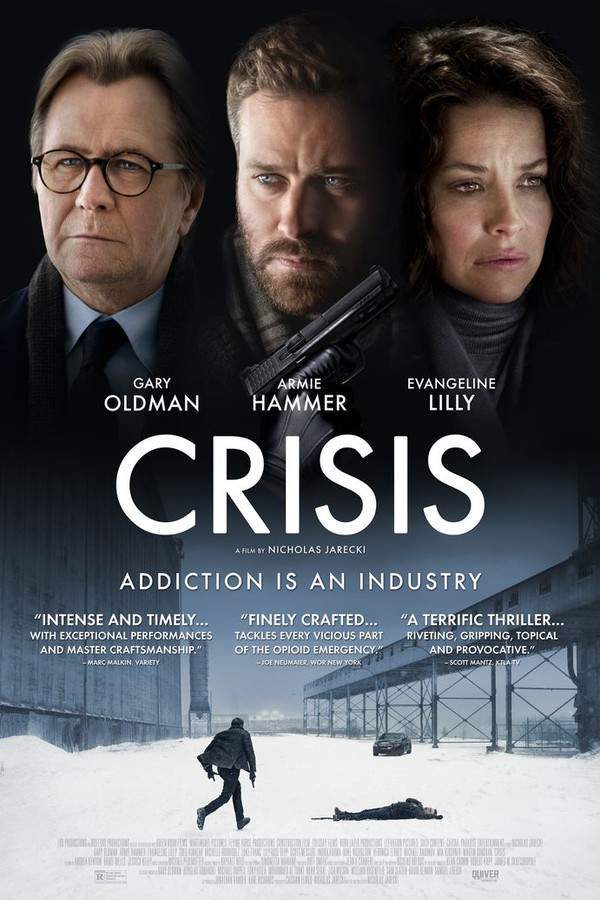
Systemic analysis dramas like Too Big to Fail

Unflinching examinations of flawed systems that leave you with uneasy questions. Fans of Too Big to Fail who appreciate its deep dive into a complex system will enjoy these similar movies. These films offer a sobering look at how large-scale systems operate, fail, and are patched up, often ending on a bittersweet note that questions the true cost of stability.

  • sober
  • contemplative
  • gripping
  • heavy
  • thought-provoking
  • uneasy
  • Tone: sober, contemplative, bittersweet
  • Pacing: steady, detailed
Why these movies?

The story pattern: The narrative pattern involves peeling back the layers of a complex institution to reveal the interconnected causes of a major failure. The journey is one of discovery and grim realization, where solving the immediate crisis often comes at the cost of addressing the root causes, leading to an ending that mixes relief with cynicism or unease.

Why they belong together: These films are connected by their analytical approach to storytelling, heavy emotional weight, and a shared tone of sober contemplation. They prioritize understanding a complex problem over simple heroics, resulting in a similar bittersweet and thought-provoking feeling long after the credits roll.

Every angle

Too Big to Fail (2011) Explained: Plot, Timeline & Characters

Everything about Too Big to Fail in one place: what happens in the plot summary, the timeline in chronological order, the characters and meaning and a spoiler-free summary. What's After the Movie adds the cast, box office and post-credit scenes.

Coming soon on iOS and Android

The Plot Explained Movie Summary App

Plot summaries, endings explained and timelines on your phone. Catch up on any movie in minutes, save your favorites and never miss a twist again.

Be the first to know when we launch. Your email stays private, always.

Learn more about the app