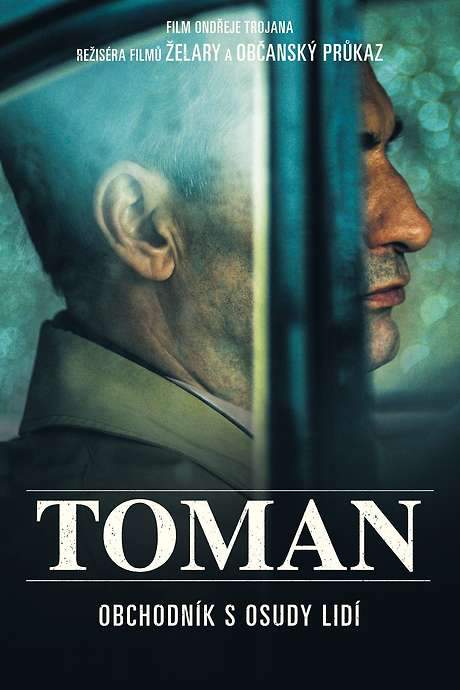
The film traces the rise and fall of Zdeněk Toman Jiří Macháček, the head of Czechoslovak Intelligence from 1945 to 1948, a figure whose career twists through political intrigue, war-time decisions, and a dramatic coup d'état. It opens in April 1948 with an interrogation by Inspector Putna, a tense moment that signals the fragility of Toman’s grip on power, before shifting back to March 1945 when he served as a repatriation officer in Carpathian Ruthenia. In this frontier region, he finds himself at odds with NKVD officers who insist that no one should be repatriated as the area edges toward becoming part of the Soviet Union. To survive the clash, Toman begins to use bribes and leverage to navigate the competing pressures around him, testing the boundaries between loyalty, money, and influence.
Toman’s path crosses with Imrich Rosenberg, a moment that marks a turning point in his ambitions. When Rosenberg asks him to facilitate the repatriation of Jews from Carpathian Ruthenia, Toman agrees, motivated by the promise of money and a chance to expand his own power. This decision foreshadows his later willingness to use his position for personal advancement, even as he also shows a capacity to assist vulnerable groups. The plot thickens as he organizes a meeting of the exiled Czechoslovak government in Košice, a move that expands his network and visibility. At this juncture, Toman encounters Václav Nosek [Jaromír Dulava], who agrees to help him climb the ranks of the intelligence service. Nosek’s backing becomes a crucial aid, and with it Toman moves from peripheral influence to a central role within the intelligence circle that is then led by a non-communist General Josef Bartík [Jiří Dvořák].
As Toman’s star rises, he forges a close connection with Rudolf Slánský [Stanislav Majer], a prominent Communist who tasks him with securing finances for the Communist Party of Czechoslovakia. To fulfill this mandate, Toman taps into contacts in Great Britain, gathering resources that fuel his ascent and, more broadly, the party’s ambitions. When the opportunity arises, he replaces Bartík as the Head of Intelligence, consolidating power and shaping policy behind the scenes. His influence extends beyond statecraft: he leverages his position to aid Jewish refugees and to contribute to the early momentum behind Israel’s establishment, a move that earns both praise and suspicion from various political quarters.
Toman’s growing influence helps the Communist side win the 1946 elections, but it also pits him against the Soviet clique embodied by Bedřich Reicin [Marek Taclík], whose ties to Moscow threaten Toman’s autonomy. The tension escalates as Toman’s support for Israel collides with Soviet interests, placing him in open conflict with his former allies. This clash culminates in his removal from office during the 1948 coup d'état, a turning point that leads to his arrest and the sensational suicide of his wife, Pesla Tomanová [Kateřina Winterová]. The narrative follows Toman’s desperate flight to Bavaria, where he ultimately surrenders to American soldiers with the help of Jewish representatives he had previously assisted, completing a arc defined by ambition, loyalty, and a dramatic pursuit of power that altered Czechoslovakia’s postwar landscape.
Throughout the story, the film balances personal calculation with political consequence, painting a portrait of a man who navigates bribery, diplomacy, and ideological shifts in a time of upheaval. The cast’s carefully drawn performances anchor a history that reads like a cautionary chronicle of how power can bend under pressure, yet how the past continues to echo in the decisions of those who hold influence.