Plot Explained Spoilers guaranteed!
Plot Explained

Browse by genre

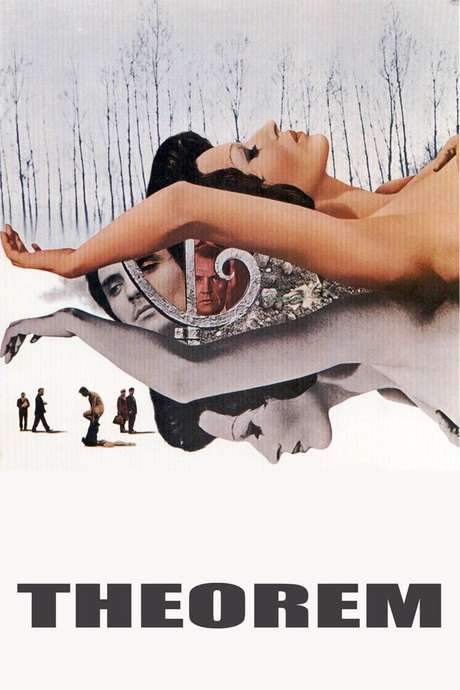
Theorem (1968) movie poster

Timeline

Theorem (1968) Timeline Explained – Every Event in Order

Release, runtime and language
1968 · 95 mins · Italian
Loading streaming availability…
Directed by
Pier Paolo Pasolini
Starring
Terence Stamp, Massimo Girotti, Anne Wiazemsky, Giovanni Ivan Scratuglia, Ninetto Davoli, Laura Betti

Only 923 spoken words carry a haunting drama. A prosperous Italian family is disrupted by the arrival of a charismatic stranger who inexplicably seduces each member—father, mother, son, daughter—before vanishing. The encounters trigger profound awakenings, yet the family cannot discern his identity or purpose.

On this page (6)
  1. 1 Where to watch
  2. 2 Events in order (15)
  3. 3 Timeline questions answered
  4. 4 Movie threads
  5. 5 Movies like Theorem
  6. 6 Every angle
Loading streaming availability…

15 events in order · contains spoilers

Theorem Timeline: Events in Chronological Order

Every key event of Theorem (1968) in order, scene by scene, with when and where it takes place. Use it to untangle flashbacks, time jumps and parallel storylines, to refresh your memory before the sequel or to find the exact scene you are thinking of.

  1. The Visitor arrives at the Milanese estate

    A mysterious figure known as The Visitor appears at the gates of a bourgeois Milanese estate, heralded by an arm-flapping postman. The family watches in mix of curiosity and unease as this enigmatic stranger steps into their orderly life. He offers himself without demanding anything in return, unsettling the household with his presence.

    When
    Evening
    Where
    Milanese estate, Milan
  2. The Visitor's first intimate tie with the maid

    The Visitor begins an intimate relationship with the maid, drawing her into a forbidden closeness that unsettles her devout conscience. He stops her from attempting suicide with a gas hose and instead offers comfort and relief. The episode marks the first of several disruptive liaisons that unsettle the family’s moral surface.

    When
    Evening
    Where
    Maid's quarters, estate
  3. The Stranger bonds with the frightened son

    He befriends and sleeps with the frightened son, easing his doubts and giving him confidence. The boy’s mind opens to new possibilities as the stranger becomes a mentor and lover. This bond deepens despite the family’s disquiet.

    When
    Night
    Where
    Son's room
  4. The Stranger seduces the mother

    The Visitor seduces the mother, awakening desires she has long suppressed. Their affair provides her with sexual fulfilment and a sense of liberation from religious and social constraints. The family’s balance begins to tilt as her world expands beyond its former confines.

    When
    Night
    Where
    Mother's chamber
  5. The Visitor comforts the father

    He cares for and comforts the despondent father, offering a tenderness that replaces his loneliness. Their relationship becomes emotionally intimate as the father’s faith in bourgeois security erodes. The visitor’s influence stretches across the entire household.

    When
    During stay
    Where
    Father's room
  6. The Stranger draws close to the daughter

    He becomes emotionally intimate with the daughter, gradually removing her childish innocence about men. Her perceptions widen as she experiences a dangerous awakening and attachment. The family’s careful self-containment begins to crack under his pressure.

    When
    During stay
    Where
    Daughter's space
  7. Herald announces the Stranger's imminent departure

    A herald returns to announce that the stranger will depart as suddenly as he arrived. His impending exit unsettles each member, foreshadowing a void that will force them to confront hidden truths. The estate itself seems to tremble at the thought of losing him.

    When
    Approaching departure
    Where
    Estate gates
  8. The void left behind: family confronts hidden truths

    In the absence of the visitor, the family confronts what has been kept hidden by their bourgeois trappings. Old resentments, desires, and fears surface, revealing the fragile surface of their orderly lives. Each member must decide what kind of person they will become without the stranger’s gravitational pull.

    When
    After departure
    Where
    Estate and surrounding spaces
  9. The maid returns to her village and performs miracles

    The maid returns to the rural village where she was born and is seen performing miracles. Word of these feats spreads, challenging the boundaries of ordinary life. Her actions mark a mysterious turn in her fate after leaving the estate.

    When
    After departure
    Where
    Rural village
  10. The maid immolates herself

    She sacrifices herself by burying her body in dirt, tears of regeneration streaming down her face in ecstatic surrender. Her act becomes a transformative rite that defies conventional sense and signals an end to her earthly ties. The village mourns yet is left with an uncanny sense of renewal.

    When
    After departure
    Where
    Rural burial site
  11. The daughter sinks into a catatonic state

    The daughter’s psyche collapses into catatonia and she is institutionalized. The absence of the Stranger deepens her withdrawal, and the family watches as her world narrows to isolation and routine. Her confinement mirrors the family's own disintegration.

    When
    After departure
    Where
    Institution
  12. The son becomes an artist, drawn to the Stranger

    The son leaves the family home to pursue art, obsessively drawing the Stranger’s face. His fixation becomes a lifelong project, a way to keep the memory of the visitor alive. The act suggests a search for identity outside the bourgeois world they inhabited.

    When
    After departure
    Where
    City art space
  13. The mother seeks new sexual encounters

    The mother continues to redefine her life by seeking sexual encounters with young men. Her behavior signals a further erosion of the conventional family order. The household’s equilibrium collapses under the weight of her desires.

    When
    After departure
    Where
    Various locations
  14. The father relinquishes wealth and identity

    He strips himself of all material possessions, handing the factory over to its workers. He removes his clothes at a railway station, choosing naked exposure as a radical break with his former life. The act embodies a dramatic rejection of bourgeois security.

    When
    Final
    Where
    Railway station
  15. The father’s final act: naked escape across Mount Etna

    He wanders naked across the slopes of Mount Etna, screaming in primal rage and despair. The journey marks the ultimate eruption of the father’s inner turmoil as the family’s world crumbles around him. The film closes on a note of unresolved anguish and profound transformation.

    When
    Finale
    Where
    Mount Etna

Last updated: October 09, 2025 at 11:21

Was this helpful?

Timeline questions answered

Theorem Timeline Explained: Your Questions Answered

When does it happen, and why in that order? The questions people ask about the chronology of Theorem (1968): time jumps, flashbacks, cause and effect between scenes and the correct order of events, each answered with spoilers.

Q1

Why does the mysterious visitor come to the family?

The Visitor arrives uninvited at the Milanese estate without explanation, offering himself to each family member without demanding anything in return. He appears to be a catalyst for personal transformation rather than someone with a conventional motivation, his purpose seems to be exposing hidden desires and truths that each character has suppressed within their bourgeois lifestyle.

Foreshadowing: The postman's unsettling knowledge of the visitor's arrival hints that this is not a random event but something preordained or mythical.

  • visitor
  • arrival
  • motivation
  • catalyst
  • transformation
Q2

What happens to Odetta after the Visitor leaves?

After the Visitor departs, Odetta sinks into a catatonic state and is institutionalized. Her psychological collapse represents a dangerous awakening, unlike other family members who found release, Odetta's exposure to intimacy and desire proved overwhelming, leaving her unable to function in the world.

Foreshadowing: The timeline notes her 'perilous kind of awakening' during the Visitor's stay, foreshadowing her breakdown.

  • odetta
  • catatonia
  • institution
  • breakdown
  • psychological collapse
Q3

Why does Paolo strip naked and run to Mount Etna?

After giving his factory to the workers, Paolo removes his clothes at a railway station and wanders naked across Mount Etna, screaming in primal rage and despair. This radical act represents his complete rejection of bourgeois identity and material security, his nakedness symbolizes the stripping away of social facades, while his screaming expresses the overwhelming emotional release and anguish from his transformation.

Foreshadowing: The Visitor's comfort and intimacy with Paolo directly eroded his faith in 'bourgeois security,' setting up this final rupture.

  • paolo
  • naked
  • mont etna
  • rejection
  • freedom
  • despair
Q4

What happens to Emilia after she returns to her village?

Emilia returns to her rural village after leaving the estate and is seen performing miracles. She then sacrifices herself by burying her body in dirt while tears of regeneration stream down her face, an ecstatic surrender that defies conventional understanding. Her transformation from a suicidal maid to a miracle-worker suggests a spiritual rebirth enabled by the Visitor's intervention.

Foreshadowing: The Visitor initially saved her from suicide with a gas hose, suggesting a spiritual arc that culminates in her voluntary sacrifice.

  • emilia
  • miracles
  • village
  • sacrifice
  • regeneration
Q5

Why does each family member react differently to the Visitor's departure?

Each family member reacts differently because the Visitor touched something unique in each of them, their deepest suppressed desires and fears. The mother found sexual liberation, the son discovered artistic purpose, the daughter experienced psychological destruction, the father felt compelled to reject his entire identity, and the maid found spiritual transcendence. Their varied reactions reflect the different prisons their bourgeois lives had created.

Foreshadowing: The Visitor's intimate encounters were 'singular' in effect but unique in how each character responded, setting up divergent fates.

  • family reactions
  • differences
  • transformation
  • aftermath
Q6

What does Pietro do after the Visitor leaves?

Pietro leaves the family home to pursue art, obsessively drawing the Visitor's face as if it could be a key to understanding what he felt but could not name. His fixation becomes a lifelong project, representing his search for identity and meaning outside the bourgeois world he once inhabited.

Foreshadowing: The Visitor befriended the frightened son, easing his doubts and giving him confidence, sparking his creative awakening.

  • pietro
  • art
  • drawing
  • visitor face
  • creative awakening
Q7

Why does Lucia seek new sexual encounters after the Visitor leaves?

Lucia, the sexually repressed mother, continues seeking sexual encounters with younger men after the Visitor's departure. Her behavior represents a continuation of the sexual liberation the Visitor triggered, she attempts to recapture the thrill and meaning the Visitor briefly stirred, but her pursuit suggests incomplete fulfillment.

Foreshadowing: The Visitor 'awakened desires she has long suppressed' during their affair, establishing her new direction.

  • lucia
  • sexual encounters
  • liberation
  • pursuit of pleasure
Q8

Is the Visitor meant to be a real person or a symbolic figure?

The Visitor remains unnamed throughout the film and functions as a mythic, almost allegorical figure. He acts as a catalyst whose presence reveals hidden truths and triggers transformations. The narrative invites interpretation of him as a symbolic presence, whether divine, demonic, or psychological, rather than a literal character with a defined identity.

Foreshadowing: The Visitor appears without explanation and departs abruptly, behaving more like a narrative device than a realistic character.

  • visitor
  • symbol
  • allegory
  • meaning
  • interpretation
  • mythic
Q9

What lasting effect does the Visitor have on the family?

The Visitor's presence cracks the family's carefully maintained bourgeois facade, revealing hidden yearnings and unspoken fears beneath their prosperous life. After his departure, none of them can return to their previous existence, each member must navigate profound personal consequences that range from tragic institutionalization to ecstatic liberation, demonstrating both the tenderness and danger of intimate connection.

Foreshadowing: The visitor's influence is described as 'singular' and 'at once generous and invasive,' setting up lasting transformation.

  • visitor effect
  • family
  • aftermath
  • transformation
  • consequences
Q10

Why does Paolo give his factory to the workers?

Paolo hands his factory over to the workers as the first step in his radical rejection of material possessions and bourgeois identity. The act represents the collapse of his former self, the Visitor's comfort and intimacy eroded his faith in the security his wealth provided, making him unable to continue living within the framework of capitalist identity he once inhabited.

Foreshadowing: The Visitor provided 'tenderness that replaces his loneliness,' destabilizing his foundation.

  • paolo
  • factory
  • workers
  • rejection
  • wealth
  • transformation

Movie threads

More Movies Like Theorem, by Mood & Story

Curated lists built around what makes Theorem tick: the same mood, the same kind of story or the same emotional payoff. Each list explains why these movies belong together.

Movies with a Mysterious Catalyst like in Theorem

Stories where an enigmatic outsider disrupts a stagnant world, triggering profound change. If you liked the unsettling impact of the visitor in Theorem, explore more movies where an enigmatic stranger acts as a disruptive force. These films focus on the psychological fallout and profound awakenings triggered by a catalyst figure, often featuring complex characters and ambiguous motivations.

  • mysterious
  • unsettling
  • psychologically intense
  • cathartic
  • transformative
  • ambiguous
  • Tone: tense, mysterious, unsettling
  • Pacing: slow, observational
Why these movies?

The story pattern: Narratives in this thread typically begin with the arrival of an outsider into a closed, often complacent system. The plot revolves not around solving the stranger's mystery, but around observing the chain reaction they set off. Characters are forced to shed their façades, leading to journeys of self-discovery, liberation, or destruction, while the stranger's true nature often remains an open question.

Why they belong together: These movies are grouped by their shared narrative engine: a catalyst figure who instigates deep psychological and existential change. They share a focus on character transformation over plot resolution, a tense and mysterious atmosphere, and themes of alienation, desire, and the fragility of social structures.

Slow-Burn Psychological Dramas like Theorem

Unhurried, atmospheric films where tension builds towards a psychological collapse. For viewers who appreciated the slow, deliberate pacing and intense psychological tension of Theorem, this section collects movies with a similar feel. These are atmospheric, character-driven stories where a sense of dread builds gradually, leading to profound breakdowns or transformations.

  • slow burn
  • unsettling
  • claustrophobic
  • oppressive
  • melancholic
  • psychological
  • Tone: oppressive, melancholic, tense
  • Pacing: slow burn
Why these movies?

The story pattern: Stories in this thread unfold at a methodical pace, prioritizing mood and internal conflict over fast-paced plot. The structure is often observational, focusing on small, accumulating details that lead to a major psychological rupture. The ending is frequently bleak, ambiguous, or mixed, reflecting the irreversible damage done by the slow-building pressure.

Why they belong together: These films are united by their patient, atmospheric approach to storytelling and their intense focus on psychological states. They share a heavy emotional weight, a palpable sense of unease or claustrophobia, and a commitment to showing the slow, painful process of a mind or family coming apart.

If you liked this

Movies Like Theorem

Similar movies to Theorem: the same genre, themes or kind of story. Each one comes with its own plot summary, timeline and ending explained.

Browse all movie summaries

Every angle

Theorem (1968) Explained: Plot, Timeline & Characters

Everything about Theorem in one place: what happens in the plot summary, the timeline in chronological order, the characters and meaning and a spoiler-free summary. What's After the Movie adds the cast, box office and post-credit scenes.

Coming soon on iOS and Android

The Plot Explained Movie Summary App

Plot summaries, endings explained and timelines on your phone. Catch up on any movie in minutes, save your favorites and never miss a twist again.

Be the first to know when we launch. Your email stays private, always.

Learn more about the app