Plot Explained Spoilers guaranteed!
Plot Explained

Browse by genre

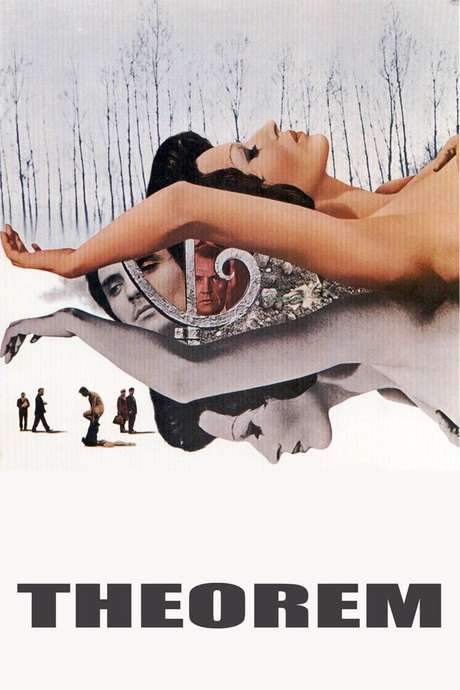
Theorem (1968) movie poster

Spoiler-Free Summary

Theorem (1968) Spoiler-Free Summary – What It's About

Release, runtime and language
1968 · 95 mins · Italian
Loading streaming availability…
Directed by
Pier Paolo Pasolini
Starring
Terence Stamp, Massimo Girotti, Anne Wiazemsky, Giovanni Ivan Scratuglia, Ninetto Davoli, Laura Betti

Only 923 spoken words carry a haunting drama. A prosperous Italian family is disrupted by the arrival of a charismatic stranger who inexplicably seduces each member—father, mother, son, daughter—before vanishing. The encounters trigger profound awakenings, yet the family cannot discern his identity or purpose.

On this page (7)
  1. 1 Where to watch
  2. 2 What it is about
  3. 3 Is it worth watching?
  4. 4 After you watch
  5. 5 Movie threads
  6. 6 Movies like Theorem
  7. 7 Every angle
Loading streaming availability…

Spoiler-free summary · safe to read

What Is Theorem About? (No Spoilers)

The plot of Theorem (1968) without spoilers: what it is about, who it follows and where it takes place, told without the twists or the ending. Enough to decide whether it is your next watch, not enough to ruin it.

In the refined neighborhoods of Milan, a prosperous Italian family lives behind well‑kept façades of tradition and comfort. The household moves with the rhythm of bourgeois rituals—a spacious estate, a diligent maid, and the quiet expectations that come with wealth. Beneath the orderly surface, each member carries hidden longings: a devout mother, a tentative father, a restless son, and a guarded daughter, all navigating the polite constraints of their privileged world.

Their routine is unsettled the day a charismatic outsider arrives at the gate, announced only by a flustered postman who seems to sense something unspoken about the newcomer. The Visitor moves through the rooms with a calm insistence, offering a blend of generosity and intrusion that feels both inviting and disquieting. He engages each family member—Emilia, the devout maid who yearns for purpose; Pietro, the sensitive son seeking confidence; Lucia, the repressed daughter craving liberation; Odetta, the timid mother caught between duty and desire; and Paolo, the patriarch whose identity is rooted in responsibility. Their encounters with him awaken dormant emotions, prompting questions that the family’s polished exterior can no longer ignore.

The film unfolds in a measured, observational tone, allowing the elegance of the setting to contrast with the simmering tension beneath. Light filters through marble corridors while quiet conversations hint at deeper currents of longing, fear, and the fragile boundaries of propriety. As the enigmatic guest lingers, the family is drawn into a delicate dance of intimacy and mystery, leaving the audience to wonder who he truly is and what purpose his presence serves. The lingering presence of The Visitor becomes a subtle catalyst, exposing the hidden layers of each character and inviting viewers to contemplate the cost of unspoken desire.

Last updated: December 04, 2025 at 23:17

Was this helpful?

What to expect

Is Theorem Worth Watching? What It Feels Like

Is it dark, sad, slow, intense or confusing? The mood of Theorem (1968) in a few tags, without a word about how it ends. Each tag opens a list of movies that feel the same.

After you watch

Seen Theorem? Now Read the Spoilers

Once you have watched Theorem (1968), come back for the full story: the plot summary with spoilers, the timeline in chronological order, the characters and meaning.

Movie threads

More Movies Like Theorem, by Mood & Story

Curated lists built around what makes Theorem tick: the same mood, the same kind of story or the same emotional payoff. Each list explains why these movies belong together.

Movies with a Mysterious Catalyst like in Theorem

Stories where an enigmatic outsider disrupts a stagnant world, triggering profound change. If you liked the unsettling impact of the visitor in Theorem, explore more movies where an enigmatic stranger acts as a disruptive force. These films focus on the psychological fallout and profound awakenings triggered by a catalyst figure, often featuring complex characters and ambiguous motivations.

  • mysterious
  • unsettling
  • psychologically intense
  • cathartic
  • transformative
  • ambiguous
  • Tone: tense, mysterious, unsettling
  • Pacing: slow, observational
Why these movies?

The story pattern: Narratives in this thread typically begin with the arrival of an outsider into a closed, often complacent system. The plot revolves not around solving the stranger's mystery, but around observing the chain reaction they set off. Characters are forced to shed their façades, leading to journeys of self-discovery, liberation, or destruction, while the stranger's true nature often remains an open question.

Why they belong together: These movies are grouped by their shared narrative engine: a catalyst figure who instigates deep psychological and existential change. They share a focus on character transformation over plot resolution, a tense and mysterious atmosphere, and themes of alienation, desire, and the fragility of social structures.

Slow-Burn Psychological Dramas like Theorem

Unhurried, atmospheric films where tension builds towards a psychological collapse. For viewers who appreciated the slow, deliberate pacing and intense psychological tension of Theorem, this section collects movies with a similar feel. These are atmospheric, character-driven stories where a sense of dread builds gradually, leading to profound breakdowns or transformations.

  • slow burn
  • unsettling
  • claustrophobic
  • oppressive
  • melancholic
  • psychological
  • Tone: oppressive, melancholic, tense
  • Pacing: slow burn
Why these movies?

The story pattern: Stories in this thread unfold at a methodical pace, prioritizing mood and internal conflict over fast-paced plot. The structure is often observational, focusing on small, accumulating details that lead to a major psychological rupture. The ending is frequently bleak, ambiguous, or mixed, reflecting the irreversible damage done by the slow-building pressure.

Why they belong together: These films are united by their patient, atmospheric approach to storytelling and their intense focus on psychological states. They share a heavy emotional weight, a palpable sense of unease or claustrophobia, and a commitment to showing the slow, painful process of a mind or family coming apart.

If you liked this

Movies Like Theorem

Similar movies to Theorem: the same genre, themes or kind of story. Each one comes with its own plot summary, timeline and ending explained.

Browse all movie summaries

Every angle

Theorem (1968) Explained: Plot, Timeline & Characters

Everything about Theorem in one place: what happens in the plot summary, the timeline in chronological order, the characters and meaning and a spoiler-free summary. What's After the Movie adds the cast, box office and post-credit scenes.

Coming soon on iOS and Android

The Plot Explained Movie Summary App

Plot summaries, endings explained and timelines on your phone. Catch up on any movie in minutes, save your favorites and never miss a twist again.

Be the first to know when we launch. Your email stays private, always.

Learn more about the app