Plot Explained Spoilers guaranteed!
Plot Explained

Browse by genre

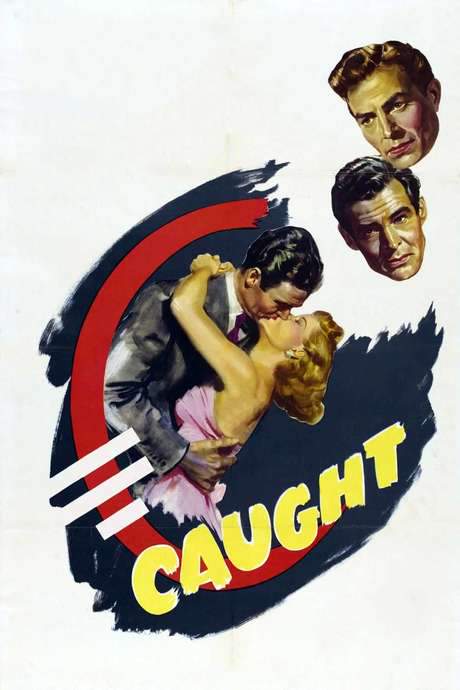
Caught (1949) movie poster

Plot Summary

Caught (1949) Plot Summary Explained

Release, runtime and language
1949 · 88 mins · English
Loading streaming availability…
Directed by
Max Ophüls
Starring
Robert Ryan, James Mason, Barbara Bel Geddes, Pamela Mason, Curt Bois, Frank Ferguson

Leonora, a naïve and impoverished young woman, marries the wealthy yet obsessive Ohlrig, only to find the marriage loveless and his behavior increasingly violent. She escapes, takes a job with New York doctor Larry Quinada and falls for him, but Ohlrig refuses a divorce. The crisis deepens when she learns she is pregnant with Ohlrig’s child.

On this page (6)
  1. 1 Where to watch
  2. 2 What happens: full plot
  3. 3 Plot questions answered
  4. 4 Movie threads
  5. 5 Movies like Caught
  6. 6 Every angle
Loading streaming availability…

Full plot summary · contains spoilers

What Happens in Caught: Full Plot Summary

The whole story of Caught (1949) explained, from the opening scene to the final frame: every key event, every twist and what it all adds up to. Read it as a quick recap before the sequel, to check a scene you missed, or to finally understand what really happened.

Charm school graduate and model Leonora Eames has always dreamed of wealth, and she makes a fateful mistake when she marries Smith Ohlrig, a glamorous but unstable multimillionaire who has never married for love. He enters marriage as an act of defiance after a psychiatrist predicts the union will ruin them; the psychiatrist also declares Ohlrig's heart condition psychosomatic. From the start, the marriage stands on manipulation and control rather than affection, with Ohlrig isolating his wife, nitpicking at her, displaying furious jealousy, and insisting she stay up late to be available whenever he returns. His flunky, Franzi Kartos, participates in this coercive dynamic.

When Ohlrig orders her to take a vacation, she asserts she will leave and find work instead. “You'll be back,” he coolly warns. She leaves the room, and he experiences another attack, which he halts by taking a pill.

Penniless, Leonora leaves Ohlrig and seeks work with an obstetrician, Dr. Hoffman, and a pediatrician, Larry Quinada, who run a practice in a poor neighborhood. Under their guidance, she learns to perform competently and gain self-respect. Quinada senses she looks familiar, though he cannot place where he has seen her before.

Ohlrig appears at Leonora's apartment and promises a fresh start, the honeymoon they never had. The next morning, at a Long Island house, she discovers that the trip was a business arrangement. Seeing through him at last, she returns to the doctors’ office and resumes her life of honest work.

She visits Dr. Hoffman, suspecting that she may have conceived during the reconciliation, and he promises not to tell Quinada, though he believes Quinada would understand the situation.

Leonora and Larry Quinada go out for a wonderful evening, and he proposes. She agrees to marry him, but wants to settle a personal matter first. She disappears, telling only her landlady that she is moving to Long Island. Quinada eventually locates her at Ohlrig’s home, where she discovers that they are indeed married. Quinada, having learned through newspapers about the marriage, understands why she seems so familiar to him. He leaves, only to be blocked by Leonora, who explains that she is pregnant and that she came back to Ohlrig to give the child the security money could provide. Quinada wants to marry her, but he warns that after three minutes with Ohlrig, he knows the man is dangerous and will ruin the child. Ohlrig then uses the question of paternity and the threat to keep the baby in order to force Leonora to stay with him. He admits that he never loved her and hates himself for the marriage, and she pleads with him not to take the child.

Excerpts from gossip columns from April to October follow the pregnancy and the rumors of Ohlrig’s cruelty. He deprives Leonora of sleep, awakens her at all hours, and drags her out at night; Franzi Kartos reaches his limit and quits, preferring to return to a head waiter’s life.

Ohlrig experiences an angina attack, and Leonora fears she may have caused it, so she calls Quinada for help. When Quinada arrives, the house fills with medical staff, and Leonora collapses as Quinada rushes her to the hospital. In the ambulance, he reassures her that Ohlrig is in perfect health. Dr. Hoffman delivers the premature baby, which does not survive. Leonora recovers, and Ohlrig loses any leverage over her. Dr. Hoffman grants Quinada two minutes with her, and a nurse brings Leonora’s mink coat to the room. Dr. Hoffman remarks that if his diagnosis is correct, Leonora won’t want it.

Last updated: October 09, 2025 at 14:04

Was this helpful?

Plot questions answered

Caught Plot Explained: Your Questions Answered

The questions people ask most about Caught (1949): what happens in the confusing scenes, why the characters do what they do, the twists, hidden details and what the ending means. Each answer contains spoilers.

Q1

Why did Smith Ohlrig marry Leonora if he didn't love her?

Ohlrig married Leonora as an act of defiance. After a psychiatrist predicted that marrying her would ruin both of them, Ohlrig proceeded with the wedding specifically to prove the prediction wrong. He never loved her and later admits he hates himself for the marriage, viewing it purely as a challenge to the psychiatrist's forecast.

Foreshadowing: The psychiatrist's warning about the marriage ruining them establishes Ohlrig's pattern of using predictions as triggers for self-destructive behavior.

  • Smith Ohlrig
  • marriage
  • psychiatrist
  • defiance
  • motivation
Q2

What was Ohlrig's psychosomatic heart condition and how did he use it?

Ohlrig had a psychosomatic heart condition, his angina attacks were triggered by emotional stress rather than physical illness. He used these attacks as psychological leverage to control Leonora, taking pills to suppress the episodes when necessary. The condition gave him power over her by making her fear his health would deteriorate if she left.

Foreshadowing: His first attack occurs right after Leonora announces she will leave, demonstrating how quickly he weaponizes his illness.

  • psychosomatic
  • heart condition
  • Ohlrig
  • control
  • leverage
Q3

Why did Leonora go back to Ohlrig after being with Quinada?

Leonora returned to Ohlrig because she discovered she was pregnant with his child. She wanted to give the baby the security that money could provide, believing Ohlrig's wealth would ensure a stable future for her child. This sacrifice meant returning to an abusive situation she had already escaped.

Foreshadowing: Her visit to Dr. Hoffman to confirm the pregnancy occurs right after she reconciles with Ohlrig, showing the stakes of her decision.

  • pregnancy
  • Leonora
  • Ohlrig
  • Quinada
  • security
  • money
Q4

Why did Ohlrig question the paternity of the baby?

Ohlrig questioned the paternity of the baby as a manipulation tactic to maintain control over Leonora. Even though he had reconciled with her, he used the possibility that Quinada might be the father to threaten her, demanding she stay with him to keep the child. This gave him leverage to force her to remain in the marriage.

Foreshadowing: Quinada's warning that Ohlrig is dangerous and will ruin the child foreshadows how Ohlrig weaponizes the pregnancy.

  • paternity
  • Ohlrig
  • control
  • baby
  • manipulation
Q5

How did the baby's death affect Ohlrig's control over Leonora?

When Leonora went into premature labor and the baby died, Ohlrig lost all leverage over her. He had been using the threat of keeping the baby to force her to stay, but with the child gone, that control vanished. This allowed her to finally escape his abuse and be with Quinada.

Foreshadowing: Dr. Hoffman's earlier warning that Ohlrig would use the child to control Leonora establishes this as the turning point.

  • baby death
  • premature birth
  • Ohlrig
  • leverage
  • freedom
Q6

Why did Franzi Kartos leave Ohlrig?

Franzi Kartos, Ohlrig's loyal flunky, finally reached his limit after witnessing months of escalating abuse during Leonora's pregnancy. Ohlrig deprived Leonora of sleep, waking her at all hours and dragging her out at night. Kartos quit and chose to return to his previous life as a head waiter rather than continue participating in the cruelty.

Foreshadowing: Earlier scenes show Kartos actively participating in controlling Leonora, making his eventual departure more significant.

  • Franzi Kartos
  • abuse
  • loyalty
  • Ohlrig
  • servant
Q7

What was the significance of the mink coat at the end?

At the end, a nurse brings Leonora's mink coat to the hospital room. Dr. Hoffman remarks that if his diagnosis is correct, she won't want it. The coat symbolizes the material wealth and luxury Ohlrig used to trap her, a reminder of the gilded cage she is now free from. Her likely rejection of it signifies her complete break from his control.

Foreshadowing: Leonora's earlier choice to leave penniless rather than accept Ohlrig's money establishes her rejection of material security.

  • mink coat
  • freedom
  • Ohlrig
  • wealth
  • symbolism
Q8

Why didn't Leonora tell Quinada about her pregnancy?

Leonora kept the pregnancy hidden from Quinada because she planned to return to Ohlrig to secure financial stability for the child. She agreed to marry Quinada but said she needed to settle something first, her existing marriage to Ohlrig and the pregnancy. She only told her landlady she was moving, disappearing without explaining the situation to Quinada.

Foreshadowing: Her secrecy during the proposal scene and her disappearance hint at the unresolved pregnancy.

  • pregnancy
  • Leonora
  • Quinada
  • secret
  • disappearance
Q9

What did Quinada tell Leonora in the ambulance about Ohlrig?

In the ambulance racing to the hospital, Quinada reassured Leonora that Ohlrig was in perfect health despite his angina attack. This moment contrasts Quinada's genuine care for her with Ohlrig's manipulation, she feared she had caused his death, but Quinada quickly dispelled that worry, showing Ohlrig's attacks were never as serious as he pretended.

Foreshadowing: Earlier scenes establish Ohlrig's pattern of exaggerating his condition for control.

  • ambulance
  • Quinada
  • Ohlrig
  • health
  • reassurance
Q10

Why did Ohlrig deprive Leonora of sleep during her pregnancy?

Ohlrig deliberately kept Leonora sleep-deprived throughout her pregnancy, waking her at all hours and dragging her out at night. This was another form of psychological abuse and control, exhaustion weakened her physically and emotionally, making her more dependent and unable to think clearly about leaving. The tactic further isolated her from any support system.

Foreshadowing: Early in the marriage, Ohlrig insisted she stay up late waiting for him, establishing his pattern of sleep deprivation as control.

  • sleep deprivation
  • abuse
  • Ohlrig
  • pregnancy
  • control

Movie threads

More Movies Like Caught, by Mood & Story

Curated lists built around what makes Caught tick: the same mood, the same kind of story or the same emotional payoff. Each list explains why these movies belong together.

Movies about escaping psychological prisons like Caught

Stories of characters trapped by manipulative relationships, fighting for their sanity and freedom. If you were captivated by the tense, oppressive atmosphere of Caught, this collection features movies with similar themes of psychological entrapment and the struggle for autonomy. These films often revolve around abusive relationships, controlling environments, and the arduous, anxiety-filled journey towards freedom and self-discovery.

  • claustrophobic
  • anxious
  • tense
  • oppressive
  • desperate
  • hopeful
  • Tone: tense, oppressive, anxious
  • Pacing: steady, methodical
Why these movies?

The story pattern: The narrative pattern follows a protagonist, often isolated and vulnerable, who enters a situation that becomes a psychological prison. The tension builds steadily as the controlling force's manipulation intensifies. The core of the story is the protagonist's dawning awareness of their predicament and their careful, dangerous plan to break free, often facing a final, high-stakes crisis before achieving a bittersweet or hard-won liberation.

Why they belong together: Movies are grouped here because they share a core experience of psychological oppression and the fight for escape. They feature similar tones of sustained tension, a steady pace that methodically builds dread, and a heavy emotional weight derived from themes of control, manipulation, and survival.

Movies with bittersweet endings about liberation like Caught

Journeys where freedom and love are achieved, but at a significant personal cost. For viewers who appreciated the complex, bittersweet resolution of Caught, this list highlights films where characters achieve their freedom or love, but not without profound sacrifice. These stories deliver a powerful, emotionally resonant mix of hope and tragedy, leaving a lasting impression on the audience.

  • bittersweet
  • melancholic
  • hopeful
  • tragic
  • contemplative
  • heavy
  • Tone: bittersweet, melancholic, hopeful
  • Pacing: steady, character-driven
Why these movies?

The story pattern: The journey typically involves a protagonist overcoming immense obstacles—often an oppressive person or system. The climax resolves the central conflict, granting the character their desired outcome (e.g., freedom, a new love). However, this resolution is complicated by a concurrent tragedy or irreversible loss, such as the death of a loved one, a profound personal sacrifice, or the burden of trauma, creating an ending that feels both victorious and mournful.

Why they belong together: These films are grouped by their distinctive emotional payoff: the bittersweet ending. They share a narrative structure where triumph is tempered by tragedy, resulting in a heavy, contemplative mood. The pacing is often steady, allowing the weight of the sacrifice to resonate fully with the emotional climax.

If you liked this

Movies Like Caught

Similar movies to Caught: the same genre, themes or kind of story. Each one comes with its own plot summary, timeline and ending explained.

Browse all movie summaries

Every angle

Caught (1949) Explained: Plot, Timeline & Characters

Everything about Caught in one place: what happens in the plot summary, the timeline in chronological order, the characters and meaning and a spoiler-free summary. What's After the Movie adds the cast, box office and post-credit scenes.

Coming soon on iOS and Android

The Plot Explained Movie Summary App

Plot summaries, endings explained and timelines on your phone. Catch up on any movie in minutes, save your favorites and never miss a twist again.

Be the first to know when we launch. Your email stays private, always.

Learn more about the app