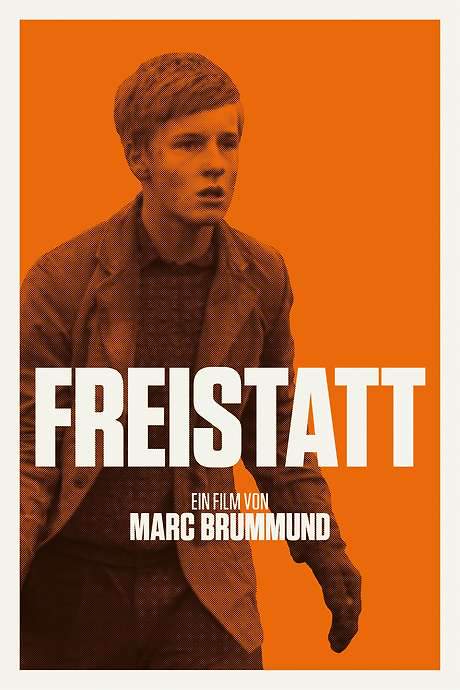
In the summer of 1968, a 14-year-old Wolfgang Rosenkötter from Osnabrück, who enjoyed tinkering with mopeds, finds himself at odds with his stepfather and the rules of his world. After exposing a paternal magazine to his friends, he is sent by the Youth Office to a Christian educational center in Freistatt. His mother promises a Christmas reunion, and he even takes a photograph of her to the new place, clinging to a thread of hope as he steps into an environment that feels harsher and more controlled than he imagined.
The home greets him with a stern efficiency. In the garden, the housefather Hausvater Brockmann reads the boy’s file aloud, labeling him as aggressive, renitent, and disobedient. The system treats him as another pupil in a long line of so-called “good Christians,” where routines resemble barracks and authority is exercised with a firm, unyielding hand. Brockmann has led this household for decades, shaping a harsh, ritualized world where punishment is a collective performance and the hierarchy is felt in every corner.
Early on, Bernd disciplines Wolfgang as the weaker pupil in a cruel routine, while Anton, an Afro-German new arrival, reaches out to him with the shared sense of belonging that Osnabrück once provided. The boys toil together in the peat mire, and when Wolfgang protests about delayed boot provision, Brother Wilde intensifies the punishment with a brutal strike. An escape attempt through the treacherous marsh fails, underscoring the sense that “freedom” here is a fragile mirage.
The house’s codes are rigid: when misbehavior occurs, the group is subjected to collective penalties, rationing, and even a prohibition on smoking. The rules are enforced by a mix of fear and care, with the housefather sometimes presenting a veneer of mercy only to reveal the power dynamics that control every moment. Wolfgang clashes with Bernd, who insists that the group must adhere to the rules for the benefit of all, a struggle that mirrors the broader tension between personal autonomy and institutional control.
A defiant act—delivering a letter to Angelika, the housefather’s daughter—becomes a flashpoint. She offers a careful, guarded explanation to her father but accepts the letter’s burden. When the letter is discovered, the pupils face punishment in the form of food deprivation, further tightening the grip of a system that relies on hunger as a tool of discipline. Wolfgang’s attempt to steal tomatoes ends in a near-drowning in a water barrel, a moment that tests his resilience and the group’s willingness to stand with him. Despite the beating with a baton, his resolve to resist is noticed by the others, and the group’s solidarity endures, even if the price is steep.
Moments of tenderness flicker amidst the cruelty. A Hedgehog slice, a small snack his mother sends for his birthday, becomes a symbol of what was lost and what remains at stake in this world. Meanwhile Bernd seizes on Wolfgang’s vulnerability, tearing out the photo of the boy’s mother and heightening the sense of separation that haunts him. The recreation period brings a turning point when Anton leads a small rebellion against Brother Wilde’s attempt to confiscate a trunk radio, and he sings a Gospel line, evoking a sense of collective memory and longing:
> Sometimes I Feel Like a Motherless Child.
This communal moment of defiance echoes through the youth home as the group clings to a sense of shared purpose, even as the daily grind continues.
On Christmas Eve, the mood turns dark. Brother Krapp, who had shown more understanding than the others, is revealed to have a troubling history with one pupil, and the service where a key is used to access the house becomes a charged, accusatory scene. The basement becomes a chamber of memory and fear, with Wolfgang briefly suspended in a dreamlike vision that hints at a troubled past and a fraught relationship with his own family. The opening credits’s beach scene with his mother foreshadows an incestuous undertone that lingers as a shadow over Wolfgang’s interior life.
A violent turn follows in a moorland conflict: Wolfgang injures Bruder Wilde’s eye with a spade, and the act becomes the catalyst for a dangerous escape with Anton. They make their way toward Osnabrück by horse transport, only to realize that Anton is a stranger to the city, without a family to return to, and Wolfgang remains torn between the pull of home and the pull of freedom. The home’s authority continues to press from behind as Anton is taken away and Wolfgang’s mother, and later his stepfather, both try to regain control of the boy’s life.
Despite every effort to reassert control, the cycle of punishment and fear intensifies. Brother Wilde exacts revenge, burying Wolfgang alive in a shallow grave with Bernd’s help, only for Brockmann to intervene unexpectedly, rescuing him from the tomb-like earth. Angelika bids Wolfgang farewell as she departs to study in Hamburg, a moment of quiet tenderness that is overshadowed by looming danger when the memory of the incident with her father resurfaces.
Tragically, Anton’s despair culminates in his own death by hanging, spurring the pupils to confront Brother Wilde and the system he represents. The other inmates flee in nightshirts, leaving Wolfgang a solitary witness to the collapse of the world he had known. His will appears fractured, bending to the rhythm of roll calls and routines that no longer offer a future he can count on. Eventually, Wolfgang is released when his stepfather’s life ends in a fatal accident, but the moment of supposed liberation is painful and ambiguous. He arrives home to find his stepfather’s child on the terrace, a jarring reminder of the costs of return. He slips back into the streets, clutching a Hedgehog slice as if clinging to a fragment of control, and borrows money from a former friend, resorting to violence when that contact reaches for his cake.
The final image glides into a somber horizon: on a train with an unclear destination, Wolfgang passes Freistatt, watching the pupils’ draisine ride through the mire from above, a distant, almost spectral reminder of the life that once bound him to the place and the people who tried to shape him.
This narrative tracks a boy’s experience of confinement, resistance, and survival within a harsh system, where moments of tenderness and memory struggle against dehumanizing discipline, leaving a lasting impression of a youth carved by a troubling, resilient will.