Plot Explained Spoilers guaranteed!
Plot Explained

Browse by genre

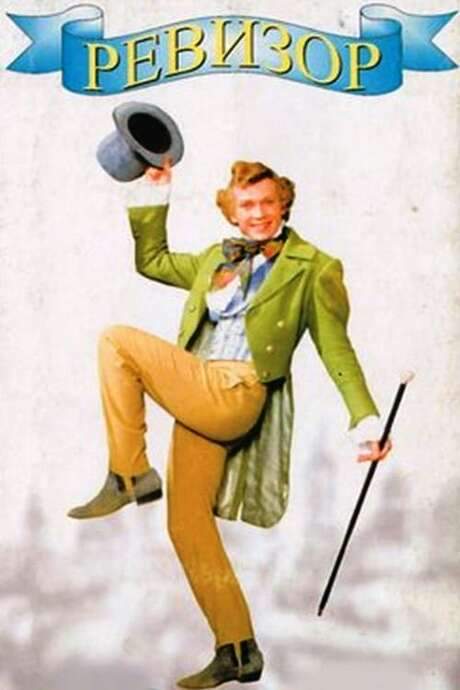
The Inspector-General (1952) movie poster

Characters & Themes

The Inspector-General (1952) Characters, Setting & Themes Explained

Release, runtime and language
1952 · 132 mins · Russian
Loading streaming availability…
Directed by
Vladimir Petrov
Starring
Alexander Polinsky, Ivan Ryzhov, Tamara Nosova, Anatoliy Kubatskiy, Elena Ponsova, Yuriy Tolubeev

Khlestakov, a flamboyant but penniless con man, arrives in a provincial Russian town where officials anxiously await a secret inspector from St. Petersburg. Mistaken for that envoy, he exploits the mistake, extorting bribes from the governor and courting both his wife and daughter, exposing the local corruption and hypocrisy until the genuine inspector finally appears.

On this page (8)
  1. 1 Where to watch
  2. 2 Characters explained (8)
  3. 3 Where & when it takes place
  4. 4 Themes & meaning (3)
  5. 5 Character & meaning questions
  6. 6 Movie threads
  7. 7 Movies like The Inspector-General
  8. 8 Every angle
Loading streaming availability…

8 main characters · contains spoilers

The Inspector-General Characters Explained: Who Is Who

The main characters of The Inspector-General (1952), heroes and villains: what drives them, how they change over the course of the story and what each of them reveals about the film's bigger ideas.

  • Ivan Alexandrovich Khlestakov (Igor Gorbachev)

    played by Igor Gorbachyov

    A penniless bureaucrat from St. Petersburg traveling to Saratov who loses his money and cannot pay for lodging. Mistaken for an important official, he revels in the role, embellishes his status, and courts the mayor's wife and daughter while borrowing over 1,000 rubles. He boasts of connections to Pushkin and nearly military rank, only to reveal his true identity when the real inspector arrives.

    • 🎭 Deception
    • 🏛️ Status-seeking
    • 💸 Money-hunger
  • Anton Antonovich Skvoznik-Dmukhanovsky (Yuri Tolubeyev)

    played by Yuriy Tolubeev

    A self-important mayor who fears embarrassment and clings to appearances. He eagerly welcomes the supposed inspector, hosting feasts and tours to display his town's supposed efficiency. His gullibility and anxiety reveal the fragility of authority in the face of rumor and deception.

    • 🏛️ Authority
    • 😨 Fear
    • 💼 Ambition
  • Mme. Anna Andreyevna Skvoznik-Dmukhanoskaya (Anastasiya Georgiyevskaya)

    The mayor's socially ambitious wife who is flattered by Khlestakov's attention. She engages in flirtation, driven by status and desire for social advancement, amplifying the farce. Her vanity intertwines with the town's deception until the truth disrupts the charade.

    • 💃 Seduction
    • 🏛️ Status
    • 💎 Vanity
  • Osip (Khlestakov's Servant)

    Loyal and practical, Osip accompanies Khlestakov and helps maintain the illusion as needed. He provides a grounded counterpoint to the ostentatious deception, often reacting with skepticism to his master's bragging.

    • 🧭 Loyalty
    • 🤝 Servant
    • 🗨️ Complicity
  • Bobchinsky (landowner)

    One of the two landowners who, along with his counterpart, eagerly mistakes the traveling clerk for the inspector. His bluster and rapid talk help propel the lie and the town's social games.

    • 🏛️ Local nobility
    • 🗣️ Talkative
    • 😂 Comic
  • Dobchinsky (landowner)

    The second landowner who shares the misidentification with Bobchinsky. His gossipy charm accelerates the town's collective deception and social pretense.

    • 🏛️ Local nobility
    • 🗨️ Talkative
    • 😂 Comic
  • Postmaster

    The town official who delivers the letter from Khlestakov, tipping off the truth and triggering the arrival of the real inspector.

    • 📬 Messenger
    • 🏛️ Bureaucracy
  • The Government Inspector (actual)

    The official from St. Petersburg whose impending arrival sets the town on edge. The townspeople's fear of his authority contrasts with their earlier eagerness to flatter and deceive.

    • 👮 Authority
    • 🚨 Reveal
    • 🗃️ Bureaucracy

Last updated: October 05, 2025 at 08:44

Was this helpful?

Setting

Where and When Does The Inspector-General Take Place?

The setting of The Inspector-General (1952): the year and time period, the places and locations, and how they shape the characters, the mood and the tension of the story.

Time period

1830s

The action takes place in the 1830s, a period of tsarist rule and rigid social codes. Officials are eager to maintain appearances and avoid embarrassment, while guests are treated according to status rather than merit. Ceremonial hospitality and public festivity frame the plot, highlighting the era's appetite for authority and spectacle. The period's orderly yet hypocritical society provides fertile ground for Gogol's satire.

Location

a small provincial town in Russia

The film is set in a small Russian provincial town where official life revolves around the mayor's circle, inns, and social appearances. The town functions as a microcosm of imperial bureaucracy, where rumors and status claims trump competence. Its streets and offices provide the stage for farce built on deception, vanity, and fear of scandal.

  • 🏙️ Provincial town
  • 🏛️ Bureaucracy
  • 🇷🇺 Russia

Last updated: October 05, 2025 at 08:44

Was this helpful?

3 major themes

The Inspector-General Meaning: Themes & Message Explained

What is The Inspector-General (1952) really about? The emotional, social and philosophical themes the film keeps returning to, its symbolism and the message beneath the surface.

  • Bureaucracy

    The local officials are quick to treat Khlestakov as a great man, revealing how power and rank can bend rules and encourage self-interest. The bureaucracy is shown as fragile, easily swayed by flattery and wealth. Officials' fear of scandal drives them to court appearances, lavish hospitality, and opportunistic deception. The film uses this setup to satirize how ink-stained desks and titles mask incompetence.

  • Deception

    A penniless clerk fabricates grand status and connections, manipulating townspeople into believing he is an inspector. The lie expands as others echo the illusion, turning misinterpretation into social currency. The character's vanity fuels a cascade of favors, loans, and flirtations. The truth only surfaces when a letter exposes him, triggering the arrival of the real inspector.

  • Class and Pretension

    The mayor, his wife, and the landowners display a preoccupation with rank and social climbing. The farce hinges on pretensions about importance, wealth, and legitimacy, which crumble under scrutiny. The townspeople's self-image is tested by the supposed inspector, revealing how status dictates behavior more than competence. The ending exposes a society built on appearances rather than truth.

Last updated: October 05, 2025 at 08:44

Was this helpful?

Character & theme questions

The Inspector-General Characters & Meaning: Your Questions Answered

The questions people ask about The Inspector-General (1952): who the characters really are, their relationships, what the symbols mean, where it takes place and what the movie is really about. Each answer contains spoilers.

Q1

Where is the film set?

The film takes place in a small provincial Russian town that serves as a microcosm of imperial bureaucracy. The setting centers on the mayor's official circle, local inns, and the social spaces where officials maintain appearances. This confined world of rumors, status claims, and bureaucratic routines provides the stage for the entire farce.

  • russian provincial town
  • setting
  • bureaucracy
  • imperial russia
Q2

When does the story take place?

The action occurs in the 1830s during tsarist Russia, a period characterized by rigid social codes and strict hierarchies. Officials in this era were deeply concerned with maintaining appearances and avoiding embarrassment, treating guests according to their claimed status rather than demonstrated merit. This era's emphasis on authority and spectacle creates the perfect conditions for Gogol's satire.

  • 1830s
  • tsarist russia
  • time period
  • 19th century
Q3

What is the bureaucracy theme in the film?

The film satirizes a bureaucracy where power and rank can bend rules and encourage self-interest. Local officials are shown as fragile, easily swayed by flattery and wealth. Their fear of scandal drives them to lavish hospitality and opportunistic deception. Gogol uses this to critique how official titles and ink-stained desks often mask deep incompetence.

  • bureaucracy
  • satire
  • corruption
  • officials
  • government
Q4

How does deception drive the story?

A penniless clerk from St. Petersburg fabricates an elaborate fiction of high status and important connections. As others echo this illusion, the lie expands into social currency, with townspeople offering favors, loans, and attention. The deception only unravels when a letter exposes the truth, triggering the arrival of the real inspector.

Foreshadowing: Khlestakov's boasting about military rank and connections to Pushkin plants seeds of suspicion that later confirm his true identity.

  • deception
  • impostor
  • khlestakov
  • lie
  • false identity
Q5

What does the film say about class and pretension?

The mayor, his wife, and the landowners are obsessed with rank and social climbing. The farce exposes how status dictates behavior more than competence or truth. When the supposed inspector arrives, the townspeople's self-image is tested, revealing a society built on appearances rather than genuine merit. The ending shows this fragile house of cards collapsing.

  • class
  • pretension
  • social climbing
  • status
  • appearances
  • aristocracy
Q6

Who is Khlestakov?

Ivan Alexandrovich Khlestakov is a penniless bureaucrat from St. Petersburg traveling to Saratov who loses his money and cannot pay for lodging. Mistaken for a powerful inspector, he revels in the role, embellishes his status, and exploits the situation by borrowing money and courting the mayor's wife and daughter. His vanity and lies drive the central deception until the real inspector's arrival exposes his true identity.

  • khlestakov
  • protagonist
  • con man
  • inspector
  • impostor
Q7

Who is the mayor in the film?

Anton Antonovich Skvoznik-Dmukhanovsky is the self-important mayor who fears embarrassment above all else. He eagerly welcomes the supposed inspector, hosting feasts and tours to display his town's supposed efficiency. His gullibility and anxiety reveal how fragile authority can be when confronted with rumor and deception. He represents the corrupt but insecure official class that Gogol satirizes.

  • mayor
  • anton antonovich
  • official
  • corruption
  • authority
Q8

Who is Anna Andreyevna?

Anna Andreyevna Skvoznik-Dmukhanoskaya is the mayor's socially ambitious wife who is flattered by Khlestakov's attention. Driven by status and desire for social advancement, she engages in flirtation with the supposed inspector. Her vanity becomes intertwined with the town's deception, and when the truth emerges, her ambitions are exposed as foolish. She represents the social climbing element of the pretension theme.

  • anna
  • mayor's wife
  • social climbing
  • flirtation
  • vanity
Q9

Why does the provincial town matter to the story?

The small provincial town matters because it represents a world where rumors and status claims determine how people are treated. This isolated environment, far from the capital's oversight, allows bureaucratic corruption to flourish while officials obsessively maintain appearances. The town's insularity makes it vulnerable to the impostor's deception and provides the perfect arena for exposing systemic hypocrisy.

  • provincial town
  • provincial russia
  • setting importance
  • corruption
Q10

What historical context does the 1830s setting provide?

The 1830s tsarist setting provides fertile ground for satire because it was a period of rigid hierarchy where official status carried enormous weight. The era's ceremonial hospitality and public festivity created opportunities for manipulation by anyone claiming authority. Gogol's comedy critiques this system by showing how easily officials can be fooled when they are more concerned with preserving their image than with genuine governance.

  • historical context
  • tsarist era
  • satire
  • 1830s russia
  • social codes
Q11

Why is the film a comedy?

The film is a comedy because it treats corruption and deception with satirical humor rather than moral gravity. The escalating tension of the impostor's ruse is tempered by farcical elements, with a rapid succession of misunderstandings and bold lies. The characters face humiliating comeuppance, but this is presented as comedic justice rather than tragedy. The humor score is high because comedy drives the entire narrative.

  • comedy
  • satire
  • genre
  • farcical
  • humorous tone

Movie threads

More Movies Like The Inspector-General, by Mood & Story

Curated lists built around what makes The Inspector-General tick: the same mood, the same kind of story or the same emotional payoff. Each list explains why these movies belong together.

Satirical Farces of Mistaken Identity like The Inspector-General

Chaotic comedies where a simple case of mistaken identity spirals into absurdity. If you enjoyed the gleeful chaos of The Inspector-General, you'll love these movies where a case of mistaken identity fuels a satirical farce. Discover similar comedies featuring charming impostors, anxious officials, and hilarious exposés of social corruption.

  • farce-like
  • satirical
  • anxious
  • gleeful
  • absurd
  • exposing
  • Tone: light, satirical, gleeful
  • Pacing: fast, chaotic
Why these movies?

The story pattern: A narrative built on a fundamental misunderstanding, where a character, often a charming rogue, is thrust into a role they don't deserve. They must improvise and deceive to maintain the ruse, leading to escalating absurdity and ultimately exposing the flaws and follies of the world around them before the truth is revealed.

Why they belong together: These movies are grouped by their shared foundation in mistaken identity, which drives a light-toned, fast-paced, and satirical plot. They create a specific humorous vibe of anxious glee, blending social commentary with farcical situations and often ending with a mixed sense of comedic comeuppance.

Gleeful Exposés of Bureaucratic Corruption like The Inspector-General

Humorous stories that skewer the vanity and incompetence of officialdom. Looking for more movies like The Inspector-General that humorously critique corrupt officials? This selection features satirical comedies focused on exposing the vanity and hypocrisy within bureaucratic systems, delivering laughs alongside sharp social commentary.

  • satirical
  • critical
  • exposing
  • absurd
  • farce-like
  • anxious
  • Tone: satirical, critical, light
  • Pacing: fast, steady
Why these movies?

The story pattern: The narrative follows a catalyst—often an outsider, impostor, or naive newcomer—who enters a closed, self-important system. Their presence, whether intentional or accidental, disrupts the status quo and reveals the deep-seated corruption, vanity, and incompetence of those in charge, leading to their humorous downfall.

Why they belong together: These films share a core thematic focus on satirizing bureaucracy and authority figures. They maintain a light emotional weight despite the serious subject matter, using fast-paced, straightforward plots and a gleeful tone to expose systemic flaws without becoming heavy or preachy.

If you liked this

Movies Like The Inspector-General

Similar movies to The Inspector-General: the same genre, themes or kind of story. Each one comes with its own plot summary, timeline and ending explained.

Browse all movie summaries

Every angle

The Inspector-General (1952) Explained: Plot, Timeline & Characters

Everything about The Inspector-General in one place: what happens in the plot summary, the timeline in chronological order, the characters and meaning and a spoiler-free summary. What's After the Movie adds the cast, box office and post-credit scenes.

Coming soon on iOS and Android

The Plot Explained Movie Summary App

Plot summaries, endings explained and timelines on your phone. Catch up on any movie in minutes, save your favorites and never miss a twist again.

Be the first to know when we launch. Your email stays private, always.

Learn more about the app