Year: 1978
Runtime: 91 mins
Language: Russian
Director: Leonid Gaidai
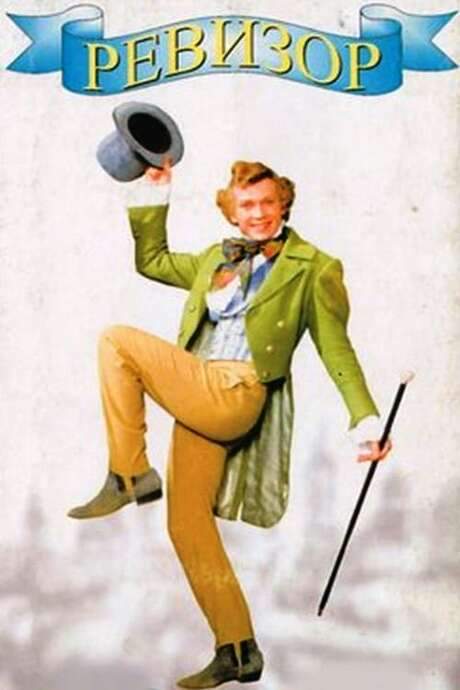
A comedy based on a classic play ‘Revizor’ by Nikolai Gogol.
Warning: spoilers below!
Haven’t seen Incognito from St.Petersburg yet? This summary contains major spoilers. Bookmark the page, watch the movie, and come back for the full breakdown. If you're ready, scroll on and relive the story!
Read the complete plot breakdown of Incognito from St.Petersburg (1978), including all key story events, major twists, and the ending explained in detail. Discover what really happened, and what it all means.
In a small town of the Russian Empire in the 19th century, corruption and petty greed color daily life. The mayor and the other officials routinely take bribes, embezzle public money, drink, and play cards, while they idle away time gossiping about the latest “news” of the town. Then an alarming disruption arrives: a stern government inspector from St. Petersburg has been sent to the city, and even worse, a plain-clothed one has appeared. Right as the privy council is convened—a move the city rulers hastily orchestrate—the news breaks that Khlestakov is staying at a hotel, a young man who isn’t paying his bills and behaves with suspicious swagger. Ivan Aleksandrovich Khlestakov is thus introduced, and the officials begin to chatter about whether he is the very auditor from the capital in disguise.
In truth, the man is a minor official who has arrived in town penniless after a costly losing streak at cards. He quickly realizes that the local powers fear a genuine St. Petersburg inspector, and he seizes on the mistaken identity with a gleeful sense of opportunity. With the air of a grand dignitary, he starts to bend the truth and to claim privileges, “advising” the mayor and his entourage as if he truly belongs to a higher circle. What follows is a rising tide of demands and evasions as the town’s leaders try to appease him, hoping to avert embarrassment or worse. The confected high status gives him a license to borrow, and then to extort, from the mayor, the judge, the head of the post, and other town figures who tremble at the thought of losing face or money.
The tension thickens as the impostor’s influence grows. He even tests the limits of courtship by making an amorous advance toward the mayor’s daughter, a move that compounds the town’s anxiety and shows how far he will go to harvest the supposed power of a St. Petersburg official. Among the dramatis personae introduced by this farce, the tension centers on the sensation that a single man’s swagger is enough to upend the hierarchy of the town. The village quickly becomes a stage for his charade, and the officials begin to reveal their own desperation as they try to maintain dignity while being plundered by someone who pretends to be indispensable.
Then a sharp turn arrives: a letter from St. Petersburg lands in the post, and the postmaster—a figure already anxious to protect the town’s reputation—reads the content aloud, shattering the illusions of the city’s leaders. The mood shifts from confident manipulation to collective shock as they realize they’ve been duped by a clever trickster rather than a formidable auditor. A police voice then interrupts the revelry, announcing that an official from the capital has arrived and must be seen immediately. The scene that follows is etched in popular memory as the town’s famous “silent scene,” when the guilty and their victims stare at one another in stunned silence, unable to utter a single word in the face of their own exposure.
An official who has arrived on behalf of the command of St. Petersburg, requires you to come to him at this very hour. He is staying at a hotel.
What unfolds is a satire of authority and a comic reversal: the supposed inspectors’ authority collapses under the weight of its own pretensions, exposing how easily the powerful can be moved by a clever pretender. The tale lingers on the irony that the city’s rulers, so ready to question and judge, have instead been outsmarted by a poorer man who merely pretends to possess the power they fear. The result is a darkly humorous indictment of bureaucratic vanity and the fragile line between dignity and deception, all set against the backdrop of a town that dutifully pretends to be in command even as it falls prey to a master of disguise.
Last updated: October 09, 2025 at 11:04
Explore frequently asked questions about Incognito from St.Petersburg (1978) with spoiler-rich answers covering the full plot summary, major story beats, character motivations, hidden details, and ending meaning. This movie summary FAQ helps explain confusing scenes, plot twists, and narrative decisions in clear, searchable detail.
The officials were already guilty of bribery and embezzlement, so the rumor of an inspector from St. Petersburg threw them into panic. When they heard about a suspicious guest at the hotel who wasn't paying his bills but acted confidently, they connected the dots wrongly. Their guilty conscience made them see threats everywhere, so they decided it was safer to treat Khlestakov as the feared auditor rather than risk ignoring the real one.
Earlier, the officials are shown taking bribes and discussing how an inspector could ruin them, establishing their paranoid mindset.
Khlestakov realized the officials believed he was a powerful inspector, so he played along with bold lies about his connections in St. Petersburg. He borrowed money while implying it was a formality, then made increasingly extravagant demands. The officials, terrified of being exposed for their corruption, complied because they thought pleasing him would protect them. Each payoff made them appear more guilty, which only convinced them they had to keep paying.
The officials' fear is visible when they first hear about the inspector, showing they would do anything to avoid scrutiny.
Drunk on his imagined power, Khlestakov decided to push his luck further by courting the mayor's daughter. He was confident the mayor would accept any suitor connected to a powerful Petersburg official. The proposal was another way to deepen his hold over the town and enjoy the privileges of his fake status. It showed how far his audacity had grown since arriving penniless.
Khlestakov's demands escalate gradually, from borrowing small amounts to making advances on the mayor's family.
The postmaster opened a letter Khlestakov had sent to a friend in St. Petersburg, hoping to find evidence of the inspector's real business. The letter showed Khlestakov was merely a minor clerk who had lost all his money gambling and was hiding in the town. It exposed his whole charade as the fantasies of a penniless nobody, not a powerful inspector.
Earlier, Khlestakov mentions losing at cards, which explains why he arrived without money.
When the real inspector's arrival was announced, the officials realized they had been completely duped by a petty clerk. They were too ashamed and terrified to speak because they knew their own corruption would now be exposed. Their silence reflected the collapse of their authority and thehumiliation of being outwitted by someone they had every reason to dismiss.
The officials' guilt is established from the opening scenes, where they frantically try to cover up their crimes.
Just as the town officials were processing the letter's revelation, a Gendarme arrived with news that an official from St. Petersburg demanded to see them immediately. This was the real inspector, not Khlestakov. The timing could not have been worse for the corrupt officials, who now faced exposure from both directions, their foolishness with the impostor and their actual crimes.
The news of the inspector arrives twice in the story: first as rumor, then as reality.
The officials had been embezzling public funds, taking bribes, and misusing their positions for years. A genuine inspector from St. Petersburg would audit their records and uncover their crimes. The fear of losing their positions, freedom, and status made them vulnerable to anyone who seemed connected to the capital's authorities.
The opening scenes show the officials drinking and gambling while neglecting their duties, establishing their guilt.
Khlestakov was a minor government clerk from St. Petersburg who had squandered all his money gambling. He arrived in the town with no funds and no plan, just hoping to avoid his debts. When he realized the officials thought he was the inspector, he saw an opportunity to live large at their expense. His entire elevated persona was a lie built on their paranoia.
The hotel scene shows Khlestakov not paying his bill and acting suspiciously before anyone suspects him.
The film exposes how petty officials protect their corruption through fear and flattery rather than actual competence. The town leaders are so worried about losing face that they blindly obey a penniless nobody. Their panic about inspection reveals a system where authority is feared rather than respected, and where pretense matters more than substance.
The comedy builds from the officials' constant gossip and scheming to protect their positions.
Discover curated groups of movies connected by mood, themes, and story style. Browse collections built around emotion, atmosphere, and narrative focus to easily find films that match what you feel like watching right now.
Comedies where a single impostor exposes the greed and hypocrisy of an entire system.If you enjoyed the chaotic satire of Incognito from St.Petersburg, you'll like these movies. Discover comedies and satirical stories featuring mistaken identity, corrupt officials, and the hilarious unraveling of pompous authority, delivering sharp social commentary through a fast-paced and farcical lens.
The narrative pattern follows a charismatic but ordinary individual being mistaken for a person of importance, leading them to be lavishly fawned over by a corrupt and fearful establishment. The deception escalates rapidly, fueled by collective anxiety and greed, until an inevitable reveal that leaves the powerful figures in humiliating disarray, though rarely facing true justice.
Movies are grouped here by their shared satirical target—institutional corruption—and their use of farce as the primary comedic tool. They consistently feature a LIGHT tone, FAST pacing, and a MEDIUM intensity born from the precariousness of the deception, offering a cathartic look at the follies of power.
Stories where a small lie escalates into an uncontrollable and chaotic web of deceit.Fans of Incognito from St.Petersburg who loved the escalating con will enjoy these films. Find movies where a small lie or mistaken identity spirals into a massive, chaotic deception, creating a blend of comedy, tension, and ironic consequences as the characters struggle to keep up with their own fabrications.
The journey begins with a simple, often opportunistic, falsehood. As the protagonist is swept up by the benefits of the lie, they must invent increasingly elaborate stories to sustain it, creating a house of cards. The pacing is fast, driven by close calls and new complications, building towards an inevitable and often humiliating revelation.
These films share a core narrative engine: the exponential growth of a deception. They are united by a specific emotional mix—the humor of the absurd situations clashes with the underlying anxiety of imminent exposure, resulting in a FAST pace and a MEDIUM intensity that keeps viewers engaged.
Don't stop at just watching - explore Incognito from St.Petersburg in full detail. From the complete plot summary and scene-by-scene timeline to character breakdowns, thematic analysis, and a deep dive into the ending - every page helps you truly understand what Incognito from St.Petersburg is all about. Plus, discover what's next after the movie.
Track the full timeline of Incognito from St.Petersburg with every major event arranged chronologically. Perfect for decoding non-linear storytelling, flashbacks, or parallel narratives with a clear scene-by-scene breakdown.
Discover the characters, locations, and core themes that shape Incognito from St.Petersburg. Get insights into symbolic elements, setting significance, and deeper narrative meaning - ideal for thematic analysis and movie breakdowns.
Discover movies like Incognito from St.Petersburg that share similar genres, themes, and storytelling elements. Whether you’re drawn to the atmosphere, character arcs, or plot structure, these curated recommendations will help you explore more films you’ll love.
Incognito from St.Petersburg (1978) Scene-by-Scene Movie Timeline
Incognito from St.Petersburg (1978) Movie Characters, Themes & Settings
Incognito from St.Petersburg (1978) Spoiler-Free Summary & Key Flow
Movies Like Incognito from St.Petersburg – Similar Titles You’ll Enjoy
Ivanov (2018) Film Overview & Timeline
Volpone (2004) Spoiler-Packed Plot Recap
The Russian Game (2007) Complete Plot Breakdown
Oblomov (1980) Detailed Story Recap
Inspector General (1982) Full Summary & Key Details
In the Moscow Slums (2023) Full Movie Breakdown
The Seagull (1972) Complete Plot Breakdown
The Seagull (1978) Spoiler-Packed Plot Recap
Uncle Vanya (1963) Ending Explained & Film Insights
Revizorro (1996) Film Overview & Timeline
The Private Life of Pyotr Vinogradov (1935) Full Summary & Key Details
The Idiot (1946) Story Summary & Characters
Ivan Vasilyevich Changes His Profession (1973) Complete Plot Breakdown
The Inspector-General (1933) Ending Explained & Film Insights
The Inspector-General (1952) Movie Recap & Themes