Plot Explained Spoilers guaranteed!
Plot Explained

Browse by genre

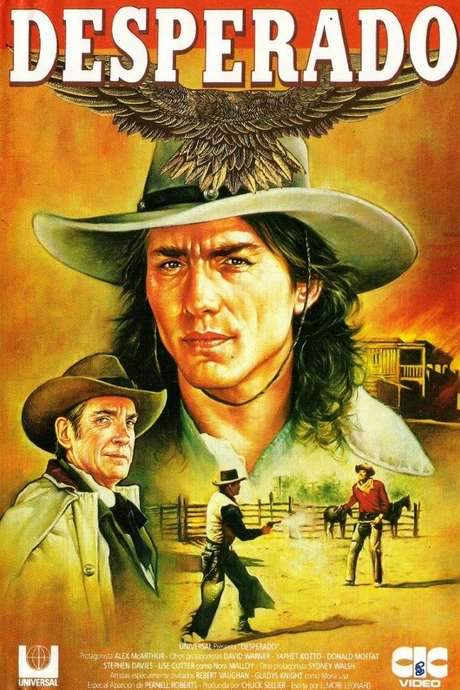
The Desperado (1954) movie poster

Plot Summary

The Desperado (1954) Plot Summary Explained

Release, runtime and language
1954 · 80 mins · English
Directed by
Thomas Carr
Starring
Lee Van Cleef, Nestor Paiva, Dabbs Greer, Beverly Garland, Rayford Barnes, Jimmy Lydon

Sam Garrett is an outlaw who lives by the rule ‘only a fool sticks his neck out for anyone.’ He warns fellow fugitive Tom Cameron, pursued by the Texas State Police known as the ‘Bluebellies’ in the 1870s. When Cameron tries to surrender, Garrett breaks his advice and is framed for a murder by a jealous rival over his girl.

On this page (5)
  1. 1 What happens: full plot
  2. 2 Plot questions answered
  3. 3 Movie threads
  4. 4 Movies like The Desperado
  5. 5 Every angle

Full plot summary · contains spoilers

What Happens in The Desperado: Full Plot Summary

The whole story of The Desperado (1954) explained, from the opening scene to the final frame: every key event, every twist and what it all adds up to. Read it as a quick recap before the sequel, to check a scene you missed, or to finally understand what really happened.

In 1863, the small Utah town of Red Valley is kept under the watchful eye of Sheriff <a href="/actor/lee-van-cleef">Lee Van Cleef</a>, who is dedicated to maintaining peace and order. While Sheriff Upton is away, the town's bank is mysteriously robbed, a bold crime secretly orchestrated by a group of corrupt figures led by the unscrupulous banker <a href="/actor/nestor-paiva">Nestor Paiva</a> as Stanley Clanton and the livery stable boss, known as "Uncle Willie" McLeod, played by <a href="/actor/dabbs-greer">Dabbs Greer</a>. Their conspiracy is further fueled by the ruthless gunman Jack Lester, who is willing to shoot three innocent men to ensure their plan's success.

Amidst this turmoil, a stranger named Cheyenne Rogers arrives in town. He is portrayed as a rugged character who quickly attracts attention. At the stable, Allison McLeod, the daughter of Uncle Willie, recognizes that the horse the stranger rides belongs to Sheriff Upton. Sensing trouble, Allison goes after Cheyenne, who is seen visiting the saloon for a drink. Her instinct is to find Sheriff Upton, especially since his horse was stolen on the trail, hinting at possible connections to the ongoing criminal activity.

The saloon, run by "The Countess," becomes a focal point in the storyline. She is portrayed as a woman who secretly harbors feelings for Cheyenne, despite him being hired to help rob the bank—though he arrives too late to participate in the heist. The Countess's affection for Cheyenne complicates her feelings, especially as she blames herself for steering him toward a life of crime. Meanwhile, Cheyenne tries to distance himself from his outlaw past by finding legitimate work breaking broncos at a ranch, attempting to start anew.

When Sheriff Upton returns to Red Valley, there is a welcoming reunion with Cheyenne, who he recognizes as an old friend. However, Lester begins to tarnish Cheyenne’s reputation by revealing his previous criminal activities, turning the townspeople against him. The tension escalates when Lester's accomplice Nitro pulls off another bank robbery, leading to chaos and unrest. Cheyenne and Nitro are eventually captured, and both are sentenced to hang. In a daring rescue, Sheriff Upton breaks them out of jail, but in the process, Upton himself is imprisoned.

Allison, feeling the weight of guilt and torn between her love for Cheyenne and her loyalty to her family, turns to the Countess for help. Her plea is successful, even though she is now in love with Cheyenne instead of the Countess. As the story unfolds, Cheyenne finds himself working against the corrupt elements in town. He passes a gun to Sheriff Upton through the jail window, helping to facilitate their efforts to set things right.

The climax of the film involves a gunfight in which Uncle Willie, burdened by guilt over his involvement in the robbery, ends up killing Clanton. In the aftermath, Allison marries Cheyenne beside her father’s jail cell, symbolizing a hopeful new beginning. The story concludes with Uncle Willie expressing surprise about how his confession to aid Cheyenne might lead to a much longer prison sentence, potentially twenty years, emphasizing themes of redemption and justice served.

Throughout the film, the characters navigate betrayal, love, and morality against the backdrop of lawlessness in the Old West. The narrative combines action, moral conflict, and moments of genuine tenderness, culminating in a resolution that highlights the possibility of redemption even for those with a dark past.

Last updated: August 19, 2025 at 05:13

Was this helpful?

Plot questions answered

The Desperado Plot Explained: Your Questions Answered

The questions people ask most about The Desperado (1954): what happens in the confusing scenes, why the characters do what they do, the twists, hidden details and what the ending means. Each answer contains spoilers.

Q1

Why was Cheyenne arrested for the bank robbery if he arrived too late?

Cheyenne was hired to help with the robbery but arrived after it was already completed. However, when Jack Lester pulled off a second bank robbery, he framed Cheyenne for complicity. Because Lester had already exposed Cheyenne's criminal past to the town, the citizens believed he was involved, leading to his arrest and death sentence alongside Lester's accomplice Nitro.

Foreshadowing: Cheyenne's arrival after the robbery and his attempt to go legitimate made him an easy target for framing.

  • cheyenne rogers
  • arrest
  • frame
  • bank robbery
  • jack lester
  • nitro
Q2

Why did Uncle Willie kill Stanley Clanton?

Uncle Willie was one of the conspirators behind the original bank robbery, working alongside Clanton. During the climactic gunfight, Willie turned on his partner, killing Clanton. This act was driven by overwhelming guilt over his involvement in the crime and his daughter's love for Cheyenne, leading him to eliminate the corrupt banker who had orchestrated the heist.

Foreshadowing: Willie's role in the robbery and his growing remorse set the stage for his violent betrayal of Clanton.

  • uncle willie mcLeod
  • stanley clanton
  • guilt
  • bank robbery
  • gunfight
  • betrayal
Q3

Why did Sheriff Upton break Cheyenne out of jail after arresting him?

Sheriff Upton and Cheyenne were old friends who reconciled upon the sheriff's return. When Cheyenne was wrongly sentenced to hang for the second robbery, Upton chose to free him because he knew Cheyenne was innocent. In the process of the jailbreak, Upton himself was captured and imprisoned, demonstrating his commitment to justice over blind adherence to the law.

Foreshadowing: The earlier reunion between Upton and Cheyenne established their friendship, making the sheriff's choice to help him believable.

  • sheriff steve upton
  • cheyenne rogers
  • jailbreak
  • friendship
  • arrest
Q4

Why did Allison help Cheyenne even though her father was involved in the robbery?

Allison McLeod fell in love with Cheyenne despite knowing his outlaw past and her father's criminal involvement. When Cheyenne was sentenced to hang, she went to the Countess for help, putting her romantic feelings above family loyalty. Her guilt over her father's crimes and her genuine affection for Cheyenne drove her to seek his rescue, even though it meant betraying her father's interests.

Foreshadowing: Allison's recognition of Cheyenne's horse and her decision to pursue him showed her interest early on.

  • allison mcLeod
  • cheyenne rogers
  • love
  • betrayal
  • bank robbery
  • uncle willie
Q5

Why did the Countess help Allison rescue Cheyenne after Cheyenne chose Allison?

The Countess secretly harbored feelings for Cheyenne and had originally recruited him for the robbery. Though Allison replaced her in Cheyenne's affection, the Countess still blamed herself for leading Cheyenne toward a life of crime. Her guilt and remaining feelings motivated her to assist Allison in freeing Cheyenne, viewing it as a chance at redemption for her past influence on him.

Foreshadowing: The Countess's affection for Cheyenne was established early when she watched him in the saloon.

  • the countess
  • cheyenne rogers
  • jealousy
  • guilt
  • bank robbery
  • redemption
Q6

Why did Uncle Willie confess to helping Cheyenne knowing he'd face 20 years in prison?

Willie confessed to assisting Cheyenne in the robbery after killing Clanton, fully accepting the legal consequences. His confession was driven by overwhelming guilt over his criminal involvement and his role in framing an innocent man. He chose redemption through confession rather than living with the burden of his crimes, accepting a lengthy prison sentence as the cost of clearing his conscience.

Foreshadowing: Willie's guilt had been building throughout the film, culminating in his betrayal and killing of Clanton.

  • uncle willie mcLeod
  • confession
  • prison
  • guilt
  • redemption
  • 20 years
Q7

How did the townspeople turn against Cheyenne so quickly after Sheriff Upton returned?

When Sheriff Upton returned to Red Valley, he was greeted warmly by Cheyenne, suggesting an old friendship. However, Jack Lester immediately exposed Cheyenne's criminal past to the townspeople, revealing his history as an outlaw. This revelation, combined with the recent bank robbery, made the townsfolk believe Cheyenne was involved in the crime, turning public opinion against him despite his attempts at reform.

Foreshadowing: Lester's character as a ruthless gunman willing to frame others was established early in the conspiracy.

  • cheyenne rogers
  • jack lester
  • townspeople
  • reputation
  • outlaw
  • frame
Q8

Why did Cheyenne pass a gun to Sheriff Upton through the jail window?

After Upton was imprisoned for breaking Cheyenne and Nitro out of jail, Cheyenne secretly passed a weapon through the jail window to help the sheriff defend himself and continue fighting the corruption in Red Valley. This act demonstrated Cheyenne's commitment to clearing his name and helping Upton restore justice, even while awaiting his own fate.

Foreshadowing: The earlier cooperation between Cheyenne and Upton established their alliance against the conspirators.

  • cheyenne rogers
  • sheriff upton
  • gun
  • jail
  • justice
  • corruption
Q9

Why was Sheriff Upton away when the bank was robbed?

Sheriff Steve Upton left Red Valley on an unspecified trip, which created the opportunity for the bank robbery. The conspiracy led by Stanley Clanton, Uncle Willie McLeod, and Jack Lester specifically targeted his absence to execute the heist. Upton's departure left the town vulnerable to the coordinated criminal operation.

Foreshadowing: The summary establishes Upton as the town's primary defender, making his absence the critical vulnerability.

  • sheriff upton
  • bank robbery
  • absence
  • conspiracy
  • red valley
Q10

What was the significance of Cheyenne riding Sheriff Upton's horse?

When Cheyenne arrived in Red Valley, he was riding a horse that belonged to Sheriff Upton. Allison McLeod recognized the horse at the stable, revealing that Cheyenne had either stolen it or obtained it through some connection to the sheriff. This detail hinted at Cheyenne's criminal background and his direct connection to the lawman, establishing early on that Cheyenne operated in a gray area between outlaws and authority.

Foreshadowing: Allison's recognition of the horse immediately suggested Cheyenne was not simply a stranger passing through.

  • cheyenne rogers
  • sheriff upton
  • horse
  • allison mcLeod
  • connection
Q11

Why did Cheyenne try to go legitimate by working at the ranch?

After arriving in Red Valley too late for the bank robbery, Cheyenne sought legitimate work breaking broncos at a local ranch. This represented his attempt to distance himself from his outlaw past and start fresh. His desire for redemption and a normal life was evident in this choice, though his criminal history ultimately caught up with him when Lester exposed his past.

Foreshadowing: Cheyenne's search for honest work showed his genuine desire to change, making his unjust fate more tragic.

  • cheyenne rogers
  • ranch
  • broncos
  • legitimate work
  • redemption
  • outlaw past

Movie threads

More Movies Like The Desperado, by Mood & Story

Curated lists built around what makes The Desperado tick: the same mood, the same kind of story or the same emotional payoff. Each list explains why these movies belong together.

Tense Redemption Westerns like The Desperado

Outlaws on the run seek a second chance while fighting a corrupt system. If you enjoyed the tense, morally complex journey of The Desperado, explore more movies like it. This collection features Westerns where outlaws framed for crimes they didn't commit fight for redemption against a corrupt system, blending steady pacing with romantic subplots and a cautiously hopeful resolution.

  • redemptive
  • tense
  • lawless
  • guilty
  • suspenseful
  • hopeful
  • Tone: tense, morally conflicted
  • Pacing: steady, character-driven
Why these movies?

The story pattern: The narrative typically involves an outsider or outlaw becoming entangled in a web of deceit after a false accusation. They must navigate a hostile environment, often with a romantic interest at stake, to uncover the truth and achieve a form of personal redemption, leading to a bittersweet resolution where justice comes at a personal cost.

Why they belong together: These films are grouped by their shared focus on the redemptive arc of a flawed hero, the central conflict of a false accusation, and the tense, steady-paced unraveling of corruption. They blend moral dilemmas with action and romance, creating a specific, compelling Western subgenre.

Movies with Bittersweet Justice like The Desperado

Stories where doing the right thing comes with a significant personal price. For viewers who appreciated the complex resolution of The Desperado, this list features similar movies where moral conflict leads to a bittersweet ending. Discover stories where characters achieve their goals, but not without personal sacrifice, blending hopeful elements with the sobering cost of doing what's right.

  • bittersweet
  • moral conflict
  • hopeful
  • redemptive
  • tense
  • guilty
  • Tone: bittersweet, hopeful, tense
  • Pacing: steady
Why these movies?

The story pattern: The emotional journey in these films revolves around a central moral conflict. The protagonist makes difficult choices to achieve a noble goal, such exposing corruption or saving others, but the conclusion is nuanced. A hopeful element (like a new relationship) is balanced against a sobering reality (like imprisonment or loss), resulting in an ending that feels earned yet emotionally complex.

Why they belong together: These movies share a specific emotional cadence, defined by a medium emotional weight and a conclusion that deliberately mixes hope with sorrow. They are united by the thematic focus on the cost of justice and the realistic, non-sanitized outcomes of moral courage.

If you liked this

Movies Like The Desperado

Similar movies to The Desperado: the same genre, themes or kind of story. Each one comes with its own plot summary, timeline and ending explained.

Browse all movie summaries

Every angle

The Desperado (1954) Explained: Plot, Timeline & Characters

Everything about The Desperado in one place: what happens in the plot summary, the timeline in chronological order, the characters and meaning and a spoiler-free summary. What's After the Movie adds the cast, box office and post-credit scenes.

Coming soon on iOS and Android

The Plot Explained Movie Summary App

Plot summaries, endings explained and timelines on your phone. Catch up on any movie in minutes, save your favorites and never miss a twist again.

Be the first to know when we launch. Your email stays private, always.

Learn more about the app