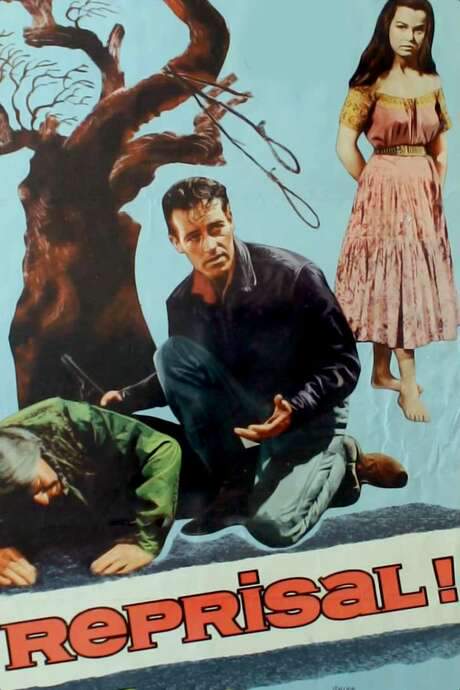
After the Civil War, John Willoughby, John Payne, returns to life in the western town of Kittreck Wells with his wife Nora Willoughby, [Ruth Roman](/actor/ruth-roman, and their 7-year-old son Petey Bobby Clark. The couple hopes the violence of war is behind them, but a call from Marshal Adam Russell [James Griffith] interrupts that peace, as a band of former Confederate soldiers is spotted pulling a robbery in a neighboring town and the marshal asks for help to stop them. The old wounds of rebellion flare up in the living memory of the town, testing John’s resolve and his instinct for justice.
Bedloe Mason, [J. Carrol Naish], arrives with his sons Gray [Ben Cooper], Wesley [John Smith], and Frank [Ben Johnson], riding into town to replenish their water supply, while Cain Mason [Sterling Franck] stays behind with his father. Petey Willoughby, who shares his father’s dislike of rebels, raises a cap pistol in a moment of mischief, and the sudden report of gunfire changes everything: Wesley Mason shoots and kills the boy. The riders mount and ride out of town, but Gray—who hadn’t witnessed the shooting—hesitates, then catches up to the others. The spark of violence has been lit, and the family’s path becomes tangled in a web of pride, duty, and revenge.
That night, darker truths begin to surface. John, diligent and unyielding in his search for accountability, learns that Gray’s fate may be more brutal than the town realizes. He discovers Gray’s body in the aftermath of the attack, carried by a wandering horse and brought home. A serious question hangs in the air: who was responsible for the child’s death? An eyewitness accuses Gray, stirring a debate that tests Nora’s patience and restraint; she urges restraint, reminding John that violence will only feed more bloodshed.
As tension builds, Gray is placed under arrest pending a formal trial, and a vigilante mood sweeps the town. A lynch mob forms, threatening to drag Gray from the jail. Back at the Mason camp, Bedloe realizes Wesley has lied about what happened, and he punishes his son with a brutal whipping until Wesley confesses what truly occurred that day. Just as the mob lines up to hang Gray, the Mason family rides into town, determined to reveal the real killer and restore some measure of truth to the proceedings.
What follows is a tense confrontation of loyalties and lies. The truth comes to light: Wesley was the one who killed Petey, not Gray. Wesley flees, while Gray moves to defend himself; a struggle ensues, and Gray follows and engages Wesley, who knocks him unconscious and then draws a knife. John, arriving at the crucial moment, stops Wesley from stabbing the unconscious Gray. A fierce struggle between John and Wesley ends with Wesley mortally wounded, his death sealing the tragic cost of such divisions. The Mason family exits the town as quietly as they arrived, leaving John to hold Nora close in the quiet aftermath.
In the end, a hard-won clarity settles over Kittreck Wells: the line between justice and mob rule proved thinner than anyone wanted to admit, and the cost of vengeance—paid in blood and broken lives—belongs to all who chose to forget the past instead of facing it. John’s quiet embrace of Nora underscores a fragile wish for peace, even as the memory of the war lingers in the dust of the town’s streets. Duty, family, and the consequences of unchecked anger collide in a Western drama that asks whether truth and restraint can outlast the embers of history.