Plot Explained Spoilers guaranteed!
Plot Explained

Browse by genre

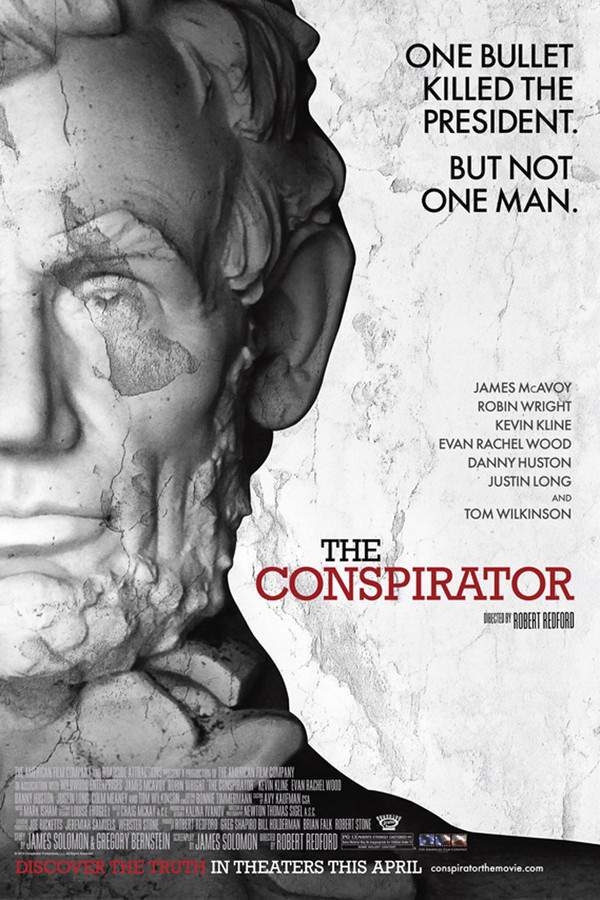
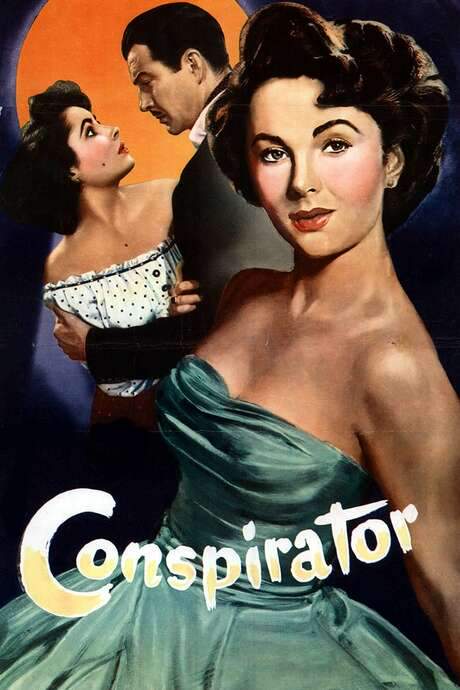
The Conspirator (1961) movie poster

Timeline

The Conspirator (1961) Timeline Explained – Every Event in Order

Release, runtime and language
1961 · 110 mins · Japanese
Directed by
Daisuke Itō
Starring
Haruko Sugimura, Shûji Sano, Akitake Kôno, Eitarô Shindô, Ken Mitsuda, Akiko Kazami

Lord Saburo Nobuyasu, a young samurai, finds little solace in his life. His arranged marriage to Tokuhime — the daughter of former rival Oda Nobunaga — brings scant happiness. Complicating matters, his scheming mother constantly interferes, seeking to undermine the Nobunaga clan and tighten her own grip on power.

On this page (5)
  1. 1 Events in order (11)
  2. 2 Timeline questions answered
  3. 3 Movie threads
  4. 4 Movies like The Conspirator
  5. 5 Every angle

11 events in order · contains spoilers

The Conspirator Timeline: Events in Chronological Order

Every key event of The Conspirator (1961) in order, scene by scene, with when and where it takes place. Use it to untangle flashbacks, time jumps and parallel storylines, to refresh your memory before the sequel or to find the exact scene you are thinking of.

  1. End of the Civil War

    On April 14, 1865, five days after Robert E. Lee's surrender to Ulysses S. Grant at Appomattox, celebrations take place among Union supporters, including Frederick Aiken. The nation is still recovering from the war's end as the events of Lincoln's assassination unfold. The night is marked by a somber mood as the country grapples with the aftermath of victory.

    When
    April 14, 1865
    Where
    Virginia
  2. Lincoln Assassinated at Ford’s Theater

    John Wilkes Booth sneaks into President Lincoln's box during a performance of Our American Cousin and shoots him in the back of the head. Booth then stabs diplomat Henry Rathbone and escapes into Maryland shouting, 'Sic Semper Tyrannis!' The crowd and witnesses, including Aiken, watch horror-stricken as Lincoln is carried away unconscious.

    Where
    Ford’s Theater, Washington D.C.
  3. Lincoln Dies and Andrew Johnson Becomes President

    Early the next morning, President Lincoln is declared dead after being taken to a nearby boarding house. Vice President Andrew Johnson is sworn in as the new President, marking a pivotal transition in leadership during a turbulent time.

    Where
    Washington D.C.
  4. Suspicions and Arrests of Conspirators

    Secretary of War Edwin Stanton orders the arrest of suspected conspirators, including Mary Surratt. Booth and David Herold evade capture for several days before being located, leading to a siege in a barn where Booth is ultimately shot and killed while trying to threaten soldiers.

    Where
    Various locations, including Maryland
  5. Mary Surratt's Trial Begins

    Mary Surratt, accused of conspiracy, is defended by her attorney Reverdy Johnson while being investigated alongside other suspects. The trial gains attention as witnesses like Louis J. Weichmann testify about her connections and possible involvement in the conspiracy.

    Where
    Washington D.C.
  6. Evidence and Testimonies at Court

    At trial, testimonies reveal Mary Surratt’s links to Booth and other conspirators, including alleged possession of binoculars and firearms. These accusations build a case against her, leading to her indictment and the anticipation of a verdict.

    Where
    Washington D.C.
  7. Mary Surratt's Defense and Public Opinion

    Aiken attempts to gather evidence to defend Mary, but faces challenges as testimonies accuse her of involvement. The controversial defense causes Aiken to question her guilt, but public opinion and court decisions seem to favor her conviction.

    Where
    Washington D.C.
  8. Sentencing and Execution of Conspirators

    On July 6, 1865, Mary Surratt, along with Powell, Herold, and Atzerodt, is found guilty and sentenced to death, while others like Mudd and Spangler receive prison sentences. Despite Aiken's efforts, Mary is executed by hanging, ending the trial proceedings.

    When
    July 6, 1865
    Where
    Washington D.C.
  9. Aiken Visits John Surratt in Jail

    Sixteen months after the executions, Aiken visits John Surratt, who was captured abroad and is incarcerated. John expresses gratitude for Aiken’s kindness toward his mother, and declines her rosary, hinting at ongoing estrangement or guilt.

    When
    Approximately late 1866
    Where
    Jail, location unspecified
  10. Court Rulings and John Surratt’s Fate

    A year later, the Supreme Court rules that citizens are entitled to civilian trials, not military tribunals. John Surratt’s case remains unresolved as the jury cannot reach a verdict, leading to his release and the end of the conspiracy trial outcomes.

    When
    Approximately October 1867
    Where
    Washington D.C.
  11. Aiken's Career Shift

    After the trial, Aiken leaves the law and becomes the first City Editor of The Washington Post. His career shifts from legal defense to journalism, reflecting a new chapter following the turbulent aftermath of Lincoln’s assassination.

    Where
    Washington D.C.

Last updated: August 19, 2025 at 05:14

Was this helpful?

Timeline questions answered

The Conspirator Timeline Explained: Your Questions Answered

When does it happen, and why in that order? The questions people ask about the chronology of The Conspirator (1961): time jumps, flashbacks, cause and effect between scenes and the correct order of events, each answered with spoilers.

Q1

Why was Mary Surratt executed for Lincoln's assassination?

Mary Surratt was convicted of conspiring with John Wilkes Booth to assassinate President Lincoln. While she maintained she only conspired to kidnap Lincoln, not kill him, witnesses testified that she provided a boarding house for conspirator meetings and possessed binoculars and firearms. The court found her guilty on all charges, and despite defense attorney Frederick Aiken's efforts, President Andrew Johnson commuted her sentence from life imprisonment to execution. The political climate and public demand for justice following Lincoln's murder heavily influenced the verdict.

Foreshadowing: Earlier testimony revealed that Louis J. Weichmann was connected to Mary’s son John and had seen conspirators meeting at her boarding house.

  • mary surratt
  • execution
  • conspiracy
  • lincoln assassination
  • death penalty
Q2

Why did Frederick Aiken agree to defend Mary Surratt?

Frederick Aiken, a Union veteran and lawyer, was initially hesitant to take Mary Surratt's case due to the political sensitivity and public sentiment against her. However, he was eventually appointed as her defense attorney. Throughout the trial, Aiken sought to find evidence proving her innocence, even as he privately questioned her guilt. His defense of a woman accused of conspiring in the President's assassination cost him his membership at the Century Club and created significant professional and personal conflicts.

Foreshadowing: The timeline shows Aiken celebrating with Union supporters on the night of Lincoln's assassination, making his eventual defense of a suspected conspirator more surprising.

  • frederick aiken
  • mary surratt
  • defense lawyer
  • trial
  • union veteran
Q3

What happened to John Surratt after Mary Surratt's execution?

John Surratt, Mary Surratt's son, escaped capture immediately after Lincoln's assassination and went into hiding. A nationwide manhunt was launched to find him. Sixteen months after the executions, Aiken visited John, who was captured abroad and incarcerated. John declined his mother's rosary but expressed gratitude for Aiken's kindness. In approximately 1867, John's case went to trial but the jury could not reach a verdict, leading to his release and the end of the conspiracy trial outcomes.

Foreshadowing: Mary claimed during her trial that her son John had left town weeks before the murder and was not involved in the plot.

  • john surratt
  • escape
  • manhunt
  • captured
  • release
Q4

Why did the other assassination attempts on Seward and Johnson fail?

Lewis Powell (Lewis Payne) attacked Secretary of State William Seward, leaving him fatally wounded but alive despite severe injuries. Powell failed to complete the assassination. George Atzerodt, assigned to kill Vice President Andrew Johnson, became overwhelmed by fear, got intoxicated, and fled without attempting the assassination. These failures, combined with Booth's death, effectively dismantled the broader conspiracy within days of Lincoln's murder.

Foreshadowing: The conspiracy involved multiple targets coordinated on the same night, but the plan unraveled when individual conspirators failed to carry out their parts.

  • lewis powell
  • george atzerodt
  • seward
  • assassination attempt
  • conspiracy failed
Q5

How was John Wilkes Booth killed?

John Wilkes Booth evaded capture for several days after assassinating Lincoln. He fled with fellow conspirator David Herold into Maryland. Union soldiers eventually tracked them to a barn in Maryland. Herold surrendered, but Booth refused to emerge. When Sergeant Boston Corbett attempted to arrest him, Booth tried to raise a rifle, and Corbett shot him. Booth died from the wound shortly after.

Foreshadowing: Booth's escape into Maryland after shouting 'Sic Semper Tyrannis!' set off the manhunt that led to his death.

  • john wilkes booth
  • death
  • maryland barn
  • boston corbett
  • escape
Q7

Why was defending Mary Surratt controversial for Frederick Aiken?

Defending Mary Surratt made Frederick Aiken a target of public anger and professional retaliation. As a Union veteran who had celebrated Lincoln's death at Ford's Theater, taking on the defense of a supposed conspirator was seen as traitorous. His association with Mary cost him his membership at the Century Club, and he faced significant personal and professional conflicts throughout the trial. Despite these consequences, Aiken continued to investigate evidence and attempt to prove her innocence.

Foreshadowing: Aiken was present at Ford's Theater on the night of the assassination, witnessing Lincoln being carried away unconscious.

  • frederick aiken
  • controversy
  • century club
  • public opinion
  • professional consequences
Q8

What was Edwin Stanton's role in the conspiracy investigation?

Secretary of War Edwin Stanton played a central role in ordering the arrest of all individuals connected to the conspiracy. He directed the investigation that led to the capture of Mary Surratt, David Herold, Lewis Powell, George Atzerodt, and others. Stanton's swift action ensured that suspected conspirators were apprehended quickly, though the investigation and subsequent trial were criticized for their political nature.

Foreshadowing: Stanton's orders came immediately after Lincoln's death, reflecting the urgency and gravity of the situation.

  • edwin stanton
  • investigation
  • arrests
  • secretary of war
  • conspiracy
Q9

How was John Wilkes Booth able to enter Lincoln's theater box?

John Wilkes Booth, a famous actor, used his knowledge of Ford's Theater to infiltrate the venue. He had inside familiarity with the theater's layout and understood the President's security arrangements. On April 14, 1865, during a performance of 'Our American Cousin,' Booth silently entered Lincoln's box from the back, taking advantage of the minimal security at the time. He shot Lincoln in the back of the head, stabbed Henry Rathbone, and escaped onto the stage.

Foreshadowing: Booth's prior performances at Ford's Theater gave him familiarity with the building's access points.

  • john wilkes booth
  • ford theater
  • lincoln box
  • security
  • assassination
Q10

What happened to David Herold after Booth's death?

David Herold was one of the conspirators who fled with Booth after the assassination. He was captured alongside Booth at the Maryland barn, but chose to surrender to Union soldiers rather than face death. Herold was arrested, tried as a conspirator, found guilty, and executed by hanging along with Mary Surratt, Lewis Powell, and George Atzerodt on July 6, 1865.

Foreshadowing: Herold surrendered to authorities while Booth refused to exit the barn, leading to different fates for the two men.

  • david herold
  • capture
  • execution
  • conspirator
  • maryland barn
Q11

Why did Andrew Johnson become president after Lincoln's death?

Andrew Johnson became president because he was the sitting Vice President at the time of Lincoln's assassination. When Lincoln succumbed to his injuries on April 15, 1865, Johnson was sworn in as the new President. His administration inherited a nation divided by war and facing the aftermath of Lincoln's murder, and he later played a controversial role in commuting Mary Surratt's sentence from life imprisonment to execution.

Foreshadowing: Atzerodt was assigned to kill Johnson on the same night as Lincoln's assassination but failed to carry out the attack.

  • andrew johnson
  • presidency
  • lincoln death
  • sworn in
  • succession

Movie threads

More Movies Like The Conspirator, by Mood & Story

Curated lists built around what makes The Conspirator tick: the same mood, the same kind of story or the same emotional payoff. Each list explains why these movies belong together.

Historical Legal Dramas Under Pressure like The Conspirator

Courtroom battles where the law is tested by intense political pressures. If you liked the tense courtroom atmosphere of The Conspirator, explore more movies like it. This collection features historical and legal dramas where high-stakes trials are overshadowed by political conspiracy and the search for truth becomes a moral battle.

  • tense
  • gripping
  • solemn
  • political
  • morally complex
  • historical
  • Tone: tense, solemn
  • Pacing: steady, methodical
Why these movies?

The story pattern: The narrative follows a legal proceeding—often a trial—set against a backdrop of significant historical events. The protagonist, usually a legal professional, faces external pressure to deliver a specific verdict, leading to a conflict between their duty to the law and the demands of powerful interests. The story unfolds methodically, revealing the complexities of the case and the personal cost of seeking justice.

Why they belong together: Movies in this thread are grouped by their shared focus on a legally complex, historically-grounded story where the courtroom becomes a microcosm of a larger societal conflict. They share a tense tone, steady pacing, and a heavy emotional weight derived from the high-stakes moral dilemmas.
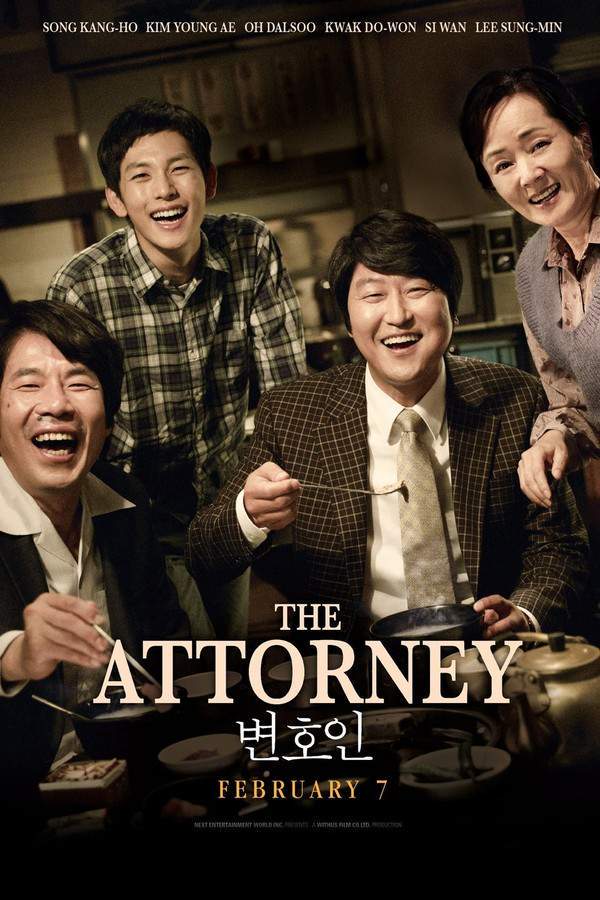
Tragic Conspiracy Dramas in History like The Conspirator

Somber stories exploring the heavy personal cost of national tragedies. For viewers who appreciated the tragic and somber mood of The Conspirator, this list features similar movies about historical conspiracies and their aftermath. Discover stories that explore national grief, political intrigue, and the bittersweet endings that follow major upheavals.

  • somber
  • tragic
  • gripping
  • historical
  • conspiracy
  • political
  • Tone: somber, tragic, tense
  • Pacing: steady, deliberate
Why these movies?

The story pattern: These stories typically begin in the wake of a shocking national tragedy. The plot investigates the conspiracy behind it or deals with its immediate consequences, often through the perspective of a peripheral figure. The journey is one of uncovering uncomfortable truths, leading to a conclusion that is often bittersweet or tragic, highlighting the enduring scars of the event.

Why they belong together: These films share a somber, gripping mood driven by themes of conspiracy, historical injustice, and national grief. They are characterized by a steady pace, high emotional intensity, and a narrative structure that prioritizes the psychological and moral fallout of a pivotal event over action or spectacle.

If you liked this

Movies Like The Conspirator

Similar movies to The Conspirator: the same genre, themes or kind of story. Each one comes with its own plot summary, timeline and ending explained.

Browse all movie summaries

Every angle

The Conspirator (1961) Explained: Plot, Timeline & Characters

Everything about The Conspirator in one place: what happens in the plot summary, the timeline in chronological order, the characters and meaning and a spoiler-free summary. What's After the Movie adds the cast, box office and post-credit scenes.

Coming soon on iOS and Android

The Plot Explained Movie Summary App

Plot summaries, endings explained and timelines on your phone. Catch up on any movie in minutes, save your favorites and never miss a twist again.

Be the first to know when we launch. Your email stays private, always.

Learn more about the app