Plot Explained Spoilers guaranteed!
Plot Explained

Browse by genre

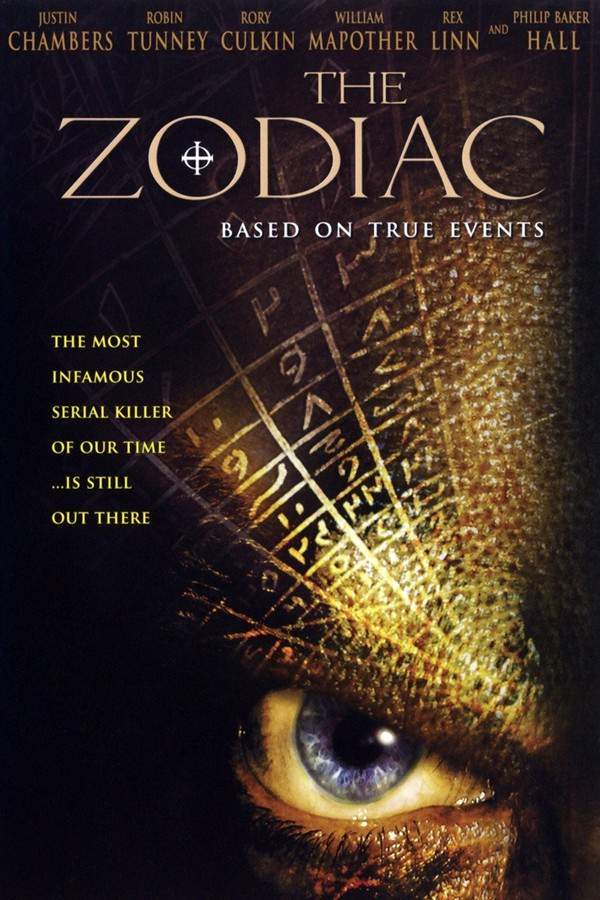
The Zodiac (2006) movie poster

Plot Summary

The Zodiac (2006) Plot Summary Explained

Release, runtime and language
2006 · 92 min · English
Directed by
Alexander Bulkley
Starring
Rory Culkin, Robin Tunney, Justin Chambers

In the Bay Area town of Vallejo, a series of brutal murders throws the community into turmoil. As Inspector Matt Parish investigates, the case proves increasingly difficult to solve, impacting his family and pushing him to the edge. Driven by an obsession to identify the elusive Zodiac killer, Parish’s relentless pursuit threatens to consume him and blur the lines between justice and madness.

On this page (5)
  1. 1 What happens: full plot
  2. 2 Plot questions answered
  3. 3 Movie threads
  4. 4 Movies like The Zodiac
  5. 5 Every angle

Full plot summary · contains spoilers

What Happens in The Zodiac: Full Plot Summary

The whole story of The Zodiac (2006) explained, from the opening scene to the final frame: every key event, every twist and what it all adds up to. Read it as a quick recap before the sequel, to check a scene you missed, or to finally understand what really happened.

The film begins on July 4, 1969, depicting a chilling moment when the Zodiac killer commits his second attack, targeting young lovers Darlene Ferrin (played by Ciara Hughes) and Mike Mageau (portrayed by Lee Norris) at a secluded lane in Vallejo, California. While Mageau manages to survive the assault, Ferrin tragically succumbs to her injuries, setting off a series of events that haunt the region.

A month later, a letter from the Zodiac arrives at the San Francisco Chronicle, which catches the attention of crime reporter Paul Avery (Robert Downey, Jr.) and political cartoonist Robert Graysmith (Rory Culkin). This letter contains encrypted messages that mock the police, but due to his role as a cartoonist, Graysmith struggles to gain the respect of Avery and his colleagues, who underestimate his interest in the unfolding case. Intrigued by the cryptic codes included in the correspondence, Graysmith receives access to one, which he successfully deciphers. As a result of this breakthrough, Avery begins to share insights from the investigation with him, cultivating an unexpected partnership.

Subsequently, the Zodiac killer strikes again at Lake Berryessa, attacking Bryan Hartnell (played by Patrick Scott Lewis) and Cecilia Shepard (portrayed by Pell James). Only Hartnell survives the brutal stabbing, while Shepard sadly does not. Shortly after this attack, the killer escalates the horror, murdering taxi driver Paul Stine in San Francisco's Presidio Heights. The investigation sees detectives Dave Toschi (Justin Chambers) and Bill Armstrong (played by Anthony Edwards) take the lead, collaborating with fellow detectives like Jack Mulanax (portrayed by Elias Koteas) and Ken Narlow (played by Donal Logue). Defying authority, the Zodiac taunts the police through media appearances, fueling the obsession of both Avery and Graysmith as they dig deeper into the case.

During their investigation, Avery and Graysmith uncover additional evidence linking the Zodiac to earlier murders dating back to 1966. However, their relationship with law enforcement shifts between cooperation and tension. They begin to suspect Arthur Leigh Allen (played by John Carroll Lynch), whose ambidextrous nature and troubling history connect him to several of the murders. Yet, handwriting analyses exonerate Allen despite substantial circumstantial evidence against him.

With the passing years, by 1971, Avery grows increasingly paranoid, entangled in a world of drugs and alcohol as he becomes consumed by the case. His obsession further strains his professional relationships and personal life. Facing mounting pressure, Avery ultimately leaves the Chronicle in 1978, while Toschi is demoted under accusations of forging a Zodiac letter, and Armstrong steps away from the homicide division. Meanwhile, Graysmith continues to pursue his investigation independently, aggravating the situation with anonymous threatening calls reminiscent of the Zodiac's early crimes, leading to the collapse of his marriage with Melanie (portrayed by Chloë Sevigny).

Graysmith's relentless pursuit gains the attention of Toschi, who recognizes Graysmith's in-depth knowledge of the case and provides contact information to relevant authorities from neighboring areas. Despite accumulating evidence pointing toward Allen, challenges remain, including the lack of hard proof that could substantiate his claims. Notably, Graysmith uncovers a lead involving a "weird guy" named Lee, who was reportedly seen prior to one of the murders.

In a pivotal moment in December 1983—14 years after the initial slayings—Graysmith confronts Allen in a Vallejo hardware store, where a brief but intense exchange occurs. Their encounter leaves both men with an unsettling impression, and it’s here that Graysmith spots Allen's name tag, inscribed with "Lee." Fast forward to 1991: Mageau views police mugshots and identifies Allen as a prime suspect. However, the film concludes with stark title cards conveying tragic truths—Allen passed away in 1992 before authorities could question him further, and DNA tests conducted in 2002 yielded no matches to samples collected from the Zodiac's infamous letters, leaving the case shrouded in relentless mystery.
Last updated: May 13, 2025 at 20:30

Was this helpful?

Plot questions answered

The Zodiac Plot Explained: Your Questions Answered

The questions people ask most about The Zodiac (2006): what happens in the confusing scenes, why the characters do what they do, the twists, hidden details and what the ending means. Each answer contains spoilers.

Q1

Why was Robert Graysmith so obsessed with catching the Zodiac?

Robert Graysmith became obsessed with the Zodiac case because he was a political cartoonist at the San Francisco Chronicle who first became intrigued by the encrypted codes in the Zodiac's letters. His successful decryption of one of the codes earned him access to investigation details from reporter Paul Avery, which fueled his determination. Over the years, his obsession intensified as he uncovered more evidence pointing toward Arthur Leigh Allen, eventually consuming his personal life, including his marriage to Melanie, and leading him to pursue the case independently for decades.

Foreshadowing: Graysmith's initial interest began when he received access to the Zodiac's code, showing his intellectual curiosity early on.

  • robert graysmith
  • obsession
  • zodiac case
  • investigation
Q2

What caused Paul Avery's paranoia and mental deterioration?

Paul Avery's paranoia and mental breakdown resulted from his deep involvement in the Zodiac case combined with receiving threatening letters from the Zodiac killer himself. As a crime reporter covering the story, he became increasingly entangled in the investigation, receiving inside information from detectives. The psychological toll of being threatened by the real killer, combined with his growing obsession, led him to turn to drugs and alcohol. By 1978, his health and relationships had deteriorated so severely that he left the San Francisco Chronicle.

Foreshadowing: Avery's early access to investigation details planted the seeds for his eventual breakdown.

  • paul avery
  • paranoia
  • threats
  • zodiac letters
  • breakdown
Q3

How did the Zodiac killer manage to taunt the police through media?

The Zodiac killer taunted police by sending letters to the San Francisco Chronicle containing encrypted messages that mocked law enforcement. These letters specifically addressed the police and prosecutors, daring them to catch him. The killer escalated this by making a television appearance, speaking directly to the public and authorities with confident demeanor while continuing to evade capture. This media manipulation became a hallmark of the case, generating massive public attention and putting enormous pressure on investigators.

Foreshadowing: The first Zodiac letter arrived at the Chronicle a month after the July 4th attack, establishing the killer's pattern of communication.

  • zodiac letters
  • media
  • taunts
  • san francisco chronicle
  • tv appearance
Q4

Why was Arthur Leigh Allen considered the prime Zodiac suspect?

Arthur Leigh Allen became the prime suspect because multiple pieces of circumstantial evidence connected him to the Zodiac murders. He was ambidextrous, which aligned with the Zodiac's ability to write with both hands. Witnesses placed him near several crime scenes, and he had a history of violent behavior. Robert Graysmith's investigation uncovered that Allen's name tag read "Lee," which connected to a witness who reported seeing a "weird guy" named Lee before one of the murders. However, handwriting experts concluded Allen did not write the Zodiac letters, and he died in 1992 before police could question him further, leaving the case unresolved.

Foreshadowing: The investigation uncovered evidence linking Allen to murders dating back to 1966, years before the July 1969 attacks.

  • arthur leigh allen
  • prime suspect
  • circumstantial evidence
  • handwriting analysis
Q5

Why couldn't the police definitively identify the Zodiac?

The Zodiac case remained unsolved primarily because of a lack of physical evidence and the killer's deliberate efforts to evade identification. The Zodiac sent taunting letters that generated massive public attention but provided no conclusive proof. Handwriting analysis was inconclusive, and DNA tests conducted in 2002 on samples from the Zodiac's letters yielded no matches. Additionally, Arthur Leigh Allen, the main suspect, died in 1992 before authorities could question him or gather definitive evidence. The combination of limited forensic technology available in the 1960s-70s and the Zodiac's careful avoidance of leaving usable evidence stymied the investigation.

Foreshadowing: Despite detectives Toschi and Armstrong leading an intensive investigation, the Zodiac's letters contained mocked police messages rather than identifying information.

  • unsolved case
  • dna tests
  • evidence
  • zodiac letters
  • investigation
Q6

Why was Mike Mageau's 1991 identification of Arthur Leigh Allen significant?

Mike Mageau's identification of Arthur Leigh Allen in 1991 was significant because Mageau was the surviving victim of the Zodiac's second attack on July 4, 1969, when Darlene Ferrin was killed. After viewing police mugshots, Mageau identified Allen as the attacker, providing the first direct eyewitness identification linking Allen to the crime. This renewed interest in the case and appeared in the film alongside copies of Graysmith's book 'Zodiac,' highlighting how the investigation had come full circle. However, Allen died in 1992 before police could question him, and DNA tests later failed to confirm the connection.

Foreshadowing: Mageau survived the original attack at lovers' lane in Vallejo, making his identification the most credible eyewitness account.

  • mike mageau
  • eyewitness identification
  • 1991
  • arthur leigh allen
Q7

What happened to Dave Toschi after the Zodiac investigation?

Dave Toschi, the legendary San Francisco detective who led the Zodiac investigation alongside Bill Armstrong, was eventually demoted amid accusations that he forged a Zodiac letter. This scandal damaged his reputation and marked a significant fall from grace for the investigator who had become famous for his pursuit of the killer. Armstrong also left the homicide division as the case remained unsolved and the pressure mounted. The demotion represented a tragic end to Toschi's career on a case that had defined his legacy.

Foreshadowing: Toschi and Armstrong took the lead early in the investigation, collaborating with multiple law enforcement agencies.

  • dave toschi
  • demotion
  • forged letter
  • bill armstrong
  • investigation end
Q8

What happened during Graysmith's confrontation with Arthur Leigh Allen in 1983?

In December 1983, fourteen years after the initial slayings, Robert Graysmith tracked down Arthur Leigh Allen at a hardware store in Vallejo. During this brief but intense encounter, Graysmith came face-to-face with the man he believed was the Zodiac. The confrontation left both men with an unsettling impression. Most importantly, Graysmith spotted Allen's name tag inscribed with "Lee," which connected to earlier witness reports about a "weird guy" named Lee seen before one of the murders. This moment solidified Graysmith's conviction that Allen was the Zodiac, though it provided no legal resolution.

Foreshadowing: Graysmith had been investigating Allen for years, and this direct confrontation was the culmination of his obsessive work.

  • graysmith
  • allen
  • 1983
  • vallejo
  • hardware store
  • confrontation
Q9

Why was the Zodiac investigation so challenging for law enforcement?

The Zodiac investigation was extraordinarily difficult because the killer operated across multiple jurisdictions in the Bay Area, including Vallejo, Lake Berryessa, and San Francisco. The Zodiac deliberately taunted police through letters while leaving no definitive physical evidence. Handwriting analysis proved inconclusive, and forensic DNA technology did not exist during the active investigation period. Additionally, the Zodiac's media appearances and letters generated enormous public pressure, forcing detectives to pursue countless leads while the killer continued to evade capture. The case involved multiple law enforcement agencies that sometimes struggled to coordinate effectively.

Foreshadowing: The investigation involved detectives from different cities working together, highlighting the jurisdictional complexity.

  • investigation challenges
  • multiple jurisdictions
  • forensic technology
  • police work
  • zodiac operations
Q10

Why did Robert Graysmith's marriage collapse due to the Zodiac investigation?

Robert Graysmith's marriage to Melanie collapsed because his obsessive pursuit of the Zodiac case consumed virtually all his time and energy. He prioritized investigating the killer over his personal life, conducting interviews with witnesses and detectives while neglecting his relationship. The stress and toll of the investigation, combined with receiving anonymous threatening calls that resembled the Zodiac's early crimes, created an unbearable environment. His single-minded determination to solve the case, which he continued pursuing independently for decades, ultimately destroyed his marriage and much of his personal life.

Foreshadowing: By 1978, Graysmith's fixation had intensified to the point of interfering with his normal life.

  • graysmith marriage
  • melanie
  • obsession
  • personal cost
  • divorce
Q11

Which attacks did the Zodiac killer carry out in the movie?

The Zodiac killer carried out several documented attacks depicted in the film. The second attack occurred on July 4, 1969, at a lovers' lane in Vallejo, killing Darlene Ferrin and seriously wounding Mike Mageau. The third attack took place at Lake Berryessa, where Bryan Hartnell survived but Cecilia Shepard died from her injuries. The fourth attack targeted taxi driver Paul Stine in San Francisco's Presidio Heights, resulting in Stine's murder. These attacks, along with earlier murders dating back to 1966 that were later connected to the Zodiac, formed the basis of the investigation that consumed investigators and journalists for decades.

Foreshadowing: The film opens with the July 4, 1969 attack, establishing the violence that would define the case.

  • zodiac attacks
  • darlene ferrin
  • paul stine
  • lake berryessa
  • cecilia shepard
Q12

Why did the Zodiac killer send encrypted letters to the media?

The Zodiac killer sent encrypted letters to the San Francisco Chronicle as a way to taunt authorities and gain notoriety while maintaining his anonymity. These letters contained cryptic codes that the Zodiac knew would challenge law enforcement and fascinate the public. By mocking the police in the letters and including specific details about the murders that only the killer would know, the Zodiac manipulated the media coverage and kept himself at the center of public attention. This psychological warfare was as important to the Zodiac as the killings themselves, demonstrating his desire to control the narrative and demonstrate his supposed superiority over law enforcement.

Foreshadowing: The first letter arrived exactly one month after the July 4th attack, showing the killer's need for recognition.

  • zodiac letters
  • encrypted codes
  • taunts
  • media manipulation
  • notoriety

Movie threads

More Movies Like The Zodiac, by Mood & Story

Curated lists built around what makes The Zodiac tick: the same mood, the same kind of story or the same emotional payoff. Each list explains why these movies belong together.

Obsessive Investigation Movies like The Zodiac

Stories of investigators becoming consumed by the unsolvable case they pursue. If you liked The Zodiac, explore more movies where investigators are consumed by their cases. This thread includes similar crime dramas and thrillers featuring obsessive pursuits, psychological toll, and unsolved mysteries that blur the line between justice and personal destruction.

  • obsessive
  • tense
  • frustrated
  • sombER
  • unsettling
  • gripping
  • Tone: dark, tense
  • Pacing: steady, methodical
Why these movies?

The story pattern: The narrative follows a linear, procedural structure that unfolds over a long period, tracking the protagonist's growing fixation. The central conflict is not just external (catching the criminal) but also internal, as the character's sanity and stability are progressively eroded by their inability to find closure.

Why they belong together: Movies in this thread are grouped by their shared focus on the psychological unraveling of a protagonist driven by an unsolvable puzzle. They share a dark tone, heavy emotional weight, and a bleak or ambiguous ending that underscores the destructive nature of obsession.

Bleak True Crime Stories Similar to The Zodiac

Grim, methodical crime stories based on real events with no clean resolution. Find movies like The Zodiac that depict dark, true-crime investigations. This collection features similar procedural dramas and mysteries with a steady pace, high intensity, and bleak endings, capturing the grim reality of cases that haunt communities and investigators alike.

  • tense
  • sombER
  • unsettling
  • gripping
  • anxious
  • frustrated
  • Tone: dark, bleak
  • Pacing: steady, procedural
Why these movies?

The story pattern: These narratives are typically linear, following the chronology of a real-life investigation. They emphasize the accumulation of evidence, dead ends, and bureaucratic challenges rather than a thrilling climax. The emotional journey is one of increasing dread and futility, culminating in an ending that acknowledges the mystery's enduring power.

Why they belong together: These movies are united by their foundation in true events, a methodical and steady pacing that mirrors real investigation, and a persistently dark, bleak tone. The shared experience is one of unsettling realism and the acceptance of unresolved justice.

If you liked this

Movies Like The Zodiac

Similar movies to The Zodiac: the same genre, themes or kind of story. Each one comes with its own plot summary, timeline and ending explained.

Browse all movie summaries

Every angle

The Zodiac (2006) Explained: Plot, Timeline & Characters

Everything about The Zodiac in one place: what happens in the plot summary, the timeline in chronological order, the characters and meaning and a spoiler-free summary. What's After the Movie adds the cast, box office and post-credit scenes.

Coming soon on iOS and Android

The Plot Explained Movie Summary App

Plot summaries, endings explained and timelines on your phone. Catch up on any movie in minutes, save your favorites and never miss a twist again.

Be the first to know when we launch. Your email stays private, always.

Learn more about the app