Plot Explained Spoilers guaranteed!
Plot Explained

Browse by genre

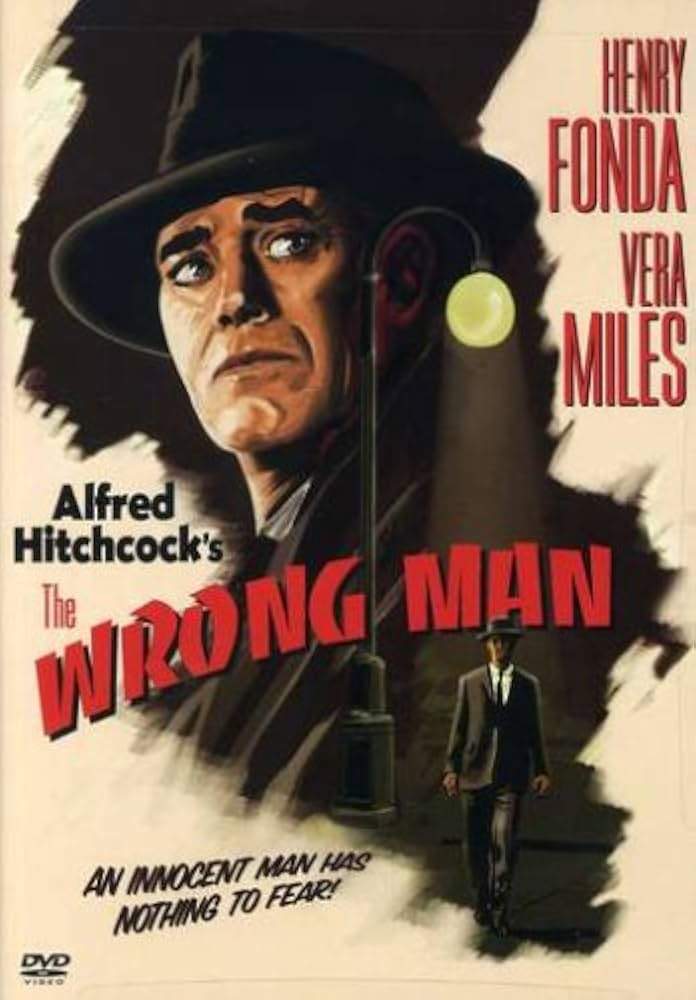
The Wrong Man (1957) movie poster

Plot Summary

The Wrong Man (1957) Plot Summary Explained

Release, runtime and language
1957 · 105 min · English
JustWatch #34,733 2
Directed by
Alfred Hitchcock
Starring
Anthony Quayle, Henry Fonda, Vera Miles, Charles Cooper, Doreen Lang, Esther Minciotti

A grieving woman returns to her childhood home and discovers her grandfather’s caretaker is surprisingly charming, yet something about him feels off. As she investigates, she uncovers a carefully constructed facade and a complex web of secrets. The closer she gets to the truth, the more blurred the lines become between what is real and what is a calculated deception, leading her into a suspenseful and unsettling mystery.

On this page (6)
  1. 1 Where to watch
  2. 2 What happens: full plot
  3. 3 Plot questions answered
  4. 4 Movie threads
  5. 5 Movies like The Wrong Man
  6. 6 Every angle

Where to watch

Where to Watch The Wrong Man (1957)

Where can you watch The Wrong Man? Stream, rent or buy it in the US, including on HBO Max, Amazon Video and Apple TV Store: current JustWatch availability with up-to-date prices.

Streaming availability powered by JustWatch

Full plot summary · contains spoilers

What Happens in The Wrong Man: Full Plot Summary

The whole story of The Wrong Man (1957) explained, from the opening scene to the final frame: every key event, every twist and what it all adds up to. Read it as a quick recap before the sequel, to check a scene you missed, or to finally understand what really happened.

As customary, Christopher Emanuel "Manny" Balestrero, a string bass player at the bustling Stork Club in New York City, returns home to Jackson Heights shortly before dawn. Upon his return, he finds his wife, Rose, still awake and troubled by a persistent toothache. She expresses her anxiety regarding their financial struggles, particularly about affording the cost of her dental extraction. Living modestly and caring for their two young sons, the couple reflects on their ongoing financial challenges. Manny, recalling Rose's insurance policy, suggests they might be able to secure a loan against it to cover the procedure and promises to investigate this once the office opens.

Later that day, after assuring his sons he will return at 5:30 PM to give them music lessons, Manny first visits his ill father. Subsequently, he goes to the insurance company to inquire about the loan. Unbeknownst to Manny, the clerks, feeling uneasy in his presence, begin to conspire, convinced that he resembles a man who robbed them a month prior. As a result, the police, alerted by the insurance clerks, wait for Manny at his home and apprehend him at 5:30 PM, without providing a chance to speak with Rose or disclose the reason for his arrest.

At the police station, the bewildered Manny is questioned about his finances. The officers, seemingly concluding he has a motive for theft, take him on a tour of various stores that had been robbed, seeking identification from the proprietors. While many express uncertainty about Manny's identity as the robber, the police then bring in the insurance clerks to confirm their suspicions. The detectives also suspect a match between Manny's handwriting and that of the robber, leading to an unnerving exercise where Manny is asked to print words from a holdup note. In a moment of anxiety, Manny misspells "drawer" as "draw," echoing the robbery note. This slip, coupled with the wavering testimonies from witnesses, culminates in Manny being charged with robbery and assault, leading to his fingerprinting and confinement overnight.

Meanwhile, Rose grows worried when Manny fails to return, as he has never been late or uncommunicative. By the time the police inform her, she is joined by Manny's family, including his mother and brother-in-law, Gene Conforti, who supports her. The following morning, Manny is transported to felony court via a police wagon, joining other suspects. In a disappointing turn of events, the judge sets a bail amount of $7,500, despite the defense attorney's appeals for clemency. Thankfully, Manny’s family manages to secure his release after raising the funds. Rose subsequently contacts Frank D. O'Connor, a lawyer recommended to them, who reluctantly agrees to take on Manny's case despite his lack of criminal trial experience.

As the case unfolds, O'Connor encourages Manny and Rose to gather details about his whereabouts during the robberies. They recall their vacation at a resort in Cornwall, New York, during the first robbery, where Manny was engaged in a card game with three fellow guests. However, they face obstacles, as one participant is untraceable, while the other two have since passed away. Subsequently, Manny remembers that he had a swollen jaw due to a toothache during the second robbery, and his dentist corroborates this, asserting that the dental procedure had to be postponed. O'Connor sees the potential of this as an alibi since witnesses did not note a swollen jaw on the robber. Gradually, Rose's mental state declines as she emotionally burdens herself, believing her actions led to Manny's entanglement in this ordeal. In a moment of crisis, Manny takes her to a doctor, resulting in her admission to a sanitarium in Ossining.

As the trial begins, witnesses take the stand to identify Manny as the alleged robber. Unfortunately, O'Connor's lack of preparation becomes evident as he struggles to challenge the claims effectively. A particularly disheartening moment occurs when a juror openly questions the merit of O'Connor's cross-examination. Ultimately, the proceedings lead to a mistrial, triggered by the evident bias of the jurors against Manny. Following this setback, Manny confides in his mother, who is caring for the boys during Rose’s absence, expressing his feelings of despair. She suggests seeking solace through prayer, and shortly thereafter, while a delicatessen is robbed, the owner’s husband successfully subdues the assailant while the owner informs the police. This newly apprehended suspect inadvertently catches the attention of the detective working on Manny's case, prompting a reevaluation.

While performing at the Stork Club, Manny is unexpectedly called to the 110th precinct police station, where it is revealed that the insurance clerks now recognize the actual robber among them. After confirming the identification, the clerks can barely meet Manny's gaze as they exit the station. With the charges against him finally dropped, Manny rushes to inform Rose about the news, only to find her unable to engage with him upon his visit to the sanitarium.
Last updated: May 28, 2025 at 19:07

Was this helpful?

Plot questions answered

The Wrong Man Plot Explained: Your Questions Answered

The questions people ask most about The Wrong Man (1957): what happens in the confusing scenes, why the characters do what they do, the twists, hidden details and what the ending means. Each answer contains spoilers.

Q1

Why was Manny arrested when he went to the insurance company?

Manny was arrested because insurance clerks recognized him as resembling a man who had robbed them a month earlier. When Manny visited the office to inquire about borrowing against his wife's insurance policy, the clerks became uneasy and alerted the police. Officers waited at his home and arrested him at 5:30 PM without explaining the reason or giving him a chance to contact his wife.

  • arrest
  • insurance clerks
  • robbery suspicion
  • police
Q2

Why did police think Manny was the robber?

Police suspected Manny primarily because he matched the physical description of a previous robber and because he was experiencing financial difficulty. His visit to the insurance office triggered the clerks' memory. Additionally, officers took him to multiple stores for identification and obtained his handwriting samples, which they compared to the holdup notes.

  • suspect
  • identification
  • handwriting evidence
  • police investigation
Q3

How did misspelling "drawer" hurt Manny's case?

During handwriting analysis, police asked Manny to copy words from the robbery note. In his anxiety, he misspelled "drawer" as "draw," matching an error made by the actual robber. This slip, combined with uncertain witness identifications, led to Manny being charged with robbery and assault.

  • handwriting analysis
  • drawer misspelling
  • evidence
  • courtroom
Q4

Why did Rose blame herself for Manny's trouble?

Rose fell into depression because she believed her financial stress and toothache led Manny to visit the insurance company, which triggered his mistaken identification and arrest. She irrationaly concluded that if she hadn't needed money for dental work, Manny would never have gone to that office and been caught up in the nightmare.

  • rose
  • guilt
  • depression
  • blame herself
  • mental breakdown
Q5

What caused Rose's mental breakdown?

Rose's mental state deteriorated under the crushing stress of watching her innocent husband being wrongfully accused. The constant worry, fear of losing him to prison, financial strain, and her misplaced guilt about triggering the events led her to become catatonic. Manny eventually had her admitted to a sanitarium in Ossining.

  • rose
  • mental breakdown
  • sanitarium
  • psychological trauma
Q6

Why was O'Connor's defense so ineffective at trial?

Frank D. O'Connor was a lawyer with no criminal trial experience who reluctantly took Manny's case. He failed to adequately prepare his cross-examination of witnesses, and his challenges to the identification evidence fell flat. A juror openly questioned the quality of his defense, and the biased jurors ultimately caused a mistrial.

  • o'connor
  • defense lawyer
  • trial
  • mistrial
  • ineffective counsel
Q7

How was the real robber finally identified?

The real robber was caught after another deli robbery. During that incident, the owner's husband subdued the assailant while the owner called police. The detective working on Manny's case became suspicious, and when the actual robber was brought in, the insurance clerks finally recognized him as the true culprit. They could barely meet Manny's gaze when confirming the identification.

  • real robber
  • identification
  • deli robbery
  • exoneration
Q8

Why couldn't Manny's alibi witnesses be found?

Manny and Rose attempted to prove they were at a resort in Cornwall, New York during one of the robberies. However, one of the three card game participants was untraceable, while the other two had since died. They also had a dentist confirm Manny had a swollen jaw during another robbery, which could have helped since witnesses didn't note a swollen jaw on the robber, but this evidence wasn't fully developed before the trial complications.

  • alibi
  • witnesses
  • corner new york
  • vacation
  • evidence
Q9

What led to the mistrial in Manny's case?

The trial ended in a mistrial because the jurors showed evident bias against Manny. The defense attorney's ineffective cross-examination failed to undermine the weak witness identifications, and the jurors appeared to favor the prosecution's circumstantial case. The judge declared a mistrial due to this juror bias.

  • mistrial
  • jurors
  • bias
  • courtroom proceedings
Q10

What happened to Rose at the end of the movie?

After Manny was exonerated and the charges were dropped, he rushed to inform Rose at the sanitarium. However, he found her unable to engage with him - she remained unresponsive and catatonic. The movie ends with this bittersweet realization that while Manny's name is cleared, the psychological damage to Rose is lasting and profound.

  • rose
  • sanitarium
  • ending
  • catatonic
  • unresponsive

Movie threads

More Movies Like The Wrong Man, by Mood & Story

Curated lists built around what makes The Wrong Man tick: the same mood, the same kind of story or the same emotional payoff. Each list explains why these movies belong together.

Miscarriage of Justice Thrillers like The Wrong Man

Stories where ordinary people are trapped by a flawed and faceless system. For viewers who appreciated the harrowing reality of The Wrong Man, this list features movies about wrongful accusations and systemic failure. Explore similar dramatic thrillers and film noirs where innocent characters fight against a relentless legal machine.

  • unsettling
  • anxious
  • grim
  • despairing
  • methodical
  • claustrophobic
  • Tone: tense, bleak
  • Pacing: steady, methodical
Why these movies?

The story pattern: The narrative follows an average citizen whose life is upended by a case of mistaken identity or circumstantial evidence. The story methodically progresses through the legal stages—arrest, trial, imprisonment—highlighting the bureaucratic indifference and the psychological toll on the accused and their family.

Why they belong together: These films are grouped by their central theme of injustice and their ability to generate tension through realism rather than action. They share a heavy emotional weight, a tense tone, and a focus on the devastating personal cost of a legal error.

Slow Burn Psychological Descent stories like The Wrong Man

A methodical and grim exploration of a character's mental collapse under pressure. If you were gripped by the mental health decline in The Wrong Man, this collection features movies with a similar focus on psychological trauma. Find other straightforward, heavy dramas where characters slowly succumb to despair under extreme stress.

  • grim
  • despairing
  • anxious
  • unsettling
  • heavy
  • psychological
  • Tone: grim, despairing
  • Pacing: steady, slow burn
Why these movies?

The story pattern: The story centers on a traumatic event—often a miscarriage of justice, a loss, or a hidden secret—that acts as a catalyst. The narrative pacing is steady and deliberate, charting the protagonist's or a close family member's gradual decline into anxiety, depression, or catatonia, often culminating in a bittersweet or bleak resolution.

Why they belong together: These films are connected by their primary focus on the realistic and devastating impact of trauma on the human psyche. They share a high intensity, a steady pace that mimics the inexorable nature of mental collapse, and a heavy, often bittersweet emotional conclusion.

If you liked this

Movies Like The Wrong Man

Similar movies to The Wrong Man: the same genre, themes or kind of story. Each one comes with its own plot summary, timeline and ending explained.

Browse all movie summaries

Every angle

The Wrong Man (1957) Explained: Plot, Timeline & Characters

Everything about The Wrong Man in one place: what happens in the plot summary, the timeline in chronological order, the characters and meaning and a spoiler-free summary. What's After the Movie adds the cast, box office and post-credit scenes.

Coming soon on iOS and Android

The Plot Explained Movie Summary App

Plot summaries, endings explained and timelines on your phone. Catch up on any movie in minutes, save your favorites and never miss a twist again.

Be the first to know when we launch. Your email stays private, always.

Learn more about the app