Plot Explained Spoilers guaranteed!
Plot Explained

Browse by genre

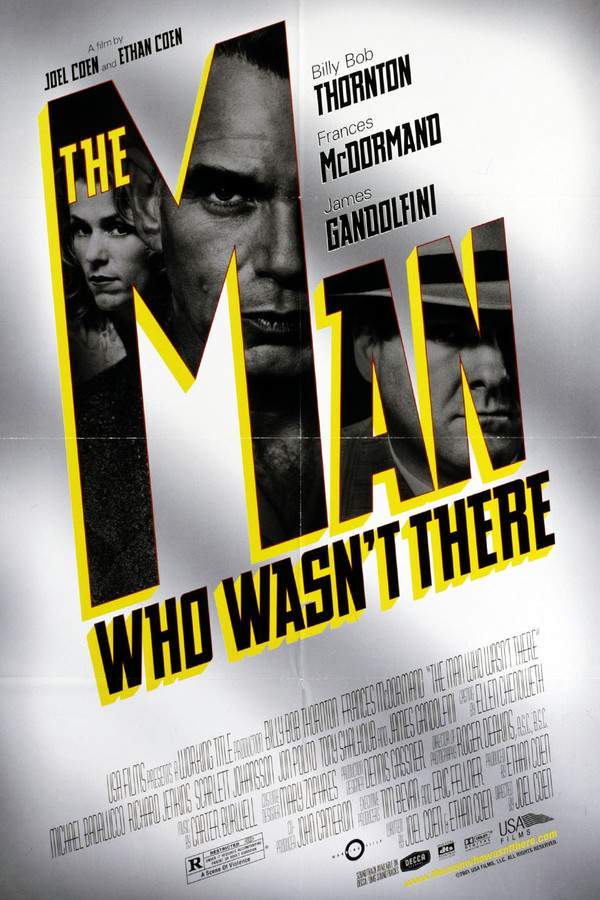
The Man Who Wasn't There (2001) movie poster

Plot Summary

The Man Who Wasn't There (2001) Plot Summary Explained

Release, runtime and language
2001 · 116 min · English
Directed by
Ethan Coen, Joel Coen
Starring
Billy Bob Thornton, Frances McDormand

In 1940s northern California, a reserved barber named Ed Crane finds his ordinary existence shattered by his wife's affair. This triggers a dangerous series of events involving deception, blackmail, and violence. As Ed becomes entangled in a complex scheme, he confronts a shadowy underworld and must confront his own moral compass while navigating a world of escalating risks and hidden truths.

On this page (6)
  1. 1 Where to watch
  2. 2 What happens: full plot
  3. 3 Plot questions answered
  4. 4 Movie threads
  5. 5 Movies like The Man Who Wasn't There
  6. 6 Every angle

Where to watch

Where to Watch The Man Who Wasn't There (2001)

Where can you watch The Man Who Wasn't There? Stream, rent or buy it in the US, including on Amazon Video, Apple TV Store and Fandango At Home: current JustWatch availability with up-to-date prices.

Streaming availability powered by JustWatch

Full plot summary · contains spoilers

What Happens in The Man Who Wasn't There: Full Plot Summary

The whole story of The Man Who Wasn't There (2001) explained, from the opening scene to the final frame: every key event, every twist and what it all adds up to. Read it as a quick recap before the sequel, to check a scene you missed, or to finally understand what really happened.

In 1949 Santa Rosa, California, Ed Crane is trapped in a disheartening life married to Doris, a bookkeeper battling a drinking problem. He spends his days working in a barbershop owned by his brother-in-law, Frank. One day, a customer named Creighton Tolliver approaches Ed with an intriguing investment opportunity, seeking $10,000 for a new venture in dry cleaning. Motivated by a desire to change his circumstances, Ed decides to anonymously blackmail Doris's employer, the shady "Big Dave" Brewster, whom he suspects is having an affair with Doris. Brewster, desperate to hide his transgressions, illegally siphons money from his department store to meet the demands of the blackmail.

However, Brewster soon realizes what is happening and confronts Tolliver, leading to a brutal altercation where Tolliver is ultimately murdered. Facing danger himself, Ed finds himself involved in a deadly struggle when Brewster threatens him at the department store. In a moment of self-defense, Ed fatally stabs Brewster with a cigar knife.

As the investigation unfolds, authorities discover discrepancies in the store's finances, leading to Doris's arrest under the belief that she embezzled funds and murdered Brewster. To navigate the legal turmoil, Ed hires Freddy Riedenschneider, a flashy defense attorney from Sacramento known for his extravagant lifestyle, which is funded by a significant portion of Doris's defense contributions, financed through a mortgage on the barbershop by Frank. Tragically, on the eve of her trial, Doris takes her own life in her jail cell, revealing she had been pregnant and desperate, despite having not been intimate with Ed for years.

Meanwhile, Frank spirals deeper into debt and alcoholism. Ed, seeking solace in companionship, visits a friend's young daughter, Rachel "Birdy" Abundas, to listen to her play the piano, nurturing a fantasy of managing her burgeoning music career. This dream, however, is shattered by a music teacher's harsh assessment that Birdy lacks talent. The situation escalates dramatically when Birdy makes a bold advance on Ed, causing him to crash his car in shock.

Ed awakens in a hospital, only to be arrested for the murder of Tolliver, who was found beaten to death alongside Ed's investment papers. The police theorize that Ed manipulated Doris into embezzling funds and killed Tolliver when he discovered the truth. In a desperate bid for defense, Ed mortgages his home to retain Riedenschneider. On the first day of the trial, chaos erupts as Frank lashes out at Ed, resulting in a mistrial. Left with no defense strategy, Ed appeals to the court's mercy, yet his plea falls on deaf ears, leading to a death sentence.

Amidst the bleak wait on death row, Ed pours his life story into a manuscript aimed at pulp magazines. As his execution looms closer, a strange sighting of a UFO outside the prison cell grips his attention. In his final moments before the electric chair, Ed reflects on his choices, revealing a peculiar sense of peace; he harbors no regrets, anticipating a reunion with Doris in the afterlife, liberated from the flaws of their earthly lives.

Last updated: November 15, 2024 at 19:42

Was this helpful?

Plot questions answered

The Man Who Wasn't There Plot Explained: Your Questions Answered

The questions people ask most about The Man Who Wasn't There (2001): what happens in the confusing scenes, why the characters do what they do, the twists, hidden details and what the ending means. Each answer contains spoilers.

Q1

Why did Ed decide to blackmail Big Dave Brewster?

Ed blackmaileаd Brewster because he suspected his wife Doris was having an affair with Brewster. Rather than confronting the situation directly, Ed chose an anonymous blackmail scheme hoping to profit from Brewster's desperation to hide his transgressions and potentially force some change in his own stagnant life.

Foreshadowing: Early scenes establish Ed's monotonous existence and hint at his passive, observant nature, making this indirect approach consistent with his character.

  • ed crane
  • b blackmail
  • b brewest
  • affair
  • motivation
Q2

Who actually killed Creighton Tolliver?

Big Dave Brewster killed Creighton Tolliver. When Tolliver confronted Brewster about the blackmail demands (which were actually coming from Ed), Brewster attacked and murdered him. Ed was later wrongly arrested for the crime, with police believing he killed Tolliver to cover up his own blackmail scheme.

Foreshadowing: The timeline shows Brewster becoming increasingly desperate as the blackmail continued, setting up his violent confrontation with Tolliver.

  • creighton tolliver
  • murder
  • big dave brewster
  • killer
Q3

Why was Doris arrested for Big Dave Brewster's murder?

Doris was arrested because investigators discovered discrepancies in the department store's finances and believed she had embezzled money. They assumed she killed Brewster to cover up her theft, completely misunderstanding the blackmail scheme. Ed had been the one blackmailing Brewster, not Doris.

Foreshadowing: The illegal siphoning of funds from the department store creates the financial paper trail that leads investigators to Doris.

  • doris arrest
  • embezzlement
  • brewster murder
  • accused
Q4

How was Doris pregnant if she hadn't been intimate with Ed for years?

The film strongly implies Doris's pregnancy resulted from her affair with Big Dave Brewster. The revelation comes as a devastating shock to Ed, adding tragic weight to her suicide. This explains why she had been distant from Ed and confirms her infidelity.

Foreshadowing: Ed's suspicion of an affair between Doris and Brewster was the catalyst for the entire blackmail scheme.

  • doris pregnancy
  • affair
  • big dave brewster
  • suicide
  • revelation
Q5

What happened between Ed and Birdy that caused the car crash?

Birdy, the young piano student Ed had been mentoring, made a romantic or sexual advance toward Ed. Shocked by this inappropriate advance from a much younger woman, Ed crashed his car. This incident remains ambiguous in the film, but it represents another example of Ed's life spiraling out of control due to circumstances beyond his control.

Foreshadowing: Ed's visits to Birdy had an undertone of unspoken longing, though he appeared to channel this into paternal aspirations for her career.

  • birdy abundas
  • car crash
  • advance
  • ed crane
Q6

Why does Ed see a UFO before his execution?

The UFO sighting represents a moment of surreal escapism in the otherwise grim narrative. As Ed faces his fate on death row, the strange light in the sky offers him a brief distraction from his impending execution and symbolizes his detachment from reality as he prepares to die.

  • ufo
  • execution
  • death row
  • surreal
  • moment
Q7

Why is Ed at peace with his death sentence?

Ed achieves a strange sense of acceptance by his final moments. He views death as a reunion with his wife Doris in an afterlife free from the flaws and disappointments of their earthly marriage. His passivity throughout the film, combined with his reflection on a life of missed opportunities, allows him to find a kind of peace in letting go.

Foreshadowing: Ed's overall passive demeanor throughout the film foreshadows his acceptance of fate rather than fighting against it.

  • death sentence
  • peace
  • afterlife
  • doris
  • acceptance
Q8

Why did Frank attack Ed during the trial?

Frank, Ed's brother-in-law who owned the barbershop, had mortgages the business to pay for Ed's defense attorney. As Frank spiraled into debt and alcoholism, he became increasingly resentful of Ed. During the trial, Frank publicly lashed out at Ed, causing a mistrial. His anger stemmed from financial ruin and likely suspected Ed was more culpable than he appeared.

Foreshadowing: Frank's financial troubles and descent into alcoholism are traced throughout the second half of the film.

  • frank
  • trial
  • mistrial
  • attack
  • brother-in-law
Q9

Why did Doris commit suicide in jail?

Doris took her own life on the eve of her trial while facing overwhelming despair. She was pregnant with another man's child, had been falsely accused of murder and embezzlement, and faced the shame of her affair being exposed. The combination of these factors, plus years of struggling with alcoholism and an unhappy marriage, drove her to end her life.

Foreshadowing: Doris's battle with alcoholism and emotional distance throughout the film foreshadow her ultimate breakdown.

  • doris suicide
  • jail
  • pregnant
  • despair
  • trail
Q10

Why did Ed stab Big Dave Brewster?

Ed killed Brewster in what he claimed was self-defense. When Brewster confronted Ed at the department store, threatening him with violence over the blackmail situation, Ed panicked and stabbed Brewster with a cigar knife. However, the circumstances remain ambiguous, and it's unclear if the killing was truly necessary self-defense or a desperate act.

Foreshadowing: Tensions had been building between Ed and Brewster as the blackmail escalated, leading to this violent confrontation.

  • ed crane
  • brewster
  • stabbing
  • self-defense
  • murder
Q11

What was the dry cleaning business investment about?

Creighton Tolliver approached Ed with an opportunity to invest $10,000 in a new dry cleaning business venture. This represented Ed's only apparent chance to escape his bleak life. However, the investment money became entangled in the blackmail scheme, and Tolliver's death left the opportunity forever out of reach.

Foreshadowing: Ed's initial hope for a better life is introduced early, making his ultimate fate even more tragic.

  • dry cleaning
  • investment
  • tolliver
  • 10000
  • money

Movie threads

More Movies Like The Man Who Wasn't There, by Mood & Story

Curated lists built around what makes The Man Who Wasn't There tick: the same mood, the same kind of story or the same emotional payoff. Each list explains why these movies belong together.

Fatalistic noir stories like The Man Who Wasn't There

Stories where a small decision triggers an inescapable cascade of doom. If you liked the fatalistic spiral and oppressive mood of 'The Man Who Wasn't There', you'll find similar movies here. This collection features bleak crime dramas and neo-noirs where characters are trapped by fate, leading to stories of moral compromise and ultimate doom, all with a heavy emotional weight.

  • fatalistic
  • oppressive
  • melancholic
  • dreary
  • doomed
  • existential
  • Tone: bleak, fatalistic, melancholic
  • Pacing: slow, deliberate
Why these movies?

The story pattern: The narrative typically follows an average, often detached, protagonist who makes a single misstep into a world of crime or deception. This decision, rather than granting agency, instead reveals their powerlessness against larger, shadowy forces. The plot unfolds with a sense of grim inevitability, punctuated by ironic twists that seal the character's bleak fate.

Why they belong together: These movies are grouped by their shared commitment to a fatalistic worldview, a bleak tone, and a slow, deliberate pace that allows the sense of doom to permeate every scene. They feature protagonists on a downward spiral, exploring themes of futility, moral ambiguity, and the crushing weight of the American Dream gone wrong.

Movies about slow moral collapse like The Man Who Wasn't There

Character studies where quiet desperation leads to a heavy moral compromise. For viewers who appreciated the slow, deliberate examination of moral failure in 'The Man Who Wasn't There', this section highlights similar films. Discover character-driven dramas where ordinary people are pushed to their limits, resulting in stories of betrayal, desperation, and heavy emotional consequences, all conveyed through a patient, atmospheric pace.

  • slow burn
  • psychological
  • detached
  • desperation
  • heavy
  • moral ambiguity
  • Tone: bleak, detached, heavy
  • Pacing: slow burn, atmospheric
Why these movies?

The story pattern: The narrative is less about external events and more about the internal journey of the protagonist. It follows a linear but deeply psychological path, where external pressures—like infidelity, financial despair, or a corrupt environment—slowly corrode the character's principles. The conflict is primarily internal, manifesting in quiet actions that have loud, tragic repercussions.

Why they belong together: These films are connected by their shared focus on character psychology over fast-paced plots. They utilize a slow burn approach to build an oppressive atmosphere, allowing the viewer to feel the weight of every bad decision. The emotional journey is central, resulting in a heavy, contemplative viewing experience centered on themes of failure and existential dread.

If you liked this

Movies Like The Man Who Wasn't There

Similar movies to The Man Who Wasn't There: the same genre, themes or kind of story. Each one comes with its own plot summary, timeline and ending explained.

Browse all movie summaries

Every angle

The Man Who Wasn't There (2001) Explained: Plot, Timeline & Characters

Everything about The Man Who Wasn't There in one place: what happens in the plot summary, the timeline in chronological order, the characters and meaning and a spoiler-free summary. What's After the Movie adds the cast, box office and post-credit scenes.

Coming soon on iOS and Android

The Plot Explained Movie Summary App

Plot summaries, endings explained and timelines on your phone. Catch up on any movie in minutes, save your favorites and never miss a twist again.

Be the first to know when we launch. Your email stays private, always.

Learn more about the app