Year: 2016
Runtime: 110 min
Language: English
Director: Gus Van Sant
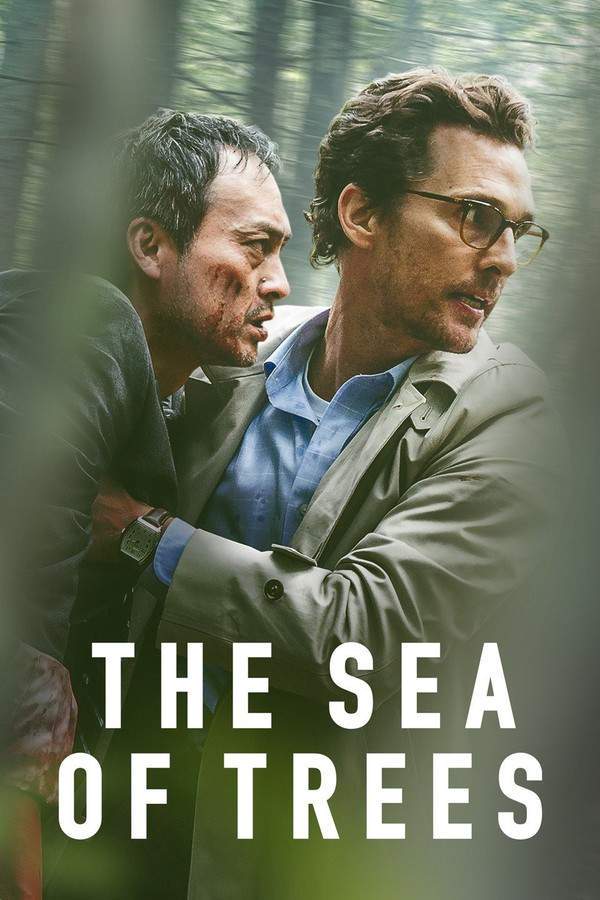
Haunted by a tragic past and a fractured marriage to Joan, an American professor travels to Japan's Aokigahara forest, known as the Sea of Trees. There, he encounters Takumi, a mysterious man also grappling with profound loss. Their paths intertwine as they begin a deeply moving journey of self-discovery, confronting their demons and seeking solace amidst the serene yet melancholic beauty of the ancient woodland.
Find where to stream, rent, or buy The Sea of Trees (2016) in the US with current JustWatch availability, up-to-date pricing, and platform listings for subscription, rental, and digital purchase options.
Warning: spoilers below!
Haven’t seen The Sea of Trees yet? This summary contains major spoilers. Bookmark the page, watch the movie, and come back for the full breakdown. If you're ready, scroll on and relive the story!
Read the complete plot breakdown of The Sea of Trees (2016), including all key story events, major twists, and the ending explained in detail. Discover what really happened, and what it all means.
Arthur Brennan, an adjunct professor of physics, embarks on a journey to Aokigahara, often referred to as “The Suicide Forest,” carrying a sealed package with him. Upon his arrival, he intends to take his own life through a drug overdose but unexpectedly encounters Takumi Nakamura, a Japanese man who previously tried to end his life by slitting his wrists after suffering a demotion. However, he now finds himself torn by memories of his wife Kiiro and daughter Fuyu, realizing he would miss them dearly. The two men soon find themselves lost in the forest, navigating through a thick maze of trees, and to keep their minds occupied, they share glimpses from their lives.
As flashbacks unfold, we learn about Arthur’s troubled marriage to his wife Joan, a real estate agent. Their relationship is strained due to Joan’s resentment over Arthur’s affair with Gabriella, his colleague, and the constant belittlement he faces for earning less than her. After a fierce argument leads Joan to suffer a heavy nosebleed, a hospital visit reveals she has a brain tumor. Remarkably, the couple manages to rekindle their love during this tumultuous period, reminiscing about their cherished lake house and the joy they found in the simple things, like walking among the orchids.
Tragedy strikes when a truck collision claims Joan’s life after she is transported to a recovery hospital. At her funeral, Arthur confesses to the funeral director that despite their years together, he hardly knew his wife. The director reminds him about one of Joan’s sisters sending a copy of her favorite book, triggering a wave of nostalgia.
In the forest, Arthur and Takumi face a series of harrowing challenges: falls, flash floods, dehydration, and the biting cold of the night. Amidst the despair, they come across the bodies of individuals who succumbed to their struggles. Taking refuge in a tent with a deceased camper’s emergency supplies, Arthur shares with Takumi the deep remorse he feels for the way he treated Joan during their marriage.
The following morning, Arthur leaves a sick Takumi behind as he ventures out to seek help, promising to return. Using a walkie-talkie from the deceased camper, Arthur makes contact with park rangers, but his weakened state hampers his ability to convey that Takumi is still at risk in the forest.
Twelve days later, Arthur is assessed by a psychiatrist at the hospital before his anticipated release. He expresses his determination to return to the forest for Takumi, but the psychiatrist reveals troubling news: the rangers found the tent but no one else, and there are no records of a Takumi Nakamura or his family.
Returning to the forest, Arthur discovers the unopened package he previously abandoned. He finds the tent and a coat he used to cover Takumi but is unexpectedly greeted by a beautiful orchid in Takumi’s place. He recalls Takumi’s words about the forest acting as a purgatory, where the spirits of loved ones linger in moments of despair. Inside the package, he uncovers Joan’s favorite book, Hansel and Gretel, leading him to a profound realization: Takumi was, in fact, a manifestation of Joan’s spirit, guiding him to overcome his guilt.
Arthur ultimately returns to the United States, bringing the orchid with him. During a conversation with his student Eric, he discovers that the names Takumi mentioned were not identities, but rather words signifying “yellow” and “winter,” leading him to remember his last meaningful exchange with Joan. He visits their lake house one last time, planting the orchid in Joan’s garden, a symbol of love, remembrance, and healing.
Last updated: November 15, 2024 at 15:56
Explore frequently asked questions about The Sea of Trees (2016) with spoiler-rich answers covering the full plot summary, major story beats, character motivations, hidden details, and ending meaning. This movie summary FAQ helps explain confusing scenes, plot twists, and narrative decisions in clear, searchable detail.
Arthur traveled to Aokigahara, known as the Suicide Forest, with the intention of ending his life. He was carrying a sealed package containing his wife's favorite book, symbolizing the emotional burden he wanted to escape. Haunted by guilt over his affair and his failure to truly know his wife Joan, Arthur sought to find peace in the notorious forest.
The film opens with Arthur arriving at the forest with a sealed package, immediately establishing his suicidal intent.
Takumi Nakamura is a Japanese man who previously attempted suicide by slitting his wrists after being demoted from his job. He survived and found himself lost in the forest, torn by memories of his wife Kiiro and daughter Fuyu. Unlike Arthur, Takumi's near-death experience made him realize he would miss his family dearly, giving him a reason to want to live.
Takumi's backstory is revealed through his conversations with Arthur as they navigate the forest together.
After recovering from brain tumor surgery, Joan was tragically killed in a truck collision while being transported from one hospital to another. This accident occurred after Arthur and Joan had rekindled their love during her illness, making the loss even more devastating for Arthur.
The film hints at Joan's fragile state during her recovery period before the accident occurs.
Takumi was revealed to be a manifestation of Joan's spirit, serving as a spiritual guide to help Arthur overcome his guilt. The forest functioned as a purgatory where the spirits of loved ones appear during moments of despair. When Arthur returns to the forest, he finds an orchid in Takumi's place, confirming the supernatural nature of their encounter.
Takumi speaks about the forest being a purgatory where spirits of loved ones linger in moments of despair.
The orchid represents love, remembrance, and healing. It appears where Takumi once stood, confirming he was Joan's spiritual form. Arthur brings the orchid back to America and plants it in Joan's garden at their lake house, symbolizing his acceptance of her death and his ability to move forward while keeping her memory alive.

The orchid blooms in the exact spot where Takumi stood, marking the moment of spiritual revelation.
Kiiro means "yellow" and Fuyu means "winter" in Japanese. Arthur discovers this when his student Eric points out that these were not the names of Takumi's family members, but rather Japanese words. This realization leads Arthur to remember his last meaningful conversation with Joan, who had mentioned yellow flowers and winter at their lake house.
Takumi's references to Kiiro and Fuyu seem like family names but are actually Japanese words with deeper personal significance.
The rangers found Arthur's tent and supplies but found no evidence that anyone else had been there. There were no records of a Takumi Nakamura or his family because Takumi was not a physical person but a spiritual manifestation. This explains why no search could locate him despite Arthur's desperate attempts to communicate his location.
Arthur struggles to convey Takumi's location to rangers using the walkie-talkie, foreshadowing the revelation that Takumi was never physically there.
The sealed package contained a copy of Joan's favorite book, "Hansel and Gretel," which one of Joan's sisters had sent after her death. Arthur had kept this book throughout his guilt and grief, and finding it in the package helped him understand that his encounter with Takumi was Joan's way of guiding him toward healing.
Arthur carries the package throughout his journey but abandons it initially, only to rediscover it during his return.
Arthur felt he hardly knew Joan because their marriage was strained by his affair with colleague Gabriella and his lower earning compared to Joan, which led to constant belittlement. Despite years together, Arthur admitted to the funeral director that he never truly understood her. Their reconnection only came during her hospitalization for her brain tumor, when they reminisced about their lake house.
Flashbacks reveal the tension in their marriage caused by Arthur's affair and financial insecurity.
Discover curated groups of movies connected by mood, themes, and story style. Browse collections built around emotion, atmosphere, and narrative focus to easily find films that match what you feel like watching right now.
Characters confront their past in transformative, otherworldly landscapes.Movies like The Sea of Trees where characters grapple with profound loss in ethereal settings. If you liked the themes of grief, guilt, and spiritual guidance in The Sea of Trees, you'll find similar stories of melancholic healing and symbolic redemption here.
The narrative typically involves a protagonist, burdened by trauma or guilt, entering a liminal space—be it a forest, a dreamscape, or a metaphorical afterlife. There, they are not alone; a mysterious figure or series of events forces a confrontation with their inner pain, culminating not in a simple happy ending, but in a nuanced, bittersweet resolution that offers a path forward.
This thread groups movies based on their shared focus on internal redemption, the use of symbolic settings as purgatorial metaphors, and a narrative arc that moves from despair toward a complex, often spiritual, form of acceptance.
Stories where isolated characters process heavy grief at a reflective pace.Find movies similar to The Sea of Trees that feature a slow, melancholic pace and a solitary character in a striking natural setting. If you liked the quiet, reflective feel and heavy emotional weight of The Sea of Trees, explore these dramas about grief and isolation.
The narrative is often minimalist, focusing on a single protagonist's journey through a visually striking but emotionally oppressive environment. The pacing is deliberately slow, allowing the audience to sit with the character's pain. The conflict is almost entirely internal, with flashbacks and quiet moments revealing the source of their despair, leading to a gradual, often subtle, emotional shift.
Movies are grouped here based on a potent combination of a melancholic tone, slow pacing, a focus on a solitary protagonist, and the use of the environment as a character itself to reflect and amplify the inner turmoil of grief.
Don't stop at just watching - explore The Sea of Trees in full detail. From the complete plot summary and scene-by-scene timeline to character breakdowns, thematic analysis, and a deep dive into the ending - every page helps you truly understand what The Sea of Trees is all about. Plus, discover what's next after the movie.
Track the full timeline of The Sea of Trees with every major event arranged chronologically. Perfect for decoding non-linear storytelling, flashbacks, or parallel narratives with a clear scene-by-scene breakdown.
Discover the characters, locations, and core themes that shape The Sea of Trees. Get insights into symbolic elements, setting significance, and deeper narrative meaning - ideal for thematic analysis and movie breakdowns.
Discover movies like The Sea of Trees that share similar genres, themes, and storytelling elements. Whether you’re drawn to the atmosphere, character arcs, or plot structure, these curated recommendations will help you explore more films you’ll love.
The Sea of Trees (2016) Scene-by-Scene Movie Timeline
The Sea of Trees (2016) Movie Characters, Themes & Settings
The Sea of Trees (2016) Spoiler-Free Summary & Key Flow
Movies Like The Sea of Trees – Similar Titles You’ll Enjoy
The Tree (2011) Story Summary & Characters
Departures (2009) Ending Explained & Film Insights
The Forest (2016) Movie Recap & Themes
The Sea Is Watching (2003) Movie Recap & Themes
The People Garden (2016) Complete Plot Breakdown
Vision (2018) Spoiler-Packed Plot Recap
When a Tree Falls (2018) Complete Plot Breakdown
Distance (2001) Complete Plot Breakdown
A Forest with No Name (2002) Ending Explained & Film Insights
The Forest for the Trees (2003) Film Overview & Timeline
The Forest of Love (2019) Movie Recap & Themes
Jyukai: The Sea of Trees Behind Mt. Fuji (2005) Complete Plot Breakdown
Forest of Death (2007) Spoiler-Packed Plot Recap
The Tree of Love (1938) Ending Explained & Film Insights
I Hear the Trees Whispering (2022) Plot Summary & Ending Explained