Madman? Monster? Murderer? Scientist? After a detective is beaten by thugs and committed to an asylum overseen by Professor Baum, he watches the professor become obsessed with a fellow inmate—criminal mastermind Dr. Mabuse, a hypnotist. When Mabuse’s notes are linked to a string of recent crimes, Commissioner Lohmann must uncover how the doctor is directing the offenders, despite contradictory reports on his location, and bring him to justice.
Find where to stream, rent, or buy The Testament of Dr. Mabuse (1933) in the US with current JustWatch availability, up-to-date pricing, and platform listings for subscription, rental, and digital purchase options.
Warning: spoilers below!
Haven’t seen The Testament of Dr. Mabuse yet? This summary contains major spoilers. Bookmark the page, watch the movie, and come back for the full breakdown. If you're ready, scroll on and relive the story!
Explore the full timeline and setting of The Testament of Dr. Mabuse (1933). Follow every major event in chronological order and see how the environment shapes the story, characters, and dramatic tension.
Last updated: October 04, 2025 at 17:37
Meet the key characters of The Testament of Dr. Mabuse (1933), with detailed profiles, motivations, and roles in the plot. Understand their emotional journeys and what they reveal about the film’s deeper themes.
Last updated: October 04, 2025 at 17:37
Explore the central themes of The Testament of Dr. Mabuse (1933), from psychological, social, and emotional dimensions to philosophical messages. Understand what the film is really saying beneath the surface.
Last updated: October 04, 2025 at 17:37
Browse frequently asked questions about The Testament of Dr. Mabuse (1933) focused on characters, relationships, themes, symbols, setting, and story context. This movie info FAQ gives spoiler-aware explanations for character arcs, world details, and thematic interpretation so readers can better understand what the film is really about.
The story unfolds across urban Germany, moving between a print shop, a mental asylum, a bank, and a chemical plant. These locations represent both the gritty industrial landscape of early 1930s Germany and the controlled environment where Mabuse's influence persists.
The print shop serves as a key location where a crucial clue appears, linking early crime scenes to Mabuse's writings.
The events take place in early 1930s Germany, during the final years of the Weimar Republic. This era was marked by political instability and rising crime, creating an atmosphere of paranoia that permeates the entire narrative.
The historical backdrop of the Weimar Republic's decline provides the perfect conditions for Mabuse's manipulative schemes to flourish.
The film treats Mabuse as a genius who weaponizes psychology to orchestrate crime. His writings become a blueprint for a society-wide conspiracy, manipulating both criminals and authorities. The line between mastermind and myth blurs as specters of Mabuse haunt the characters, exploring control, illusion, and the dark potential of intellect.
Mabuse's hypnotic abilities are introduced early, establishing his power to influence minds remotely.
Power is depicted as a seductive force that can bend reality. Mabuse's grand designs reveal how a few control many through fear and propaganda. Professor Baum's worshipful stance toward Mabuse shows how institutions can be co-opted by charisma. The law struggles to contain a genius whose influence extends beyond conventional crime, critiquing societal decay where crime thrives on systemic weakness.
Baum's obsession with Mabuse begins as academic curiosity but evolves into something more troubling.
Lohmann's pursuit tracks Mabuse's labyrinthine plan while the city itself becomes a surveillance state. Clues are scarce, misdirection is abundant, and trust erodes as citizens doubt what they see. The ghostly presence of Mabuse and the curtained room heighten paranoia, turning ordinary spaces into stages for conspiracy. The narrative shows how fear can be weaponized to destabilize society.
The mysterious curtained room appears early, symbolizing the unseen observer watching all.
Dr. Mabuse is a criminal mastermind and hypnotist who writes detailed crime plans, transcending into a mythic figure. His genius is both alluring and dangerous, shaping a clandestine network. He manipulates others remotely using fear and suggestion to drive mass crime, and his ghostly presence haunts the entire film.
Mabuse appears as an inmate in the asylum, yet crimes continue outside, establishing his ability to exert influence beyond physical confinement.
Professor Baum is a psychologist who runs the asylum where Mabuse is confined. He studies Mabuse's writings and oscillates between skepticism and awe, acknowledging Mabuse's genius while confronting the threat he represents. His obsession with Mabuse drives much of the investigation and blurs ethical boundaries, embodying the tension between scientific curiosity and moral responsibility.
Baum's fascination with Mabuse's work begins as professional study but becomes all-consuming.
Kommissar Lohmann is a determined police inspector who pieces together Mabuse's plan through clues and contact with Hofmeister. He represents order and rationality, stubbornly pursuing truth even as the case spirals into complexity. His pursuit culminates in a tense confrontation with the mastermind and the unfolding conspiracy.
Lohmann's methodical approach to the case contrasts sharply with the chaos caused by Mabuse's schemes.
The film depicts a modern industrial Germany caught between economic instability and social decay. Banks, factories, and chemical plants represent a cityscape under pressure, where organized crime exploits systemic weaknesses. The urban environment becomes both a setting for criminal activity and a metaphor for the fragile society being manipulated by Mabuse's designs.
The industrial locations are not merely backdrops but symbols of the vulnerable infrastructure Mabuse targets.
The early 1930s Weimar Republic context is crucial because Mabuse's writings fuel a wave of coordinated crimes, echoing the era's fear of an unseen puppeteer pulling strings behind the curtain. The film reflects anxieties about societal collapse and the breakdown of order, making Mabuse not just a criminal but a metaphor for the political manipulation occurring in Germany at that time.
The timing of Mabuse's crime wave coincides with the broader societal instability of the era.
Discover curated groups of movies connected by mood, themes, and story style. Browse collections built around emotion, atmosphere, and narrative focus to easily find films that match what you feel like watching right now.
Stories where a shadowy criminal organization orchestrates elaborate crimes from the shadows.If you enjoyed unraveling the criminal web in The Testament of Dr. Mabuse, explore more movies like it. These films feature shadowy organizations, elusive masterminds, and intricate crime plots that challenge determined investigators, perfect for fans of dark, complex thrillers.
These narratives typically follow a dual perspective, alternating between the meticulous execution of crimes by an unseen hand and the dogged efforts of law enforcement or a protagonist to connect the dots. The central mystery revolves around the identity and methods of the puppet master, creating a cat-and-mouse game where the true antagonist is often an idea or a system as much as a person.
Movies are grouped here based on their shared focus on layered criminal schemes, the theme of pervasive societal corruption, and the intellectual puzzle of piecing together a grand design from fragmented clues. They share a specific mood of intellectual paranoia.

Films exploring how obsession and madness consume characters from within.If the themes of psychological control and obsession in The Testament of Dr. Mabuse intrigued you, discover similar films. These stories delve into the dark corners of the mind, exploring how fixation and madness can consume individuals, perfect for viewers who appreciate heavy, psychologically complex dramas.
The narrative arc is an internal one, charting a character's progressive psychological collapse. An initially stable or driven individual becomes consumed by a singular focus—be it power, knowledge, or another person—leading to their isolation and the dissolution of their identity. The story often uses visual and narrative techniques to immerse the audience in the character's deteriorating perception.
These films are connected by their intense focus on a character's internal psychological unraveling. They share a dark tone, a heavy emotional weight, and thematic explorations of obsession, control, and the fragility of the human psyche, creating a consistently haunting and thought-provoking vibe.
Don't stop at just watching - explore The Testament of Dr. Mabuse in full detail. From the complete plot summary and scene-by-scene timeline to character breakdowns, thematic analysis, and a deep dive into the ending - every page helps you truly understand what The Testament of Dr. Mabuse is all about. Plus, discover what's next after the movie.
Read a complete plot summary of The Testament of Dr. Mabuse, including all key story points, character arcs, and turning points. This in-depth recap is ideal for understanding the narrative structure or reviewing what happened in the movie.
Track the full timeline of The Testament of Dr. Mabuse with every major event arranged chronologically. Perfect for decoding non-linear storytelling, flashbacks, or parallel narratives with a clear scene-by-scene breakdown.
Discover movies like The Testament of Dr. Mabuse that share similar genres, themes, and storytelling elements. Whether you’re drawn to the atmosphere, character arcs, or plot structure, these curated recommendations will help you explore more films you’ll love.
The Testament of Dr. Mabuse (1933) Plot Summary & Movie Recap
The Testament of Dr. Mabuse (1933) Scene-by-Scene Movie Timeline
The Testament of Dr. Mabuse (1933) Spoiler-Free Summary & Key Flow
Movies Like The Testament of Dr. Mabuse – Similar Titles You’ll Enjoy
The Plagues of Breslau (2020) Full Summary & Key Details
The Plagues of Breslau (2018) Full Movie Breakdown
Dr. M (1990) Spoiler-Packed Plot Recap
The Terror of Doctor Mabuse (1962) Story Summary & Characters
Dr. Mabuse, the Gambler (1922) Full Movie Breakdown
The Death Ray of Dr. Mabuse (1964) Full Movie Breakdown
Menace (1934) Ending Explained & Film Insights
Dr. Mabuse vs. Scotland Yard (1963) Complete Plot Breakdown
The Thousand Eyes of Dr. Mabuse (1960) Plot Summary & Ending Explained
The Mysterious Magician (1964) Ending Explained & Film Insights
The Amazing Dr. Clitterhouse (1938) Complete Plot Breakdown
M (1931) Full Summary & Key Details
M (1951) Story Summary & Characters
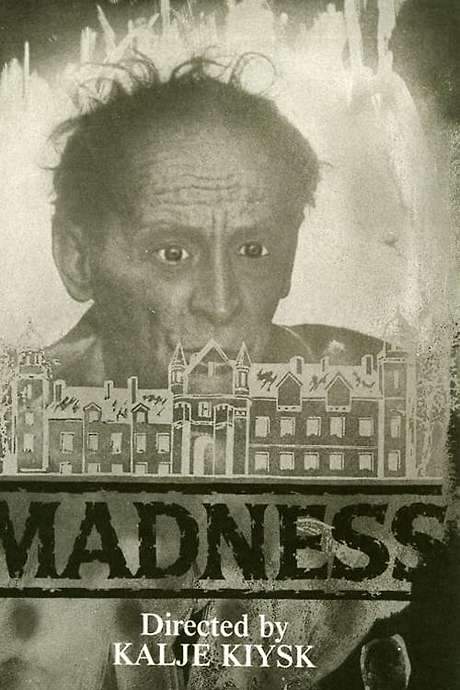
Madness (1969) Full Movie Breakdown
The Invisible Dr. Mabuse (1962) Ending Explained & Film Insights