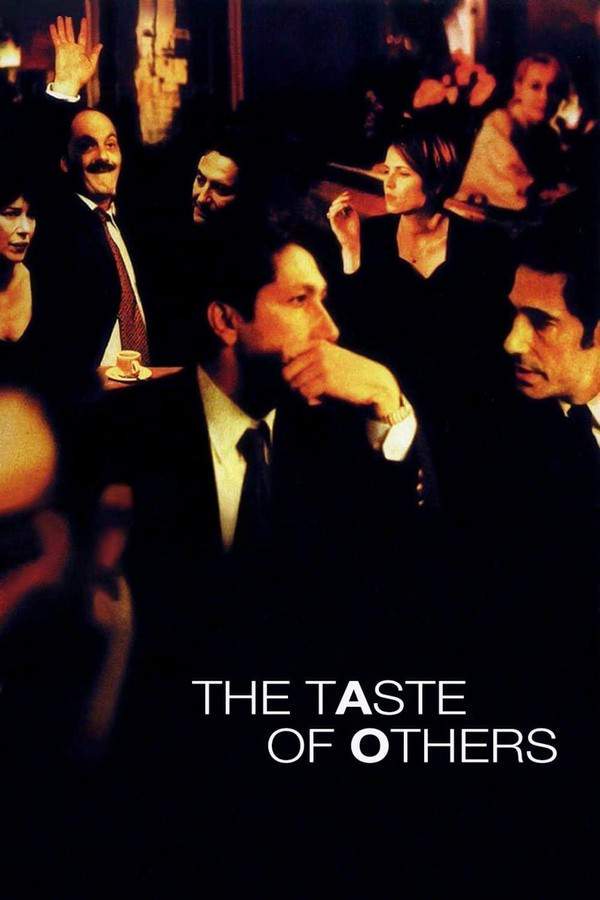
The Taste of Others

The Taste of Others

JustWatch#20,29010

Year: 2001

Runtime: 112 min

Language: French

Director: Agnès Jaoui

DramaComedyRomance

A cynical and disillusioned businessman, Castella, finds his life unexpectedly changed by a captivating actress named Clara. Drawn to her mesmerizing stage presence, he becomes increasingly smitten as their lives intertwine. Their connection challenges Castella's perspective and forces him to confront the possibilities that emerge from this unlikely and complex relationship, ultimately examining the nature of connection and personal growth.

Where to Watch The Taste of Others?

Find where to stream, rent, or buy The Taste of Others (2001) in the US with current JustWatch availability, up-to-date pricing, and platform listings for subscription, rental, and digital purchase options.

Streaming availability powered by JustWatch

Warning: spoilers below!

Haven’t seen The Taste of Others yet? This summary contains major spoilers. Bookmark the page, watch the movie, and come back for the full breakdown. If you're ready, scroll on and relive the story!

Timeline – The Taste of Others (2001)

Trace every key event in The Taste of Others (2001) with our detailed, chronological timeline. Perfect for unpacking nonlinear stories, spotting hidden connections, and understanding how each scene builds toward the film’s climax. Whether you're revisiting or decoding for the first time, this timeline gives you the full picture.

1

Castella's Business Dilemma

Castella, the owner of a steel factory, realizes that his business dealings with a group of Iranians require him to improve his English skills. Understanding the necessity for this communication, he decides to hire a tutor to help him learn the language.

2

Hiring Clara as a Tutor

To enhance his English proficiency, Castella hires Clara, an accomplished tutor played by Anne Alvaro. Their lessons begin, marking the start of a transformative journey for him both professionally and personally.

3

Angelique's Decorating Project

Meanwhile, Castella's wife, Angelique, is preoccupied redecorating her sister-in-law's apartment. Her focus on aesthetics contrasts sharply with Castella's burgeoning interest in the arts, hinting at underlying marital tensions.

4

The Theatre Outing

During a trip to the theatre to watch their niece perform in a play called *Bérénice*, Castella encounters Clara, who moonlights as an actress. This serendipitous meeting ignites a shift in his perception of the arts.

Theatre
5

Franck's Troubled Past

The story unveils Franck's background as a troubled police officer haunted by a corrupt case. His decision to leave the force adds an element of complexity to his character and influences his interactions with others, particularly Castella.

6

Frustration in the Bar

Bruno is sent by Franck to fetch cigarettes from a bar, where he encounters the barmaid Manie, who reminisces about a prior connection with him. Their interaction adds depth to Bruno's character, revealing the echoes of his past.

Bar
7

Clara's Artistic Doubts

After the performance of *Bérénice*, Clara confides in her friends about her fear of never working again as she nears forty. This moment of vulnerability showcases her struggles in the competitive world of acting.

8

Growing Bond with Clara

Despite initially dismissing the world of theatre, Castella is increasingly captivated by Clara's artistic lifestyle. His attendance at her performances and shared meals with her friends signals his growing affection, though his cultural naivety often leaves him ridiculed.

9

Awkward Poem and Rejection

Castella's attempt to win Clara over with an awkward poem ultimately leads to disappointment when she admits she doesn't share his feelings. This moment marks a significant turning point in their relationship and highlights the emotional stakes for Castella.

Tea Room
10

A Missed Lesson

One day, Clara waits for Castella at the tea room, but he fails to arrive. This absence conveys the growing distance and tension developing between them amid their entwined personal and professional lives.

Tea Room
11

Bruno's Romantic Struggles

As Bruno practices his flute, he grapples with his long-distance relationship strain, especially as his fiancée in the U.S. seems to be moving on. His inner conflict provides a parallel to Castella's own emotional turmoil.

12

Franck and Manie's Fling

Franck and Manie's romantic relationship blossoms, yet it is plagued by tension over her involvement in illegal activities. This complexity enriches the storytelling and showcases the challenges of their bond.

13

Tension with Angelique

Castella's marriage to Angelique begins to unravel partly due to her disapproval of an art piece he purchased from Clara's acquaintance. Their mutual frustrations underscore the personal sacrifices they must navigate amid their evolving identities.

14

Clara's Big Opportunity

Clara secures a lead role in the famous play *Hedda Gabler*, which marks a culmination of her struggles in theatre. She invites Castella to the premiere, hoping to rekindle their connection and showcase her talent.

15

A Joyful Closure

At the premiere of *Hedda Gabler*, Clara experiences a surge of happiness upon seeing Castella in the audience. This poignant moment enriches her performance and provides a bittersweet sense of resolution as she takes her final bow.

Theatre

Last updated: November 15, 2024 at 20:14

Was this helpful?

The Taste of Others (2001) Timeline Questions Answered – Chronology FAQ

Find frequently asked questions about the The Taste of Others (2001) timeline, including chronological order, nonlinear jumps, cause-and-effect links, and scene sequence clarifications. This timeline FAQ helps explain when key events happen, how moments connect, and why the story unfolds in that specific order.

Q1

Why does Castella become so captivated by Clara?

A.

Castella's fascination with Clara stems from her mesmerizing stage presence at the theatre, which ignites his previously dormant appreciation for art and culture. As a businessman focused on practical matters, Clara's artistic world represents an enticing escape from his mundane routine. His growing attendance at her performances and willingness to endure her friends' mockery demonstrates a genuine desire for personal transformation beyond just romantic pursuit.

castellaclaraattractiontheatretransformation
Q2

Why does Clara reject Castella despite his feelings?

A.

Clara directly tells Manie that Castella is not intellectually stimulating enough for her, citing his lack of cultural sophistication as the reason she cannot reciprocate his romantic feelings. Although Castella makes genuine efforts to improve his English and attend cultural events, Clara views his attempts as insufficient for a meaningful intellectual connection. This rejection highlights the class and cultural divide between them, with Clara seeking a partner who can match her intellectual and artistic depth.

claracastellarejectionromanceintellect
Q3

Why does Castella's marriage to Angelique fall apart?

A.

The marriage deteriorates primarily due to Castella's growing obsession with Clara and the arts, which creates emotional distance from his wife. Angelique also disapproves of an art piece Castella purchased from one of Clara's acquaintances, seeing it as another example of his misguided cultural pursuits. Their mutual frustrations, Castella's withdrawal and Angelique's disapproval, gradually erode their connection, though the breakdown is portrayed as a gradual drift rather than a dramatic conflict.

castellaangeliquemarriagetensionart
Q4

Why did Franck leave his job as a police officer?

A.

Franck's departure from the police force was triggered by a disturbing case involving systemic corruption within the department. The corrupt system caused him significant psychological distress, leading him to abandon his career as a protective measure for his mental well-being. This traumatic experience explains his willingness to work as a temporary bodyguard for Castella, he sought a simpler, less morally fraught existence.

franckpolicecorruptionresignationbackstory
Q5

Why does Castella fail to show up for his lesson with Clara?

A.

The exact reason for Castella's absence is not explicitly stated in the summary, but it occurs after Clara has already rejected his romantic advances. This no-show symbolizes the growing emotional distance and uncertainty in their relationship following the rejection. It represents a turning point where Castella begins to retreat from the pursuit, perhaps recognizing the futility of his efforts or dealing with the emotional fallout of being spurned.

castellaclaratea roomabsencerejection
Q6

Why does Angelique disapprove of the art piece Castella bought?

A.

Angelique, as an interior decorator with strong aesthetic sensibilities, views Castella's art purchase as another misguided attempt to appear cultured without genuine understanding. Her disapproval reflects her broader concern that Castella's sudden interest in art is superficial and perhaps motivated more by his infatuation with Clara than authentic appreciation. This disagreement becomes another source of tension in their deteriorating marriage.

angeliqueartdecordisapprovalmarriage
Q7

What is the nature of Franck and Manie's relationship?

A.

Franck and Manie engage in a passionate romantic fling that develops into serious discussion of marriage. However, their relationship is complicated by Manie's involvement in drug dealing, which creates persistent tension between them. Despite their genuine connection, the illegal activity threatens to undermine their future together, representing another example of the film's exploration of complicated relationships.

franckmanieromancedrug dealingtension
Q8

Why does Clara invite Castella to her Hedda Gabler premiere after rejecting him?

A.

Clara's invitation appears to be an act of closure and reconciliation rather than a change of romantic heart. By inviting Castella despite knowing he was not the intellectual equal she desired, she acknowledges the genuine connection they did form through their lessons and his support of her career. Their interaction remains platonic, she appreciates his presence at her professional triumph without rekindling romantic hopes.

claracastellahedda gablerpremiereinvitation
Q9

Why is the film's ending considered bittersweet?

A.

The ending is bittersweet because Clara achieves professional triumph as the lead in Hedda Gabler and finds emotional closure seeing Castella in the audience, yet their relationship does not become romantic. Castella experiences genuine personal growth through his exposure to art and culture, but his romantic aspirations remain unfulfilled. Other characters like Bruno and Franck also face mixed outcomes, leaving the film with a poignant sense of incomplete resolution.

Early scenes establish Castella's dismissal of theatre, making his presence at the premiere meaningful.

endingbittersweetclosureprofessional successunfulfilled love
Q10

Why does Castella buy an art piece from Clara's acquaintance despite the cost?

A.

Castella's purchase represents his earnest attempt to integrate himself into Clara's world and demonstrate genuine interest in the arts. However, this gesture backfires as Angelique views it as another superficial move, and Clara's friends likely see him as an easy target for exploitation. The purchase exemplifies Castella's awkward transition into cultural pursuits, well-intentioned but often misdirected.

castellaart purchasesocial climbingclara friends
Mobile App Preview

Coming soon on iOS and Android

The Plot Explained Mobile App

From blockbusters to hidden gems - dive into movie stories anytime, anywhere. Save your favorites, discover plots faster, and never miss a twist again.

Sign up to be the first to know when we launch. Your email stays private, always.

Explore Movie Threads

Discover curated groups of movies connected by mood, themes, and story style. Browse collections built around emotion, atmosphere, and narrative focus to easily find films that match what you feel like watching right now.

Movies about cultural clash romance like The Taste of Others

Stories where love challenges social divides and leads to personal growth.If you liked the poignant connection between Castella and Clara in The Taste of Others, explore more movies about bittersweet romances that bridge social divides. These films feature characters whose lives are transformed by unlikely relationships, offering similar themes of personal growth and complex emotional dynamics.

romanticbittersweetreflectivecharacter-drivenmelancholicworld-wearytalky

Narrative Summary

These narratives typically follow a protagonist from one world who becomes enamored with someone from a different social or cultural sphere. The central conflict stems from this cultural clash, driving a character arc of self-discovery and changed perspective, often culminating in a realistic, bittersweet resolution rather than a conventional happy ending.

Why These Movies?

Movies in this thread are grouped by their shared focus on romance as a catalyst for personal transformation across social boundaries. They possess a bittersweet tone, moderate emotional weight, and a character-driven pace that prioritizes reflection and nuanced interaction over melodramatic plot.

Movies about midlife awakening like The Taste of Others

Character studies of personal reinvention sparked by unexpected encounters.Find more character-driven stories similar to The Taste of Others, where a disillusioned businessman undergoes a quiet personal transformation. These films explore midlife crises and awakenings with a steady pace, bittersweet tone, and a focus on nuanced emotional growth rather than high-stakes action.

reflectivemelancholiccharacter-drivenunsentimentaltalkyworld-wearymidlife crisis

Narrative Summary

The narrative pattern involves a cynical or settled protagonist whose worldview is challenged by an encounter with art, passion, or a charismatic individual. The story unfolds through conversations and small realizations, building a portrait of gradual internal shift where the victory is often a changed perspective, not a changed circumstance.

Why These Movies?

These films share a specific vibe: a steady, talky pace; a melancholic yet unsentimental mood; and a focus on the quiet drama of self-realization. They are united by the thematic core of midlife re-evaluation and the bittersweet emotional texture of growth that comes with acceptance, not conquest.

Unlock the Full Story of The Taste of Others

Don't stop at just watching - explore The Taste of Others in full detail. From the complete plot summary and scene-by-scene timeline to character breakdowns, thematic analysis, and a deep dive into the ending - every page helps you truly understand what The Taste of Others is all about. Plus, discover what's next after the movie.

The Taste of Others Summary

Read a complete plot summary of The Taste of Others, including all key story points, character arcs, and turning points. This in-depth recap is ideal for understanding the narrative structure or reviewing what happened in the movie.

The Taste of Others Summary

Characters, Settings & Themes in The Taste of Others

Discover the characters, locations, and core themes that shape The Taste of Others. Get insights into symbolic elements, setting significance, and deeper narrative meaning - ideal for thematic analysis and movie breakdowns.

Characters, Settings & Themes in The Taste of Others

The Taste of Others Spoiler-Free Summary

Get a quick, spoiler-free overview of The Taste of Others that covers the main plot points and key details without revealing any major twists or spoilers. Perfect for those who want to know what to expect before diving in.

The Taste of Others Spoiler-Free Summary

More About The Taste of Others

Visit What's After the Movie to explore more about The Taste of Others: box office results, cast and crew info, production details, post-credit scenes, and external links - all in one place for movie fans and researchers.

More About The Taste of Others

Similar Movies to The Taste of Others

Discover movies like The Taste of Others that share similar genres, themes, and storytelling elements. Whether you’re drawn to the atmosphere, character arcs, or plot structure, these curated recommendations will help you explore more films you’ll love.