Plot Explained Spoilers guaranteed!
Plot Explained

Browse by genre

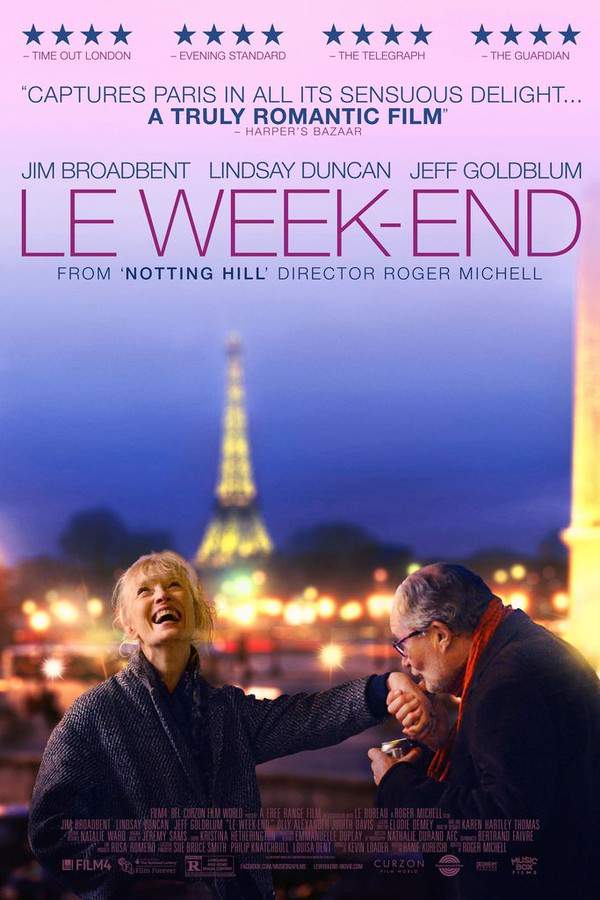
Le Week-End (2014) movie poster

Plot Summary

Le Week-End (2014) Plot Summary Explained

Release, runtime and language
2014 · 93 min · English
Loading streaming availability…
Starring
Jeff Goldblum, Jim Broadbent, Lindsay Duncan

A long-married British couple travels to Paris for a weekend getaway, hoping to reignite their romance. While in the City of Love, they reconnect with old friends and confront unresolved issues from their past. Through laughter and heartfelt moments, Nick and Meg explore the complexities of a lasting relationship and rediscover the spark that brought them together, acknowledging the challenges and joys of middle age.

On this page (5)
  1. 1 Where to watch
  2. 2 What happens: full plot
  3. 3 Plot questions answered
  4. 4 Movie threads
  5. 5 Every angle
Loading streaming availability…

Full plot summary · contains spoilers

What Happens in Le Week-End: Full Plot Summary

The whole story of Le Week-End (2014) explained, from the opening scene to the final frame: every key event, every twist and what it all adds up to. Read it as a quick recap before the sequel, to check a scene you missed, or to finally understand what really happened.

Nick and Meg Burrows, a married academic couple hailing from Moseley, Birmingham, find themselves in Paris to mark their 30th wedding anniversary. However, things take a turn when Meg deems the chosen accommodation by Nick as unsatisfactory, leading them to book a room at a far pricier hotel. Their relationship appears tumultuous, with tensions arising more frequently than tender moments. Frustration mounts for Meg as she receives a call from their aimless son, highlighting Nick's willingness to welcome him back home once again.

As the weekend unfolds, Nick and Meg engage in hotel life and explore the many bars and restaurants. During a lunch together, Nick discloses that he has been pushed towards early retirement. In turn, Meg shares her contemplation of leaving Nick to pursue new aspirations. Their encounters take an unexpected turn when they run into Morgan, a former university mate of Nick's who has become a renowned writer. Morgan's affluence casts a stark shadow over the unremarkable careers of Nick and Meg.

On one of their outings from the hotel, Nick takes a moment to reminisce about a beloved film, each word resonating with nostalgia as he mentions the iconic dance scene from Bande à part. Putting aside their budget concerns, they decide to indulge in a lavish meal at a fancy restaurant. However, the exorbitant bill leads to a confrontation, prompting Meg to slip away to find an exit without settling the tab, and she summons Nick to help her escape.

Afterwards, they attend a dinner soiree at Morgan's home. Before the feast, Meg candidly informs Nick about her intentions to meet another man, which leads to an uncomfortable tension at the dinner table. As dinner commences, Morgan raises a toast in honor of Nick, recognizing his influence during their youth and extolling his personal achievements. In a moment of raw honesty, Nick stands up to reveal his perceived failures in academia, his wife's upcoming rendezvous, and their financial woes. Meg follows suit, sharing a seemingly harmless call overheard by a friend, who mistook her cheerful tone for a conversation with a lover – it was, in fact, an exchange with her husband.

As they exit the gathering, Nick and Meg leave the party linked arm-in-arm. The following day, Nick fields another call from their son who expresses his inability to return to a home that now belongs solely to him and Meg.

Upon their return to the hotel, they discover that they have exceeded their credit card limit, prompting them to seek assistance from Morgan. He arrives at the café, offering sympathy and potential support. The film concludes on a high note as Nick selects a well-loved tune on the jukebox. He finds himself dancing joyfully in the café, prompting Meg to join him, with Morgan observing in fascination, mirroring the delightful scene from Bande à part.
Last updated: November 08, 2024 at 03:26

Was this helpful?

Plot questions answered

Le Week-End Plot Explained: Your Questions Answered

The questions people ask most about Le Week-End (2014): what happens in the confusing scenes, why the characters do what they do, the twists, hidden details and what the ending means. Each answer contains spoilers.

Q1

Why does Meg tell Nick she wants to meet another man?

Meg reveals this at Morgan's dinner because she's been contemplating leaving Nick to pursue her own aspirations. The revelation is triggered by the accumulation of frustrations throughout the trip, Nick's early retirement, their financial struggles, and her feeling that their marriage has become stagnant. The tense dinner setting prompts her to be candid about her desires, though she later clarifies the confession wasn't about an actual affair.

Foreshadowing: Earlier, Meg mentions contemplating new aspirations, hinting at her growing dissatisfaction with the marriage.

  • meg nick affair confession dinner paris
Q2

Why does Nick reveal his academic failures at Morgan's dinner?

Nick's outburst is triggered by Morgan's heartfelt toast praising his past achievements. The contrast between Morgan's success and Nick's sense of failure, his early retirement, financial troubles, and his wife's confession, overwhelms him. In a moment of vulnerability, Nick stands up and publicly admits his academic disappointments, Meg's intention to meet another man, and their money problems, essentially breaking under the pressure of pretending everything is fine.

Foreshadowing: The earlier lunch reveals Nick has been pushed toward early retirement, planting the seed of his professional inadequacy.

  • nick academic failure dinner speech morgan
Q3

Why do Meg and Nick leave the restaurant without paying?

After ordering an extravagant meal they couldn't afford, the shocking bill triggers an argument. Meg, frustrated with Nick's financial decisions and the state of their marriage, impulsively looks for an escape route. She signals Nick to help her slip out without paying the tab, a moment that reflects both their financial desperation and the growing dysfunction in their relationship. It's a brief, embarrassing act that underscores how far they've fallen from their former selves.

Foreshadowing: Their decision to ignore budget concerns and order lavishly earlier planted the seeds for this confrontation.

  • restaurant bill paris escape unpaid
Q4

What does the final dance scene in the cafe mean?

The dance at the end mirrors the iconic dance scene from Jean-Luc Godard's film *Bande à part* that Nick reminisced about earlier in the trip. It symbolizes a moment of reconnection and joy between Nick and Meg amid their marital struggles. By choosing a nostalgic tune and dancing spontaneously, Nick reignites the spark that brought them together 30 years ago. Meg joining him shows she's willing to reconnect, while Morgan watching from the sidelines represents their shared history and the possibility of new beginnings.

Foreshadowing: Nick's nostalgic reminiscence about the *Bande à part* dance scene directly sets up this final moment.

  • dance cafe paris musique nostalgie reconnexion
Q5

Why does Meg receive a tense call from their son during the trip?

The son calls to express his aimlessness and reluctance to return home, revealing he's not ready to settle down. Meg's frustration stems from Nick's willingness to welcome their son back unconditionally, which Meg sees as enabling his lack of direction. This call highlights the ongoing tension in their parenting approach and adds to Meg's broader dissatisfaction with their life, a subplot that reflects the larger theme of stagnation in their family.

Foreshadowing: This call establishes early in the film that their son represents an unresolved issue between Nick and Meg.

  • son phone call aimless return home
Q6

Why do Nick and Meg exceed their credit card limit in Paris?

The couple's financial problems stem from their impulsive decisions throughout the trip, booking a more expensive hotel, indulging in a lavish meal, and attending Morgan's dinner. When they return to the hotel and discover they've maxed out their credit card, they're forced to seek help from Morgan. This moment symbolizes their broader struggles: professional disappointments, retirement anxieties, and thegap between their aspirations and reality.

Foreshadowing: Their earlier decision to ignore budget concerns and book a pricier hotel set the stage for this financial crisis.

  • credit card limit money paris hotel financial problems
Q7

Who is Morgan and why does his success affect Nick and Meg?

Morgan is a former university classmate of Nick's who has become a renowned, wealthy writer. Running into him in Paris triggers feelings of inadequacy in both Nick and Meg. Morgan's affluence starkly contrasts with their unremarkable careers and financial struggles. His dinner party becomes a setting where Nick and Meg must confront their perceived failures. Yet Morgan also shows empathy, arriving at the café to offer support when they exceed their credit card limit, demonstrating that friendship persists despite the awkwardness of their situation.

Foreshadowing: The moment Morgan appears, his success immediately raises the stakes for Nick's self-worth.

  • morgan writer friend paris success wealth
Q8

Why does Nick reminisce about the film Bande à part in Paris?

Nick references the Godard film because it holds personal nostalgia, he mentions the iconic dance scene while in Paris, the city where the film is set. This moment serves as a brief respite from the marital tension, allowing Nick and Meg to reconnect through shared cultural memory. The reference foreshadows their own dance at the film's end, creating a thematic loop between nostalgia, youth, and rekindled romance.

Foreshadowing: This nostalgic moment directly sets up the final dance scene that mirrors the film.

  • bande à part godard film nostalgia paris dance

Movie threads

More Movies Like Le Week-End, by Mood & Story

Curated lists built around what makes Le Week-End tick: the same mood, the same kind of story or the same emotional payoff. Each list explains why these movies belong together.

Movies about midlife marriage crises like Le Week-End

Couples confronting aging and past disappointments in picturesque settings. If you enjoyed the honest portrayal of a long-married couple in 'Le Week-End,' explore similar movies about midlife crises and romantic reconnection. These dramas and dramedies focus on relationships tested by time, featuring bittersweet reflections and hopeful rediscovery.

  • introspective
  • wistful
  • tender
  • reflective
  • melancholic
  • hopeful
  • Tone: bittersweet, reflective
  • Pacing: steady, conversational
Why these movies?

The story pattern: The narrative follows a couple, often on a journey or vacation, as they escape their routine to confront lingering resentments and unfulfilled dreams. Through conversations and encounters, they navigate the gap between their youthful ideals and current reality, leading to a climax that is rarely a simple fix but an acceptance of their complicated bond.

Why they belong together: They are grouped by their focus on the specific emotional terrain of middle age within a relationship—the mix of disappointment, tenderness, and the hard-won decision to continue together. The tone is consistently bittersweet, balancing humor with poignant drama.

Bittersweet travel dramas with character depth like Le Week-End

Journeys to beautiful places that mirror journeys into the self. Find movies similar to 'Le Week-End' where a travel setting fuels a character-driven story. These films feature couples or individuals on transformative getaways, blending scenic beauty with poignant drama and a steady, introspective pace.

  • nostalgic
  • introspective
  • wistful
  • tender
  • melancholic
  • hopeful
  • Tone: bittersweet, melancholic
  • Pacing: steady, immersive
Why these movies?

The story pattern: The plot is structured around a short-term escape from everyday life. The characters' interactions with the new environment and the people they meet force them to see themselves and their relationships in a new light. The journey is more emotional than physical, culminating in a realization or a subtle shift rather than a dramatic resolution.

Why they belong together: They share a specific vibe: the juxtaposition of a beautiful, often romantic, location with the messy, unvarnished truth of human relationships. The pacing is steady, allowing for deep character exploration, and the overall feeling is one of poignant, thoughtful melancholy mixed with hope.

Every angle

Le Week-End (2014) Explained: Plot, Timeline & Characters

Everything about Le Week-End in one place: what happens in the plot summary, the timeline in chronological order, the characters and meaning and a spoiler-free summary. What's After the Movie adds the cast, box office and post-credit scenes.

Coming soon on iOS and Android

The Plot Explained Movie Summary App

Plot summaries, endings explained and timelines on your phone. Catch up on any movie in minutes, save your favorites and never miss a twist again.

Be the first to know when we launch. Your email stays private, always.

Learn more about the app