Plot Explained Spoilers guaranteed!
Plot Explained

Browse by genre

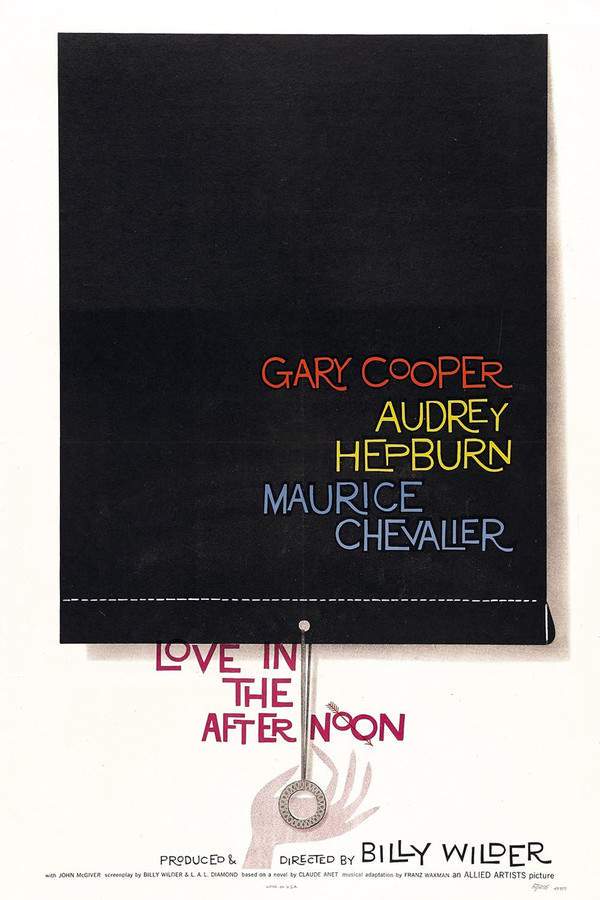
Love in the Afternoon (1957) movie poster

Plot Summary

Love in the Afternoon (1957) Plot Summary Explained

Release, runtime and language
1957 · 130 min · English
Loading streaming availability…
Directed by
Billy Wilder
Starring
John McGiver, Gary Cooper, Audrey Hepburn, Claude Ariel, Elga Andersen, Lise Bourdin

A French detective's reserved daughter finds herself unexpectedly drawn to an alluring American playboy. Their budding romance quickly becomes complicated as they discover their families are connected by a series of secrets and deceptions. What begins as a charming encounter evolves into a quest for truth, revealing hidden identities and offering a chance at redemption for those involved.

On this page (6)
  1. 1 Where to watch
  2. 2 What happens: full plot
  3. 3 Plot questions answered
  4. 4 Movie threads
  5. 5 Movies like Love in the Afternoon
  6. 6 Every angle
Loading streaming availability…

Full plot summary · contains spoilers

What Happens in Love in the Afternoon: Full Plot Summary

The whole story of Love in the Afternoon (1957) explained, from the opening scene to the final frame: every key event, every twist and what it all adds up to. Read it as a quick recap before the sequel, to check a scene you missed, or to finally understand what really happened.

Frédéric is a thriving young partner at a Parisian firm, happily married to Hélène, an English teacher, and eagerly awaiting the arrival of their second child. However, beneath this picture-perfect life lies a growing sense of unease. As he navigates daily routines, Frédéric finds himself reminiscing about his bachelor days, where he reveled in the freedom to pursue any woman he fancied. This nostalgia manifests into a vivid fantasy where he wields a magical amulet, compelling all women to submit to his desires—a sequence showcasing actresses from previous "Six Moral Tales" installments. Surprisingly, instead of feeling guilty, Frédéric interprets these escapist thoughts as evidence of his deep love for his wife.

The plot thickens when Chloé, a former flame, unexpectedly appears at his office, homeless and destitute. Once linked to a friend from Frédéric's past, Chloé carries the weight of unresolved tension. Initially, Frédéric suspects her intentions are merely to find a benefactor, but as she embarks on a quest for stability, trying various jobs with comedic results that amuse Frédéric's secretaries, they strike up a rapport. Their afternoons together shift from casual banter to intimate conversations that Frédéric struggles to have with his wife, providing him a blend of companionship and allure without romantic entanglements.

With the arrival of Frédéric's second child, Chloé expresses her desire to have a child of her own, insisting that Frédéric must be the father, despite her aversion to marriage. Faced with an emotional crossroads, Frédéric grapples with the notion of remaining with the devoted Hélène or venturing into the uncertain territory with Chloé, with whom he feels an inexplicable, intense attraction. The pressure mounts when Chloé invites him over to her place, only to be found emerging from a bath, beckoning him to dry her off and luring him towards her bed. In a moment of clarity, Frédéric chooses to flee, returning home to find Hélène in tears. He comforts her, solidifying their bond as they retreat to their bedroom, leaving his dilemma unresolved but rekindling the connection he cherishes with his wife.

Last updated: November 15, 2024 at 17:43

Was this helpful?

Plot questions answered

Love in the Afternoon Plot Explained: Your Questions Answered

The questions people ask most about Love in the Afternoon (1957): what happens in the confusing scenes, why the characters do what they do, the twists, hidden details and what the ending means. Each answer contains spoilers.

Q1

Why does Frédéric have a fantasy about a magical amulet?

Frédéric's fantasy about the magical amulet represents his nostalgia for his bachelor days when he could pursue any woman he desired. Rather than feeling guilty about these escapist thoughts, he interprets them as evidence of his deep love for Hélène, believing that only someone who truly loves his wife would dream of being so irresistible to her. This psychological rationalization reveals his internal conflict between his current contented married life and his lingering desires.

Foreshadowing: The fantasy appears early in the film, establishing the emotional tension that will drive the entire narrative.

  • magical amulet fantasy
  • bachelor days
  • Frédéric desires
  • emotional conflict
Q2

Why does Chloé show up at Frédéric's office homeless?

Chloé arrives at Frédéric's office destitute and homeless, carrying unresolved tension from her past connection to a friend in Frédéric's past. While Frédéric initially suspects she simply wants a benefactor, her true motivation is finding stability and a sense of purpose in her life, which she pursues through trying various jobs with comedic results.

Foreshadowing: Her unexpected appearance early in the story signals the re-entry of Frédéric's past into his carefully constructed present.

  • Chloé homeless
  • Chloé background
  • Frédéric past
  • character motivation
Q3

Why does Frédéric confide in Chloé instead of his wife Hélène?

Frédéric finds it difficult to have the intimate conversations he shares with Chloé with his wife Hélène. Their afternoon meetings provide him with companionship and emotional connection that he feels is lacking in his marriage. This emotional gap, not necessarily romantic desire initially, draws him to Chloé and creates the foundation for the complicated triangle that develops.

Foreshadowing: Their rapport builds gradually through workplace interactions, showing how emotional distance from one's spouse can open doors to outside connections.

  • emotional intimacy
  • Frédéric Hélène marriage
  • Chloé friendship
  • marital distance
Q4

Why does Chloé want Frédéric to be the father of her child?

After Frédéric's second child is born, Chloé expresses her desire to have a child of her own and insists that Frédéric must be the father. Despite her aversion to marriage, she wants a child without the traditional commitment. This proposition forces Frédéric to confront his feelings and make a choice between his stable family life with Hélène and the uncertain but intense attraction he feels toward Chloé.

Foreshadowing: This demand directly follows the birth of Frédéric's child with Hélène, highlighting the theme of fatherhood and family as central to his identity.

  • Chloé child
  • Frédéric father
  • Chloé proposition
  • family desire
Q5

Why does Frédéric flee from Chloé's apartment?

When Chloé invites Frédéric to her home and emerges from a bath beckoning him toward her bed, Frédéric experiences a moment of clarity. He realizes the depth of his commitment to Hélène and chooses to flee from the tempting situation. This decision represents his internal struggle between transient desire and lasting love, ultimately choosing his marriage despite the powerful attraction he feels for Chloé.

Foreshadowing: The invitation to her home is the climax of the temptress narrative, and the preceding buildup of their emotional connection makes this moment of resistance more meaningful.

  • Frédéric temptation
  • Chloé seduction
  • moral choice
  • marital commitment
Q6

Why is Hélène crying when Frédéric returns home?

When Frédéric returns home after fleeing from Chloé's apartment, he finds Hélène in tears. While the exact cause of her distress is not explicitly detailed in the summary, this moment deepens Frédéric's emotional turmoil and reinforces his realization of the importance of their bond. He comforts her, strengthening their connection.

Foreshadowing: Hélène's tears serve as a turning point that solidifies Frédéric's decision to choose his marriage over his temptation.

  • Hélène tears
  • Frédéric return
  • marital reconciliation
  • emotional moment
Q7

How does Frédéric's amulet fantasy reveal his attitude toward his marriage?

Frédéric's interpretation of his amulet fantasy as proof of his love for Hélène reveals his remarkable ability to rationalize. He uses the fantasy not as a warning about his wandering desires but as confirmation of his devotion, arguing that only a man deeply in love would imagine his wife being so irresistible. This psychological mechanism allows him to avoid confronting the growing distance in his actual marriage.

Foreshadowing: This self-deception early in the film establishes the pattern of rationalization that defines Frédéric's character throughout.

  • self-deception
  • rationalization
  • marriage psychology
  • amulet meaning
Q8

Why does the film leave Frédéric's dilemma unresolved?

The film ends with Frédéric having chosen his wife and rekindled their connection, but the underlying dilemma remains unanswered. This bittersweet conclusion reflects the realistic nature of marital temptation, choosing commitment doesn't erase the feelings or questions that led to the crisis. The unresolved tension emphasizes that while Frédéric has made his decision, the emotional struggle between desire and commitment is an ongoing battle, not a one-time victory.

Foreshadowing: The open-ended nature is established from the beginning, as the fantasy sequence suggests Frédéric's internal conflict is a permanent feature of his psychology, not a problem to be permanently solved.

  • unresolved ending
  • bittersweet conclusion
  • marriage struggle
  • final scene meaning
Q9

What jobs does Chloé try while seeking stability?

Chloé attempts various jobs during her quest for stability, though the specific positions are not detailed in the summary. These job-seeking efforts lead to humorous situations that amuse Frédéric's secretaries, showing both Chloé's earnest attempt at rebuilding her life and the comic relief she provides to the office environment.

Foreshadowing: Her comedic job failures contrast with the increasingly serious emotional stakes developing between her and Frédéric.

  • Chloé jobs
  • comedic scenes
  • character backstory
Q10

Why does Frédéric feel nostalgic about his bachelor days?

Despite his seemingly perfect life as a thriving partner in Paris with a loving wife and a second child on the way, Frédéric experiences a creeping sense of unease that manifests as nostalgia for his bachelor days. This longing represents his subconscious dissatisfaction with the routines of married life and his memory of the freedom and excitement he once had pursuing women without commitment.

Foreshadowing: This nostalgia is the seed that grows into his fantasy about the magical amulet and eventually draws him back to Chloé.

  • bachelor nostalgia
  • Frédéric dissatisfaction
  • married life
  • freedom longing

Movie threads

More Movies Like Love in the Afternoon, by Mood & Story

Curated lists built around what makes Love in the Afternoon tick: the same mood, the same kind of story or the same emotional payoff. Each list explains why these movies belong together.

Romantic Moral Dilemmas like in Love in the Afternoon

Stories where love is entangled with difficult ethical choices and bittersweet consequences. If you liked the complex emotional choices in Love in the Afternoon, explore more movies where romance and morality collide. This section features bittersweet stories of infidelity, secret pasts, and personal crises, perfect for fans of character-driven romantic dramas with emotional depth.

  • romantic
  • melancholic
  • introspective
  • tempting
  • uncertain
  • moral conflict
  • Tone: bittersweet, melancholic
  • Pacing: steady, conversational
Why these movies?

The story pattern: Narratives in this thread typically follow a protagonist caught between a tempting new romantic possibility and their pre-existing responsibilities or moral principles. The plot is driven by internal conflict and conversational intimacy, leading to a climax where a definitive choice must be made, often resulting in a bittersweet resolution that acknowledges the loss inherent in any decision.

Why they belong together: Movies are grouped here because they share a core focus on romance as a catalyst for moral questioning. They have a similar emotional texture—romantic yet melancholic—and a steady, introspective pacing that allows the audience to sit with the characters' dilemmas. The high romance score is balanced by a tangible sense of sadness and consequence.
Midlife Crisis Dramas like Love in the Afternoon

Sophisticated stories of characters revisiting youthful dreams and confronting marital reality. Find more sophisticated films similar to Love in the Afternoon that delve into midlife fantasies and marital introspection. This collection features charming yet melancholic stories about romantic temptation, age differences, and the re-evaluation of one's life, ideal for viewers who enjoy nuanced adult dramas.

  • nostalgic
  • introspective
  • charming
  • tempting
  • melancholic
  • sophisticated
  • Tone: charming, nostalgic, bittersweet
  • Pacing: steady, reflective
Why these movies?

The story pattern: The narrative pattern involves a protagonist whose stable life is disrupted by an encounter that evokes a younger, freer version of themselves. The story unfolds through a series of reflective conversations and moments of temptation, examining the 'what if' questions of life. The conflict is primarily internal, as the character weighs fantasy against reality, often leading to a reaffirmation of their life choices tinged with poignant regret.

Why they belong together: These films are connected by their central theme of midlife contemplation and the allure of romantic fantasy. They share a specific mood blend of charm and nostalgia, a medium intensity focused on psychological stakes, and a focus on topics like marital crisis and age differences. The pacing is consistently steady, allowing for deep character exploration.

If you liked this

Movies Like Love in the Afternoon

Similar movies to Love in the Afternoon: the same genre, themes or kind of story. Each one comes with its own plot summary, timeline and ending explained.

Browse all movie summaries

Every angle

Love in the Afternoon (1957) Explained: Plot, Timeline & Characters

Everything about Love in the Afternoon in one place: what happens in the plot summary, the timeline in chronological order, the characters and meaning and a spoiler-free summary. What's After the Movie adds the cast, box office and post-credit scenes.

Coming soon on iOS and Android

The Plot Explained Movie Summary App

Plot summaries, endings explained and timelines on your phone. Catch up on any movie in minutes, save your favorites and never miss a twist again.

Be the first to know when we launch. Your email stays private, always.

Learn more about the app