Plot Explained Spoilers guaranteed!
Plot Explained

Browse by genre

The Sun Also Rises (2007) movie poster

Timeline

The Sun Also Rises (2007) Timeline Explained – Every Event in Order

Release, runtime and language
2007 · 116 mins · Chinese
Starring
Joan Chen, Anthony Wong, Jaycee Chan, Jiang Wen, Kong Wei, Cui Jian

A polyptych of interconnected stories in different time-zones, shifting between a Yunnan village, a campus, and the Gobi Desert.

On this page (5)
  1. 1 Events in order (12)
  2. 2 Timeline questions answered
  3. 3 Movie threads
  4. 4 Movies like The Sun Also Rises
  5. 5 Every angle

12 events in order · contains spoilers

The Sun Also Rises Timeline: Events in Chronological Order

Every key event of The Sun Also Rises (2007) in order, scene by scene, with when and where it takes place. Use it to untangle flashbacks, time jumps and parallel storylines, to refresh your memory before the sequel or to find the exact scene you are thinking of.

  1. Mother seeks tranquility through daring

    A single mother, Zhou Yun, drives her devoted son to distraction with her daredevil antics as she pursues a strange tranquility. She climbs tall trees and performs bold acts near the river, pushing both danger and affection into their daily life. This reckless devotion sets the emotional tempo for their relationship.

    Where
    Riverbank / family home
  2. Slippers as a symbol of clingy stability

    She cherishes a beautiful pair of slippers that she keeps losing, turning them into a fragile symbol of safety. The son fears that the footwear will remain behind when his mother disappears, leaving him lost. The tension between care and risk grows with every missing shoe.

    Where
    Home / river
  3. Son worries about his mother's vanishing

    Jaycee Chan's character worries more as his mother chases thrill and balance in her life, fearing the day she might disappear for good. His anxiety mirrors the slipper symbolism, suggesting a future where his mother is gone but the memory persists. Their bond is tested by this looming fear.

    Where
    Family residence
  4. Campus romance and rivalry begins

    On a college campus, two old friends face a test of loyalty as a love triangle unfolds around a woman. Doctor Lin, the mistress of Old Tang, grows closer to Liang, a teacher, stirring jealousy and competition. The campus becomes the stage for shifting affections.

    When
    Daytime
    Where
    College campus
  5. Accusation of inappropriate conduct

    Liang is accused of groping women at a campus gathering, turning the community on edge and exposing the fragility of reputations. Old tensions surface as loyalties are questioned. The incident triggers a deeper exploration of desire and power.

    When
    Evening
    Where
    Campus gathering
  6. Curtain test to reveal guilt

    In a provocative moment, Lin offers her rear end behind a curtain to determine whose hand was guilty, forcing a controversial confrontation about accountability. The act reveals the messy, entangled relationships among Lin, Tang, and Liang. The campus drama intensifies as truth and desire collide.

    When
    Evening
    Where
    Campus, behind curtain
  7. Rivalry deepens into personal conflict

    The incident exposes how ambition and romance intersect, turning friendship into suspicion and trust into manipulation. Lin's loyalty wavers between Tang and Liang as she navigates her own desires. The campus storyline grows darker and more complicated.

    Where
    Campus
  8. Tang's wife succumbs to an affair

    Old Tang's young wife begins a relationship with the madwoman's son, introducing a dangerous blend of jealousy and forbidden love. The hunter's world collides with a secret passion that could destabilize their fragile household. The consequences ripple through all four stories.

    Where
    Tang's home and hunting grounds
  9. Noise of passion intercepted by a whisper

    Tang overhears the couple's noises of passion and his wife whispers that her husband believes her belly is velvet, a bizarre boast that unsettles him. The word velvet becomes a symbol of mystery and misperception. The hunter's world is jolted by the intimate betrayal.

    Where
    Home
  10. Violent impulse met with velvet curiosity

    Tang is driven to shoot the young man, but is halted when the boy asks simply, 'What is velvet?' The moment reframes violence as a search for meaning rather than a straightforward act. It heightens the film's themes of perception and consequence.

    Where
    Home
  11. Dreamlike convergence unfolds

    The final episode unfolds as a dreamlike sequence that interweaves the four stories, circling back to earlier motifs and fates. The characters' lives intersect in surreal, symbolic ways that invite interpretation. The sequence serves as a narrative fulcrum, blending memory and imagination.

    When
    End of film
    Where
    Abstract dream space
  12. A circle completed, lives tied together

    In the closing moments, the intertwined lives come full circle, reinforcing themes of family, desire, jealousy, and fate. The dreamlike interplay resolves personal histories while leaving room for ambiguity. The film ends with a sense of cyclical renewal rather than tidy closure.

    When
    End
    Where
    Dream space / final montage

Last updated: February 20, 2026 at 12:15

Was this helpful?

Timeline questions answered

The Sun Also Rises Timeline Explained: Your Questions Answered

When does it happen, and why in that order? The questions people ask about the chronology of The Sun Also Rises (2007): time jumps, flashbacks, cause and effect between scenes and the correct order of events, each answered with spoilers.

Q1

Why does Zhou Yun climb trees and act so recklessly?

Zhou Yun's dangerous behavior stems from her search for tranquility through extreme experiences. Rather than finding peace in stillness, she pursues moments of intense thrill, climbing tall trees, standing on river rafts, to feel alive. Her son interprets this as a sign she may eventually disappear completely, as if seeking something beyond the physical world. The reckless acts are her way of confronting mortality and meaning.

Foreshadowing: Her daring riverbank moments early in the film establish the pattern of seeking transcendence through risk.

  • Zhou Yun
  • mother
  • recklessness
  • tranquility
  • danger
  • disappearance
Q2

What do the slippers symbolize in the film?

The beautiful pair of slippers represent fragile stability and fear of loss. Zhou Yun cherishes them but repeatedly loses them, mirroring her unpredictable behavior. Her son fixates on them because he fears that when his mother eventually disappears, as he dreadfully anticipates, the slippers will be all that remains of her presence. The footwear becomes a tangible anchor to an intangible, vanishing mother.

Foreshadowing: The recurring lost slippers early establish the film's themes of impermanence and clinging to what's slipping away.

  • slippers
  • symbol
  • mother
  • son
  • loss
  • stability
Q3

Why does Doctor Lin offer herself behind a curtain to test the men?

When Liang is accused of groping women at a campus gathering, Lin orchestrates a provocative test to identify the culprit. She stands behind a curtain and offers her body for each man to touch, claiming she can identify the guilty hand by intimate recognition. This controversial act reveals her position as Tang's mistress while also demonstrating her willingness to use herself as a pawn in determining truth, exposing the tangled sexual politics among her, Tang, and Liang.

Foreshadowing: The test foreshadows how characters throughout the film use intimate exposure as a tool for revelation and manipulation.

  • Doctor Lin
  • curtain test
  • accusation
  • Liang
  • Old Tang
  • campus
Q4

What does Old Tang's wife mean when she says her belly is velvet?

When Tang overhears his wife with her lover, she whispers that Tang has told her her belly feels like velvet, a bizarre, intimate boast about her skin. This phrase represents how Tang has objectified her, reducing her body to a sensory experience while he was absent hunting. The odd phrasing reveals both the emptiness of their marriage and how language itself becomes distorted through infidelity and neglect.

Foreshadowing: The velvet phrase plant the seed for the pivotal velvet question that halts violence later.

  • velvet
  • Old Tang
  • wife
  • belly
  • affair
  • whisper
Q5

Why does asking 'What is velvet?' stop Tang from shooting the young man?

Driven to murder his wife's lover, Tang is halted when the young man innocently asks, 'What is velvet?' The question completely disarms him, replacing violence with curiosity about a word he associate with intimate betrayal. It reframes the moment from rage to philosophical confusion, forcing Tang to confront how little he understands the world his wife inhabits. The absurd question becomes a bridge between impulse and humanity.

Foreshadowing: The phrase 'velvet' first appeared earlier when Tang boasted about his wife's belly, creating this exact moment of poetic irony.

  • velvet
  • shooting
  • Old Tang
  • young man
  • question
  • disarmed
Q6

How are the four stories in the film connected?

The four narratives, Zhou Yun and her son, the campus love triangle, Old Tang and his wife, and the dreamlike finale, are linked through overlapping characters and thematic echoes. The 'madwoman' from the first story is the mother whose son appears in Tang's storyline. Doctor Lin is connected to Old Tang throughout. The final dream sequence weaves all these characters together, revealing their fates are intertwined in a cyclical pattern that returns to where it began.

Foreshadowing: Subtle visual and dialogue parallels between stories hint at connections that the dreamlike finale makes explicit.

  • interconnected stories
  • characters
  • connection
  • four stories
  • cycle
Q7

What is the meaning of the dreamlike ending?

The final sequence interweaves all characters in a surreal space where past and present collapse. Their lives 'fold back onto themselves,' suggesting fate operates in a circle, events repeat, characters meet across stories, and endings become beginnings. This dreamlike convergence implies all four narratives exist in the same spiritual or temporal loop, reinforcing themes of memory, desire, and the fragility of everyday life returning to its starting point.

Foreshadowing: Earlier moments, slippers lost and found, the velvet phrase, accusations repeated, prepare for this full-circle revelation.

  • dreamlike ending
  • finale
  • meaning
  • circle
  • convergence
  • interpretation
Q8

Why does Jaycee Chan's character fear his mother will disappear?

The son observes his mother's increasingly dangerous behavior, climbing trees, balancing on river rafts, and interprets it as a sign she is drifting toward permanent departure. His anxiety reflects a deeper fear of abandonment and loss, amplified by her reckless pursuit of something beyond ordinary life. He believes her thrill-seeking will eventually lead to a disappearance from which she won't return, leaving him alone.

Foreshadowing: His worry is established immediately through her dangerous activities and his vigilant watching.

  • son
  • mother
  • fear
  • disappearance
  • Jaycee Chan
  • Zhou Yun
Q9

Why is the film structured as four interconnected stories?

The four-part structure explores how memory, desire, and fate operate across different times and places, a Yunnan village, campus, and Gobi Desert. Each story examines similar themes (infidelity, rivalry, loss) through different lenses, building toward a cumulative effect. The interconnectedness suggests characters' lives are bound together even when separated by distance or time, culminating in the dreamlike revelation that everything returns to where it started.

Foreshadowing: Each story introduces motifs (slippers, velvet, accusations) that echo across the others.

  • structure
  • four stories
  • interconnected
  • narrative
  • nonlinear
  • meaning
Q10

Who is the madwoman's son and why is he important?

The 'madwoman' is Zhou Yun, the restless mother from the first story, and her son is the young man who has an affair with Old Tang's wife. His role connects the separate narratives, creating a physical link between the mother-son household and the hunter's world. His innocent question about velvet halts violence, demonstrating how the younger generation inadvertently shapes the older generation's fate.

Foreshadowing: His identity is revealed only when he appears in Tang's story, completing the circular character web.

  • madwoman son
  • identity
  • Zhou Yun
  • young man
  • affair
  • connection

Movie threads

More Movies Like The Sun Also Rises, by Mood & Story

Curated lists built around what makes The Sun Also Rises tick: the same mood, the same kind of story or the same emotional payoff. Each list explains why these movies belong together.

Movies with interconnected stories like The Sun Also Rises

Stories where multiple characters and timelines collide in unexpected ways. Discover films that use a polyptych narrative structure, blending multiple storylines into one. If you liked the way The Sun Also Rises connected lives across a Yunnan village, a campus, and the Gobi Desert, you'll find similar complex, multi-threaded stories here.

  • nonlinear
  • interconnected
  • dreamlike
  • reflective
  • serendipity
  • melancholic
  • Tone: melancholic, reflective
  • Pacing: variable, contemplative
Why these movies?

The story pattern: This narrative pattern presents a fragmented story that slowly reveals connections between seemingly unrelated characters and events. The plot unfolds across different settings and time periods, converging to explore a central theme of shared human experience, memory, or fate.

Why they belong together: These movies are grouped together because they share a complex, multi-threaded narrative structure. They create a unique experience by showing how individual stories are part of a larger whole, often leaving the audience to piece together the connections.
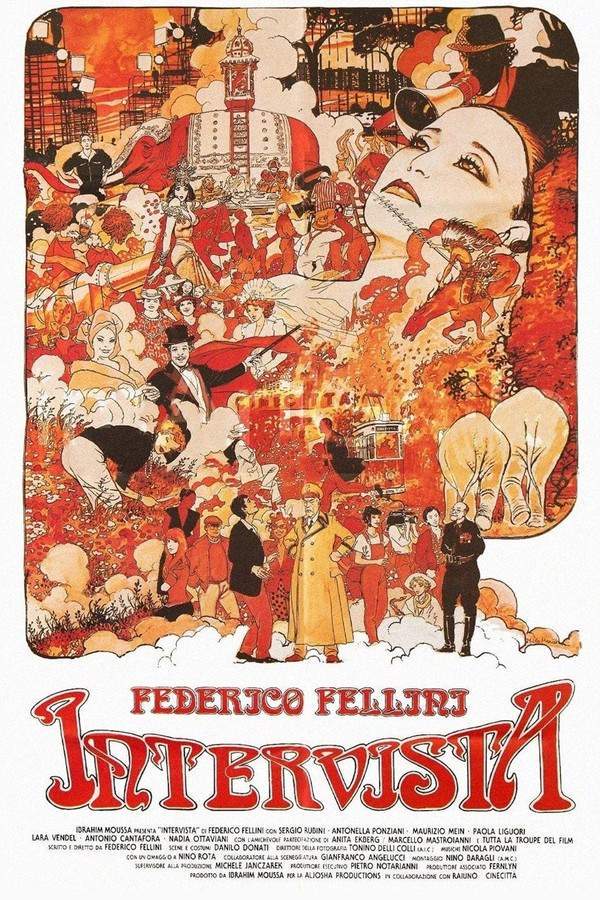
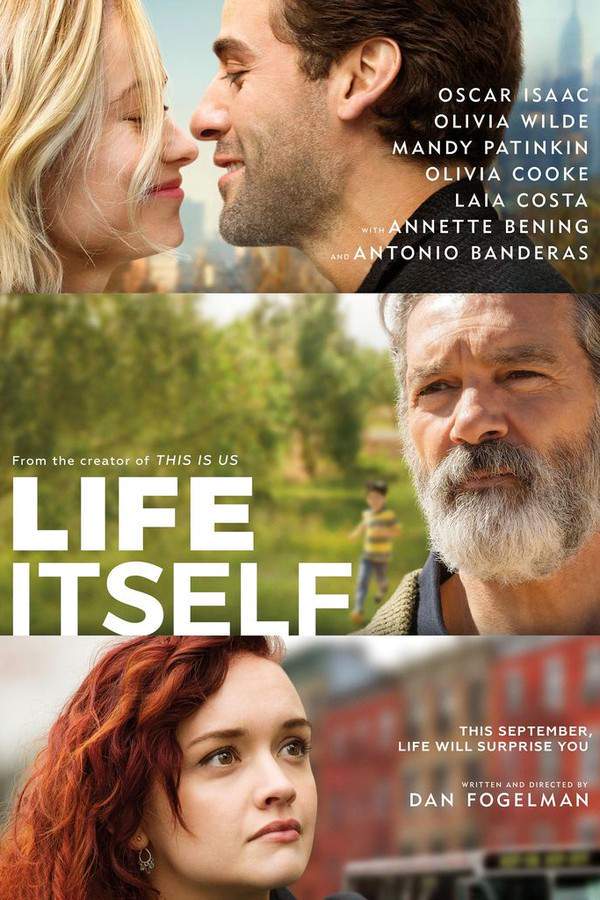
Dreamlike and melancholy movies like The Sun Also Rises

Journeys through memories and desires in a surreal, poignant haze. Find films that share the surreal, melancholic vibe of The Sun Also Rises. If you were captivated by its dreamlike tapestry weaving madness, memory, and desire, explore more movies that use fantasy elements to explore poignant emotional landscapes.

  • dreamlike
  • surreal
  • melancholic
  • nostalgic
  • atmospheric
  • psychological
  • Tone: melancholic, surreal
  • Pacing: variable, slow burn
Why these movies?

The story pattern: The narrative in these films often prioritizes mood and atmosphere over strict plot, flowing between reality and dream logic. Characters grapple with past traumas, unfulfilled desires, or a search for meaning, leading to an emotionally resonant and often ambiguous journey.

Why they belong together: This thread groups movies that use a surreal, dreamlike aesthetic to deliver a deeply melancholic and reflective experience. The focus is on a specific emotional palette and visual style that blurs the line between memory, fantasy, and reality.

If you liked this

Movies Like The Sun Also Rises

Similar movies to The Sun Also Rises: the same genre, themes or kind of story. Each one comes with its own plot summary, timeline and ending explained.

Browse all movie summaries

Every angle

The Sun Also Rises (2007) Explained: Plot, Timeline & Characters

Everything about The Sun Also Rises in one place: what happens in the plot summary, the timeline in chronological order, the characters and meaning and a spoiler-free summary. What's After the Movie adds the cast, box office and post-credit scenes.

Coming soon on iOS and Android

The Plot Explained Movie Summary App

Plot summaries, endings explained and timelines on your phone. Catch up on any movie in minutes, save your favorites and never miss a twist again.

Be the first to know when we launch. Your email stays private, always.

Learn more about the app