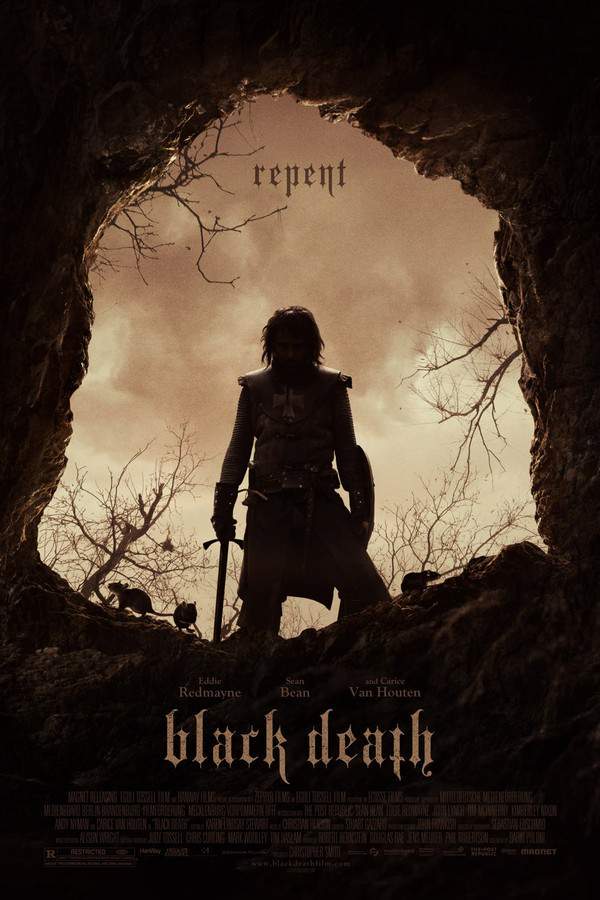
In 1678, two years after the end of King Philip's War, John Fletcher and Josiah Cutting arrive in the small town of Sudbury, Massachusetts, to chase whispers of devil worship and to scrutinize rumors that trouble the local quiet. They are joined, reluctantly, by Thomas Russell, the town’s reverend, and a troubled man named Isaac Goodenow, who insists he has witnessed something antithetical to God—dark, demonic activity lurking in a clearing beyond the town’s borders. With Goodenow as their guide, the two witch hunters venture into the forest to observe, wait, and test the locals’ fears. After a long day’s trek, they reach the secluded clearing, set camp, and brace themselves to observe whatever truth lies hidden in the shadows. A haunting, opaque visitation comes at night: a mysterious woman appears, her presence felt even as she remains unseen.
The following day brings unsettling changes in Goodenow, whose behavior grows increasingly erratic. That evening, under a relentless rain, Fletcher witnesses him engaging in a stark and shocking act atop a large, altar-like stone, an act that convinces Fletcher he has crossed into a realm where the devil’s influence is real. In response, the men restrain Goodenow, binding him to a tree, a decision taken in a climate of fear and zeal. While they search the nearby woods, they stumble upon Flora, a woman described as a slave of Patience Gavett, a widow whose land surrounds or overlaps this region. Flora Flowers is subdued, her arms bound, and she is taken prisoner, an accusation fueled by Goodenow’s insistence that Flora represents the source of the town’s sinister happenings. Flora is subjected to a provocative, public ritual as she is restrained; she later seduces Fletcher in the night, and the next morning Cutting warns Fletcher that his own behavior—his earlier indiscretion—will have to be reported when they return to town.
That night, Fletcher experiences a blinding apparition, a white light that seems to cleanse or indict—an image that lingers in his mind as the following day unfolds. In the morning, the trio—Fletcher, Cutting, and their guides—find themselves bound by Goodenow, Flora, and the enigmatic woman revealed to be Patience Gavett, a formidable figure whose husband, Mr. Gavett, is supposedly the owner of the land. Patience announces a grim plan: she will carry out a satanic rite using Fletcher’s sperm to sow a demon within Flora. The group remains at the clearing for several days as Flora’s pregnancy rapidizes, but the ritual fails, and Flora dies amid the birth pains of a child that never fully comes to be.
Discontent festers. In a brutal turn, Patience strips Cutting and has Goodenow lead him away into the woods. Fletcher pleads for mercy, but Patience taunts him, reminding him that his own war crimes—committed alongside Captain Samuel Mosley—are well known to her. Fletcher flees through the forest, his mind burning with fear and guilt as Patience, meanwhile, orchestrates a ritualistic end for Goodenow in Cutting’s presence. Back in Sudbury’s shadows, Fletcher encounters a party led by Reverend Russell and the seemingly alive [Mr. Gavett], who proves to be a ruse—Patience, in disguise, has feigned the husband’s presence to manipulate Fletcher for another ritual.
As the troupe returns to the clearing to rescue Cutting and confront the others, Fletcher grows suspicious of the man who claims grace before meals, noticing that his words stumble and his identity seems unsure. The truth surfaces when Fletcher discovers that the man who calls himself Mr. Gavett is, in fact, Patience in a hollow disguise, and that the real Mr. Gavett has been dead all along. Patience’s plan is revealed anew: she intends to restart the ritual without Flora. With Cutting in tow, now seemingly rotting from within, Fletcher is forced to face the full scope of the plot as Patience, still in Mr. Gavett’s outward form, leads him to Cutting and to Reverend Russell, leaving Fletcher to decide whether to sacrifice his own safety to prevent what Patience intends.
In the climactic confrontation, Fletcher fights Patience in a brutal, intimate struggle that leaves both men gravely wounded. As they lie together in the fading light, their bodies find a paradoxical moment of union, and a profound, almost spectral brightness bursts forth from the altar. Patience’s pregnancy accelerates into an astonishing birth, a demon that begins as a radiant light and then resolves into a horned silhouette, a figure that seems to embody the town’s darkest history. Fletcher, dying, utters a final wish that the demon bring a lasting curse upon Sudbury, a curse that will mark the town for ages to come and seal its fate within a cycle of fear and retribution. The ending leaves the town and its survivors haunted by what has been unleashed, a force born of colonial conflict, vengeance, and the unquiet memory of a war’s brutal past.
This tale unfolds as a tense reckoning between fear and guilt, between the violent history of the settlers and the unforeseen, terrifying consequences of their attempts to police the boundaries between good and evil. The forest—the setting of so many reckonings—becomes both stage and witness to the unraveling of a community under the weight of its own past, its leaders, and the women who navigate power with cunning and resolve.