Plot Explained Spoilers guaranteed!
Plot Explained

Browse by genre

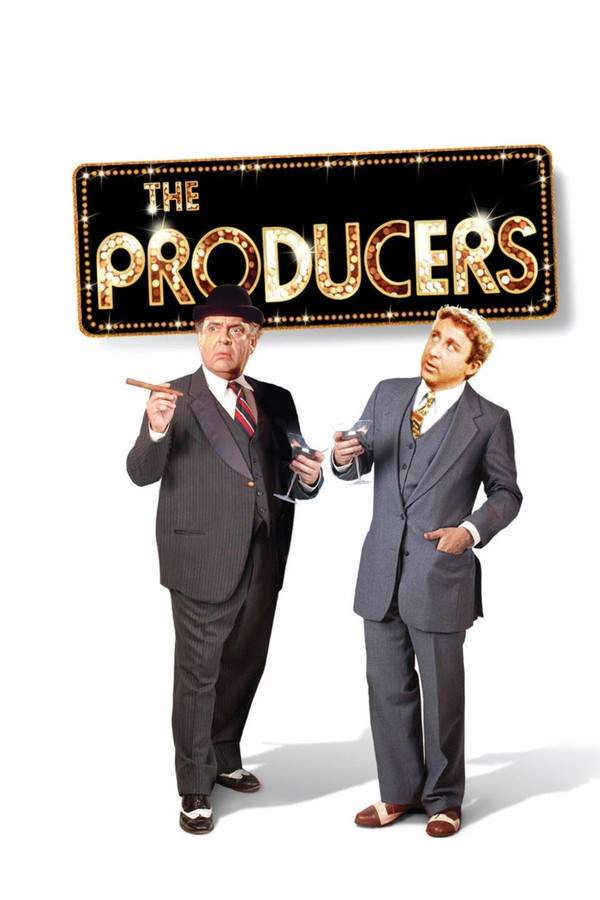
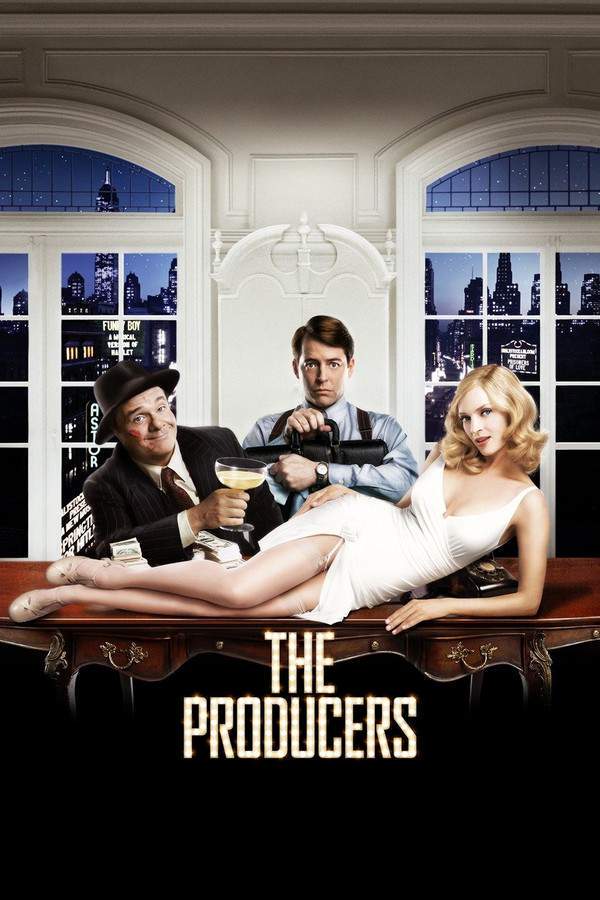
The Producers (2005) movie poster

Timeline

The Producers (2005) Timeline Explained – Every Event in Order

Release, runtime and language
2005 · 134 min · English
Loading streaming availability…
Directed by
Susan Stroman
Starring
Nathan Lane, Matthew Broderick, Uma Thurman
Budget
$45M

A down-on-his-luck Broadway producer and a timid accountant team up to deliberately produce the worst musical ever, hoping to make money from investors. Their outrageous plan involves creating "Springtime for Hitler," a hilariously offensive show that is initially intended as a guaranteed flop. However, the show becomes unexpectedly popular, launching the unlikely partners to fame and fortune while creating a series of increasingly chaotic situations.

On this page (6)
  1. 1 Where to watch
  2. 2 Events in order (16)
  3. 3 Timeline questions answered
  4. 4 Movie threads
  5. 5 Movies like The Producers
  6. 6 Every angle
Loading streaming availability…

16 events in order · contains spoilers

The Producers Timeline: Events in Chronological Order

Every key event of The Producers (2005) in order, scene by scene, with when and where it takes place. Use it to untangle flashbacks, time jumps and parallel storylines, to refresh your memory before the sequel or to find the exact scene you are thinking of.

  1. Opening Night Disaster

    The film opens with the disastrous opening night of Max Bialystock's latest Broadway show, *Funny Boy: A Musical Version of Hamlet*. Audience members exit the theater, expressing their dismay and disappointment, declaring the production a complete failure.

    When
    Opening Night
    Where
    Broadway Theater
  2. Leo's Arrival

    Leopold Bloom, Max's new accountant, arrives to go over the financials for *Funny Boy*. However, his work is quickly interrupted by the eccentric investor, Hold-Me-Touch-Me, who engages in playful antics with Max.

    Where
    Max's Office
  3. Leo's Dream

    During a chaotic meeting, Leo shares his lifelong dream of becoming a producer. His anxiety is evident as he clutches a blue baby blanket, which he resorts to rubbing against his face when stressed, particularly after Max snatches it away, sending him into a fit of hysteria.

    Where
    Max's Office
  4. The Big Idea

    After calming down, Leo realizes a groundbreaking idea: it might be more profitable to produce a flop than a hit. With Max's encouragement, they conspire to create the biggest flop in Broadway history to pocket the excess funds.

    Where
    Max's Office
  5. Searching for a Flop

    Max and Leo embark on a quest to find the worst play imaginable. They ultimately settle on *Springtime for Hitler*, a preposterous musical written by Neo-Nazi Franz Liebkind, believing it will surely fail and allow them to profit.

    Where
    New York City
  6. Meeting Franz Liebkind

    In a humorous rooftop encounter, Max and Leo meet Liebkind, who insists they don swastika armbands and participate in a mock-sworn oath. The absurdity of the situation highlights the ludicrous nature of their production choice.

    Where
    Rooftop
  7. Getting a Director

    To bring their audacious project to life, they seek out flamboyant director Roger DeBris. Despite his reluctance, DeBris agrees to direct after hearing about the potential for a Tony Award, setting the stage for their chaotic production.

    Where
    DeBris's Office
  8. Ulla Joins the Team

    They encounter the enchanting Ulla, who auditions on a whim and impressively performs 'When You Got It, Flaunt It'. Soon after, she is hired as both their secretary and a cast member, contributing to the show's unique flair.

    Where
    Audition Room
  9. Raising Money

    Max employs his charm to court wealthy elderly women to secure funding for their production, while Leo finds himself in a burgeoning romance with Ulla. This new relationship leads Leo to finally discard his comforting blue blanket.

    Where
    Various Locations
  10. Opening Night Chaos

    As opening night arrives, nerves run high. Amid uncertain reactions from the audience and a series of unexpected mishaps, Leo dons the Broadway producer's hat, a symbol of his dreams and aspirations.

    When
    Opening Night
    Where
    Broadway Theater
  11. Unexpected Success

    Initially, the audience leaves in disgust, but DeBris's outrageous portrayal of Hitler changes the atmosphere, turning the production into a surprising success as the audience recognizes it as a satire rather than an offense.

    When
    Opening Night
    Where
    Broadway Theater
  12. The Scheme Backfires

    After the successful performance, Max and Leo return to their office only to realize their grand scheming has backfired. Just as they begin to confess their misdeeds, DeBris and his assistant burst in to celebrate.

    Where
    Max's Office
  13. Legal Troubles

    Chaos erupts when Liebkind storms in, furious and demanding justice for the perceived betrayal. Just then, the police arrive, leading to the arrest of Bialystock and Bloom, revealing their tax fraud.

    Where
    Max's Office
  14. Sentenced to Prison

    Max and Leo receive unexpected sentences of five years in prison, shocking everyone. Their lives take a turn as they come to terms with their situation while facing the fate of a life behind bars.

    Where
    Courtroom
  15. A New Musical

    During their time in prison, they create a musical titled *Prisoners of Love*, which becomes a hit among inmates and staff alike. Eventually pardoned for lifting spirits, they return to Broadway with newfound success.

    Where
    Prison
  16. New Beginnings

    Now fully embracing their partnership, Max and Leo embark on new theatrical ventures that include productions like *A Streetcar Named Murray* and *Katz*. They solidify their status as a unique and successful duo in the theater industry.

    Where
    Broadway

Last updated: November 08, 2024 at 01:54

Was this helpful?

Timeline questions answered

The Producers Timeline Explained: Your Questions Answered

When does it happen, and why in that order? The questions people ask about the chronology of The Producers (2005): time jumps, flashbacks, cause and effect between scenes and the correct order of events, each answered with spoilers.

Q1

Why did Springtime for Hitler become a successful show?

When Roger DeBris performs as Hitler in an outrageously flamboyant, over-the-top manner, the audience suddenly realizes the entire production is a satire rather than a serious pro-Nazi musical. This transformation from potential offense to comedic genius causes the audience to embrace it enthusiastically, turning what was meant to be the ultimate flop into a surprising hit.

  • springtime for hitler
  • success
  • satire
  • roger deb ris
  • audience reaction
Q2

Why were Max and Leo arrested?

Max and Leo were arrested for fraud because they took money from investors to produce a guaranteed flop while secretly planning to keep the excess funds for themselves. Their scheme involved raising two million dollars with the intention of pocketing any money left over after the show closed, which constituted illegal financial misconduct. Additionally, tax fraud was uncovered during the investigation.

  • arrest
  • fraud
  • prison
  • scheme
  • max bialystock
  • leopold bloom
Q3

What happened to Max and Leo after they were released from prison?

After being pardoned for boosting morale in prison with their musical 'Prisoners of Love,' Max and Leo returned to Broadway and became successful producers. They went on to create hit productions including 'A Streetcar Named Murray,' 'South Passaic,' 'Maim,' and 'Katz,' finally achieving the Broadway success they always dreamed of.

  • prison
  • release
  • broadway
  • success
  • producers
  • prisoners of love
Q4

Why did Leo carry a blue baby blanket everywhere?

Leo used the blue baby blanket as a comfort object to manage his anxiety and stress. Whenever he felt overwhelmed, he would rub it against his face for reassurance. He finally discarded the blanket after his first kiss with Ulla, symbolizing his emotional growth and transition from a nervous, dependent man into a confident Broadway producer.

  • blue blanket
  • anxiety
  • leo bloom
  • ulla
  • comfort object
Q5

How did Max and Leo plan to make money from a flop?

Leo realized that when investors pay for a Broadway production, any money remaining after the show closes (especially a flop that closes quickly) could be pocketed by the producers. By intentionally creating the worst musical possible, they could ensure the show would fail fast while keeping the surplus funds, essentially stealing from their investors.

  • scheme
  • flop
  • investors
  • money
  • bialystock and bloom
Q6

Why did Ulla join Bialystock and Bloom's team?

Ulla, a stunning aspiring actress, showed up for an unscheduled audition and impressed everyone with her performance of 'When You Got It, Flaunt It.' Max and Leo hired her as both their secretary and a cast member in the production. She also began a romantic relationship with Leo during this time.

  • ulla
  • audition
  • secretary
  • cast member
  • romance
Q7

What was Franz Liebkind's role in Springtime for Hitler?

Franz Liebkind was the Neo-Nazi playwright who wrote 'Springtime for Hitler,' believing it was a serious tribute to the Nazi regime. Max and Leo approached him to secure the rights to his musical, convinced it would be the ultimate flop. Liebkind insisted they wear swastika armbands and take a mock oath to Siegfried during their meeting.

  • franz liebkind
  • playwright
  • nazi
  • springtime for hitler
  • rights
Q8

Why did Roger DeBris agree to direct Springtime for Hitler?

Roger DeBris, known for being the most flamboyant director in New York, initially hesitated when told about the controversial nature of 'Springtime for Hitler.' However, he was persuaded to direct after learning there was potential for a Tony Award, believing his theatrical vision could transform the material.

  • roger deb ris
  • director
  • tony award
  • flamboyant
  • musical
Q9

Why did the audience leave initially but then return during Springtime for Hitler?

At opening night, the audience began leaving in disgust when the musical appeared to be a serious pro-Nazi production. However, when Roger DeBris appeared as Hitler in an absurdly exaggerated, comedic performance, the audience realized it was satire and erupted into laughter and applause, turning the failure into a sensation.

  • audience
  • opening night
  • satire
  • reaction
  • comedy
  • hitler
Q10

Why did Max Bialystock become a Broadway producer?

Max had already been a Broadway producer, though his recent productions had all failed dramatically. His latest failure, 'Funny Boy: A Musical Version of Hamlet,' opened and closed on the same night. He partnered with Leo to produce 'Springtime for Hitler' specifically to scam investors, though he eventually found genuine success in later years.

  • max bialystock
  • producer
  • broadway
  • funny boy
  • hamlet
Q11

What happened to Hold-Me-Touch-Me, the elderly investor?

Hold-Me-Touch-Me was one of Max's wealthy elderly female investors who would visit his office for 'checkies', checks paired with playful physical interactions. She was part of the group of older women Max courted to raise the two million dollars needed to finance 'Springtime for Hitler.' Her fate after the scheme collapsed is not specified in the film.

  • hold-me-touch-me
  • investor
  • elderly women
  • max bialystock
  • funding

Movie threads

More Movies Like The Producers, by Mood & Story

Curated lists built around what makes The Producers tick: the same mood, the same kind of story or the same emotional payoff. Each list explains why these movies belong together.

Movies with chaotic get-rich-quick schemes like The Producers

Plans so ridiculous they fail upward, leading to unexpected fame and fortune. If you loved the hilarious, accidentally-successful plot of The Producers, you'll enjoy these movies. This section features comedies and satires where outrageous, doomed-to-fail plans backfire into fame and fortune. Discover films with a similar mix of zany characters, chaotic situations, and a lighthearted, happy ending.

  • zany
  • satirical
  • absurd
  • optimistic
  • chaotic
  • flamboyant
  • Tone: whimsical, satirical
  • Pacing: fast, chaotic
Why these movies?

The story pattern: The narrative follows a predictable but delightful arc: a character or group, often in financial desperation, conceives an outlandish, 'foolproof' plan to make money quickly. They pursue this scheme with chaotic energy, facing minor setbacks that only heighten the comedy. The climax occurs when their plan, intended to be a disaster, is misinterpreted by the public as brilliant, leading to an ironic and happy resolution where they achieve everything they wanted, but not at all how they planned.

Why they belong together: These films are grouped by their shared foundation in satire and farce, featuring fast-paced storytelling, a light emotional tone, and a core plot device of a plan backfiring spectacularly in the best way possible. They offer a comforting and optimistic experience where failure is not an end but a wacky detour to success.
Zany musical comedies with a satirical edge like The Producers

Energetic musicals filled with big characters, slapstick humor, and satirical wit. Fans of the outrageous musical numbers and comedic flair of The Producers will find more to love here. This section highlights other fast-paced, satirical musicals that blend slapstick humor with big production numbers. Explore movies that share a lighthearted, whimsical tone and a focus on pure, unapologetic entertainment.

  • flamboyant
  • theatrical
  • silly
  • satirical
  • energetic
  • optimistic
  • Tone: whimsical, light
  • Pacing: fast, energetic
Why these movies?

The story pattern: Stories in this thread often revolve around a theatrical production or performance art as a central plot device. The narrative is straightforward, serving as a vehicle for a rapid succession of comedic set pieces, auditions, rehearsals, and show-stopping musical numbers. Character arcs are simple and humorous, with conflicts resolved through song, dance, and farcical solutions rather than deep introspection.

Why they belong together: These movies are united by their primary goal: to entertain through music and comedy. They share a specific mix of genre (Comedy and Musical), a fast pacing driven by musical numbers, a whimsical or light tone, and a focus on visual and performative extravagance. The overall experience is one of joyful, energetic escapism.

If you liked this

Movies Like The Producers

Similar movies to The Producers: the same genre, themes or kind of story. Each one comes with its own plot summary, timeline and ending explained.

Browse all movie summaries

Every angle

The Producers (2005) Explained: Plot, Timeline & Characters

Everything about The Producers in one place: what happens in the plot summary, the timeline in chronological order, the characters and meaning and a spoiler-free summary. What's After the Movie adds the cast, box office and post-credit scenes.

Coming soon on iOS and Android

The Plot Explained Movie Summary App

Plot summaries, endings explained and timelines on your phone. Catch up on any movie in minutes, save your favorites and never miss a twist again.

Be the first to know when we launch. Your email stays private, always.

Learn more about the app