Year: 1983
Runtime: 107 min
Language: English
Director: Alan Johnson
During World War II, a struggling Polish theater troupe finds themselves caught up in the turmoil of the conflict. The comedic chaos escalates when the actor's increasingly flirtatious wife finds herself entangled with charming young officers. Amidst the danger and uncertainty, he devises a daring and elaborate plan, using his theatrical skills to aid in a secret mission and ultimately demonstrating unexpected bravery.
Warning: spoilers below!
Haven’t seen To Be or Not to Be yet? This summary contains major spoilers. Bookmark the page, watch the movie, and come back for the full breakdown. If you're ready, scroll on and relive the story!
Read the complete plot breakdown of To Be or Not to Be (1983), including all key story events, major twists, and the ending explained in detail. Discover what really happened—and what it all means.
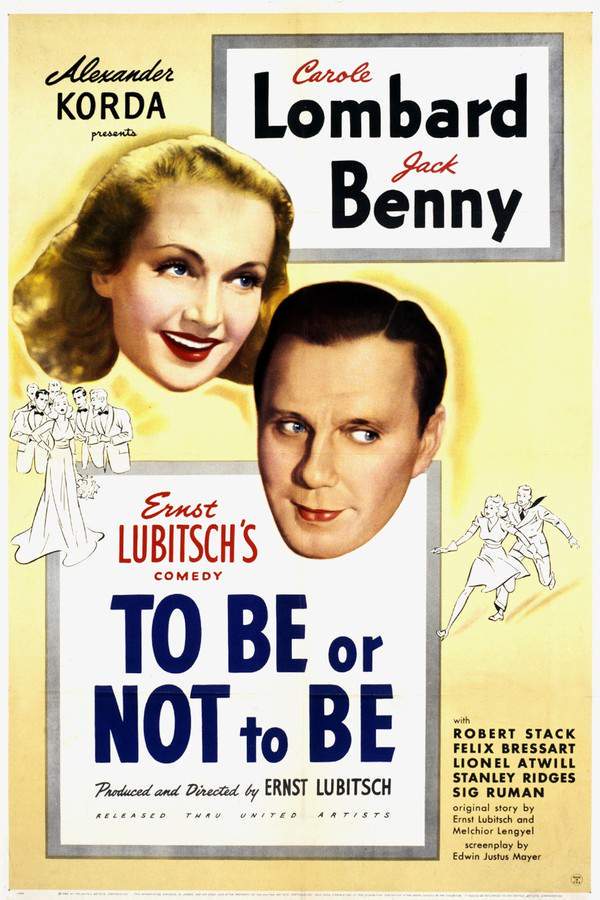
In wartime Warsaw, the Bronski Theatre is a large ensemble company led by Frederick Bronski, whose meticulous control often grates on the troupe, especially his wife Anna Bronski, whose performances consistently win the audience’s praise. Their domestic tension overlaps with the company’s ambitions, as Anna’s artistry and popularity heighten Frederick’s sense of ownership over the troupe.
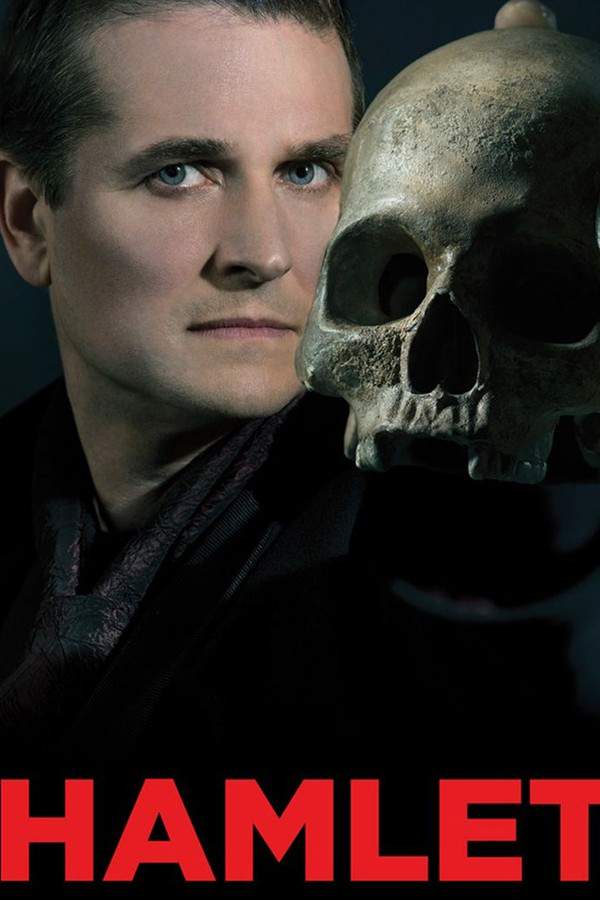
Anna’s personal life becomes entangled when she begins a flirtation with bomber pilot Andre Sobinski, whom she invites to her dressing room during Frederick’s staging of Hamlet. The moment is buoyant and risky, a brief escape from the mounting pressure, but it is soon overshadowed by the looming threat of war. The mood shifts as the Nazi invasion of Poland disrupts their world, forcing Sobinski to return to his squadron and the troupe to face an uncertain future.
As the Bronski Theater fights to stay open under Gestapo censorship, Sobinski and the Royal Air Force’s Polish squadron find common cause with Dr. Siletski, a Polish radio broadcaster who claims he is returning to Poland with messages for family members and for the Polish Underground. The arrangement grows tense when Sobinski notices that Siletski cannot recognize Anna’s name, even though he had claimed to live in Warsaw. This discrepancy spurs deepening suspicion, and Sobinski seeks help from British intelligence, who quickly conclude that Siletski is a Nazi sympathizer plotting to deliver the names to the Gestapo.
A daring plan unfolds: Sobinski parachutes into Warsaw and reunites with Anna and Frederick, who have taken refuge with Anna’s dresser Sasha after their home becomes Gestapo Headquarters. In the city, Siletski takes Anna to his room at the Europa Hotel—now repurposed as German Military Headquarters—under the pretense of discussing Sobinski’s supposed personal message. He invites her to dinner, convinced there is no military value in the exchange, while back at home Anna explains the situation to Frederick and Sobinski. They soon realize that Siletski and Gestapo leader Colonel Erhardt have never actually met, and they hatch a plan in which Frederick will pose as Erhardt to retrieve the list and protect Anna.
The ruse deepens as the night intensifies: actors disguised as Gestapo interrupt Anna’s date with Siletski and drag him away to “headquarters,” the Bronski Theater. Frederick, adopting Siletski’s guise, manages to recover the list but cannot help reacting to news of Anna’s liaisons, which momentarily exposes his masquerade. Siletski attempts a frantic escape through the theater, but Sobinski shoots him, removing any chance he posed of revealing the larger scheme. Frederick must now double down on the deception, posing again as Siletski to retrieve a copy of the list and to secure Anna’s safety, all while the ever-present danger of Gestapo scrutiny lingers.
The theater becomes a battleground as Nazi soldiers assault the troupe for harboring Sasha, who is targeted for being homosexual. The performance space itself is compromised and several actors rally to protect him, but the theater is forced to close. With Anna taken to Gestapo headquarters under Erhardt’s orders, Frederick disguises himself as Siletski once more to retrieve her, unaware that the Germans have already found Siletski’s body. In a tense moment, Ehrhardt leaves Frederick alone in a room with the dead Siletski, and Frederick improvises a final gambit: he removes Siletski’s beard and applies a fresh disguise beard, goading Ehrhardt into pulling it off and convincing him that Frederick is the real Siletski—enough to secure Sasha’s release.
Yet the ruse cannot last. As the plan nears its breaking point, Sobinski and the Bronski troupe orchestrate one last dramatic-smokescreen: a special performance for the visiting Hitler designed to distract the occupiers and provide a path to safety for the Jewish refugees sheltered by Frederick. The performance stumbles at times, but it achieves its purpose, and the troupe escapes the clutches of Occupied Poland. They reach the airport, where German security briefly closes in, but Sobinski’s piloting carries them to the skies and on to England.
In gratitude, the British government grants the Bronskis permission to perform in London, even as the finale of their journey hints at a bitter irony: on the stage in London, a new, young soldier rises and leaves Frederick’s renowned To be or not to be speech unfinished, signaling that the cost of war has touched even their most iconic moments.
Last Updated: October 09, 2025 at 15:36
Discover curated groups of movies connected by mood, themes, and story style. Browse collections built around emotion, atmosphere, and narrative focus to easily find films that match what you feel like watching right now.
Comedic plans and elaborate deceptions in the face of serious danger.If you liked the clever deceptions and tense comedy of To Be or Not to Be, explore more movies where daring plans unfold against a backdrop of serious danger. These films feature characters using their wits in high-pressure situations, creating a unique mix of suspense and satirical humor.
These stories typically revolve around an elaborate, often improvised, scheme that grows increasingly complex and risky. Characters must convincingly play roles within their own deception, leading to moments of near-discovery and frantic problem-solving. The plot thrives on a fast-paced sequence of obstacles and narrow escapes, driven by cleverness rather than brute force.
Movies in this thread are grouped by their unique tonal balance: placing comedic, almost farcical characters and situations within a genuinely high-stakes context. They share a pattern of using intelligence and performance as primary tools for survival, creating an experience that is simultaneously tense, absurd, and satisfyingly clever.
Characters who use their performance skills as their ultimate weapon.Find more movies like To Be or Not to Be where performers become protagonists. These stories explore how skills from the stage—acting, disguise, and improvisation—become vital tools in life-or-death situations, offering a unique blend of drama, comedy, and clever resolutions.
The narrative follows characters whose professional identity as performers is directly applied to a high-stakes real-world problem. Their journey involves a transition from artifice to authentic courage, where the line between their staged persona and their true self blurs. The conflict is often resolved not through physical strength, but through a masterful final 'performance' that outwits the antagonists.
This thread groups movies based on a specific character archetype: the performer-hero. The central appeal is seeing specialized artistic skills repurposed for survival or resistance, creating a satisfying intellectual victory. This shared focus on theatricality as a narrative engine creates a cohesive and unique viewing experience.
Don't stop at just watching — explore To Be or Not to Be in full detail. From the complete plot summary and scene-by-scene timeline to character breakdowns, thematic analysis, and a deep dive into the ending — every page helps you truly understand what To Be or Not to Be is all about. Plus, discover what's next after the movie.
Track the full timeline of To Be or Not to Be with every major event arranged chronologically. Perfect for decoding non-linear storytelling, flashbacks, or parallel narratives with a clear scene-by-scene breakdown.
Discover the characters, locations, and core themes that shape To Be or Not to Be. Get insights into symbolic elements, setting significance, and deeper narrative meaning — ideal for thematic analysis and movie breakdowns.
Get a quick, spoiler-free overview of To Be or Not to Be that covers the main plot points and key details without revealing any major twists or spoilers. Perfect for those who want to know what to expect before diving in.
Visit What's After the Movie to explore more about To Be or Not to Be: box office results, cast and crew info, production details, post-credit scenes, and external links — all in one place for movie fans and researchers.
Discover movies like To Be or Not to Be that share similar genres, themes, and storytelling elements. Whether you’re drawn to the atmosphere, character arcs, or plot structure, these curated recommendations will help you explore more films you’ll love.
To Be or Not to Be (1983) Scene-by-Scene Movie Timeline
To Be or Not to Be (1983) Movie Characters, Themes & Settings
To Be or Not to Be (1983) Spoiler-Free Summary & Key Flow
Movies Like To Be or Not to Be – Similar Titles You’ll Enjoy
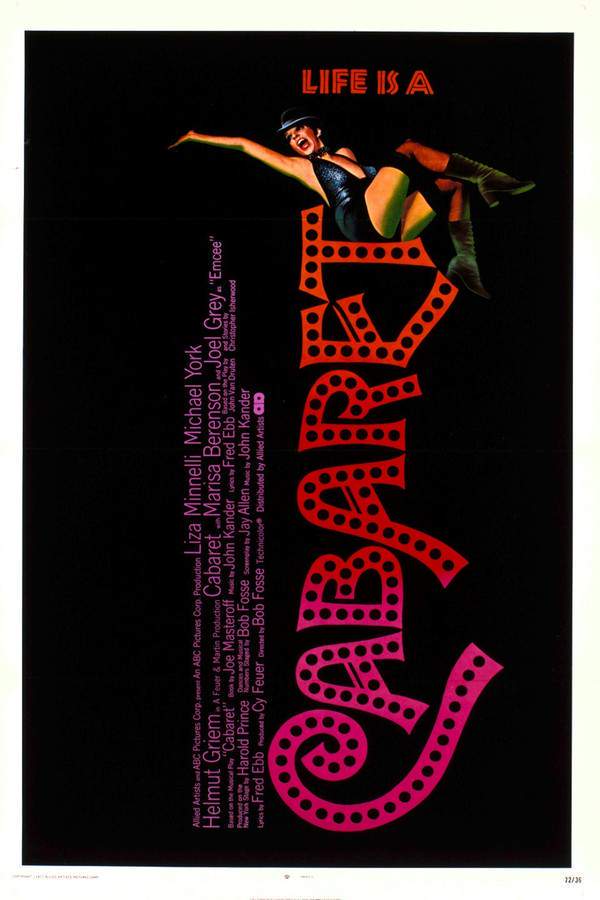
Cabaret (1972) Full Movie Breakdown
A Stasi Comedy (2022) Complete Plot Breakdown
The Great Dictator (1940) Complete Plot Breakdown
Nazi Agent (1942) Film Overview & Timeline
Me and the Colonel (1958) Full Summary & Key Details
Mein Kampf (2009) Spoiler-Packed Plot Recap
Hitler: Beast of Berlin (1939) Complete Plot Breakdown
The Strange Death of Adolf Hitler (1943) Plot Summary & Ending Explained
Hitler’s Kaput! (2008) Full Movie Breakdown
Hitler: A Film from Germany (1977) Film Overview & Timeline
Which Way to the Front? (1970) Plot Summary & Ending Explained
Don’t Look Now… We’re Being Shot At! (1966) Detailed Story Recap
Adolf and Marlene (1977) Plot Summary & Ending Explained
Idiot’s Delight (1939) Complete Plot Breakdown
Once Upon a Honeymoon (1942) Plot Summary & Ending Explained