

Plot Explained Spoilers guaranteed!
Plot Explained

Browse by genre

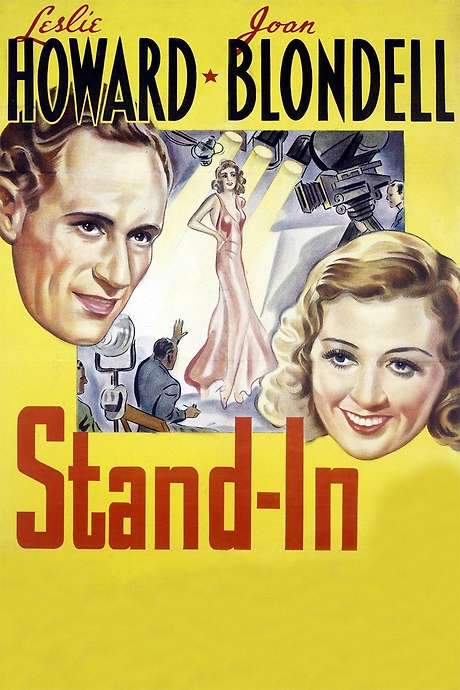
Stand-In (1937) movie poster

Plot Summary

Stand-In (1937) Plot Summary Explained

Release, runtime and language
1937 · 91 mins · English
Directed by
Tay Garnett
Starring
Humphrey Bogart, Jack Carson, Leslie Howard, C. Henry Gordon, Tully Marshall, Olin Howland

Hail! The conquering hero comes! An East‑Coast efficiency expert, determined to redeem his reputation by rescuing a financially struggling Hollywood studio, enlists the unlikely assistance of a former child star who now works as a studio stand‑in, sparking an unlikely partnership.

On this page (6)
  1. 1 Where to watch
  2. 2 What happens: full plot
  3. 3 Plot questions answered
  4. 4 Movie threads
  5. 5 Movies like Stand-In
  6. 6 Every angle

Where to watch

Where to Watch Stand-In (1937)

Where can you watch Stand-In? Stream, rent or buy it in the US, including on Mometu: current JustWatch availability with up-to-date prices.

Streaming availability powered by JustWatch

Full plot summary · contains spoilers

What Happens in Stand-In: Full Plot Summary

The whole story of Stand-In (1937) explained, from the opening scene to the final frame: every key event, every twist and what it all adds up to. Read it as a quick recap before the sequel, to check a scene you missed, or to finally understand what really happened.

During the Great Depression, Fowler Pettypacker, a Wall Street banker, faces a pivotal choice: accept an offer from Ivor Nassau to buy Colossal Pictures, a struggling studio on Poverty Row, or hold out in hopes of turning a profit. The bank sends Atterbury Dodd to Hollywood as the new head of the studio, betting on his mathematical calculations to prove that Colossal can still thrive.

Colossal’s fate hinges on a trio of ambitious players: the studio’s star actress Thelma Cheri, the eccentric foreign director Koslofski, and the enthusiastic press agent Tom Potts. They are secretly aligned with Nassau to sabotage the studio, driving up costs on producer Douglas Quintain’s jungle feature, Sex and Satan, so that the film flops and Colossal goes bankrupt.

In Hollywood, Dodd becomes acquainted with Lester Plum, a bright-eyed former child star who now works as a stand-in for Cheri. Lester opens Dodd’s eyes to the realities of filmmaking, and she eventually becomes his secretary. As Dodd grows into the job, Lester’s warmth deepens into affection, though he initially remains unaware of her feelings.

Dodd’s arrival coincides with his first viewing of Sex and Satan, which leaves him unimpressed. Koslofski places the blame on Quintain, a man who once discovered Cheri and helped shape her rise, even as she sides with Koslofski. The friction leads Dodd to fire Quintain. A preview further reveals the film’s flaws: audiences apparently care more about the ape than Cheri’s performance, underscoring the studio’s precarious position.

Seeking a way out, Quintain suggests salvaging the project by trimming Cheri’s role and expanding the ape’s presence. Yet before any changes can take place, a phone call from Fowler Pettypacker shocks Dodd: Nassau has purchased the studio, and Dodd is fired. Undaunted, Dodd rallies the workers who had seemed hostile toward him, uniting them to complete the film in defiance of the new ownership.

In a touching personal turn, the momentum of solidarity gives way to a developing wish for a brighter future: Dodd asks Lester Plum to marry him, signaling that the human stories behind the numbers may outshine even the most calculated plans. The tale threads together ambition, betrayal, and reconciliation, painting a portrait of a Hollywood that is as much about people and loyalties as it is about profits and prestige.

Last updated: October 09, 2025 at 10:46

Was this helpful?

Plot questions answered

Stand-In Plot Explained: Your Questions Answered

The questions people ask most about Stand-In (1937): what happens in the confusing scenes, why the characters do what they do, the twists, hidden details and what the ending means. Each answer contains spoilers.

Q1

Why was Atterbury Dodd sent to Hollywood to run Colossal Pictures?

The bank sent Dodd to Hollywood because he had calculated mathematically that Colossal Pictures could still be profitable if kept independent. Fowler Pettypacker, a Wall Street banker, was debating whether to sell the studio to Ivor Nassau, but Dodd staked his reputation on proving the studio could succeed under proper management. The bank's investment in his calculations led to his appointment as the new studio head.

Foreshadowing: Dodd's mathematical approach to filmmaking contrasts with the creative chaos he encounters, setting up his eventual transformation.

  • atterbury dodd
  • colossal pictures
  • hollywood
  • studio head
  • bank
  • financial crisis
Q2

Why did Thelma Cheri, Koslofski, and Tom Potts plot against Colossal?

Cheri, Koslofski, and Potts secretly aligned with Ivor Nassau to bankrupt Colossal Pictures. They inflated production costs on the jungle feature Sex and Satan, hoping the losses would force the studio into bankruptcy and allow Nassau to acquire it. Their conspiracy was designed to artificially drive up expenses and ensure the film failed financially.

Foreshadowing: Early scenes show Cheri and Koslofski working together, hinting at their secret alliance against the studio's success.

  • thelma cheri
  • koslofski
  • tom potts
  • sabotage
  • conspiracy
  • sex and satan
  • Nassau
Q3

Why did Atterbury Dodd fire producer Douglas Quintain?

Dodd fired Quintain after viewing Sex and Satan and hearing Koslofski blame Quintain for the film's poor quality. The tension was intensified because Quintain had discovered Cheri and helped her rise to stardom, yet Cheri sided with Koslofski against him during the conflict. Dodd fired Quintain to placate the conspirators and gain control over the troubled project.

Foreshadowing: Quintain's complicated past with Cheri foreshadows her willingness to turn against him when convenient.

  • douglas quintain
  • dodd
  • firing
  • producer
  • sex and satan
  • koslofski
Q4

Why did the studio workers support Dodd after he was fired?

After Dodd was fired when Nassau purchased the studio, he rallied the workers who had seemed hostile toward him by uniting them to complete Sex and Satan in defiance of the new ownership. His transformation from a cold numbers-focused executive to someone who valued the workers as people earned their loyalty. The workers chose to back him because he had genuinely come to respect and care about them.

Foreshadowing: Earlier scenes show Dodd learning about the workers' lives through Lester, foreshadowing his ability to inspire them.

  • workers
  • rally
  • dodd
  • support
  • colossal pictures
  • unite
Q5

Why did Dodd ask Lester Plum to marry him at the end?

Dodd proposed to Lester because her warmth and patience had transformed his worldview throughout his time at Colossal. Under her tutelage, he learned to see the studio's workers as people rather than numbers on a spreadsheet. As the workers united and the film project was salvaged, Dodd realized that human connections and relationships mattered more than his mathematical calculations, leading him to express his love through marriage.

Foreshadowing: Throughout the film, Lester's affection for Dodd is evident while he remains oblivious, building toward his eventual recognition of her value.

  • lester plum
  • dodd
  • proposal
  • marriage
  • romance
  • transformation
Q6

Why did the preview audience prefer the ape over Thelma Cheri in Sex and Satan?

The preview audience responded more to the ape than to Cheri's performance because the film itself was fundamentally weak overall. Audiences naturally gravitated toward the most entertaining element, which happened to be the ape. This feedback underscored how badly the production had gone wrong and why drastic changes were needed.

Foreshadowing: Dodd's unimpressed reaction after viewing the film hints at its poor quality before the preview confirms it.

  • ape
  • preview
  • audience
  • thelma cheri
  • sex and satan
  • failure
Q7

Why did Ivor Nassau want to buy Colossal Pictures?

Ivor Nassau sought to acquire Colossal Pictures because the studio was struggling financially during the Great Depression. By purchasing Colossal, Nassau could expand his entertainment empire on Poverty Row. The conspirators working with him deliberately inflated costs on Sex and Satan to force the studio into bankruptcy, making it easier for Nassau to take control.

Foreshadowing: The opening debate between Pettypacker and Nassau establishes Nassau's intent to acquire the struggling studio.

  • ivor nassau
  • colossal pictures
  • acquisition
  • purchase
  • bankruptcy
  • poverty row
Q8

Why did Douglas Quintain suggest trimming Cheri's role and adding more ape?

After the disastrous preview confirmed audiences preferred the ape over Cheri, Quintain proposed salvaging Sex and Satan by reducing Cheri's screen time and expanding the ape's presence. This was a pragmatic attempt to transform the weak film into something more marketable by focusing on the one element that actually engaged viewers.

Foreshadowing: The preview feedback directly motivates Quintain's salvage plan, which acknowledges the film's fundamental problems.

  • quintain
  • cheri
  • ape
  • trimming
  • sex and satan
  • salvage plan
Q9

Why was Lester Plum working as a stand-in instead of a starring actress?

Lester Plum was a former child star who had once been popular but now worked as a stand-in for Thelma Cheri at Colossal Pictures. Her career had declined, typical for child stars who outgrew their appeal. Despite her reduced status, she remained cheerful and used her experience to teach Dodd about the realities of Hollywood filmmaking.

Foreshadowing: Lester's background as a former child star explains her wisdom about the industry and her patient mentorship of Dodd.

  • lester plum
  • stand-in
  • child star
  • former actress
  • career decline
Q10

Why did Thelma Cheri side with Koslofski against Quintain?

Cheri sided with Koslofski in blaming Quintain for Sex and Satan's problems despite Quintain having discovered her and helped shape her rise to stardom. This betrayal was part of her secret alliance with Koslofski and Nassau to sabotage the studio. Her willingness to turn against her former benefactor demonstrated her complicity in the conspiracy.

Foreshadowing: Earlier references to Quintain's role in Cheri's career make her betrayal more striking when it occurs.

  • thelma cheri
  • koslofski
  • quintain
  • betrayal
  • conspiracy
  • alliance

Movie threads

More Movies Like Stand-In, by Mood & Story

Curated lists built around what makes Stand-In tick: the same mood, the same kind of story or the same emotional payoff. Each list explains why these movies belong together.

Movies with clever underdog stories like Stand-In

Clever protagonists use their wits and charm to overcome professional obstacles. If you enjoyed the witty charm and professional triumph in Stand-In, you'll love these movies featuring clever underdogs who save the day. This thread highlights similar comedies and dramas where sharp minds and unlikely partnerships conquer corporate or creative adversity.

  • witty
  • charming
  • underdog
  • triumphant
  • resourceful
  • optimistic
  • Tone: light, witty, optimistic
  • Pacing: steady, engaging
Why these movies?

The story pattern: The narrative follows an underestimated protagonist, often an outsider, who is brought in to solve a problem. They face skepticism and active sabotage from established forces but utilize their unique perspective and quick thinking to devise clever solutions, proving their worth and achieving success against the odds.

Why they belong together: These movies are grouped together because they share a light, optimistic tone and a focus on intellectual triumph over brute force or bureaucracy. The central appeal is the joy of watching a charming protagonist outsmart their rivals, making the victory feel earned and delightful.
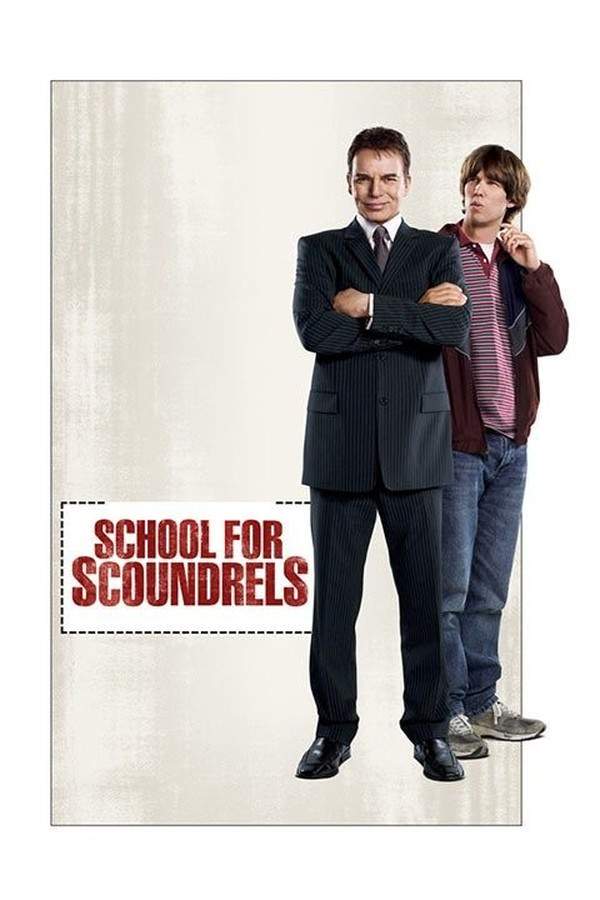

Movies about Hollywood satire and studio life like Stand-In

Behind-the-scenes stories that humorously expose the absurdities of the film industry. Fans of Stand-In's look at studio politics will enjoy these other films set in the world of movie-making. Discover similar romantic comedies and satires that explore the glamorous, chaotic, and often hilarious business behind the silver screen.

  • satirical
  • behind-the-scenes
  • industrious
  • glamorous
  • romantic
  • witty
  • Tone: light, satirical, romantic
  • Pacing: steady
Why these movies?

The story pattern: Stories in this thread unfold within the film industry, revealing the conflict between art and commerce. Characters navigate a world of fickle stars, anxious producers, and desperate screenwriters, where personal and professional lines blur. The plot often involves saving a project or a career, exposing the madness while ultimately celebrating the magic of movies.

Why they belong together: These films are connected by their specific setting and satirical target: the Hollywood machine. They share a breezy, industrious mood and a meta-commentary on fame, creativity, and business, offering a consistently entertaining and insider-y perspective on the world of entertainment.

If you liked this

Movies Like Stand-In

Similar movies to Stand-In: the same genre, themes or kind of story. Each one comes with its own plot summary, timeline and ending explained.

Browse all movie summaries

Every angle

Stand-In (1937) Explained: Plot, Timeline & Characters

Everything about Stand-In in one place: what happens in the plot summary, the timeline in chronological order, the characters and meaning and a spoiler-free summary. What's After the Movie adds the cast, box office and post-credit scenes.

Coming soon on iOS and Android

The Plot Explained Movie Summary App

Plot summaries, endings explained and timelines on your phone. Catch up on any movie in minutes, save your favorites and never miss a twist again.

Be the first to know when we launch. Your email stays private, always.

Learn more about the app