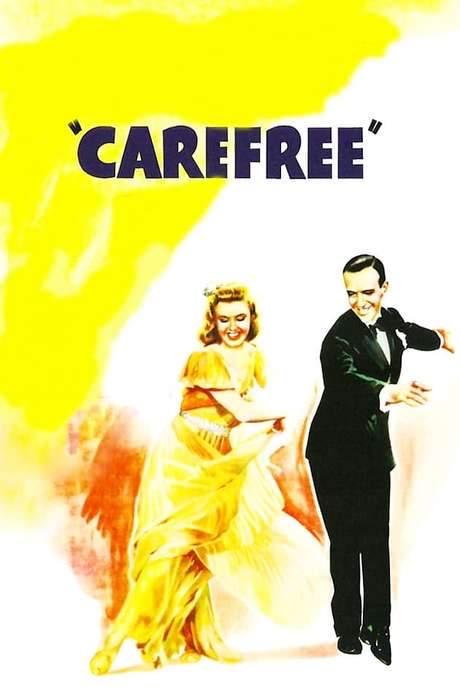
Spud Miller [Jack Oakie], the owner of radio station W.H.Y., runs the operation with the station’s only announcer, Smiley Goodwin [Henry Wadsworth], who also serves as the house singer for the act Lochinvar—the Great Lover, beloved by millions. The two men share the air as a combative, comic duo, trading quips and riffs as they push the show to entertain a growing audience. But behind the laughter, the station faces the real danger of bankruptcy, and Spud must find a lifeline before the lights go out.
In a bid to save the business, Spud and Smiley receive a bold pitch from two outside masterminds, George Burns and Gracie Allen. They propose selling an invention called The Radio Eye, a television-like device imagined by Gracie Allen’s uncle that could pick up and transmit any signal, anytime, anywhere. The plan promises a dramatic leap forward for their station, but it requires money up front. Burns and Allen push for an advance of $5,000 so they can lock in the rights and move ahead with the project. Spud, ever the gambler, decides to enter an international broadcast competition with a staggering prize of $250,000, hoping the windfall will rescue W.H.Y. and propel their careers into a new era.
Meanwhile, Ysobel de Naigila—a Countess famous in her own right—has been listening to the Lochinvar show and becomes convinced that Lochinvar is sending letters to listeners. When she discovers the truth is more tawdry and playful than romantic, she travels to the station to confront the show and to confront Lochinvar himself with a pistol. Yet Spud and Smiley manage to calm her with humor and charm, and they pivot the situation toward a new opportunity: she might invest the $5,000 that would fund The Radio Eye, which would, in turn, give them the star power needed to win the competition. She agrees to join them on a bold, risky journey.
Ysobel’s enthusiasm carries them to a Caribbean island named Clementi, where she intends to decide which of the two suitor-hopefuls—Spud or Smiley—will win her hand by midnight. But the trip quickly turns perilous. Gordoni [C. Henry Gordon], a ruthless antagonist, intends to murder them and seize their assets. In a cruel twist, Gordoni has Drowso drug Ysobel’s drink in order to keep her asleep and out of the way while his plan unfolds. Spud and Smiley, aware of the danger, race to alert Burns and Allen in distant New York, who then hurriedly set sail for Clementi with a sense of urgency and resolve.
Back on the island, Gracie Allen’s ingenuity comes into play in a spectacular sequence. Gracie sets a fire on a boat that carries the trio, and a Coast Guard cutter intercepts and pulls them aboard, guiding them toward safety. Gordoni, not to be outflanked, pursues with his henchmen, but Spud and Smiley cleverly hijack the moment by turning on The Radio Eye and broadcasting a distraction—the Vienna Boys Choir and the Ray Noble Orchestra—to confuse Gordoni and his men and cover their escape. A tense chase ensues, with coaches and teams of horses pulling the pair along a bifurcated road until they reach the water’s edge and the pier.
As the Coast Guard, Burns, and Allen close in, Gordoni makes a desperate leap into the sea. The climactic moment unfolds with Spud and Smiley regaining control of the situation and triumphing in the international broadcast contest, securing the $250,000 prize that could guarantee the future of W.H.Y. and its colorful lineup. With danger behind them and a fresh sense of possibility ahead, Spud conveys a cautious but hopeful message to Ysobel: after a period of observation, he may marry her and begin a new life together.
In the end, the strange mix of vaudeville, invention, international broadcasting, and romantic farce leaves the central duo not only with a hefty financial win but with a hard-won status as the season’s most unpredictable—and entertaining—radio stars. And as the unlikely romance hints of a new beginning, Ysobel delivers a line that underscores the film’s playful, noir-tinged optimism: >Let this be the start of a beautiful friendship.