
















Plot Explained Spoilers guaranteed!
Plot Explained

Browse by genre

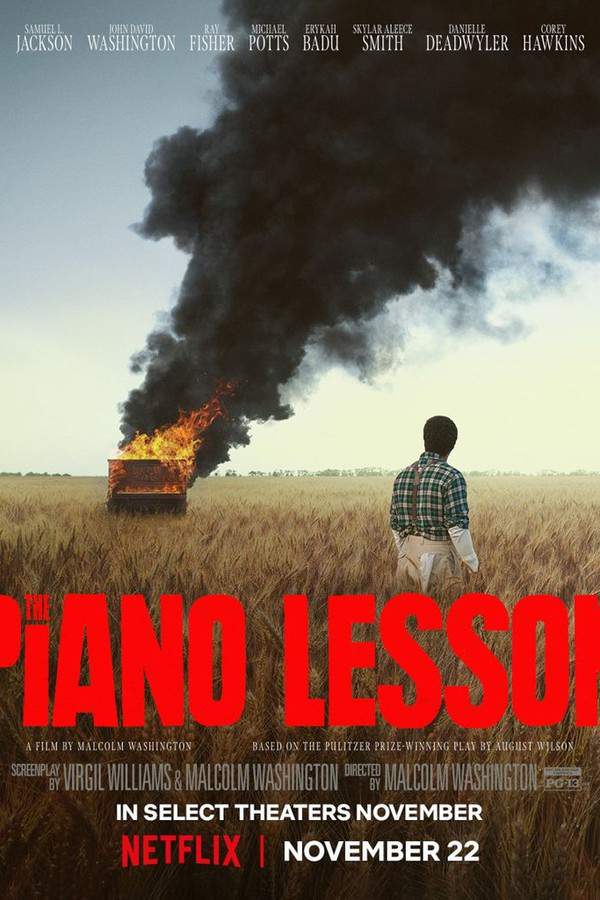
The Piano Lesson (2024) movie poster

Characters & Themes

The Piano Lesson (2024) Characters, Setting & Themes Explained

Release, runtime and language
2024 · 2 h 5 m · English
Echo score 66
JustWatch #9,459 9
Starring
Samuel L. Jackson, Ray Fisher, Corey Hawkins, John David Washington, Stephan James, Gail Bean

A conflict arises within the Charles family over a cherished heirloom piano. A brother intends to sell the piano to build the family’s financial future, while his sister is determined to preserve it as the last remaining symbol of their heritage. The disagreement escalates into a tense battle between them, threatening to fracture their relationship.

On this page (9)
  1. 1 Where to watch
  2. 2 Characters explained (3)
  3. 3 Where & when it takes place
  4. 4 Themes & meaning (3)
  5. 5 Character & meaning questions
  6. 6 The book behind the movie
  7. 7 Movie threads
  8. 8 Movies like The Piano Lesson
  9. 9 Every angle

Where to watch

Where to Watch The Piano Lesson (2024)

Where can you watch The Piano Lesson? Stream, rent or buy it in the US, including on fuboTV, Philo and Hoopla: current JustWatch availability with up-to-date prices.

Streaming availability powered by JustWatch

3 main characters · contains spoilers

The Piano Lesson Characters Explained: Who Is Who

The main characters of The Piano Lesson (2024), heroes and villains: what drives them, how they change over the course of the story and what each of them reveals about the film's bigger ideas.

  • Boy Willie

    played by John David Washington

    Boy Willie is driven and determined, seeking to assert his family's legacy by reclaiming land and identity. His eagerness to sell the family piano showcases his conflicted priorities and desire for autonomy in a racially oppressive world. Throughout the story, he grapples with the ghost of his family's past, both literally and metaphorically.

    • 👨‍🎤 Protagonist
    • 🔥 Determined
    • 🎼 Driven
  • Berniece

    played by Danielle Deadwyler

    Berniece is fiercely protective of her family's history and the sacred piano, embodying resilience and the struggle against her painful past. Her character wrestles with memories of her mother's pressures and the haunting presence of the ghost, serving as a vessel for generational trauma and strength. She ultimately finds empowerment through music and remembrance.

    • 💪 Strong-willed
    • 🎹 Protector
    • 🌺 Complex
  • Doaker

    played by Samuel L. Jackson

    Doaker serves as a stabilizing presence in the Charles family, offering wisdom and a connection to their shared past. He provides a grounding influence amidst the conflicts between Boy Willie and Berniece, illustrating the importance of family ties and the weight of legacy. His character adds depth to the family's dynamic and the piano's significance.

    • 👴 Wise
    • 💼 Mediator
    • 🙏 Family-oriented

Last updated: September 09, 2026 at 04:41

Was this helpful?

Setting

Where and When Does The Piano Lesson Take Place?

The setting of The Piano Lesson (2024): the year and time period, the places and locations, and how they shape the characters, the mood and the tension of the story.

Time period

1911, 1936

The events span from 1911 to 1936, highlighting the significant struggles of African Americans in the early 20th century. This period saw the ongoing impact of slavery and the fight for autonomy and identity, as evidenced by Boy Wille and Berniece's conflicts over their family's piano, a powerful symbol of heritage.

Location

Pittsburgh, Mississippi

The movie predominantly takes place in Pittsburgh, where the Charles family resides, and Mississippi, which is intertwined with their family history. Pittsburgh serves as a backdrop for the family’s struggles and dynamic, while Mississippi is the site of ancestral trauma and a contested piece of land representing generational legacy.

  • 🏙️ City
  • 🌾 Farmland

Last updated: September 09, 2026 at 04:41

Was this helpful?

3 major themes

The Piano Lesson Meaning: Themes & Message Explained

What is The Piano Lesson (2024) really about? The emotional, social and philosophical themes the film keeps returning to, its symbolism and the message beneath the surface.

  • Heritage

    The piano in the movie symbolizes the Charles family's heritage and resilience. It serves as an artifact of their struggles and a reminder of their ancestry, illustrating the deep connection between culture, memory, and identity. Both siblings grapple with the meaning of this heritage, revealing the complexities of ownership and legacy.

  • Supernatural

    Supernatural elements play a vital role in the narrative, with the ghost of James Sutter haunting the Charles household. This spectral presence intensifies the family's drama and highlights themes of guilt, unresolved conflicts, and the ancestral ties that linger beyond death. The ghost represents the past's inescapable grip on the present.

  • Reparations

    The theme of reparations is central to the story, encapsulated in Boy Willie’s desire to acquire land as compensation for his father's death. This underscores the historical injustices faced by African Americans and raises questions about ownership, land, and the pursuit of dignity in the face of systemic oppression.

Last updated: September 09, 2026 at 04:41

Was this helpful?

Character & theme questions

The Piano Lesson Characters & Meaning: Your Questions Answered

The questions people ask about The Piano Lesson (2024): who the characters really are, their relationships, what the symbols mean, where it takes place and what the movie is really about. Each answer contains spoilers.

Q1

Where is The Piano Lesson set?

The Piano Lesson is primarily set in Pittsburgh, where the Charles family lives during the 1930s. Mississippi also plays a key role in the story as the ancestral home tied to the family's history. The contrast between the urban Pittsburgh setting and the rural Mississippi farmland shapes much of the family's internal conflict over legacy and land.

  • pittsburgh
  • mississippi
  • setting
  • charles family
  • farmland
  • city
Q2

What time period does The Piano Lesson take place in?

The Piano Lesson spans from 1911 to 1936, placing it firmly in the early 20th century. This era was marked by the ongoing aftermath of slavery and the struggle for African American autonomy and identity. The time period is essential to understanding why the piano and the contested land in Mississippi carry such deep historical weight.

  • 1911
  • 1936
  • early 20th century
  • era
  • historical context
Q3

What are the main themes of The Piano Lesson?

The Piano Lesson explores heritage, the supernatural, and reparations as its central themes. Heritage is embodied in the piano itself, which carries ancestral carvings and memory. Reparations come through Boy Willie's push to reclaim land as compensation for his father's death. The supernatural presence of a ghost haunting the household reflects how unresolved trauma from the past continues to shape the present.

  • themes
  • heritage
  • supernatural
  • reparations
  • meaning
Q4

What does the piano symbolize in the story?

The piano in The Piano Lesson symbolizes the Charles family's heritage, resilience, and ancestral memory. It is carved with images of family members from the era of slavery, making it a physical artifact of the family's history. For Berniece, it represents what must be preserved; for Boy Willie, it represents something that can be traded for a future. The piano ultimately becomes a test of what a family values more: the past or progress.

  • piano symbolism
  • heritage
  • ancestral carvings
  • family legacy
Q5

Who is Boy Willie and what does he want?

Boy Willie, played by John David Washington, is Berniece's brother and a determined, driven man who wants to sell the family piano in order to buy farmland in Mississippi. His goal is to reclaim land as a form of reparations and build a financial future for the next generation. He sees the piano as a resource rather than a relic, which puts him in direct conflict with his sister.

  • boy willie
  • john david washington
  • land
  • farmland
  • reparations
Q6

Why is Berniece so protective of the piano?

Berniece, played by Danielle Deadwyler, sees the piano as the last living symbol of her family's identity and suffering. It connects her to her ancestors, including her mother, and embodies the generational trauma the Charles family has carried since slavery. Selling it, in her view, would mean erasing that history and abandoning the people whose lives are literally carved into its wood.

  • berniece
  • danielle deadwyler
  • piano
  • protection
  • ancestral memory
Q7

Who is Doaker Charles in the family?

Doaker Charles, played by Samuel L. Jackson, is Berniece and Boy Willie's uncle and a stabilizing voice within the family. He carries deep knowledge of the family's history, including how the piano came to be carved, and often serves as a mediator between the warring siblings. His presence grounds the story and gives weight to the piano's significance by tying it to the family's shared past.

  • doaker
  • samuel l jackson
  • uncle
  • family mediator
Q8

What role does the ghost play in the story?

The ghost of James Sutter haunts the Charles household and represents the inescapable grip of the past on the present. His presence embodies unresolved guilt, ancestral trauma, and the lingering violence of slavery. The supernatural haunting intensifies the family's existing tensions and forces the characters to confront history they would rather ignore.

  • ghost
  • james sutter
  • haunting
  • supernatural
  • ancestral trauma
Q9

Why does Boy Willie want to buy land in Mississippi?

Boy Willie wants to buy land in Mississippi as a form of reparations for his father, who was killed by white landowners. Owning that land represents autonomy, dignity, and a reversal of the historical dispossession his family endured. For him, land ownership is the only meaningful way to restore what slavery took, even if it means sacrificing the piano to get there.

  • mississippi land
  • reparations
  • boy willie
  • father's death
  • autonomy
Q10

Is The Piano Lesson based on a play?

Yes, The Piano Lesson is based on August Wilson's Pulitzer Prize-winning play of the same name, first staged in 1987. The 2024 film is an adaptation that preserves the play's focus on African American family life in the early 20th century. Wilson's work is part of his larger Pittsburgh Cycle, a series of ten plays exploring Black American history across each decade of the 20th century.

  • august wilson
  • play adaptation
  • pittsburgh cycle
  • pulitzer prize
Q11

What historical context surrounds the story?

The Piano Lesson is set against the backdrop of early 20th century America, where African Americans were still living with the economic and psychological effects of slavery. Land ownership, labor, and family heirlooms carried heightened meaning because they represented hard-won autonomy. The Charles family's conflict over the piano reflects broader struggles within Black communities over how to honor the past while building a future.

  • historical context
  • slavery aftermath
  • african american
  • early 20th century

Movie threads

More Movies Like The Piano Lesson, by Mood & Story

Curated lists built around what makes The Piano Lesson tick: the same mood, the same kind of story or the same emotional payoff. Each list explains why these movies belong together.

Family heirloom conflicts like in The Piano Lesson

Beloved possessions become battlegrounds where love, memory, and survival collide. Movies like The Piano Lesson where a treasured family possession sparks a bitter dispute between relatives. These dramas explore what it means to hold onto ancestral memory versus chasing a better future, and how love, legacy, and sacrifice can collide over a single meaningful object.

  • family conflict
  • legacy
  • heritage
  • sibling rivalry
  • bittersweet
  • ancestral
  • Tone: bittersweet, tense, somber
  • Pacing: steady, character driven
Why these movies?

The story pattern: Stories in this thread typically open with an inherited object of deep symbolic weight, often tied to a traumatic or culturally significant past. A practical-minded family member pushes to sell, trade, or repurpose it for financial gain, while a more emotionally rooted character insists it must be preserved at all costs. The argument escalates through flashbacks that reveal the object's true history, forcing the family to reckon with grief, identity, and what they owe to those who came before them. Resolution usually comes as a bittersweet compromise: one side yields, but the cost is felt.

Why they belong together: These films share a core dramatic engine: an object charged with memory weaponized by circumstance. They blend intimate family drama with larger questions of cultural memory, economic survival, and the meaning of inheritance. The pacing tends to be steady and character-driven, the emotional weight is heavy, and the conflicts feel painfully real because both sides are right in different ways.


Haunted family dramas like in The Piano Lesson

Supernatural visitations force families to face the unhealed wounds of their ancestors. If you were moved by The Piano Lesson, explore more movies like this where supernatural hauntings expose buried historical trauma. These atmospheric dramas blend ghosts, grief, and family conflict to ask what we owe to the generations who came before us, and what it costs to finally lay the past to rest.

  • supernatural
  • haunted
  • ancestral trauma
  • grief
  • somber
  • spiritual
  • Tone: haunting, somber, bittersweet
  • Pacing: steady, atmospheric build
Why these movies?

The story pattern: Films in this thread begin with a family already fractured by grief or denial, living in a space haunted by something tied to a larger historical injustice. Supernatural manifestations escalate as the family resists confronting the truth, and the climax typically involves a ritual of acknowledgment, an exorcism, or a symbolic act of letting go. The living must reckon with what the dead endured, and the ending is rarely clean: the haunting may lift, but the loss and the lessons remain.

Why they belong together: These stories share a powerful blend of literal and figurative haunting, where the supernatural pressure reflects the weight of unprocessed collective trauma. They tend to be slow, moody, and rooted in specific cultural histories, with steady pacing that allows dread to accumulate. The tone is consistently somber and bittersweet, and the emotional register is heavy, anchored by strong performances and symbolism that rewards patient viewers.

If you liked this

Movies Like The Piano Lesson

Similar movies to The Piano Lesson: the same genre, themes or kind of story. Each one comes with its own plot summary, timeline and ending explained.

Browse all movie summaries

Every angle

The Piano Lesson (2024) Explained: Plot, Ending, Timeline & Characters

Everything about The Piano Lesson in one place: what happens in the plot summary, the timeline in chronological order, the characters and meaning, the ending explained and a spoiler-free summary. What's After the Movie adds the cast, box office and post-credit scenes.

Coming soon on iOS and Android

The Plot Explained Movie Summary App

Plot summaries, endings explained and timelines on your phone. Catch up on any movie in minutes, save your favorites and never miss a twist again.

Be the first to know when we launch. Your email stays private, always.

Learn more about the app