Plot Explained Spoilers guaranteed!
Plot Explained

Browse by genre

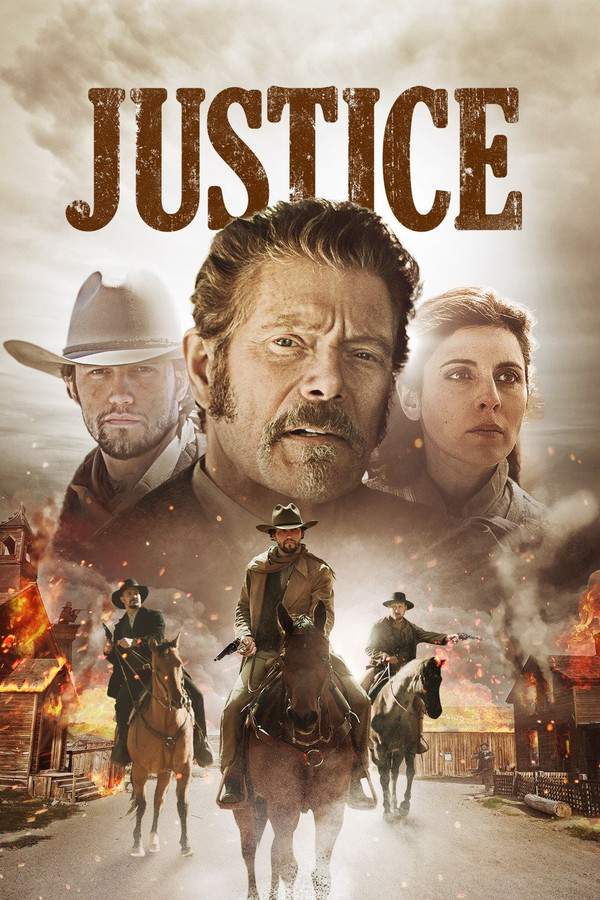
The Judge (2014) movie poster

Plot Summary

The Judge (2014) Plot Summary Explained

Release, runtime and language
2014 · 141 min · British english
JustWatch #661 34
Directed by
David Dobkin
Starring
Billy Bob Thornton, Robert Downey Jr., Vera Farmiga, Robert Duvall, Leighton Meester, Vincent D'Onofrio
Budget
$50M

In the Texas town of Helena, Marshal James Jennings is a legendary lawman known for his unique approach to justice. He believes in offering forgiveness and second chances to those he deems worthy, often dispensing justice in unconventional ways. His methods challenge the traditional legal system and explore the complexities of morality and redemption in a frontier setting.

On this page (6)
  1. 1 Where to watch
  2. 2 What happens: full plot
  3. 3 Plot questions answered
  4. 4 Movie threads
  5. 5 Movies like The Judge
  6. 6 Every angle

Where to watch

Where to Watch The Judge (2014)

Where can you watch The Judge? Stream, rent or buy it in the US, including on YouTube, Amazon Video and Apple TV Store: current JustWatch availability with up-to-date prices.

Streaming availability powered by JustWatch

Full plot summary · contains spoilers

What Happens in The Judge: Full Plot Summary

The whole story of The Judge (2014) explained, from the opening scene to the final frame: every key event, every twist and what it all adds up to. Read it as a quick recap before the sequel, to check a scene you missed, or to finally understand what really happened.

Hank Palmer, played by Robert Downey Jr., is a prominent defense attorney based in Chicago, who finds himself estranged from his family in the small town of Carlinville, Indiana. His life takes a sudden turn when he receives the heartbreaking news of his mother’s passing while in court. With a tumultuous divorce underway and a bitter custody battle for his young daughter Lauren looming, Hank is reminded by his estranged wife Lisa of his disconnection from their daughter’s life, causing him frustration and anger, especially as he grapples with Lisa's infidelity with her old college sweetheart.

Upon returning to Carlinville, Hank reconnects with his brothers, Glen, played by Vincent D'Onofrio, who manages a tire shop, and Dale, an aspiring filmmaker portrayed by Jeremy Strong, who effortlessly captures moments on his ever-present 8mm camera. Hank’s initial visits are filled with nostalgia and awkwardness as he visits the local courthouse, observing his father, Judge Joseph Palmer, played by Robert Duvall. Known simply as "The Judge," he is a stern figure who believes in holding people accountable for their actions, though he seemed to have forgotten his bailiff's name.

At the funeral, a frosty reunion occurs, as Hank and Joseph's relationship is strained with unspoken resentments. The family breakfast turns into an embarrassing moment when Hank discovers he was left out, highlighting his isolation in the family dynamics. Amidst this, Hank rekindles his past romance with Sam, played by Vera Farmiga, a diner waitress who has been rooted in the town for two decades. Their history hangs heavy as they navigate their feelings.

Soon after, Hank learns that Judge Joseph is under scrutiny for a hit-and-run accident that left Mark Blackwell, a man whom Joseph had sentenced years ago, dead. Amidst this legal turmoil, prosecutor Dwight Dickham, played by Billy Bob Thornton, aims to secure a first-degree murder conviction against the aging judge. The dynamics shift as Joseph, dutifully refusing Hank’s help, opts for local attorney C.P. Kennedy, portrayed by Dax Shepard, who proves ineffective in defending such a complex case.

As Hank navigates the courtroom proceedings, he discovers a shocking truth about Joseph’s health, finding out that the Judge has been receiving treatment for terminal colon cancer, which suggests that his memory failure could be linked to his condition. However, Joseph’s strong desire to uphold his legacy leads him to reject a valid defense strategy that could potentially exonerate him. Hank is torn between familial loyalty and the moral high ground he believes should be taken.

In a series of shocking courtroom revelations, Hank’s attempts to establish reasonable doubt lead to unexpected results. Joseph’s testimony during the trial unveils deep-rooted issues between father and son, dating back to a youthful indiscretion that resulted in Glen's injury. Ultimately, the Judge’s confession hints at a complex blend of personal guilt and familial expectations.

As the trial concludes with Joseph being convicted of voluntary manslaughter, he finds himself facing a brief sentence before receiving compassionate parole due to his illness. A tender moment shared between Hank and Joseph while fishing solidifies their reconciliation. Tragically, Joseph passes away peacefully in the boat, leaving Hank with a patchwork of memories and unresolved feelings. Finally, Hank returns to the courtroom once dominated by his father, symbolically spinning the judge's chair, where it eerily stops, now pointed at him.
Last updated: November 02, 2024 at 11:35

Was this helpful?

Plot questions answered

The Judge Plot Explained: Your Questions Answered

The questions people ask most about The Judge (2014): what happens in the confusing scenes, why the characters do what they do, the twists, hidden details and what the ending means. Each answer contains spoilers.

Q1

Why does Hank Palmer return to Carlinville?

Hank returns to Carlinville after learning his mother has died. While he was in court handling a case in Chicago, he received the devastating news, which forced him to leave his contentious divorce proceedings and custody battle to attend the funeral and confront his estranged family.

  • Hank Palmer
  • return
  • Carlinville
  • mother death
  • funeral
Q2

Why is Hank Palmer estranged from Judge Joseph?

Hank and his father Joseph have been estranged for years due to deep-seated resentment. The tension stems from Joseph's demanding and stern nature as a judge, which created emotional distance. During the trial, it emerges that Joseph's harsh judgment of Hank's youthful mistake led to a family secret - Joseph accidentally caused Glen's injury as a teenager, which Hank had been blamed for, creating lasting family fractures.

  • estrangement
  • Judge Joseph
  • Hank Palmer
  • family conflict
  • resentment
Q3

What is Judge Joseph accused of in the movie?

Judge Joseph is accused of a hit-and-run accident that killed Mark Blackwell, a man whom Joseph had sentenced to prison years earlier. Prosecutor Dwight Dickham pursues a first-degree murder conviction, claiming the collision was intentional retaliation for the original sentence.

  • Judge Joseph
  • hit-and-run
  • Mark Blackwell
  • murder charge
  • trial
Q4

Why does Judge Joseph refuse Hank's help with his defense?

Joseph refuses Hank's assistance out of pride and stubbornness. Despite being a renowned defense attorney, Joseph insists on hiring local attorney C.P. Kennedy instead. His refusal likely stems from wanting to handle his own affairs independently and not wanting to appear weak or dependent on his estranged son, especially given his traditional views about handling problems oneself.

  • refusal
  • defense
  • C.P. Kennedy
  • pride
  • Joseph Palmer
Q5

What illness does Judge Joseph have?

Hank discovers that Joseph has been suffering from terminal colon cancer. The illness explains his occasional memory failures and personality changes that had raised questions about his competency. Despite knowing his time is limited, Joseph chooses to face the trial rather than seek compassionate medical consideration.

  • colon cancer
  • terminal illness
  • memory loss
  • health
  • Judge Joseph
Q6

What secret does Joseph reveal during the trial?

During his testimony, Joseph reveals a painful family secret: when Glen was a teenager, Joseph was responsible for the accident that caused Glen's permanent injury. Young Hank had taken the blame for the incident to protect his father, and this hidden guilt has haunted the family for decades, contributing to the tension between Joseph and his children.

  • trial confession
  • Glen injury
  • family secret
  • past trauma
Q7

Why does Joseph confess to the hit-and-run?

Joseph confesses to the crime during his trial testimony. His confession appears to stem from a combination of factors: the overwhelming guilt from keeping secrets, his deteriorating health, and possibly a desire to finally take responsibility for his actions rather than continuing to hide behind denial. The confession also represents his attempt to stop lying and face consequences, just as he demanded others face consequences in his courtroom.

  • confession
  • hit-and-run
  • guilt
  • trial testimony
  • Judge Joseph
Q8

What is the verdict in Joseph's trial?

Joseph is convicted of voluntary manslaughter for the hit-and-run death of Mark Blackwell. Given his age, the seriousness of the offense, and his position as a judge who should have upheld the law, the conviction carries significant weight. However, due to his terminal illness, he receives a brief sentence before being granted compassionate parole.

  • verdict
  • conviction
  • voluntary manslaughter
  • sentencing
  • trial outcome
Q9

How does Joseph die in The Judge?

Joseph passes away peacefully while fishing on a lake with Hank. During their reconciliation fishing trip, Joseph dies quietly in the boat, allowing for a tender final moment between father and son. His death comes shortly after they finally reconcile, making the ending both bittersweet and cathartic.

  • death
  • fishing
  • Joseph Palmer
  • peaceful death
  • reconciliation
Q10

What does the ending scene with the judge's chair mean?

In the final scene, Hank returns to the courthouse and spins his father's judge chair. The chair slowly stops, pointing directly at Hank. This symbolizes Hank accepting responsibility for his father's legacy and potentially stepping into his father's role. It represents a full circle moment where Hank, who fled his hometown and rejected his family, now faces the possibility of staying and continuing his father's work.

  • ending
  • judge's chair
  • symbolism
  • courthouse
  • Hank Palmer
  • legacy

Movie threads

More Movies Like The Judge, by Mood & Story

Curated lists built around what makes The Judge tick: the same mood, the same kind of story or the same emotional payoff. Each list explains why these movies belong together.

Movies about family reconciliation amidst illness like The Judge

Estranged families confront a lifetime of hurt in the shadow of a parent's final days. Discover movies like The Judge where a family crisis, often a parent's terminal illness, forces estranged relatives to reunite and confront their painful past. These films focus on the bittersweet journey of healing old wounds and finding closure.

  • melancholic
  • cathartic
  • somber
  • nostalgic
  • fraught
  • heartbreaking
  • Tone: bittersweet, melancholic, cathartic
  • Pacing: steady, deliberate
Why these movies?

The story pattern: These stories typically begin with a crisis that reunites a fractured family, often centered on a dying parent. The narrative unfolds through a series of confrontations, flashbacks revealing past trauma, and quiet moments of attempted connection, moving towards a resolution that offers emotional closure and reconciliation, but is inevitably shadowed by grief.

Why they belong together: Movies in this thread share a heavy emotional weight and a bittersweet tone. They are united by the core theme of mending broken family bonds under the immense pressure of mortality, blending deep sadness with moments of profound catharsis.

Legal dramas with deep personal stories like The Judge

Where the courtroom becomes a stage for resolving intense, private family battles. If you liked The Judge, explore other movies where a courtroom trial is intertwined with a powerful personal family drama. These films use the legal system to explore themes of guilt, forgiveness, and complex relationships.

  • tense
  • somber
  • fraught
  • cathartic
  • moral conflict
  • family secrets
  • Tone: tense, bittersweet, heavy
  • Pacing: steady, alternating between tense and quiet
Why these movies?

The story pattern: The narrative pattern involves a central legal proceeding that forces characters to publicly confront private truths. Courtroom revelations parallel breakthroughs in personal relationships. The legal outcome is often secondary to the emotional and moral resolution achieved by the characters, with the trial acting as a crucible for personal change.

Why they belong together: These films are grouped together because they masterfully blend the tense, structured format of a legal drama with the raw, unstructured emotions of a family saga. The shared experience is one of high tension and heavy emotional weight, where public and private justice collide.

If you liked this

Movies Like The Judge

Similar movies to The Judge: the same genre, themes or kind of story. Each one comes with its own plot summary, timeline and ending explained.

Browse all movie summaries

Every angle

The Judge (2014) Explained: Plot, Timeline & Characters

Everything about The Judge in one place: what happens in the plot summary, the timeline in chronological order, the characters and meaning and a spoiler-free summary. What's After the Movie adds the cast, box office and post-credit scenes.

Coming soon on iOS and Android

The Plot Explained Movie Summary App

Plot summaries, endings explained and timelines on your phone. Catch up on any movie in minutes, save your favorites and never miss a twist again.

Be the first to know when we launch. Your email stays private, always.

Learn more about the app