Plot Explained Spoilers guaranteed!
Plot Explained

Browse by genre

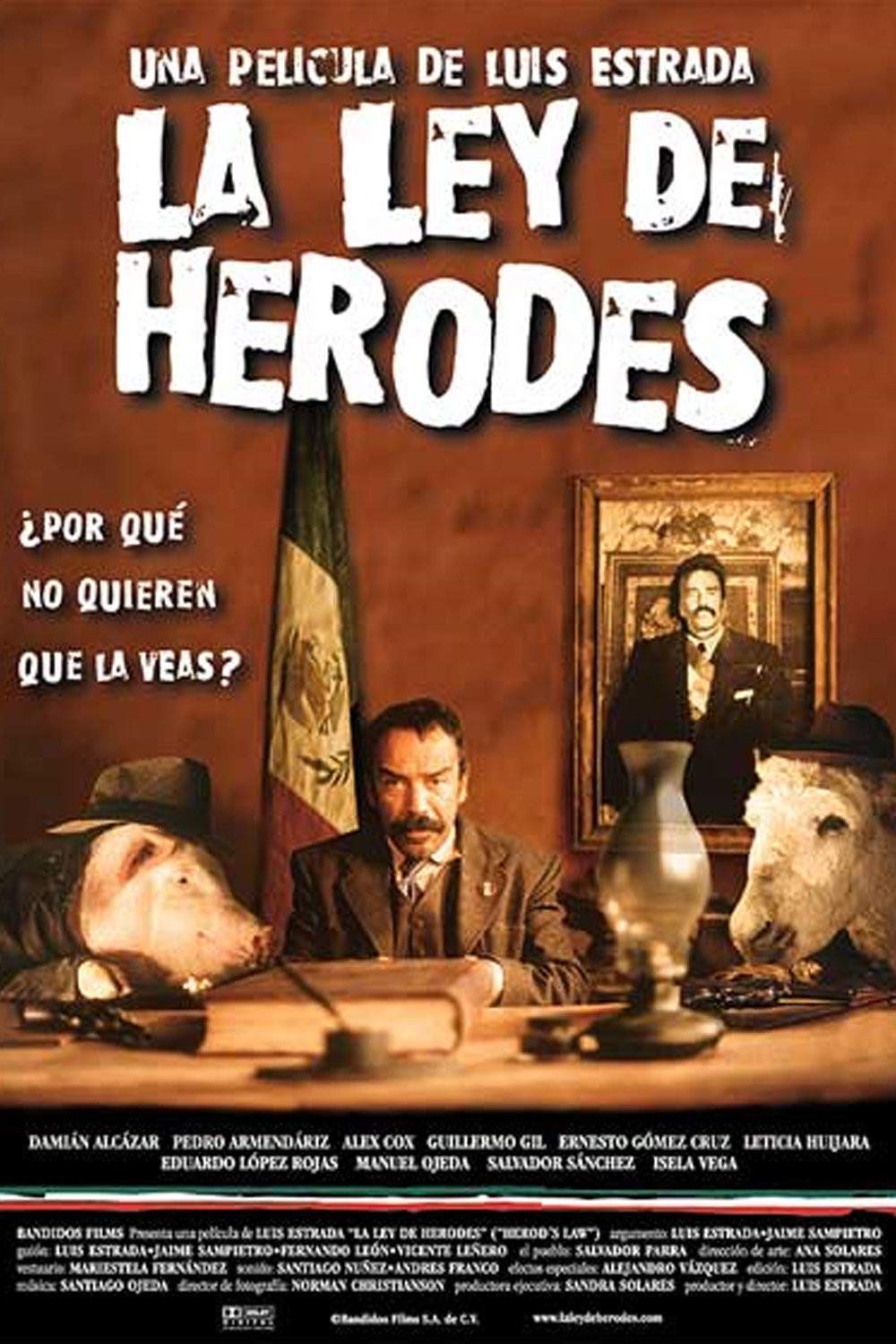
The Perfect Dictatorship (2014) movie poster

Timeline

The Perfect Dictatorship (2014) Timeline Explained – Every Event in Order

Release, runtime and language
2014 · 143 mins · Spanish
Loading streaming availability…
Directed by
Luis Estrada
Starring
Sonia Couoh, Alfonso Herrera, Noé Hernández, Juan Pablo Medina, Gustavo Sánchez Parra, Hernán Mendoza

When a powerful Mexican television corporation reveals a scandal involving Governor Carmelo Vargas, his political future hangs in the balance. Facing serious accusations, Vargas secretly agrees to a lucrative deal with the network to rehabilitate his image. Two key figures, ambitious news producer Carlos Rojo and star reporter Ricardo Diaz, are tasked with orchestrating a smear campaign to transform the governor into a presidential candidate, raising questions about the integrity of democracy and the influence of media power.

On this page (5)
  1. 1 Where to watch
  2. 2 Events in order (12)
  3. 3 Timeline questions answered
  4. 4 Movie threads
  5. 5 Every angle
Loading streaming availability…

12 events in order · contains spoilers

The Perfect Dictatorship Timeline: Events in Chronological Order

Every key event of The Perfect Dictatorship (2014) in order, scene by scene, with when and where it takes place. Use it to untangle flashbacks, time jumps and parallel storylines, to refresh your memory before the sequel or to find the exact scene you are thinking of.

  1. Presidential ceremony and provocative immigration remark

    At a formal credentials ceremony, the President makes a provocative remark about immigration, telling the ambassador to tell Obama to consider allowing more Mexicans in because they can do jobs that even black people didn't want. The comment crystallizes the combustible mix of power, media, and personal ambition fueling the story. The event sets the tone for the political crisis to come.

    Where
    Presidential ceremony, Mexico City
  2. TV MX plans a distraction video

    State officials pressure Televisión Mexicana to manufacture a distraction by airing a video showing Governor Vargas allegedly accepting bribes from drug lords. The plan is to steer public attention away from the political crisis at the top. The network weighs the reputational risk against the potential ratings gain.

    Where
    Televisión Mexicana (TV MX) offices, Mexico City
  3. Vargas seeks image repair with TV MX

    Vargas sees the danger and negotiates with TV MX to polish his image, arguing that the network’s star-studded newscast is the public’s most trusted source amid rumors and competing channels. The talks aim to control the narrative before the situation spirals further. The behind-the-scenes maneuvering reveals how political fortunes can ride on media manipulation.

    Where
    TV MX offices, Mexico City
  4. Rojo and Diaz assigned; cartel interest surfaces

    Rojo and Diaz are assigned to cover Vargas’s side of the story and are soon drawn into a world where a faction of drug cartel members wants to shape Vargas’s image. The cartel's involvement exposes the blurred boundaries between journalism and criminal influence. The newsroom becomes a staging ground for competing agendas.

    Where
    TV MX offices, Mexico City
  5. Morales' Congress speech and assassination attempt

    Agustín Morales delivers a forceful speech in Congress calling for Vargas’s resignation, signaling the opposition’s push to topple the governor. The moment is nearly derailed when Morales narrowly escapes an assassination attempt. The near-assassination underscored the stakes of politics and the vulnerability of public figures.

    Where
    Congress, Mexico City
  6. Morales leverages TV MX contracts

    Morales leverages his position by securing contracts through TV MX alongside Vargas’s inner circle, gaining leverage to demand a ten-minute slot to present his corruption findings. The negotiation dramatizes how media power can be weaponized to influence political outcomes. The situation foreshadows the convergence of media, money, and political bloodlines.

    Where
    TV MX offices and Vargas circle, Mexico City
  7. Live expose and Morales is attacked

    During Morales’s planned on-air presentation, the President’s staff reveal deeper personal allegations of child abuse against Morales, a devastating blow that interrupts the broadcast. Enraged, Morales assaults the host and is forcibly removed from the studio, setting off a cascade of investigations. Later that night, Morales is found dead in a hotel, and officials and TV MX describe it as a suicide, hinting at a cover-up.

    Where
    TV MX studio; hotel (that night)
  8. Vargas retaliates against his godson

    Vargas, feeling the consequences of his network-backed machinations, retaliates against his godson in a public moment witnessed by Rojo, underscoring how far he will go to maintain control. The confrontation reveals the brutal link between political power and personal loyalty. It marks a turning point where the governor's ruthlessness becomes a defining trait.

    Where
    Public setting, Rojo present
  9. Kidnapping breakthrough and ransom appeal

    A breakthrough occurs when a witness identifies who kidnapped the two Garza sisters, triggering a crowd-sourced ransom appeal that TV MX broadcasts to mobilize donations. Vargas personally contributes a large sum, reportedly in exchange for dating Jazmín, illustrating how money and romance thread through the crisis. The public-relief narrative competes with ongoing scrutiny of Vargas’s governance.

    Where
    TV MX studios and public broadcast
  10. Garza family steps back; police take the lead

    The Garza family steps away from the camera as Doña Chole takes a stand and moves toward the police, signaling a shift toward a more legitimate investigation. TV MX responds by fabricating a montage of a government rescue operation to paint Vargas as a heroic savior. The episode exposes the moral compromises of a media machine prioritizing ratings over truth.

    Where
    Garza family home; TV MX studios
  11. Channel lineup shifts and leadership changes

    Díaz becomes the face of TV MX’s new lineup while Rojo ascends to an executive role within the network. Vargas, meanwhile, begins to position himself for the presidency, formalizing his relationship with Jazmín. The episode shows how personal branding and political ambitions intertwine behind the scenes.

    Where
    TV MX offices, Mexico City
  12. Vargas ascends to national politics (2018)

    Two years later, Vargas rises to the national stage, securing the 2018 Mexican presidential election through a coalition that unites PRI, PAN and PRD, shaping a new political era. The narrative suggests that control of media and information helped fuel his ascent. The closing meditation reflects on how headlines are manufactured and how power is distributed.

    When
    2018
    Where
    National stage, Mexico

Last updated: October 03, 2025 at 10:34

Was this helpful?

Timeline questions answered

The Perfect Dictatorship Timeline Explained: Your Questions Answered

When does it happen, and why in that order? The questions people ask about the chronology of The Perfect Dictatorship (2014): time jumps, flashbacks, cause and effect between scenes and the correct order of events, each answered with spoilers.

Q1

Why does TV MX agree to help Governor Vargas after the bribe video surfaces?

TV MX agrees to help Vargas because state officials pressure them to create a distraction from a larger political crisis. Vargas negotiates directly with the network, arguing that their star-studded newscast is the most trusted source of information in Mexico. The network calculates that helping rehabilitate his image will yield better ratings and financial benefits than simply exposing him.

Foreshadowing: The opening scene about the President's controversial immigration remark establishes the toxic political environment that makes this deal possible.

  • tv mx
  • governor vargas
  • media deal
  • bribe video
  • television mexicana
Q2

What happens to Agustín Morales after his Congress speech demanding Vargas's resignation?

After delivering a speech calling for Vargas's resignation, Morales narrowly escapes an assassination attempt in Congress. Later, he secures contracts with Vargas's political circle through TV MX and demands a ten-minute slot to present evidence of corruption. However, just as he's about to speak, the President's staff broadcast live allegations of child abuse against him. Morales assaults the host and is removed from the studio. That night, he's found dead in his hotel, officially ruled a suicide, though the film strongly suggests a cover-up.

Foreshadowing: The assassination attempt earlier in Congress establishes the dangerous levels political opponents face.

  • agustín morales
  • assassination attempt
  • congress
  • child abuse allegations
  • covered up death
Q3

How does Governor Vargas eventually become President of Mexico?

Vargas rises to the presidency two years after the TV MX operation, securing the 2018 Mexican presidential election through a coalition uniting PRI, PAN, and PRD. The film depicts how media manipulation, manufactured scandals against opponents, and controlled narrative helped fuel his ascent, illustrating the movie's central critique of democratic processes corrupted by media-power alliances.

Foreshadowing: Throughout the film, the systematic elimination of opposition figures and story manipulation establish the groundwork for Vargas's eventual candidacy.

  • carmelo vargas
  • president election 2018
  • pri pan prd coalition
  • media manipulation
Q4

What is the purpose of the Garza sisters' kidnapping subplot in the story?

The kidnapping serves multiple narrative purposes: it provides TV MX with compelling ratings content by pressuring the Garza family to share information exclusively with the network, it allows the network to manufacture a government rescue operation that paints Vargas as a heroic savior, and it demonstrates how the media exploits personal tragedies for political narratives. The subplot ultimately shows the moral compromises the network makes to maintain influence.

Foreshadowing: The family's decision to work with TV MX sets up the later conflict when they choose to step away from the camera.

  • garza sisters
  • kidnapping
  • tv mx ratings
  • media exploitation
  • ransom appeal
Q5

How are the child abuse allegations against Morales revealed and used politically?

During Morales's planned live television appearance to present corruption evidence against Vargas, the President's staff suddenly interrupt the broadcast with personal allegations of child abuse against Morales. This devastating revelation not only derails his corruption exposé but also destroys his credibility. The timing and convenient release of these allegations suggest they were weaponized as a political weapon to silence opposition.

Foreshadowing: The President's office involvement reveals the extent of government-media coordination in protecting Vargas.

  • agustín morales
  • child abuse allegations
  • political weapon
  • live television
  • opposition silenced
Q6

What is the relationship between Governor Vargas and Jazmín?

Vargas contributes a large sum to the crowd-sourced ransom appeal for the kidnapped Garza sisters, reportedly in exchange for being allowed to date Jazmín. The relationship is transactional rather than romantic, reflecting how Vargas uses both money and personal connections to strengthen his political image and power. By the film's end, Vargas formalizes this relationship as he pursues the presidency.

Foreshadowing: This arrangement demonstrates how Vargas combines financial influence with personal relationships for political gain.

  • carmelo vargas
  • jazmín
  • relationship
  • transaction
  • ransom contribution
Q7

What roles do Carlos Rojo and Ricardo Diaz play in TV MX's operation?

Carlos Rojo is the ambitious news producer who orchestrates much of the coverage strategy, while Ricardo Diaz is the star reporter tasked with presenting Vargas's side of the story. Both become complicit in the network's manipulation as they advance professionally, Rojo ascends to an executive role while Diaz becomes the face of the channel's new lineup. Their careers illustrate how journalists can be co-opted into serving political narratives.

Foreshadowing: Early scenes establishing their professional ambitions foreshadow their moral compromises.

  • carlos rojo
  • ricardo diaz
  • news producer
  • reporter
  • tv mx complicity
Q8

How does TV MX manipulate the rescue of the Garza sisters?

After the Garza family steps away from the camera and Doña Chole moves toward the police, TV MX fabricates a montage depicting a government rescue operation. This manufactured footage casts Vargas as a heroic savior and suggests the Garza family supports his actions, demonstrating how the network creates false narratives to serve political interests.

Foreshadowing: The earlier pressure on the family to share information exclusively establishes the network's control over the story.

  • tv mx
  • fabricated rescue
  • garza family
  • manufactured footage
  • media lies
Q9

What is the significance of the President's controversial immigration remark at the opening ceremony?

The President's provocative remark about immigration during the credential ceremony, that Mexicans should be allowed into the US because they can do jobs even black people didn't want, establishes the film's critique of racist political rhetoric. This moment sets the dark, satirical tone and illustrates the film's argument about how political power operates through inflammatory messaging and media management.

Foreshadowing: This opening establishes the political environment where media manipulation and divisive rhetoric become tools of power.

  • president
  • immigration remark
  • ceremony
  • racist rhetoric
  • opening scene
Q10

What does the title 'The Perfect Dictatorship' mean in relation to the story?

The title refers to the film's critique of democracy in Mexico, where political power is maintained not through overt dictatorship but through manufactured consent via media control. The 'perfect' dictatorship is one that appears democratic while actually being controlled by media-political alliances that manipulate public opinion, eliminate opposition, and stage elections. The ending, where Vargas successfully becomes president, demonstrates this system working.

Foreshadowing: The entire narrative arc, from Vargas's rehabilitation to his presidential victory, illustrates how the system operates.

  • perfect dictatorship title
  • democracy
  • media control
  • political manipulation
  • electoral fraud
Q11

Why does Vargas retaliate against his godson in front of Rojo?

Vargas retaliates against his godson in a public setting witnessed by Rojo to demonstrate his ruthlessness and willingness to eliminate anyone who threatens his political future. This chilling moment reveals how far the Governor is willing to go to maintain control, serving as a turning point that exposes the brutal link between political power and personal loyalty.

Foreshadowing: This scene establishes the personal costs of crossing Vargas and foreshadows the methods used against Morales.

  • carmelo vargas
  • godson
  • retaliation
  • threat
  • power demonstration
Q12

How does the drug cartel influence the story with Governor Vargas?

A faction of the drug cartel becomes interested in shaping Governor Vargas's image and interacts with Rojo and Diaz during their coverage of Vargas's story. This involvement exposes the blurred boundaries between journalism, criminal influence, and political power, demonstrating how multiple powerful interests converge to control the narrative in Mexico.

Foreshadowing: The cartel's involvement reinforces the film's theme about the various forces manipulating Mexican politics and media.

  • drug cartel
  • governor vargas
  • media influence
  • criminal politics
  • corruption

Movie threads

More Movies Like The Perfect Dictatorship, by Mood & Story

Curated lists built around what makes The Perfect Dictatorship tick: the same mood, the same kind of story or the same emotional payoff. Each list explains why these movies belong together.

Political thrillers about media manipulation like The Perfect Dictatorship

Stories where the creation of public perception becomes the ultimate political weapon. If you were fascinated by the cynical portrayal of media power in The Perfect Dictatorship, this list features movies with a similar focus. Discover other tense, complex stories where journalism, propaganda, and public opinion are the central instruments of political warfare and power consolidation.

  • cynical
  • tense
  • power hungry
  • unsettling
  • satirical
  • urgent
  • Tone: dark, cynical, tense
  • Pacing: fast, urgent
Why these movies?

The story pattern: These narratives typically follow ambitious figures in media and politics who enter a symbiotic, corrupt relationship. The plot revolves around a calculated campaign to distort the truth, often involving smear tactics, fabricated scandals, and psychological manipulation, leading to a cynical examination of how democracies can be subverted from within.

Why they belong together: Movies in this thread are grouped by their shared dark tone, high tension, and complex plotting around a central theme: the dangerous collusion between media conglomerates and political ambition. They create an anxious, urgent mood focused on the mechanics of power rather than traditional action.
Bleak satires about systemic corruption like The Perfect Dictatorship

Cynical comedies where the corrupt system always wins, leaving hope defeated. Fans of the grim, hopeless ending of The Perfect Dictatorship will find similar movies here. These are dramas and comedies that share a bleak outlook, using satire to expose how political and corporate systems reward corruption, resulting in stories with heavy emotional weight and a profound sense of moral tragedy.

  • satirical
  • bleak
  • cynical
  • grim
  • unsettling
  • heavy
  • Tone: dark, satirical, bleak
  • Pacing: fast, steady
Why these movies?

The story pattern: The narrative pattern involves a protagonist or a situation that exposes the deep rot within a powerful institution. However, unlike stories of triumph, the system effectively neutralizes the threat, assimilates the corrupt, and emerges stronger. The journey is one of exposing futility, leading to a ending that feels like a defeat for justice.

Why they belong together: These films are united by their blending of dark satire with a bleak ending feel and heavy emotional weight. They share a specific emotional mix: the intellectual stimulation of satire combined with the depressing realization that the corruption they mock is ultimately victorious.

Every angle

The Perfect Dictatorship (2014) Explained: Plot, Timeline & Characters

Everything about The Perfect Dictatorship in one place: what happens in the plot summary, the timeline in chronological order, the characters and meaning and a spoiler-free summary. What's After the Movie adds the cast, box office and post-credit scenes.

Coming soon on iOS and Android

The Plot Explained Movie Summary App

Plot summaries, endings explained and timelines on your phone. Catch up on any movie in minutes, save your favorites and never miss a twist again.

Be the first to know when we launch. Your email stays private, always.

Learn more about the app