





Plot Explained Spoilers guaranteed!
Plot Explained

Browse by genre

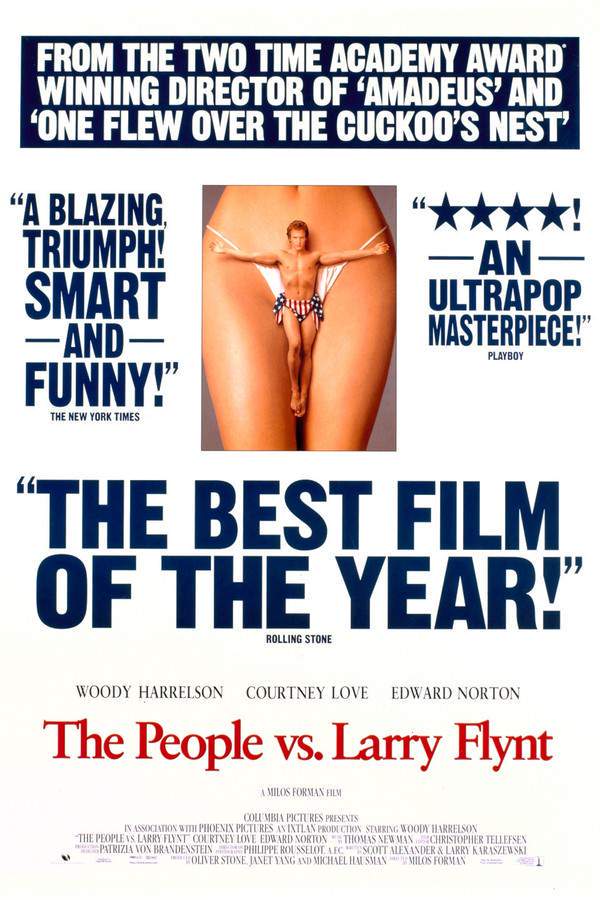
The People vs. Larry Flynt (1996) movie poster

Timeline

The People vs. Larry Flynt (1996) Timeline Explained – Every Event in Order

Release, runtime and language
1996 · 129 min · English
Directed by
Milos Forman
Starring
Woody Harrelson, Courtney Love

Facing constant legal battles and personal attacks, pornographer Larry Flynt finds an unexpected supporter in his lawyer, Alan Isaacman. After a near-fatal assassination attempt leaves him paralyzed, Flynt perseveres, fueled by his commitment to free speech. His case ultimately leads to a pivotal Supreme Court challenge, where his reputation and the principles he defends are put to the ultimate test.

On this page (6)
  1. 1 Where to watch
  2. 2 Events in order (15)
  3. 3 Timeline questions answered
  4. 4 Movie threads
  5. 5 Movies like The People vs. Larry Flynt
  6. 6 Every angle

Where to watch

Where to Watch The People vs. Larry Flynt (1996)

Where can you watch The People vs. Larry Flynt? Stream, rent or buy it in the US, including on Amazon Video, Apple TV Store and Fandango At Home: current JustWatch availability with up-to-date prices.

Streaming availability powered by JustWatch

15 events in order · contains spoilers

The People vs. Larry Flynt Timeline: Events in Chronological Order

Every key event of The People vs. Larry Flynt (1996) in order, scene by scene, with when and where it takes place. Use it to untangle flashbacks, time jumps and parallel storylines, to refresh your memory before the sequel or to find the exact scene you are thinking of.

  1. Larry Flynt's Early Days

    In 1953, a young Larry Flynt is discovered peddling moonshine in Kentucky. This marks the beginning of his tumultuous journey in search of success and notoriety.

    When
    1953
    Where
    Kentucky
  2. Establishment of the Hustler Go-Go Club

    Fast forward to the early 1970s, Flynt, alongside his brother Jimmy, runs the Hustler Go-Go club in Cincinnati. Despite initial financial struggles, they look for innovative ways to turn around their fortune.

    When
    1970s
    Where
    Cincinnati
  3. Launch of Hustler Magazine

    In a bold move, Larry Flynt decides to launch a newsletter featuring nude images of the club's entertainers. This marks the inception of Hustler magazine, which paves the way for his future endeavors.

  4. Controversial Publication

    In 1975, Hustler magazine publishes scandalous photos of former First Lady Jackie Kennedy Onassis. This risky decision attracts significant attention and boosts the magazine's sales drastically.

    When
    1975
  5. Love Story with Althea

    While experiencing newfound success, Flynt encounters Althea Leasure, a stripper in one of his clubs. Their romantic relationship blossoms, and Althea becomes a pivotal figure in Flynt's life.

  6. Activism and Notoriety

    As Flynt's fame climbs, he becomes a target for anti-pornography activists. His provocative statements during public debates challenge societal norms and spur controversy.

  7. Legal Battles Begin

    In 1975, Flynt faces a court ruling against him in Cincinnati for smut-peddling. Although this setback is disheartening, he is released shortly after due to a legal technicality.

    When
    1975
    Where
    Cincinnati
  8. Turning Toward Faith

    Ruth Carter Stapleton, a devout Christian, reaches out to Flynt, urging him to embrace faith. Her message resonates, prompting Flynt to contemplate the role of religion in his life and work.

  9. Tragic Shooting Incident

    By 1978, a tragic shooting during a court session in Georgia leaves Flynt paralyzed from the waist down. This moment marks a significant turning point in his life, leading to despair and addiction.

    When
    1978
    Where
    Georgia
  10. Struggles with Addiction

    Following the shooting, Flynt relocates to Beverly Hills, where he grapples with severe depression and substance abuse. Meanwhile, Althea also succumbs to addiction to pain medications.

    Where
    Beverly Hills
  11. Back Surgery and Recovery

    In 1983, after undergoing back surgery, Flynt experiences a revival of spirit. He returns to reclaim control of Hustler magazine, which had been under the management of Althea and Jimmy.

    When
    1983
  12. Courtroom Antics

    Flynt finds himself entangled in another legal scandal involving leaked videos tied to the John DeLorean case. His outrageous courtroom antics, including wearing a flag as a diaper, further tarnish his reputation.

  13. Libel Case Against Jerry Falwell

    During this tumultuous time, Flynt publishes a parody featuring preacher Jerry Falwell, igniting a libel lawsuit. In a surprising twist, he countersues for copyright infringement, setting the stage for a trial.

    When
    December 1984
  14. Supreme Court Appeal

    After the tragic death of Althea in 1987, Flynt turns his energy to appealing the libel case to the Supreme Court. He pushes his attorney Isaacman to fight for justice, despite the overwhelming odds.

    When
    1987
  15. A Landmark Victory

    In 1988, Flynt achieves a monumental victory as the Supreme Court unanimously overturns the previous verdict against him. However, this success also leaves him grappling with the haunting memories of Althea.

    When
    1988

Last updated: November 07, 2024 at 23:56

Was this helpful?

Timeline questions answered

The People vs. Larry Flynt Timeline Explained: Your Questions Answered

When does it happen, and why in that order? The questions people ask about the chronology of The People vs. Larry Flynt (1996): time jumps, flashbacks, cause and effect between scenes and the correct order of events, each answered with spoilers.

Q1

Why did Larry Flynt publish the Jackie Kennedy Onassis photos?

Larry Flynt published the scandalous photos of Jackie Kennedy Onassis in 1975 as a calculated business move to boost struggling sales of Hustler magazine. The controversial decision paid off dramatically, causing sales to skyrocket and establishing Hustler as a major player in the adult publishing industry. This marked a turning point in the magazine's commercial success.

  • jackie kennedy photos
  • hustler magazine sales
  • controversial publication
  • business decision
Q2

What caused Larry Flynt to become paralyzed?

In 1978, Larry Flynt was shot during a court session in Georgia. The shooting left him paralyzed from the waist down for life. The attacker was never definitively identified, though the shooting occurred at a time when Flynt faced intense legal and personal threats from anti-pornography activists.

Foreshadowing: Earlier in the film, Flynt's provocative statements during debates with anti-pornography activists had made him a target for violent backlash.

  • shooting
  • paralysis
  • georgia court
  • attempt on his life
Q3

Why did Jerry Falwell sue Larry Flynt?

Jerry Falwell sued Larry Flynt for libel after Hustler magazine published a satirical parody ad that depicted Falwell having a sexual encounter with his mother in an outhouse. The parody was meant to mock Falwell's moralistic stance on sexuality. Falwell claimed the publication caused him emotional distress and sued for damages.

  • jerry falwell
  • libel lawsuit
  • parody
  • emotional distress
Q4

What was the Supreme Court ruling in Hustler Magazine v. Falwell?

In 1988, the Supreme Court unanimously ruled in favor of Larry Flynt and Hustler Magazine, overturning the lower court verdict that had found Flynt guilty of emotional distress. The ruling established that public figures like Jerry Falwell cannot recover damages for intentional infliction of emotional distress based on offensive speech, reinforcing strong First Amendment protections for satirical and parody content.

  • supreme court
  • first amendment
  • free speech
  • ruling
  • victory
Q5

How did Althea die in the movie?

Althea Leasure, Larry Flynt's longtime partner, died of AIDS in 1987. Her body was discovered in the bathtub by Flynt. Her death marked a devastating turning point, intensifying Flynt's grief and determination to continue fighting the legal battle against Jerry Falwell.

Foreshadowing: Earlier scenes established that both Althea and Larry struggled with substance abuse and addiction to pain medications following his paralysis.

  • althea death
  • aids
  • bathroom
  • 1987
  • loss
Q6

Why did Larry Flynt continue fighting the Falwell case after losing?

After losing the initial trial and suffering the devastating loss of Althea in 1987, Larry Flynt insisted his lawyer Alan Isaacman appeal the case to the Supreme Court. Flynt viewed the case as a matter of principle, believing the verdict was wrong and that the case would set an important precedent for free speech protections regardless of the content's offensive nature.

  • appeal
  • supreme court
  • free speech principle
  • persistence
Q7

Why did Ruth Carter Stapleton approach Larry Flynt?

Ruth Carter Stapleton, sister of President Jimmy Carter and a devout Christian, approached Larry Flynt in 1975 to encourage him to turn toward faith and religion. Her message had a profound impact on Flynt, leading him to incorporate religious themes into his magazine and personal life, though this phase was temporary.

  • ruth carter stapleton
  • jimmy carter
  • faith
  • conversion
Q8

Why was Larry Flynt committed to a psychiatric ward?

Larry Flynt was committed to a psychiatric ward after exhibiting increasingly erratic behavior, including throwing an orange at a judge and wearing an American flag as a diaper in court. During this confinement, he was diagnosed with bipolar disorder, which helped explain his manic episodes and impulsive behavior throughout his life.

  • bipolar disorder
  • psychiatric ward
  • mental health
  • courtroom antics
Q9

Why did Alan Isaacman become Larry Flynt's lawyer?

Alan Isaacman, a young attorney, became Larry Flynt's lawyer during his ongoing legal battles. Despite Flynt's controversial reputation as a pornographer, Isaacman chose to represent him because he viewed Flynt's legal fights as broader constitutional matters concerning free speech. Isaacman remained dedicated to Flynt's case for years, eventually arguing before the Supreme Court.

  • alan isaacman
  • lawyer
  • free speech
  • representation
Q10

What was the John DeLorean case about?

In the early 1980s, Larry Flynt found himself in legal trouble again after leaking videos related to the John DeLorean case. The videos contained FBI footage related to DeLorean's drug case investigation. This legal scandal added to Flynt's growing list of courtroom battles and contributed to his notoriety.

  • john delorean
  • leaked videos
  • fbi
  • legal battle
Q11

How did Larry Flynt become a free speech symbol?

Larry Flynt became an unlikely free speech advocate through his relentless legal battles. Though his motivations were initially rooted in protecting his pornographic business, his lawyer Alan Isaacman framed their work as a broader fight for First Amendment rights. The Hustler Magazine v. Falwell case became a landmark free speech decision, transforming Flynt from a controversial publisher into a figure associated with constitutional principles.

  • free speech
  • first amendment
  • advocate
  • constitutional rights
Q12

What did Larry Flynt mean about sex being illegal to photograph?

During debates with anti-pornography activists, Larry Flynt made a provocative statement highlighting the paradox of American attitudes toward sexuality: "Murder is illegal, but if you take a picture of it you may get your name in a magazine or maybe win a Pulitzer Prize... However, sex is legal, but if you take a picture of that act, you can go to jail." This argument encapsulated his critique of censorship laws and framed his fight as one against hypocrisy.

  • censorship
  • paradox
  • sex laws
  • pornography debate
  • provocation
Q13

Why does the ending feel bittersweet?

The ending is bittersweet because while Larry Flynt achieves a monumental legal victory with the Supreme Court ruling in his favor, this triumph is overshadowed by his profound personal losses. He is left alone, watching old videos of Althea, haunted by the memory of his dead partner and the physical and emotional toll of his battles. The professional success cannot compensate for his isolation and grief.

  • ending
  • bittersweet
  • victory
  • loss
  • althea
  • grief

Movie threads

More Movies Like The People vs. Larry Flynt, by Mood & Story

Curated lists built around what makes The People vs. Larry Flynt tick: the same mood, the same kind of story or the same emotional payoff. Each list explains why these movies belong together.

Movies about controversial free speech battles like The People vs. Larry Flynt

Controversial figures fighting landmark legal battles for their principles. If you enjoyed the legal and moral complexities of The People vs. Larry Flynt, explore more movies about flawed underdogs fighting for unpopular freedoms. These films often feature intense courtroom drama, dark personal struggles, and a bittersweet tone, chronicling the real-life figures who challenged the system.

  • legal drama
  • defiant
  • courtroom
  • biopic
  • free speech
  • controversial
  • Tone: dark, defiant, bittersweet
  • Pacing: variable, building to intense legal showdowns
Why these movies?

The story pattern: The narrative typically follows a biographical arc, charting the rise of a controversial figure, the legal and personal attacks they endure, and their perseverance through a pivotal court case. The journey is marked by significant personal sacrifice, including damaged relationships, health crises, and public scorn, culminating in a legal victory that feels morally complex rather than purely triumphant.

Why they belong together: Movies are grouped here based on their shared focus on a real-life, contentious legal battle centered on First Amendment rights or civil liberties. They share a dark, heavy tone, a mix of steady and variable pacing that builds to courtroom intensity, and a protagonist who is both visionary and deeply flawed.


Movies with bittersweet victories and heavy costs like The People vs. Larry Flynt

Stories where professional success comes shadowed by profound personal loss. For viewers who appreciated the complex emotional resolution of The People vs. Larry Flynt, this list features movies where a hard-won public triumph is tempered by private sorrow. These stories explore the theme of success bought at a great personal price, often leaving characters isolated despite their achievements.

  • bittersweet
  • tragic victory
  • personal sacrifice
  • melancholic
  • defiant
  • perseverance
  • Tone: bittersweet, melancholic, dark
  • Pacing: variable, often slowing for reflective moments
Why these movies?

The story pattern: The narrative pattern involves a parallel track: the protagonist's determined pursuit of a goal (a court case, a business, an artistic vision) and the simultaneous erosion of their personal life through tragedy, addiction, or loss. The climax sees the goal achieved, but the resolution focuses on the character alone, grappling with the hollow space where their personal happiness used to be.

Why they belong together: These films are grouped by their shared emotional structure: a bittersweet ending where professional accomplishment is inextricably linked with personal sacrifice. They carry a heavy emotional weight, often feature a dark or melancholic tone, and leave the audience with a feeling of complex, unresolved sadness alongside the victory.

If you liked this

Movies Like The People vs. Larry Flynt

Similar movies to The People vs. Larry Flynt: the same genre, themes or kind of story. Each one comes with its own plot summary, timeline and ending explained.

Browse all movie summaries

Every angle

The People vs. Larry Flynt (1996) Explained: Plot, Timeline & Characters

Everything about The People vs. Larry Flynt in one place: what happens in the plot summary, the timeline in chronological order, the characters and meaning and a spoiler-free summary. What's After the Movie adds the cast, box office and post-credit scenes.

Coming soon on iOS and Android

The Plot Explained Movie Summary App

Plot summaries, endings explained and timelines on your phone. Catch up on any movie in minutes, save your favorites and never miss a twist again.

Be the first to know when we launch. Your email stays private, always.

Learn more about the app