Plot Explained Spoilers guaranteed!
Plot Explained

Browse by genre

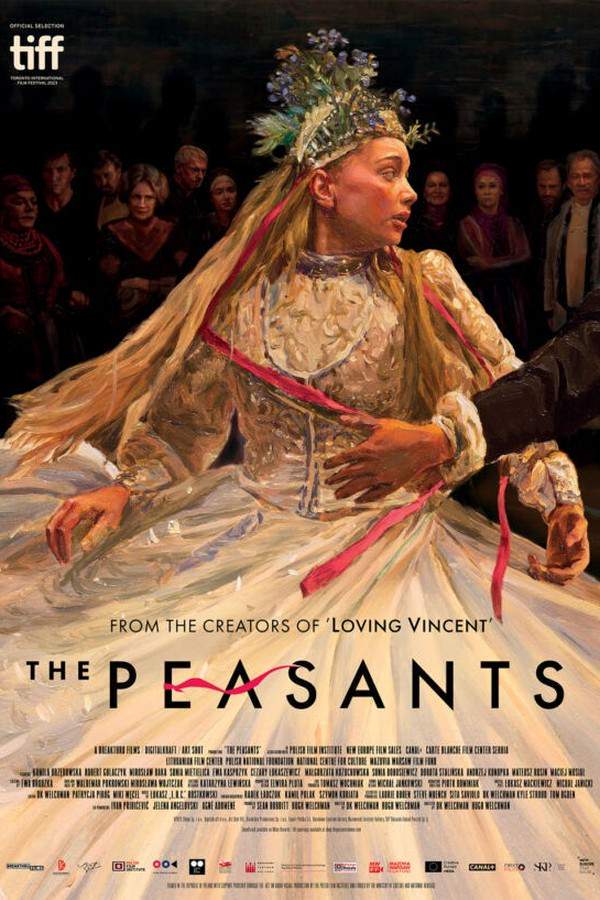
The Peasants (2023) movie poster

Timeline

The Peasants (2023) Timeline Explained – Every Event in Order

Release, runtime and language
2023 · 1 h 54 m · Polish
Echo score 63
Loading streaming availability…
Directed by
Hugh Welchman, DK Welchman
Starring
Malgorzata Kozuchowska, Sonia Bohosiewicz, Sonia Mietielica, Dorota Stalinska, Cezary Lukaszewicz, Miroslaw Baka
Budget
$7.5M

In 19th century Poland, a spirited young woman named Jagna challenges the customs of her village, where long-standing feuds and rumors create a tense atmosphere. As she fights for her independence, her actions spark a conflict that threatens the established order and forces her to confront the traditional forces dominating her community.

On this page (7)
  1. 1 Where to watch
  2. 2 Events in order (15)
  3. 3 Timeline questions answered
  4. 4 The book behind the movie
  5. 5 Movie threads
  6. 6 Movies like The Peasants
  7. 7 Every angle
Loading streaming availability…

15 events in order · contains spoilers

The Peasants Timeline: Events in Chronological Order

Every key event of The Peasants (2023) in order, scene by scene, with when and where it takes place. Use it to untangle flashbacks, time jumps and parallel storylines, to refresh your memory before the sequel or to find the exact scene you are thinking of.

  1. Introduction to Lipce

    The film opens with a depiction of the village of Lipce, highlighting its rural charm and the lives of its inhabitants. Set at the beginning of the twentieth century, the villagers' daily routines reflect societal norms and relationships in this close-knit community.

    When
    Early 1900s
    Where
    Lipce
  2. Jagna's Talent and Affair

    Jagna Paczesiówna, a beautiful peasant woman known for her cutout artistry, is introduced. She is engaged in a secret affair with Antek Boryna, the son of the wealthiest farmer in Lipce, which creates tension with Antek's wife, Hanka.

    Where
    Lipce
  3. Conflict with Marriage Proposal

    Maciej Boryna, the elder Boryna, wishes to marry Jagna and offers her a generous dowry. This proposal pleases Jagna's mother, Dominikowa, but sparks conflict as Antek and Hanka strongly oppose the arrangement, leading to significant familial strife.

    Where
    Lipce
  4. Antek's Exile

    After a confrontation between Antek and his father, Maciej decrees that both Antek and Hanka must leave their home. They move in with Hanka's father, resulting in a significant lifestyle change and highlighting the themes of poverty and oppression.

    Where
    Boryna Farm
  5. Boryna and Jagna's Wedding

    Maciej Boryna and Jagna hold an extravagant wedding ceremony, attended by members of the community, but notably absent are Antek and Hanka. This event marks the beginning of Jagna's complex life as Boryna's wife.

    Where
    Lipce
  6. Continued Affair

    Despite marrying Boryna, Jagna resumes her affair with Antek, engaging in secretive encounters. Boryna discovers their liaison multiple times, which leads to jealousy and further issues in their marriage, deepening the conflict.

    Where
    Lipce
  7. Revenge Against Landowners

    Boryna, angered by the landowners' court decision to cut down peasants' forests, organizes a retaliation against them. This decision culminates in a violent clash, leaving Boryna seriously injured and sparking a cycle of revenge involving Antek.

    Where
    Lipce
  8. Russian Troops Intrude

    The conflict escalates when Russian troops arrive and begin arresting villagers, including Antek. This event disrupts the already fragile situation in Lipce, leading to greater tensions and uncertainty for the characters involved.

    Where
    Lipce
  9. Hanka's Struggles

    As Boryna lies wounded, Hanka assumes responsibility for managing the farm. She openly insults Jagna, blaming her for the misfortunes faced by the villagers, which further isolates Jagna in the community.

    Where
    Boryna Farm
  10. Mayor's Scheme

    The mayor approaches Jagna with a proposal to help bail Antek out of jail, but his true intentions are revealed when he tries to take advantage of her. This adds a layer of danger and manipulation to Jagna's already tumultuous life.

    Where
    Lipce
  11. Boryna's Death

    Boryna, determined to reclaim his farming duties, attempts to sow the fields but collapses and dies in the process. His death significantly impacts both Jagna and Antek, altering the power dynamics in Lipce.

    Where
    Boryna Farm
  12. Antek's Return

    Following Boryna's funeral, Antek is released from jail and returns home to a jubilant Hanka. His return marks a pivotal shift in the social hierarchy of Lipce, as Antek aims to reclaim his father's legacy.

    Where
    Lipce
  13. Villagers' Conspiracy

    As tensions rise, villagers gather to discuss Jagna's alleged promiscuity, believing it has provoked divine anger. They decide to take action against her, revealing the strong influence of communal beliefs on individual lives.

    Where
    Inn in Lipce
  14. Jagna's Humiliation

    The villagers, fueled by outrage, attack Jagna, stripping her of dignity and dragging her from her home to the outskirts. The brutality of the mob showcases the harsh realities of ostracism and community judgment.

    Where
    Edge of Lipce
  15. Jagna's Defiance

    After being publicly humiliated, Jagna rises from the mud, determined to reclaim her strength. She walks away from Lipce, symbolizing her resilience and refusal to be defeated by the collective anger of the villagers.

    Where
    Lipce

Last updated: September 28, 2026 at 10:55

Was this helpful?

Timeline questions answered

The Peasants Timeline Explained: Your Questions Answered

When does it happen, and why in that order? The questions people ask about the chronology of The Peasants (2023): time jumps, flashbacks, cause and effect between scenes and the correct order of events, each answered with spoilers.

Q1

Why did the villagers of Lipce turn on Jagna and banish her?

Jagna became the scapegoat for every misfortune that befell Lipce, from the forest dispute and Boryna's injury to the drought that ruined the harvest. At a village meeting, the mayor's wife publicly accused her of inviting divine punishment through her promiscuity, and in a deeply religious, patriarchal community, a woman who challenged social norms was an easy target. The banishment was the collective punishment for behavior the village deemed immoral, regardless of the actual causes of their suffering.

Foreshadowing: Throughout the film, gossip about Jagna's affair and rumors about her influence over Boryna steadily accumulate, building toward the village's eventual condemnation.

  • jagna
  • banishment
  • lipce
  • villagers
  • scandal
  • drought
Q2

What does the ending of The Peasants mean?

After being stripped, beaten, and dragged to the outskirts of Lipce, Jagna rises from the mud as rain washes over her and walks forward into an unknown future. The ending symbolizes her refusal to be destroyed by the collective cruelty of the community and reclaims a fragile autonomy for a woman who had been treated as property throughout the film. It is not a redemption or a happy ending, but an image of resilience in the face of total social destruction.

  • ending
  • jagna
  • symbolism
  • resilience
  • final scene
Q3

Why did Antek assault Jagna when they reunited after Boryna's death?

With Boryna dead and Antek now the head of the Boryna household, the power dynamic shifted entirely in his favor, and he sought to reclaim Jagna as his possession. Their reunion at their old meeting spot was an attempt to restore what they had, but Antek's attraction had always been entangled with dominance rather than tenderness. The act of violence reflects how their relationship was rooted in ownership from the beginning, not love.

Foreshadowing: Antek's earlier possessiveness over Jagna and his willingness to defy his father for her hinted at the violent undertone of their bond.

  • antek
  • jagna
  • assault
  • reunion
  • boryna death
Q4

Why did Maciej Boryna want to marry Jagna despite her affair with his son?

Boryna was a widower who longed for companionship and wanted a young wife to manage his household and warm his home. The marriage also allowed him to reassert patriarchal control by claiming the woman his son was secretly seeing, which humiliated Antek and punished his defiance. The generous dowry of six acres of land sweetened the arrangement for Jagna's mother, who pressured Jagna into accepting despite her own feelings.

Foreshadowing: Early scenes establish Boryna as a wealthy but lonely widower whose household has been without a mistress since his first wife's death.

  • boryna
  • jagna
  • marriage
  • dowry
  • widower
  • dominance
Q5

Why did Antek support Jagna's banishment despite their history?

By the time the village met to decide Jagna's fate, Antek had risen in social standing and needed to protect his position by appearing loyal to village norms. Endorsing the banishment allowed him to publicly distance himself from the woman he had loved and assaulted, demonstrating his conformity to the same patriarchal order that had always punished her. Self-preservation had replaced whatever remained of his attachment.

Foreshadowing: Antek's passivity during Hanka's open insults of Jagna after Boryna's injury foreshadows his willingness to sacrifice her when it benefits him.

  • antek
  • jagna
  • banishment
  • conformity
  • self-preservation
Q6

Why did Boryna give his hidden fortune to Hanka instead of Jagna?

On his deathbed, Boryna recognized that Jagna's continued infidelity had destroyed any trust he had in her, and he wanted the money to benefit his grandchildren rather than a wife who had betrayed him. Hanka had earned his respect by loyally managing the farm in his absence and shielding the family during the crisis. Boryna chose the daughter-in-law who had honored the household over the wife who had shamed it.

Foreshadowing: Boryna's repeated discovery of Jagna and Antek together had already eroded his affection long before his injury.

  • boryna
  • hanka
  • fortune
  • inheritance
  • jagna
Q7

What caused Boryna's injury and how did it lead to Antek's arrest?

Boryna was enraged when the landowners' court ordered the felling of the peasants' forests, an act that threatened the village's livelihood. He rallied the men of Lipce for a violent reprisal against the landowners, but the clash left him seriously injured. Antek then took revenge for his father's wounds, which prompted Russian troops to intervene and arrest him along with other villagers, escalating the conflict into state violence.

  • boryna injury
  • forest dispute
  • landowners
  • russian troops
  • antek arrest
Q8

Why did Jagna continue her affair with Antek after marrying Boryna?

Jagna's marriage to Boryna was a transactional arrangement driven by her mother's pressure and Boryna's offer of land, not by genuine affection. Her emotional and physical bond with Antek had been established long before the marriage and did not disappear because of it, even though the affair brought her more punishment than pleasure. Boryna caught them repeatedly, and each discovery deepened the household's hostility toward her.

  • jagna
  • antek
  • affair
  • marriage
  • betrayal
Q9

Why did Boryna exile Antek and Hanka from his farm?

After Antek and Hanka openly opposed Boryna's marriage to Jagna, a bitter confrontation followed in which they challenged his authority. Boryna used his position as patriarch to banish them from his property, forcing them to move in with Hanka's father and live in poverty. The exile was both a punishment for their defiance and a way to remove obstacles to the marriage he had already decided upon.

  • boryna
  • antek
  • hanka
  • exile
  • confrontation
  • inheritance
Q10

Why did Jagna go to the mayor to get Antek released from prison?

Jagna was desperate to free Antek because she still loved him and felt responsible for the chain of events that had led to his imprisonment. The mayor exploited this desperation by offering to help in exchange for sexual favors, turning her attempt at rescue into a harrowing encounter. She narrowly escaped the assault, but the experience deepened her isolation and exposed how every man in power tried to take advantage of her vulnerability.

  • jagna
  • mayor
  • antek
  • prison
  • exploitation
Q11

Why did Jagna refuse Mateusz's marriage proposal near the end of the film?

After being used by Boryna, betrayed and assaulted by Antek, and nearly assaulted by the mayor, Jagna had no desire to submit to another marriage that would once again reduce her to property. Her refusal of the carpenter Mateusz reflects a hard-won rejection of the patriarchal arrangements that had defined and destroyed her life in Lipce. It signals, just before her banishment, that she would rather face the unknown alone than endure another cycle of ownership.

  • jagna
  • mateusz
  • marriage
  • refusal
  • autonomy
Q12

What does Jagna's banishment and public humiliation symbolize in the story?

Jagna's stripping, beating, and expulsion represent the village's collective enforcement of patriarchal norms against a woman who refused to remain silent, obedient, or invisible. Her body is made the literal site on which the community punishes its own anxieties about sin, scarcity, and social change. The rain that washes over her afterward visually resets the scene, transforming her public degradation into a quiet declaration that the village, not Jagna, has revealed its own ugliness.

Foreshadowing: The recurring drought that grips Lipce sets up the villagers' need to find a scapegoat for their suffering.

  • jagna
  • banishment
  • symbolism
  • patriarchy
  • drought
  • humiliation

Movie threads

More Movies Like The Peasants, by Mood & Story

Curated lists built around what makes The Peasants tick: the same mood, the same kind of story or the same emotional payoff. Each list explains why these movies belong together.

Movies like The Peasants where women defy closed patriarchal communities

Stories where a woman's independence collides with rigid communities and crushing tradition. Discover powerful period dramas like The Peasants where women challenge rigid patriarchal villages. These heavy, bleak films explore female independence against hostile communities, often ending in mob violence, exile, or tragedy. If you liked The Peasants' raw portrait of autonomy versus tradition, these similar stories of forbidden love and social ostracism will resonate deeply with fans of devastating rural drama.

  • patriarchal
  • defiance
  • female autonomy
  • oppressive
  • rural
  • ostracism
  • Tone: bleak, oppressive
  • Pacing: slow burn
Why these movies?

The story pattern: A spirited protagonist enters or returns to a tight-knit traditional village, igniting tension through forbidden desire, refusal to conform, or simple refusal to be owned. The community closes ranks — through gossip, arranged marriages, withheld affection, and finally collective violence. The arc rarely offers redemption; instead it traces the slow annihilation of one woman's personhood by an unyielding collective. Family, lovers, and neighbors become complicit in the punishment, leaving the viewer with the bitter recognition that freedom in such places carries an almost unbearable price.

Why they belong together: These films share a core thematic engine: a female character whose autonomy is treated as a threat to communal order. They lean on period settings, rural isolation, and the slow machinery of patriarchal enforcement. Their bleak endings, heavy emotional weight, and focus on mob justice and ostracism create a coherent experience of watching one woman absorb the cruelty of an entire village.

Slow burn devastating dramas like The Peasants

Patient, atmospheric stories where tension, gossip, and resentment erupt into devastating collective violence. If you loved The Peasants' slow, oppressive pacing and brutal communal violence, these similar heavy period dramas deliver the same devastating emotional weight. Explore bleak films with no redemptive endings, accumulating tension across seasonal chapters, and unflinching depictions of mob justice and collective cruelty against individuals. Movies like The Peasants for fans of patient, atmospheric suffering.

  • slow burn
  • bleak
  • oppressive
  • communal violence
  • heavy
  • hostile
  • Tone: bleak, tense, somber
  • Pacing: slow burn, deliberate
Why these movies?

The story pattern: The narrative unfolds in deliberate, often seasonal or chaptered movements, layering interpersonal hostility, infidelity, land disputes, and whispered gossip until the community turns on its chosen victim. Violence, when it arrives, is collective rather than personal — a stripping, a beating, a banishment performed by many hands. The pacing refuses urgency, trusting atmosphere and silence to do the heaviest work, and the resolution almost never delivers relief.

Why they belong together: These films share a patient, almost ritualistic pacing and a tonal commitment to bleakness without compromise. Their characters live inside tight, gossip-driven social worlds where private grudges become public verdicts. The emotional weight stays heavy throughout, and the intensity peaks in unflinching communal punishment scenes, making them natural companions for viewers who found The Peasants' slow accumulation of dread and collective cruelty unforgettable.

If you liked this

Movies Like The Peasants

Similar movies to The Peasants: the same genre, themes or kind of story. Each one comes with its own plot summary, timeline and ending explained.

Browse all movie summaries

Every angle

The Peasants (2023) Explained: Plot, Ending, Timeline & Characters

Everything about The Peasants in one place: what happens in the plot summary, the timeline in chronological order, the characters and meaning, the ending explained and a spoiler-free summary. What's After the Movie adds the cast, box office and post-credit scenes.

Coming soon on iOS and Android

The Plot Explained Movie Summary App

Plot summaries, endings explained and timelines on your phone. Catch up on any movie in minutes, save your favorites and never miss a twist again.

Be the first to know when we launch. Your email stays private, always.

Learn more about the app