Plot Explained Spoilers guaranteed!
Plot Explained

Browse by genre

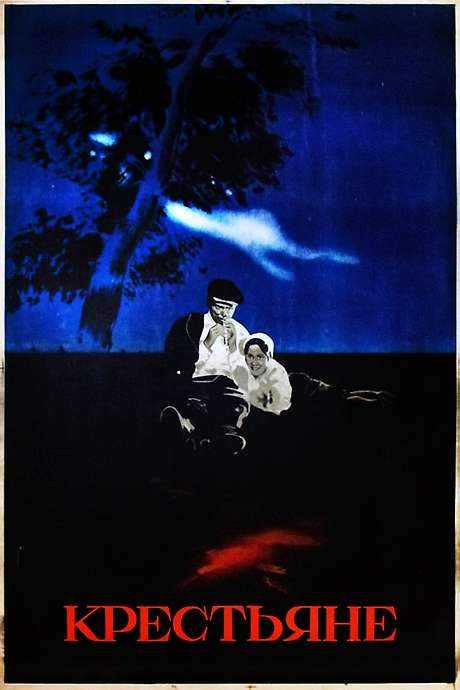
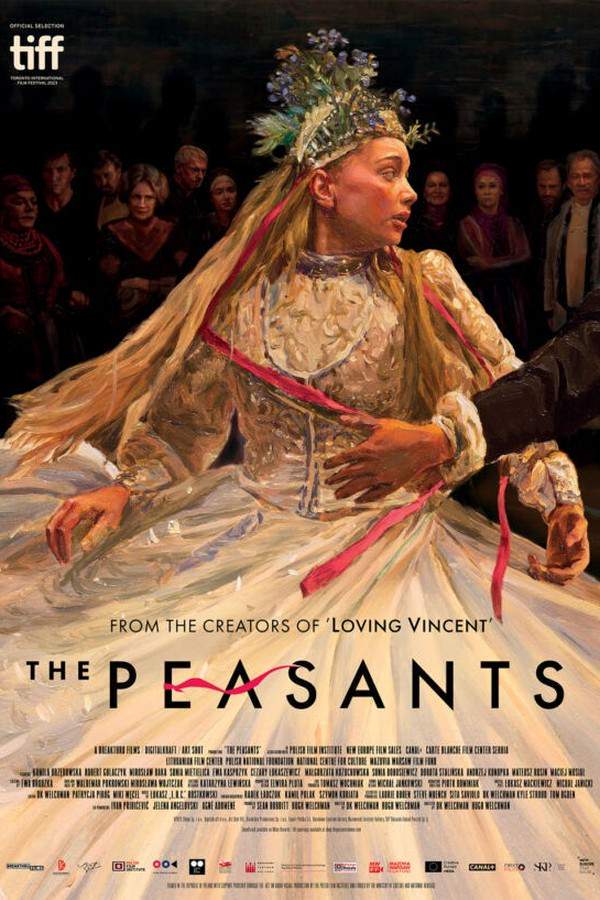
The Peasants (2023) movie poster

Characters & Themes

The Peasants (2023) Characters, Setting & Themes Explained

Release, runtime and language
2023 · 1 h 54 m · Polish
Echo score 63
Loading streaming availability…
Directed by
Hugh Welchman, DK Welchman
Starring
Malgorzata Kozuchowska, Sonia Bohosiewicz, Sonia Mietielica, Dorota Stalinska, Cezary Lukaszewicz, Miroslaw Baka
Budget
$7.5M

In 19th century Poland, a spirited young woman named Jagna challenges the customs of her village, where long-standing feuds and rumors create a tense atmosphere. As she fights for her independence, her actions spark a conflict that threatens the established order and forces her to confront the traditional forces dominating her community.

On this page (9)
  1. 1 Where to watch
  2. 2 Characters explained (5)
  3. 3 Where & when it takes place
  4. 4 Themes & meaning (3)
  5. 5 Character & meaning questions
  6. 6 The book behind the movie
  7. 7 Movie threads
  8. 8 Movies like The Peasants
  9. 9 Every angle
Loading streaming availability…

5 main characters · contains spoilers

The Peasants Characters Explained: Who Is Who

The main characters of The Peasants (2023), heroes and villains: what drives them, how they change over the course of the story and what each of them reveals about the film's bigger ideas.

  • Jagna Paczesiówna

    played by Kamila Urzedowska

    Jagna is a beautiful and talented peasant woman known for her skill in making cutouts. Torn between her affair with Antek and her marriage to Boryna, she becomes a central figure in the drama and conflicts of Lipce. Her resilience and eventual ostracization mirror the harsh realities faced by women in her society.

    • 💖 Romantic
    • 🚺 Strong Woman
    • 🚫 Victim
  • Antek Boryna

    played by Robert Gulaczyk

    Antek is the son of Maciej Boryna and is characterized by his passionate but troubled relationship with Jagna. His internal conflict over loyalty to his wife and his illicit love shapes his actions throughout the film. Antek's struggle with identity and belonging highlights the complexities of love and societal expectations.

    • 💔 Lover
    • ⚔️ Angry
  • Maciej Boryna

    played by Miroslaw Baka

    Maciej is the wealthiest farmer in Lipce, driven by his desire to marry Jagna while managing familial conflicts. As a widower, his intentions are complicated by his wealth and power, leading to personal and community strife. His character embodies the tensions of authority and the desires rooted in traditional dynamics.

    • 👨‍🌾 Wealthy
    • ⚖️ Authority
  • Hanka Boryna

    played by Sonia Mietielica

    Hanka is Antek's wife, who struggles with the pain of her husband's infidelity. She is portrayed as a strong yet deeply hurt woman, representing the emotional toll of betrayal in close-knit communities. Hanka's evolution throughout the film mirrors the complexities of marriage and loyalty.

    • 😔 Suffering
    • 💔 Betrayed
  • Dominikowa

    played by Ewa Kasprzyk

    Dominikowa is Jagna's mother, who plays a crucial role in her daughter's life decisions. Her ambition for Jagna’s future often conflicts with the tragic events unfolding in their lives. Dominikowa's character reflects the parental aspirations intertwined with societal pressures.

    • 👩‍👧 Motherhood
    • 💪 Ambitious

Last updated: September 29, 2026 at 10:39

Was this helpful?

Setting

Where and When Does The Peasants Take Place?

The setting of The Peasants (2023): the year and time period, the places and locations, and how they shape the characters, the mood and the tension of the story.

Time period

turn of the twentieth century

The film is set at the turn of the twentieth century, a time marked by significant social and political changes in rural Europe. This era often depicts the struggles of the peasantry, including class conflicts, land ownership issues, and the impact of modernization. These themes resonate deeply throughout the plot, underscoring the tensions between tradition and change.

Location

Lipce

Lipce is a rural village that serves as the central setting for the movie. It is characterized by its traditional peasant lifestyle, where community bonds and personal conflicts deeply affect the inhabitants. The village plays a pivotal role in shaping the characters' lives and decisions, especially highlighting the dynamics of agricultural life at the turn of the twentieth century.

  • 🏡 Village
  • 🌾 Countryside

Last updated: September 29, 2026 at 10:39

Was this helpful?

3 major themes

The Peasants Meaning: Themes & Message Explained

What is The Peasants (2023) really about? The emotional, social and philosophical themes the film keeps returning to, its symbolism and the message beneath the surface.

  • Love and Betrayal

    The theme of love and betrayal is central to the story, with Jagna caught in a tumultuous affair with Antek while being married to Boryna. This conflict illustrates the complexities of relationships and the destructive consequences of infidelity. As social norms clash with personal desires, the characters navigate a landscape of passion, envy, and heartbreak.

  • Conflict

    Conflict is a key theme, manifesting through personal rivalries, community tension, and class struggles. The clashes between the peasants and landowners, alongside the personal vendettas between Jagna, Antek, and Boryna, drive the narrative forward. The violence that ensues reflects the broader societal issues faced by the peasantry during this time.

  • Feminine Struggle

    The feminine struggle is poignantly illustrated through Jagna's character. Marginalized by society and scapegoated for the village's misfortunes, her journey highlights the challenges faced by women in a patriarchal system. Jagna's resilience against communal ostracism speaks to the fight for agency and dignity amid oppression.

Last updated: September 29, 2026 at 10:39

Was this helpful?

Character & theme questions

The Peasants Characters & Meaning: Your Questions Answered

The questions people ask about The Peasants (2023): who the characters really are, their relationships, what the symbols mean, where it takes place and what the movie is really about. Each answer contains spoilers.

Q1

Where is the film set and what kind of community is Lipce?

The Peasants is set in Lipce, a rural Polish village that anchors the entire story. It is a tight-knit peasant community governed by long-standing traditions, family alliances, and personal grudges. The village's insular nature means that individual choices, especially those of women, are quickly turned into public affairs judged and punished by the collective.

  • lipce
  • polish village
  • rural setting
  • peasant community
  • 19th century poland
Q2

What time period does the story take place in?

The Peasants is set at the turn of the twentieth century in rural Poland. This era was marked by significant social and political changes across Europe, including shifting land ownership patterns, class tension between peasants and landowners, and the slow intrusion of modernization. Those conditions frame the conflicts, marriage arrangements, and power struggles that define village life in the film.

  • time period
  • turn of the twentieth century
  • 19th century
  • rural europe
  • modernization
Q3

Who is Jagna and why is she central to the story?

In The Peasants, Jagna Paczesiówna is a young peasant woman known for her beauty and her talent for making paper cutouts. She becomes the focal point of the village's drama when she is drawn into a love affair with Antek while being married to the much older Maciej Boryna. Her defiance of accepted behavior turns her into the symbol of every tension the community carries between individual desire and collective expectation.

  • jagna
  • jagna paczesiowna
  • peasant woman
  • paper cutouts
  • female protagonist
Q4

Who is Antek Boryna and what defines his role?

Antek Boryna is the son of Maciej Boryna and one of the central figures in The Peasants. He is torn between his marriage to Hanka and his passionate affair with Jagna, and his divided loyalties send shockwaves through multiple households in Lipce. His character embodies the conflict between personal desire and the duties imposed by family and the watching village.

  • antek boryna
  • affair with jagna
  • married to hanka
  • divided loyalties
  • boryna family
Q5

Who is Maciej Boryna and what role does he play?

Maciej Boryna is the wealthiest farmer in Lipce and a widower whose desire to marry Jagna sets much of The Peasants into motion. His economic power gives him considerable influence over village life, and his pursuit of a much younger woman exposes how wealth and age shape authority in the community. He represents the traditional patriarchal order whose decisions ripple through every family.

  • maciej boryna
  • wealthiest farmer
  • widower
  • patriarchal authority
  • land ownership
Q6

Who is Hanka Boryna and what does her character represent?

Hanka Boryna is Antek's wife and one of the most emotionally burdened figures in The Peasants. She endures the pain of her husband's infidelity while trying to hold her household together under the watchful eyes of the village. Her arc illustrates the heavy personal cost that betrayal exacts on women bound to traditional marriage expectations in a closed rural community.

  • hanka boryna
  • antek's wife
  • infidelity
  • betrayed wife
  • marriage expectations
Q7

Who is Dominikowa and what role does she play in Jagna's life?

Dominikowa is Jagna's mother and a parent whose ambitions for her daughter are shaped by the limited options available to peasant women. She plays a key role in arranging Jagna's marriage to the wealthy Maciej Boryna and becomes entangled in the consequences of that decision. Her character reflects how parental choices, combined with social pressure, together seal a young woman's fate in Lipce.

  • dominikowa
  • jagna's mother
  • arranged marriage
  • parental ambition
  • peasant family
Q8

What does the film explore about love and betrayal?

Love and betrayal are central to The Peasants, with Jagna caught between an affair with Antek and a marriage to the older Boryna. The film portrays desire as something that cannot be contained by social rules, yet it also shows how infidelity corrodes trust, fractures families, and feeds communal hostility. Rather than romanticizing the affair, the story treats love as a destructive force that costs everyone involved.

  • love and betrayal
  • infidelity
  • affair
  • jagna antek
  • destructive passion
Q9

What does Jagna's experience reveal about women's position in the village?

Jagna's arc illustrates how a woman who resists accepted norms becomes a scapegoat for a community's frustrations. Despite her talent and resilience, she is denied agency over her marriage, her affections, and her body, and is ultimately punished by the collective for defying its rules. The Peasants uses her story to expose how rural patriarchy constrained women's lives at the turn of the twentieth century.

  • feminine struggle
  • patriarchy
  • women's oppression
  • jagna
  • gender roles
  • rural society
Q10

How do class and land ownership shape life in Lipce?

The Peasants portrays Lipce as a community sharply divided between wealthy landowners like Maciej Boryna and poorer peasants who depend on them. Land ownership determines who can afford to marry, who holds social authority, and whose desires carry weight in village disputes. These economic hierarchies intertwine with personal vendettas, turning private conflicts into broader struggles over status and survival.

  • class conflict
  • land ownership
  • peasantry
  • wealth inequality
  • village hierarchy
Q11

How does the village's collective nature influence the characters' fates?

Lipce operates as a closed social world in The Peasants where gossip, reputation, and shared judgment carry as much weight as formal authority. Personal choices quickly become public affairs, and the community enforces its norms through ostracism, shaming, and eventually mob violence. This collective pressure leaves almost no room for individuals to deviate from accepted roles, shaping the tragic trajectories of Jagna and those around her.

  • community pressure
  • gossip
  • ostracism
  • mob mentality
  • collective punishment
  • village life
Q12

Why is The Peasants presented as an animated film despite its dark subject matter?

The Peasants uses a hand-painted, folk-art animation style that visually echoes traditional rural aesthetics. This stylized medium contrasts sharply with the story's graphic violence and emotional brutality, producing a disorienting tension between surface beauty and underlying cruelty. The animation choice ultimately amplifies rather than softens the film's bleak tone, turning what looks like visual comfort into a vehicle for unflinching social commentary.

  • animation style
  • folk art
  • painted animation
  • visual style
  • tonal dissonance

Movie threads

More Movies Like The Peasants, by Mood & Story

Curated lists built around what makes The Peasants tick: the same mood, the same kind of story or the same emotional payoff. Each list explains why these movies belong together.

Movies like The Peasants where women defy closed patriarchal communities

Stories where a woman's independence collides with rigid communities and crushing tradition. Discover powerful period dramas like The Peasants where women challenge rigid patriarchal villages. These heavy, bleak films explore female independence against hostile communities, often ending in mob violence, exile, or tragedy. If you liked The Peasants' raw portrait of autonomy versus tradition, these similar stories of forbidden love and social ostracism will resonate deeply with fans of devastating rural drama.

  • patriarchal
  • defiance
  • female autonomy
  • oppressive
  • rural
  • ostracism
  • Tone: bleak, oppressive
  • Pacing: slow burn
Why these movies?

The story pattern: A spirited protagonist enters or returns to a tight-knit traditional village, igniting tension through forbidden desire, refusal to conform, or simple refusal to be owned. The community closes ranks — through gossip, arranged marriages, withheld affection, and finally collective violence. The arc rarely offers redemption; instead it traces the slow annihilation of one woman's personhood by an unyielding collective. Family, lovers, and neighbors become complicit in the punishment, leaving the viewer with the bitter recognition that freedom in such places carries an almost unbearable price.

Why they belong together: These films share a core thematic engine: a female character whose autonomy is treated as a threat to communal order. They lean on period settings, rural isolation, and the slow machinery of patriarchal enforcement. Their bleak endings, heavy emotional weight, and focus on mob justice and ostracism create a coherent experience of watching one woman absorb the cruelty of an entire village.

Slow burn devastating dramas like The Peasants

Patient, atmospheric stories where tension, gossip, and resentment erupt into devastating collective violence. If you loved The Peasants' slow, oppressive pacing and brutal communal violence, these similar heavy period dramas deliver the same devastating emotional weight. Explore bleak films with no redemptive endings, accumulating tension across seasonal chapters, and unflinching depictions of mob justice and collective cruelty against individuals. Movies like The Peasants for fans of patient, atmospheric suffering.

  • slow burn
  • bleak
  • oppressive
  • communal violence
  • heavy
  • hostile
  • Tone: bleak, tense, somber
  • Pacing: slow burn, deliberate
Why these movies?

The story pattern: The narrative unfolds in deliberate, often seasonal or chaptered movements, layering interpersonal hostility, infidelity, land disputes, and whispered gossip until the community turns on its chosen victim. Violence, when it arrives, is collective rather than personal — a stripping, a beating, a banishment performed by many hands. The pacing refuses urgency, trusting atmosphere and silence to do the heaviest work, and the resolution almost never delivers relief.

Why they belong together: These films share a patient, almost ritualistic pacing and a tonal commitment to bleakness without compromise. Their characters live inside tight, gossip-driven social worlds where private grudges become public verdicts. The emotional weight stays heavy throughout, and the intensity peaks in unflinching communal punishment scenes, making them natural companions for viewers who found The Peasants' slow accumulation of dread and collective cruelty unforgettable.

If you liked this

Movies Like The Peasants

Similar movies to The Peasants: the same genre, themes or kind of story. Each one comes with its own plot summary, timeline and ending explained.

Browse all movie summaries

Every angle

The Peasants (2023) Explained: Plot, Ending, Timeline & Characters

Everything about The Peasants in one place: what happens in the plot summary, the timeline in chronological order, the characters and meaning, the ending explained and a spoiler-free summary. What's After the Movie adds the cast, box office and post-credit scenes.

Coming soon on iOS and Android

The Plot Explained Movie Summary App

Plot summaries, endings explained and timelines on your phone. Catch up on any movie in minutes, save your favorites and never miss a twist again.

Be the first to know when we launch. Your email stays private, always.

Learn more about the app