Plot Explained Spoilers guaranteed!
Plot Explained

Browse by genre

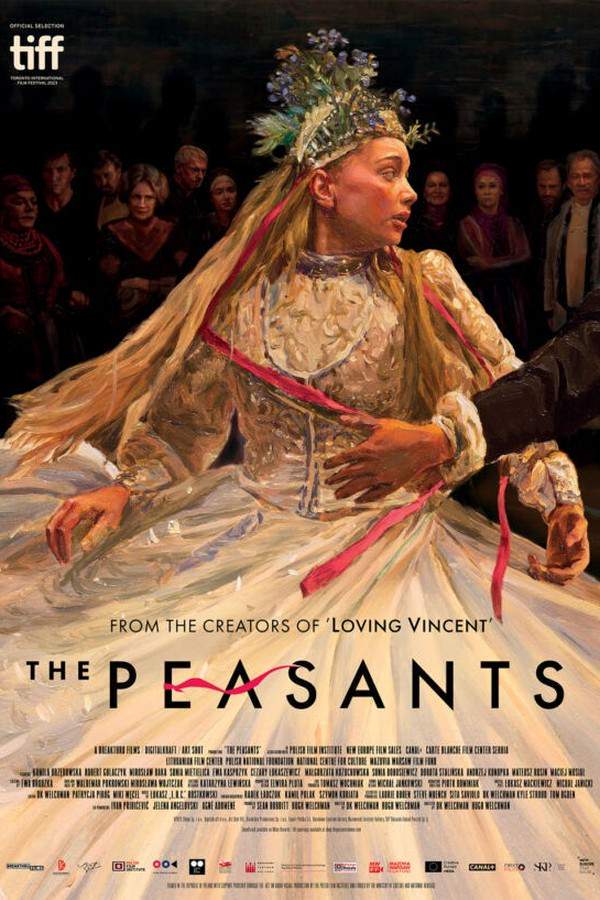
The Peasants (2023) movie poster

Ending Explained

The Peasants (2023) Ending Explained – Final Scene & Meaning

Release, runtime and language
2023 · 1 h 54 m · Polish
Echo score 63
Loading streaming availability…
Directed by
Hugh Welchman, DK Welchman
Starring
Malgorzata Kozuchowska, Sonia Bohosiewicz, Sonia Mietielica, Dorota Stalinska, Cezary Lukaszewicz, Miroslaw Baka
Budget
$7.5M

In 19th century Poland, a spirited young woman named Jagna challenges the customs of her village, where long-standing feuds and rumors create a tense atmosphere. As she fights for her independence, her actions spark a conflict that threatens the established order and forces her to confront the traditional forces dominating her community.

On this page (8)
  1. 1 Where to watch
  2. 2 What happens at the end
  3. 3 Final events in order
  4. 4 Ending questions answered
  5. 5 The book behind the movie
  6. 6 Movie threads
  7. 7 Movies like The Peasants
  8. 8 Every angle
Loading streaming availability…

Ending explained · contains spoilers

What Happens at the End of The Peasants?

How The Peasants (2023) ends, what the final scene means, which earlier moments set it up and how to read the ending if the film leaves it open. The full ending explained, with every spoiler.

In the end, The Peasants presents a stark portrait of a community torn apart by traditions, jealousy, and social pressures. Jagna, a beautiful and independent young woman, is a symbol of individual spirit in a society that seeks to control her. Despite her efforts to carve out her own path, she is ultimately betrayed by the community and even by the man she loved, Antek. His abandonment in her time of greatest need signifies the film’s tragic message: that societal norms and petty jealousies often crush the most vulnerable. As Jagna is pushed out and violently exiled from the village, it reflects how deeply rooted these oppressive traditions are, punishing those who dare to stand apart. Her expulsion isn’t just a punishment for her perceived sins or her beauty, but a reflection of a community frantic to preserve its rigid social order at any cost. The ending leaves us with a haunting image of Jagna, discarded and helpless on the outskirts of Lipce, embodying the tragic consequence of a society that values conformity over compassion and individuality. It’s a powerful reminder of how deeply societal pressures can destroy personal freedom and human dignity.

Last updated: June 25, 2025 at 08:44

Was this helpful?

The last 4 events

How The Peasants Ends: The Final Events in Order

The last events of The Peasants (2023) in chronological order, the run-up to the ending explained above. The complete timeline has all 15 events, scene by scene.

Open the full timeline
  1. Antek's Return

    Following Boryna's funeral, Antek is released from jail and returns home to a jubilant Hanka. His return marks a pivotal shift in the social hierarchy of Lipce, as Antek aims to reclaim his father's legacy.

    Where
    Lipce
  2. Villagers' Conspiracy

    As tensions rise, villagers gather to discuss Jagna's alleged promiscuity, believing it has provoked divine anger. They decide to take action against her, revealing the strong influence of communal beliefs on individual lives.

    Where
    Inn in Lipce
  3. Jagna's Humiliation

    The villagers, fueled by outrage, attack Jagna, stripping her of dignity and dragging her from her home to the outskirts. The brutality of the mob showcases the harsh realities of ostracism and community judgment.

    Where
    Edge of Lipce
  4. Jagna's Defiance

    After being publicly humiliated, Jagna rises from the mud, determined to reclaim her strength. She walks away from Lipce, symbolizing her resilience and refusal to be defeated by the collective anger of the villagers.

    Where
    Lipce

Ending questions answered

The Peasants Ending: Your Questions Answered

The questions people ask most about the ending of The Peasants (2023): what the final scene means, how the twist works, what happens to each character and how to read the ending. Each answer contains spoilers.

Q1

Why does Antek abandon Jagna at the end?

Despite his passionate affair with Jagna, Antek ultimately chooses self-preservation over loyalty when the village mobilizes against her. His withdrawal reflects how deeply rooted patriarchal loyalty to the community is, even overriding personal desire. Antek's absence during Jagna's punishment transforms her tragedy from a social condemnation into an intimate emotional betrayal.

Foreshadowing: Early in the film, Antek repeatedly hesitates when openly defying his father and the village elders, hinting that his courage has limits.

  • antek
  • jagna
  • betrayal
  • abandonment
  • peasant affair
Q2

What actually happens to Jagna in the final scenes?

Jagna is publicly stripped, beaten, and violently exiled from the village of Lipce. She is cast out onto the outskirts, discarded and helpless, left to fend for herself after the community collectively turns on her. The punishment is both physical and deeply humiliating, stripping her of dignity, belonging, and any claim to shelter within the village.

Foreshadowing: The seasonal structure of the film gradually closes in on Jagna, with each chapter narrowing her social space and increasing hostility toward her.

  • jagna
  • exile
  • punishment
  • banishment
  • lipce
Q3

Why is Jagna exiled from the village?

Jagna's exile is the community's attempt to purge a disruptive individual who refuses to conform. Her independent spirit, beauty, and refusal to submit to arranged marriages challenge the rigid social hierarchy of 19th-century Polish rural life. The village uses her as a scapegoat, punishing her for breaking unwritten codes about female autonomy, property, and marital loyalty.

Foreshadowing: From her arrival as a young bride to Boryna, Jagna is treated as an outsider whose presence already destabilizes existing households.

  • jagna
  • exile
  • conformity
  • scapegoat
  • social order
Q4

What does the ending of The Peasants symbolize?

The ending symbolizes the destructive power of enforced conformity in a closed society. Jagna's destruction represents how communities preserve rigid social order by crushing anyone who threatens the status quo. Her exile embodies the cost of female autonomy in a patriarchal world and shows how collective cruelty can override individual compassion entirely.

Foreshadowing: The painting-like seasonal chapters visually tighten around Jagna, framing her as an isolated figure even in crowds.

  • ending symbolism
  • conformity
  • patriarchy
  • female autonomy
Q5

Why does the entire village turn against Jagna?

Jagna threatens multiple social contracts at once: she defies Boryna's authority as his wife, pursues an affair with Antek that violates marriage expectations, and her beauty attracts attention that destabilizes neighboring households. The village unites against her not out of moral conviction but out of fear that her independence could spread, unraveling the customs that bind the community together.

Foreshadowing: Gossip about Jagna and Antek spreads early in the film, showing how quickly private behavior becomes public ammunition.

  • village collective
  • gossip
  • jagna
  • social pressure
  • mob
Q6

What does Jagna's public punishment reveal about the community?

The public nature of Jagna's punishment reveals that cruelty in Lipce is a communal ritual rather than an individual act. The village uses collective violence to reinforce its norms, making each participant complicit and preventing future dissent. The stripping and beating serve as a warning that anyone who challenges the social order will face the same annihilation.

Foreshadowing: Earlier shaming scenes, where villagers publicly judge a perceived transgressor, foreshadow the escalation into physical punishment.

  • public punishment
  • collective violence
  • mob justice
  • shaming
Q7

Is there any hope for Jagna at the end?

No. The ending offers no redemption, rescue, or glimpse of future recovery. Jagna is left alone, physically and emotionally broken, with no allies remaining. Her story closes on total defeat, reinforcing the film's bleak message that this society offers no path to freedom for those who defy it.

Foreshadowing: Each seasonal chapter removes a potential ally or escape route for Jagna, leaving her increasingly isolated well before the final act.

  • hope
  • bleak ending
  • jagna fate
  • despair
Q8

Why doesn't anyone defend Jagna during her exile?

Defending Jagna would mean aligning against the entire village, risking social and physical destruction. The community has already shown its willingness to use violence to enforce norms, and anyone who speaks for her would likely become the next target. Self-preservation, fear, and entrenched loyalty to tradition silence every potential ally.

Foreshadowing: Earlier moments where villagers look away from smaller injustices hint at a collective code of willful blindness.

  • bystander
  • fear
  • complicity
  • no allies
  • jagna
Q9

What is the significance of Jagna being left on the outskirts of Lipce?

The outskirts represent the literal and symbolic boundary between belonging and exile. By placing Jagna outside the village borders, the community performs a total severance; she is no longer a neighbor, a wife, or a member of society. The haunting final image emphasizes her absolute isolation and the impossibility of return.

Foreshadowing: Earlier scenes frame the village fields and edges as liminal spaces where out-of-favor characters are already socially pushed away.

  • outskirts
  • lipce
  • isolation
  • banishment
  • final image
Q10

How does Antek's betrayal deepen the tragedy of the ending?

Antek is not just another villager; he is the man Jagna risked everything to love. His withdrawal proves that even personal passion cannot survive when set against the weight of communal expectation. His betrayal transforms Jagna's tragedy from simple social punishment into intimate emotional abandonment, showing that there is no private refuge from public cruelty.

Foreshadowing: Antek's hesitation during earlier confrontations with his father suggests he measures risk before acting, foreshadowing his final withdrawal.

  • antek
  • betrayal
  • tragedy
  • love
  • abandonment
Q11

What role does Boryna play in Jagna's final fate?

Boryna, Jagna's older husband, embodies the patriarchal authority that the village defends. His wounded pride over her affair with Antek, a much younger man, fuels much of the resentment that the community channels into collective action. Jagna's exile is partly the consequence of a personal humiliation being converted into a public moral cause.

Foreshadowing: Boryna's quiet jealousy and possessiveness in earlier scenes establish the personal stakes that later ignite village-wide anger.

  • boryna
  • husband
  • patriarchy
  • jealousy
  • authority
Q12

What message does the bleak ending of The Peasants convey about society?

The ending argues that conformist societies protect themselves by destroying outliers rather than absorbing difference. It exposes how gossip, tradition, and collective judgment can become tools of violence, and how beauty, independence, and desire are treated as threats rather than gifts. The bleakness is intentional, refusing to offer catharsis and forcing the viewer to sit with the cost of unchallenged conformity.

Foreshadowing: The film's opening scenes establish gossip as a currency, foreshadowing how rumor eventually curdles into sanctioned violence.

  • social commentary
  • conformity
  • collective cruelty
  • tradition

Movie threads

More Movies Like The Peasants, by Mood & Story

Curated lists built around what makes The Peasants tick: the same mood, the same kind of story or the same emotional payoff. Each list explains why these movies belong together.

Movies like The Peasants where women defy closed patriarchal communities

Stories where a woman's independence collides with rigid communities and crushing tradition. Discover powerful period dramas like The Peasants where women challenge rigid patriarchal villages. These heavy, bleak films explore female independence against hostile communities, often ending in mob violence, exile, or tragedy. If you liked The Peasants' raw portrait of autonomy versus tradition, these similar stories of forbidden love and social ostracism will resonate deeply with fans of devastating rural drama.

  • patriarchal
  • defiance
  • female autonomy
  • oppressive
  • rural
  • ostracism
  • Tone: bleak, oppressive
  • Pacing: slow burn
Why these movies?

The story pattern: A spirited protagonist enters or returns to a tight-knit traditional village, igniting tension through forbidden desire, refusal to conform, or simple refusal to be owned. The community closes ranks — through gossip, arranged marriages, withheld affection, and finally collective violence. The arc rarely offers redemption; instead it traces the slow annihilation of one woman's personhood by an unyielding collective. Family, lovers, and neighbors become complicit in the punishment, leaving the viewer with the bitter recognition that freedom in such places carries an almost unbearable price.

Why they belong together: These films share a core thematic engine: a female character whose autonomy is treated as a threat to communal order. They lean on period settings, rural isolation, and the slow machinery of patriarchal enforcement. Their bleak endings, heavy emotional weight, and focus on mob justice and ostracism create a coherent experience of watching one woman absorb the cruelty of an entire village.


Slow burn devastating dramas like The Peasants

Patient, atmospheric stories where tension, gossip, and resentment erupt into devastating collective violence. If you loved The Peasants' slow, oppressive pacing and brutal communal violence, these similar heavy period dramas deliver the same devastating emotional weight. Explore bleak films with no redemptive endings, accumulating tension across seasonal chapters, and unflinching depictions of mob justice and collective cruelty against individuals. Movies like The Peasants for fans of patient, atmospheric suffering.

  • slow burn
  • bleak
  • oppressive
  • communal violence
  • heavy
  • hostile
  • Tone: bleak, tense, somber
  • Pacing: slow burn, deliberate
Why these movies?

The story pattern: The narrative unfolds in deliberate, often seasonal or chaptered movements, layering interpersonal hostility, infidelity, land disputes, and whispered gossip until the community turns on its chosen victim. Violence, when it arrives, is collective rather than personal — a stripping, a beating, a banishment performed by many hands. The pacing refuses urgency, trusting atmosphere and silence to do the heaviest work, and the resolution almost never delivers relief.

Why they belong together: These films share a patient, almost ritualistic pacing and a tonal commitment to bleakness without compromise. Their characters live inside tight, gossip-driven social worlds where private grudges become public verdicts. The emotional weight stays heavy throughout, and the intensity peaks in unflinching communal punishment scenes, making them natural companions for viewers who found The Peasants' slow accumulation of dread and collective cruelty unforgettable.

If you liked this

Movies Like The Peasants

Similar movies to The Peasants: the same genre, themes or kind of story. Each one comes with its own plot summary, timeline and ending explained.

Browse all movie summaries

Every angle

The Peasants (2023) Explained: Plot, Ending, Timeline & Characters

Everything about The Peasants in one place: what happens in the plot summary, the timeline in chronological order, the characters and meaning, the ending explained and a spoiler-free summary. What's After the Movie adds the cast, box office and post-credit scenes.

Coming soon on iOS and Android

The Plot Explained Movie Summary App

Plot summaries, endings explained and timelines on your phone. Catch up on any movie in minutes, save your favorites and never miss a twist again.

Be the first to know when we launch. Your email stays private, always.

Learn more about the app