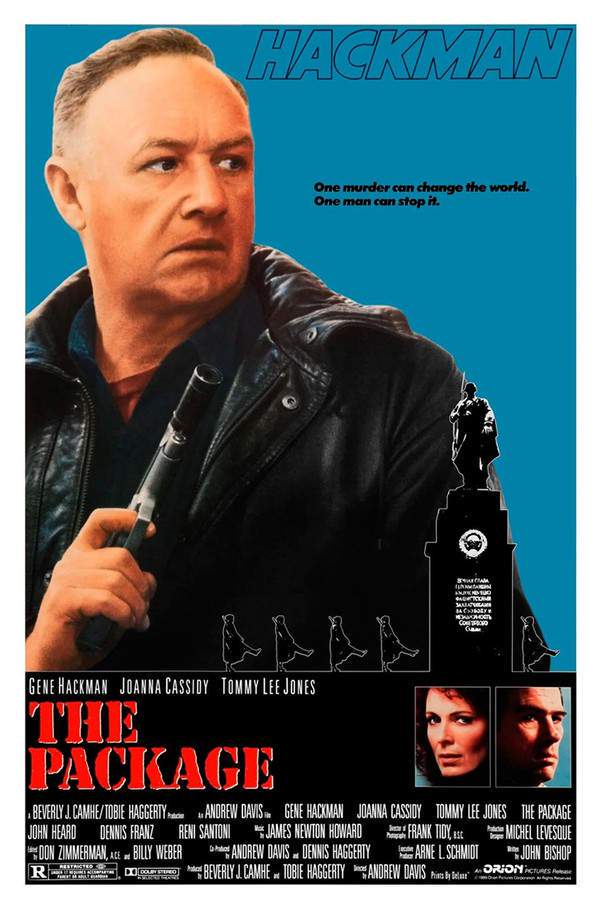
Master Sergeant Johnny Gallagher is part of a small, tightly trained unit patrolling the perimeter of a chalet in West Berlin, just as the world’s two superpowers entertain talks on mutual nuclear disarmament. The atmosphere is thick with the pressure of high-level diplomacy, yet a more shadowy agenda brews inside the same building. In a separate thread, a group of top U.S. and Soviet generals secretly plot to sabotage the talks, a plan that hinges on planting fear and mistrust rather than reaching any real agreement. When U.S. General Carlson refuses to go along with this covert scheme, the attempt at secrecy collapses in a violent moment: Carlson is killed outside the chalet by assassins masquerading as West German hikers who slipped through the perimeter with deadly precision.
Gallagher finds himself blamed for the disaster, a pawn in a larger political game, and is ordered to escort an Army sergeant named Walter Henke back to the United States for a court-martial. The journey begins routinely enough, but it takes a sharp turn upon arrival at Dulles International Airport. An undercover team detonates their plan, whisking Henke away and leaving Gallagher behind. Pursuing the truth, Gallagher tracks down Henke’s wife, only to confront a shocking revelation: she presents a photograph of a man who is not her husband. The implications are clear—the man Gallagher brought into the country is an imposter. Before he can gather his thoughts, the same undercover operatives strike again, killing Mrs. Henke and tipping off authorities that Gallagher himself is the killer. He is detained in a rapid, unsettling turn of events that marks the beginning of a long, perilous unraveling.
On the other side of the conspiracy, the real Walter Henke is approached in West Germany by Colonel Glen Whitacre, who assigns him to a top-secret mission: infiltrate a Neo-Nazi gang inside his hometown of Chicago, which the conspirators fear could be a staging ground for an attack aimed at the President. This assignment is meant to misdirect and misalign the public’s attention, while the plot behind the scenes inches ever closer to realization.
With support from Gallagher’s ex-wife, Eileen Gallagher, and her assistant, Lt. Ruth Butler, the trio pieces together the puzzle: the man Gallagher brought over is Thomas Boyette, a veteran with a long career in covert operations, who managed to enter the country by impersonating a prisoner—there was no passport record to trail, no entry stamp to reveal, nothing to tie him to West Germany. The realization deepens the mystery: this impersonation scheme is a crucial part of how the conspiracy moves men and materials across borders without leaving obvious traces.
The danger escalates when the same covert team targets Butler and assaults Eileen. Gallagher, aided by his army buddy Pvt. Marsh, manages a daring rescue and breaks free from the base where Boyette has been sheltered. The Gallaghers resolve to uncover the conspiracy by finding the real Walter Henke in Chicago, where the next phase of the peace talks is planned. To shelter them, Gallagher seeks out a trusted ally, Chicago Police Detective Milan Delich, who allows them to stay at his home. A tense dinner scene unfolds as the conspirators, disguised as police, attempt to kill Delich. The ambush is thwarted only after Delich’s retaliatory firefight kills one of Boyette’s associates, Karl Richards, highlighting the scope of collaboration behind the scenes.
As Delich carries the wounded to safety, the plot thickens. The conspirators drag Gallagher into a dangerous standoff that ends with Boyette taking Gallagher’s place, and the chase shifts toward the heart of downtown Chicago. Gallagher uses Boyette’s surveillance photos as a guide to the planned assassination site, racing against time to intercept the attempt on the President’s life. In a final move, the real Walter Henke is lured into an office building overlooking the assassination site and is killed by Boyette, a calculated effort to frame Henke for the crime and to obscure Boyette’s own deep involvement. Delich’s investigation takes another hit when Karl Richards is killed, signaling how thoroughly the conspiracy operates and how high the stakes have become.
The climax unfolds at a hotel luncheon, where a Soviet Press Secretary convinces the General Secretary to make an unplanned stop near the garage for a photo op with émigré Russian families. Before the U.S. Secret Service can secure the area, Boyette lines up a sniper shot at the General Secretary. Gallagher bursts into the room, decisive and relentless, and shoots Boyette, stopping the assassination in its tracks.
In the aftermath, Gallagher confronts Whitacre in a charged confrontation on the street, accusing him of engineering a war-for-disarmament strategy that would benefit a select few while risking catastrophic consequences for millions. Whitacre defends the plan as a fragile but necessary equilibrium, insisting that nuclear weapons are the only thing keeping the superpowers from a wider conflict. Gallagher vows to expose the conspiracy, but the moment also carries a personal reunion: he embraces Eileen, grateful to be alive and to have her support.
As the dust settles, Whitacre and his Soviet counterpart slip into a limousine, planning the world’s next steps. Their driver suddenly pulls over, and a cryptic, brutal act ends the conspiring pair’s lives—the driver executes both colonels, ensuring that any blamable details will fall away from them and that the remaining conspirators will escape accountability. The film closes on a wary, unresolved note: the drive for peace has been threatened, manipulated, and nearly derailed, but Gallagher’s perseverance and grit leave a legacy of truth that may still spark accountability in the shadows of international politics.