Plot Explained Spoilers guaranteed!
Plot Explained

Browse by genre

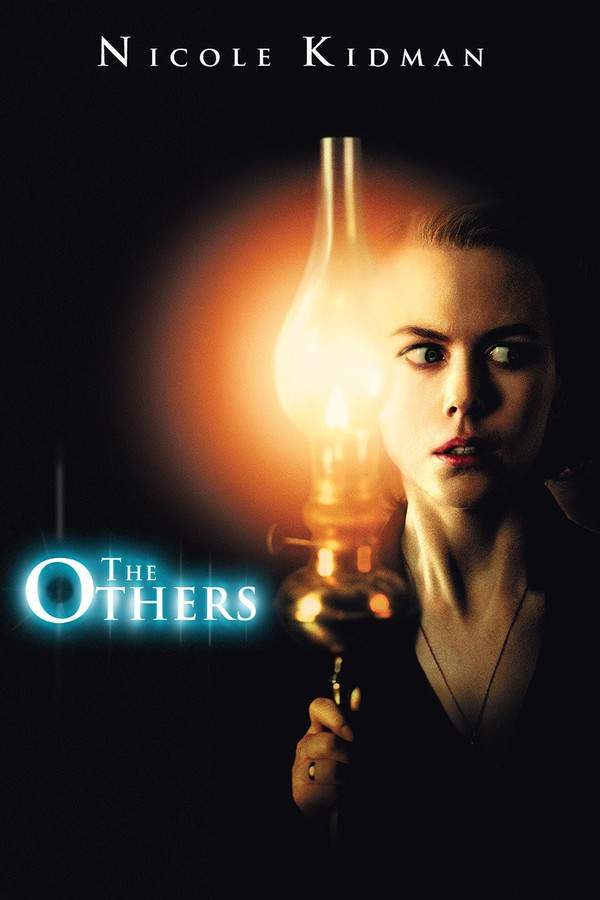
The Others (2001) movie poster

Plot Summary

The Others (2001) Plot Summary Explained

Release, runtime and language
2001 · 104 min · English
JustWatch #113 16
Directed by
Alejandro Amenábar
Starring
Christopher Eccleston, Nicole Kidman
Budget
$17M

Following World War II, a deeply religious mother relocates with her photosensitive children to a remote estate in the English countryside, awaiting news of her husband. While trying to protect her children from sunlight, Grace begins to suspect that the unsettling visions her daughter Anne describes might be real, leading her to confront a terrifying presence within the house.

On this page (6)
  1. 1 Where to watch
  2. 2 What happens: full plot
  3. 3 Plot questions answered
  4. 4 Movie threads
  5. 5 Movies like The Others
  6. 6 Every angle

Where to watch

Where to Watch The Others (2001)

Where can you watch The Others? Stream, rent or buy it in the US, including on AMC+, Philo and Shudder: current JustWatch availability with up-to-date prices.

Streaming availability powered by JustWatch

Full plot summary · contains spoilers

What Happens in The Others: Full Plot Summary

The whole story of The Others (2001) explained, from the opening scene to the final frame: every key event, every twist and what it all adds up to. Read it as a quick recap before the sequel, to check a scene you missed, or to finally understand what really happened.

Grace Stewart, portrayed by Nicole Kidman, is a devout Catholic mother residing in a secluded home on the island of Jersey, shortly after the tumult of World War II. She diligently cares for her two young children, Anne and Nicholas, who suffer from a rare condition known as Xeroderma Pigmentosa. This affliction makes them highly sensitive to sunlight, forcing their lives to revolve around strict rules to shield them from potential exposure to harmful rays.

The peace of their lives is disrupted with the arrival of three new staff members in the house: an elderly nanny named Mrs. Bertha Mills, an aged gardener, Mr. Edmund Tuttle, and a young mute girl, Lydia. However, strange occurrences soon plague the household, stirring Grace's suspicions that they may not be alone. Her daughter Anne begins to draw unsettling pictures of four mysterious figures—a man, a woman, a boy named Victor, and an elderly woman—claiming to have encountered them within the confines of their home. As the atmosphere thickens with tension, Grace hears the haunting melodies of a piano emanating from a locked room, where no one ought to be.

The chilling discovery of a "book of the dead," revealing 19th-century mourning portraits, adds to Grace's concerns as she discovers doors that should be closed standing ajar. In a desperate attempt to protect her family, Grace resorts to hunting for these supposed intruders with a shotgun, only to be confronted with inexplicable phenomena. Initially, she dismisses Anne's beliefs in ghosts, until she experiences the supernatural herself. Consumed by fear, she ventures out into the misty fog, seeking the local priest to bless their home.

Amidst this chaos, the servants seem to have their own agenda. Mrs. Mills engages with Anne, nurturing her grievances against her mother, while Mr. Tuttle digs an unmarked grave hidden beneath autumn leaves. In a twist of fate, Grace encounters her husband, Christopher Eccleston, whom she believed was lost in battle, leading to a day filled with strained silence and confusion. Grace's grief and irrational fears culminate in a series of events that pit her against an eerie old woman resembling her daughter.

As tensions rise, the story unfolds:

> "You are not my daughter!"

Grace's alarming discoveries escalate as her actions lead to fracturing her relationship with Anne. Despite Charles's return, trouble brews, as Anne reveals the terrifying realities of her mother’s behavior. The children’s visions intensify, and they find themselves drawing nearer to the veiled truth about their existence and the home they occupy. Eventually, they stumble upon the hidden graves corresponding to their enigmatic staff, paralleling Grace's gut-wrenching realization of the servants’ true identities.

Through chilling revelations, the narrative crystallizes when Anne and Nicholas learn that they, along with their mother, are trapped in a realm beyond life—ghosts haunting the shadows of their own demise after Grace's tragic descent into madness led her to unknowingly take her children's lives. As the fragments of memory emerge, Grace grapples with her fragmented reality, understanding their tragic circumstances and her husband’s oblivion of his own fate.

In the end, filled with the sorrow of regret, Grace and her children are comforted by Mrs. Mills, who explains their new life, emphasizing the need to coexist with the living while celebrating the newfound liberation from their sunlight afflictions. The family shares a poignant moment, embracing the warmth of sunshine that now envelops them freely as they watch Victor's family move away from their sanctuary.
Last updated: November 04, 2024 at 07:12

Was this helpful?

Plot questions answered

The Others Plot Explained: Your Questions Answered

The questions people ask most about The Others (2001): what happens in the confusing scenes, why the characters do what they do, the twists, hidden details and what the ending means. Each answer contains spoilers.

Q1

Why is Grace and her family in the house?

Grace, Anne, and Nicholas are actually the ghosts haunting their former home. They died decades earlier when Grace, suffering from grief and mental illness after her husband Christopher went missing in World War II, murdered her two children before committing suicide. The family has been dead the entire time, trapped in the house in denial about their fate.

Foreshadowing: The film hints at this early on when Anne draws four figures, the previous living residents of the house, whom the ghosts mistakenly believe are intruders.

  • grace stewart ghost twist
  • family dead
  • filicide
Q2

How did Grace and her children die?

Grace killed her children Anne and Nicholas and then took her own life. The film implies she did this in a moment of grief-fueled madness after her husband Christopher was declared missing in battle. This traumatic event occurred off-screen, and the family has existed in the house as ghosts ever since, unable to accept or remember their deaths.

Foreshadowing: Mrs. Mills tells Grace early on that she understands what it's like to lose a husband and be left alone with children, foreshadowing Grace's own breakdown.

  • grace death
  • children death
  • suicide
  • murder-suicide
Q3

Why are the children photosensitive if they're already dead?

The children appear to have Xeroderma Pigmentosa as part of their ghostly existence, ghosts avoid sunlight as a lingering limitation from their living years. When the truth is revealed at the end, they are finally able to stand in sunlight, suggesting their photosensitivity was a psychological holdover from their former lives rather than a real medical condition.

Foreshadowing: Anne and Nicholas drawing pictures of themselves being burned by sunlight hints at the traumatic nature of their deaths related to light.

  • xeroderma pigmentosa
  • sunlight
  • children sensitivity
Q4

Who are the 'ghosts' that Grace sees?

The figures Grace sees, Mrs. Bertha Mills, Mr. Edmund Tuttle, and the mute girl Lydia, are actually the living people who now occupy the house. They moved in after the Stewart family died. The Stewarts, as ghosts, can see and interact with the living family, mistaking them for ghosts because they don't realize they themselves are dead.

Foreshadowing: Mrs. Mills is the first 'ghost' Grace encounters, and she behaves with unusual familiarity toward Anne, which becomes clear once the twist is revealed.

  • servants living
  • house occupants
  • mrs mills
Q5

What does Mrs. Mills mean when she says 'You are not my daughter'?

When Mrs. Mills tells Anne 'You are not my daughter,' she is speaking literally, the woman Anne believes is her mother is actually the ghost of the previous resident. The living Mrs. Mills is the real mother of the children who now occupy the house. Anne has been calling this stranger 'Mother' throughout the film, not realizing the woman haunting her is actually an imposter.

Foreshadowing: This line arrives as the first major clue that the family's understanding of their relationships is fundamentally backwards.

  • not my daughter line
  • mrs mills anne
Q6

What was Mr. Tuttle digging in the garden?

Mr. Tuttle was digging a grave in the garden because he and the other living servants had discovered the bodies of the Stewart family buried on the property. They were preparing to properly inter the remains they found, likely during renovation work on the house. This explains why Grace sees them as 'digging a grave for her family', they literally are.

Foreshadowing: The discovery of their own graves is what finally triggers Anne and Nicholas to understand they are dead.

  • grave digging
  • edmund tuttle
  • garden burial
Q7

Why does Grace accept being a ghost at the end?

Grace accepts her ghostly state when the full memory of murdering her children returns to her. Rather than remaining in denial, she chooses to acknowledge the truth, that she killed her children and herself. This acceptance brings a form of peace, freeing the family from their trapped existence. Mrs. Mills explains they must learn to live with the living, which represents their transition from tormented ghosts to at-peace spirits.

Foreshadowing: Grace's earlier desperate attempts to 'protect' her children from sunlight reflect her deep-seated guilt and need to make amends.

  • acceptance
  • peace
  • afterlife
  • closure
Q8

What happened to Christopher, Grace's husband?

Christopher, played by Christopher Eccleston, is also dead but does not realize it. He appears at the house expecting to reunite with his living family, but the film suggests he died in the war or on his journey home. Like Grace and the children, he exists as a ghost unaware of his own death. When he returns, the family cannot even speak to him properly, which disturbs Grace deeply.

Foreshadowing: The strained, silent interactions between Christopher and Grace hint that something is fundamentally wrong with his return.

  • christopher eccleston
  • husband death
  • missing soldier
Q9

Why does Anne draw the four mysterious figures?

Anne is drawing the living family who moved into the house, the man, woman, boy named Victor, and elderly woman. Because the Stewarts are ghosts, they can perceive the living family occupying their home. Anne's drawings are her attempt to make sense of seeing these 'intruders' she believes are ghosts, when in fact they are the only living people in the house.

Foreshadowing: The drawings become increasingly accurate as the film progresses, revealing the true identities of the house's current residents.

  • anne drawings
  • four figures
  • mystery figures
Q10

What is the Book of the Dead that Grace finds?

The Book of the Dead contains 19th-century mourning portraits and is part of the previous residents' belongings. When Grace finds it, she is looking at pictures of herself and her family, their death portraits from when they actually died decades earlier. The book serves as a chilling preview of the truth Grace cannot yet accept.

Foreshadowing: Grace's unease around the book foreshadows her inability to confront her own death and the deaths of her children.

  • mourning portraits
  • book dead
  • portrait book
Q11

How does the film reveal the ghost twist?

The twist is revealed gradually through accumulating evidence: the discovery of graves belonging to the Stewart family, Anne and Nicholas realizing they can walk in sunlight, Mrs. Mills revealing the 'real' Anne is her daughter, and Grace finally remembering she murdered her children. The moment Anne and Nicholas find their own graves marks the turning point where they accept they are dead.

Foreshadowing: Multiple clues throughout, the servants' living behaviors, the photosensitivity contradiction, Mrs. Mills' suspicious dialogue, build toward this revelation.

  • twist reveal
  • plot twist
  • reversal ending
Q12

Why does Grace become so paranoid and irrational?

Grace's irrational behavior stems from her guilt over her crime, she murdered her own children. As a ghost, she cannot fully remember or accept what she did, so her mind projects the horror outward as paranoia about 'intruders' in the house. Her desperate attempts to protect her children from 'ghosts' is actually her unconscious mind trying to atone for the way she failed to protect them in life.

Foreshadowing: Her irrational fear and aggression increase as she gets closer to remembering the truth of her actions.

  • grace madness
  • paranoia
  • guilt
  • mental breakdown

Movie threads

More Movies Like The Others, by Mood & Story

Curated lists built around what makes The Others tick: the same mood, the same kind of story or the same emotional payoff. Each list explains why these movies belong together.

Gothic ghost mysteries with a twist like The Others

Atmospheric stories where characters unravel a supernatural secret. If you enjoyed the eerie atmosphere and shocking twist of The Others, explore more movies like it. This thread features similar slow-burn supernatural horror stories, psychological thrillers with unreliable narrators, and gothic tales where the haunting is deeply tied to a character's emotional trauma.

  • eerie
  • atmospheric
  • suspenseful
  • haunting
  • melancholic
  • psychological
  • Tone: dark, eerie, melancholic
  • Pacing: slow, deliberate
Why these movies?

The story pattern: Stories in this thread typically involve characters, often in a state of grief or isolation, encountering supernatural phenomena. The narrative builds tension gradually, leading to a climactic twist that reveals the true nature of the haunting, often connecting it directly to the protagonist's own past or psychological state.

Why they belong together: These movies are grouped together for their shared focus on atmosphere over action, their reliance on psychological suspense, and their use of a central narrative twist that redefines the story. They create a similar feeling of eerie unease and intellectual payoff.

Movies with slow-burn atmospheric dread like The Others

Stories where quiet tension slowly suffocates the characters. For fans of The Others who loved its slow pace and oppressive mood, this thread collects similar films. Find more movies with a creeping sense of dread, eerie atmospheres, and psychological horror that prioritizes mood over jump scares.

  • slow burn
  • claustrophobic
  • tense
  • eerie
  • atmospheric
  • suspenseful
  • Tone: tense, somber, claustrophobic
  • Pacing: slow burn
Why these movies?

The story pattern: The narrative pattern is one of incremental discovery and mounting paranoia. There is little action; instead, the story unfolds through small, unsettling details and a growing certainty that something is terribly wrong, often within a confined space.

Why they belong together: These films share a specific approach to horror and suspense: a deliberately slow pace, a heavy emphasis on creating a tangible, eerie atmosphere, and a focus on psychological dread rather than visceral shocks. They deliver a similar experience of sustained tension.

If you liked this

Movies Like The Others

Similar movies to The Others: the same genre, themes or kind of story. Each one comes with its own plot summary, timeline and ending explained.

Browse all movie summaries

Every angle

The Others (2001) Explained: Plot, Timeline & Characters

Everything about The Others in one place: what happens in the plot summary, the timeline in chronological order, the characters and meaning and a spoiler-free summary. What's After the Movie adds the cast, box office and post-credit scenes.

Coming soon on iOS and Android

The Plot Explained Movie Summary App

Plot summaries, endings explained and timelines on your phone. Catch up on any movie in minutes, save your favorites and never miss a twist again.

Be the first to know when we launch. Your email stays private, always.

Learn more about the app