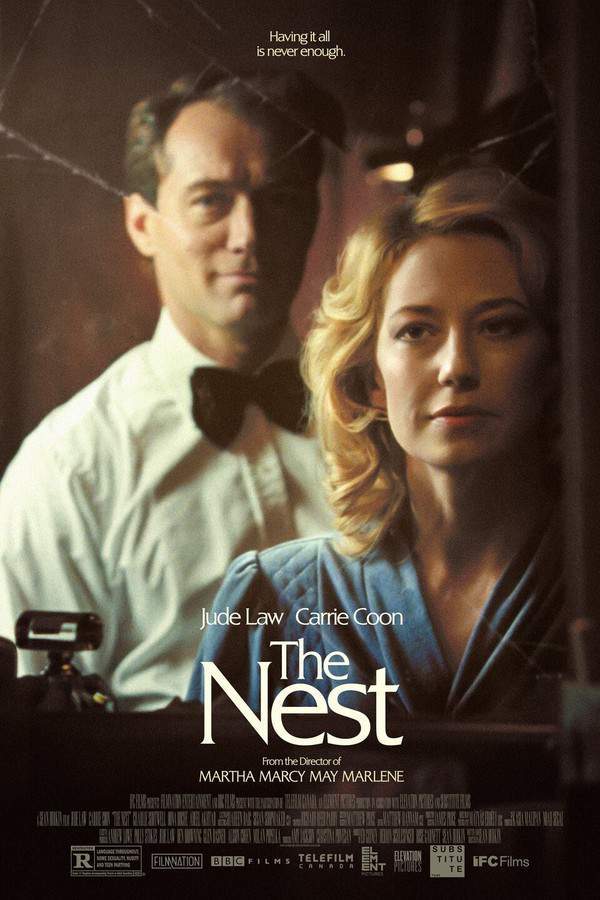
At the end of The Nest, Rory's realization sinks in that his obsession with wealth and his ongoing lies cannot sustain his family or himself. After being abandoned at the restaurant by Allison, Rory makes his way home, where he finds his family having breakfast—an image that hints at the possibility of reconciliation or at least a moment of clarity. Despite his hopes to fix everything with a new venture and start fresh, the film leaves his future uncertain, ending with Rory broken and crying at the breakfast table. His intense breakdown and the conversation with the cabbie earlier suggest he's finally understood that his relentless pursuit of money has only brought instability and pain. His past delusions of wealth—once believing he'd had a million dollars—highlight the emptiness of his ambitions, showing that success was never truly rooted in financial gains but in love and stability. The film ends on this ambiguous note, implying that Rory has learned the gravity of his mistakes, but whether he can truly change remains unanswered.
Allison's horse, Richmond, serves as a powerful symbol. Initially a beloved pet, Richmond’s failing health and tragic death mark the end of her patience and hope for her marriage—her grief punctuated by her frantic care for the horse's body. The horse’s death echoes the breakdown of her relationship with Rory, symbolizing that her marriage is as fundamentally exhausted as Richmond was. The haunting atmosphere of the family estate further reinforces this, with strange noises and the house’s empty, almost ghostly interior reflecting Rory’s false promises and the superficiality of his wealth. The house itself embodies the corrupting nature of materialism—beautiful on the surface but hollow inside—mirroring Rory’s character and the life he tries to project.
The ending remains deliberately ambiguous about whether Rory and Allison will remain together. Rory’s breakdown and his hope for a fresh start suggest he has begun to grasp the damage caused by his greed. Meanwhile, Allison’s recognition that her marriage is dead forces her to confront her own feelings of love and loss. The final scene, with Rory crying at breakfast and the quiet conclusion of their story, leaves their future unresolved. It hints that change is possible—Rory may have finally understood that wealth cannot replace genuine connection—but leaves open whether their relationship can be salvaged or if they will part ways. The overall message is that true fulfillment isn’t found in money or lies, but in honesty, love, and the courage to face one’s failures. Rory’s acknowledgment of his past and his hopes for a different future serve as a reminder that it’s never too late to make a change, even if the road ahead is uncertain.