Plot Explained Spoilers guaranteed!
Plot Explained

Browse by genre

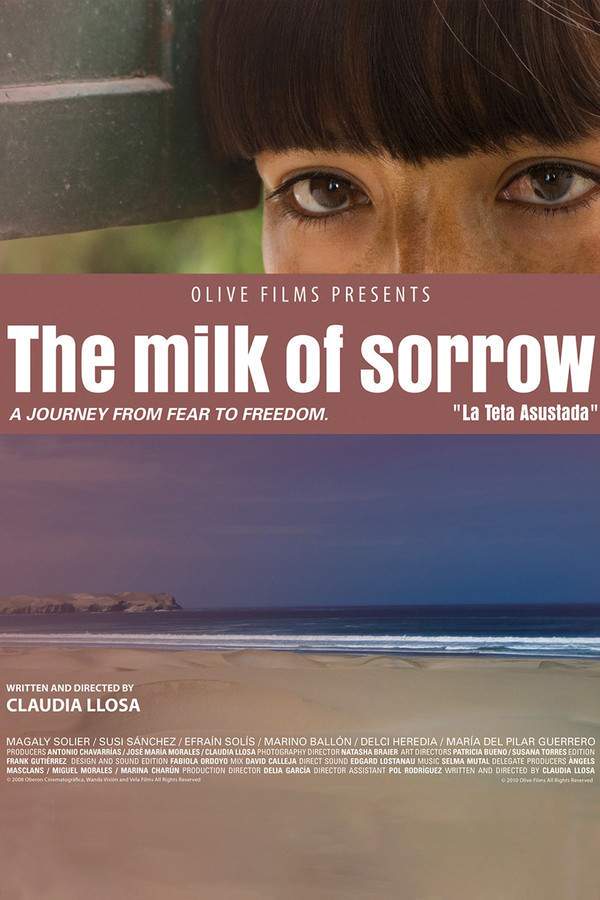
The Milk of Sorrow (2010) movie poster

Plot Summary

The Milk of Sorrow (2010) Plot Summary Explained

Release, runtime and language
2010 · 94 min · Spanish
Directed by
Claudia Llosa

Haunted by Peru's turbulent history, Fausta struggles with the loss of her mother and the unsettling truths about her own life. She discovers a deeply personal and shocking way she has dealt with past trauma, forcing her to confront painful memories and secrets. The film explores themes of fear, liberation, and the difficult journey toward healing and self-discovery.

On this page (4)
  1. 1 What happens: full plot
  2. 2 Plot questions answered
  3. 3 Movie threads
  4. 4 Every angle

Full plot summary · contains spoilers

What Happens in The Milk of Sorrow: Full Plot Summary

The whole story of The Milk of Sorrow (2010) explained, from the opening scene to the final frame: every key event, every twist and what it all adds up to. Read it as a quick recap before the sequel, to check a scene you missed, or to finally understand what really happened.

An elderly woman serenades the world with a poignant song as she lies on her deathbed, recounting a harrowing tale of her own assault and the tragic loss of her husband. As she finishes her last note, she drifts away peacefully beside her daughter, Fausta (Magaly Solier).

Growing up ensconced in the haunting stories of Peru's internal conflict, which pitted the guerrilla group Sendero Luminoso against the government, Fausta has developed an overwhelming fear of men and the threat of rape. In a desperate attempt to shield herself, she has resorted to placing a potato inside her vagina, which, despite affecting her health, she adamantly refuses to have removed by medical professionals.

After the passing of her mother, Fausta finds herself in a dire financial situation, unable to afford the costs associated with transporting her mother’s body back to their village for a proper burial. To alleviate this burden, she secures a job in the home of a talented pianist, Aída (Susi Sánchez), who is struggling to finish a composition for an upcoming recital.

Upon discovering Fausta’s innate talent for songwriting, Aída seizes the opportunity to motivate her by offering a valuable string of pearls in exchange for a completed song. Fausta, desperate for the money needed for her mother’s funeral, willingly accepts the challenge.

On the night of the performance, Aída delights the audience with Fausta's song, garnering thunderous applause. However, as they leave the venue, Fausta inadvertently mentions the song's success. Fearing that her secret of not being the true composer will be exposed, Aída cruelly ejects Fausta into the dark streets of Lima, leaving her alone.

Following her cousin's wedding, Fausta experiences another traumatic encounter when her uncle intrudes upon her slumber, pressing her to break free from the shackles of fear that have imprisoned her life, much like her late mother.

In a powerful conclusion to her journey, Fausta resolves to undergo the operation to have the potato safely removed and chooses to bury her mother near the ocean—a significant step towards embracing her life without the shadow of her past fears looming over her. It is through this act that Fausta signals her intention to finally move forward, leaving behind the weight of her anguish.

Last updated: November 08, 2024 at 01:43

Was this helpful?

Plot questions answered

The Milk of Sorrow Plot Explained: Your Questions Answered

The questions people ask most about The Milk of Sorrow (2010): what happens in the confusing scenes, why the characters do what they do, the twists, hidden details and what the ending means. Each answer contains spoilers.

Q1

Why does Fausta keep a potato inside her vagina?

Fausta places a potato inside her vagina as a misguided attempt to protect herself from sexual assault. This stems from the intense fear she developed growing up in Peru during the violent conflict with Sendero Luminoso, where rape was used as a weapon of terror. The potato represents her desperate, irrational attempt to make herself 'unusable' to potential attackers, though it causes her serious health problems.

  • fausta
  • potato
  • protection
  • sexual assault
  • trauma
  • peru
  • senderos luminoso
Q2

Why does Fausta refuse to have the potato removed by doctors?

Fausta refuses medical intervention because the potato has become a psychological security blanket, a physical manifestation of her trauma. Removing it would mean confronting her fears directly, which she feels unprepared to do. Her stubborn refusal represents the深度 of her psychological imprisonment and the hold that her traumatic past has on her ability to function.

  • fausta
  • medical
  • potato
  • trauma
  • fear
  • psychological
Q3

Why does Aída kick Fausta out after the concert?

Aída kicks Fausta out because she fears her secret will be exposed. When Fausta mentions the song's success after the recital, Aída realizes that others now know Fausta was involved in its creation. Since Aída presented the song as her own composition to build her reputation, she cruelly discards Fausta to protect her own credibility and career, showing Aída's selfishness and betrayal.

  • aida
  • betrayal
  • concert
  • fausta
  • song
  • composer
  • exposure
Q4

Why does Fausta bury her mother near the ocean instead of their village?

Fausta chooses to bury her mother near the ocean as a symbolic act of releasing her past burdens. Throughout the film, the ocean represents freedom and the possibility of moving forward. By choosing this location over the traditional village burial, Fausta signals her intention to break free from the historical traumas and familial patterns that have defined her life.

  • mother
  • burial
  • ocean
  • fausta
  • release
  • freedom
  • tradition
Q5

Why is Fausta so afraid of men?

Fausta's overwhelming fear of men developed from growing up during Peru's internal conflict with Sendero Luminoso, a guerrilla group that committed widespread sexual violence against women. The stories of these atrocities became deeply embedded in her psyche, manifesting as a paralyzing fear that she equates with survival itself, hence her desperate decision to use the potato as a barrier.

  • fausta
  • fear
  • men
  • peru
  • senderos luminoso
  • sexual violence
  • trauma
Q6

What happens with Fausta's uncle at the wedding?

After her cousin's wedding, Fausta's uncle intrudes upon her while she's sleeping and urges her to break free from her fears. This disturbing encounter mirrors the patterns of abuse and intrusion that plagued her late mother, creating another traumatic moment that pushes Fausta toward her eventual decision to change. The uncle represents the continuation of generational trauma.

  • fausta
  • uncle
  • wedding
  • trauma
  • generational
  • intrusion
Q7

Why does Fausta finally decide to have the potato removed?

Fausta decides to have the potato removed as a turning point in her healing journey. The accumulation of experiences, her mother's death, her exploitation by Aída, and the traumatic encounter with her uncle, forces her to confront the fact that the potato is not protection but a prison. Removing it symbolizes her reclamation of bodily autonomy and her commitment to living rather than merely surviving.

  • fausta
  • potato
  • healing
  • decision
  • liberation
  • body autonomy
Q8

What is the Milk of Sorrow and what does it represent?

The Milk of Sorrow is a Peruvian folk concept about inherited trauma, believed to be passed through breast milk from mothers who have experienced grief or violence. The film uses this theme literally through Fausta's mother, who sang the song about her assault while dying, passing her trauma to Fausta. The 'milk of sorrow' represents how historical and personal violence echoes through generations of Peruvian women.

  • milk of sorrow
  • trauma
  • inheritance
  • peru
  • folk
  • generation
  • mother
Q9

Why does Aída offer Fausta pearls in exchange for a song?

Aída offers Fausta a valuable string of pearls in exchange for a completed song because she is struggling to compose anything for her upcoming recital. When she discovers Fausta's natural talent for songwriting, she sees an opportunity to use Fausta's creativity to save her own performance. The offer is tempting to Fausta because she desperately needs money for her mother's funeral expenses.

  • aida
  • pearls
  • song
  • composition
  • opportunity
  • exploitation
Q10

Why can't Fausta afford her mother's burial?

Fausta cannot afford the costs to transport her mother's body back to their village for a proper burial. This financial hardship forces her to seek employment, leading her to work for Aída. The inability to give her mother a proper burial adds to Fausta's emotional burden and creates the central conflict that drives her to accept Aída's exploitative deal.

  • fausta
  • money
  • burial
  • funeral
  • transport
  • financial
  • hardship

Movie threads

More Movies Like The Milk of Sorrow, by Mood & Story

Curated lists built around what makes The Milk of Sorrow tick: the same mood, the same kind of story or the same emotional payoff. Each list explains why these movies belong together.

Movies about intergenerational trauma like The Milk of Sorrow

Stories where the past's silent wounds shape a character's present and future. If you were moved by The Milk of Sorrow's exploration of inherited pain, you'll find similar powerful dramas here. These films delve into how personal trauma is shaped by historical events and family history, following quiet, introspective characters on difficult journeys toward healing and self-discovery.

  • somber
  • contemplative
  • haunting
  • oppressive
  • anxious
  • melancholic
  • Tone: melancholic, somber, contemplative
  • Pacing: slow, deliberate, introspective
Why these movies?

The story pattern: Narratives in this thread typically follow a protagonist grappling with a psychological burden they've inherited but may not fully understand. The central conflict is often internal, as they uncover painful truths about their family or cultural history. The arc involves a slow process of confronting these shadows, leading to a release that is often bittersweet—a step towards freedom that is weighed down by the suffering it took to get there.

Why they belong together: These films are grouped together because they share a profound focus on the legacy of trauma, a melancholic and somber tone, and a slow, deliberate pacing that allows for deep immersion into a character's internal world. They prioritize emotional weight and psychological realism over fast-paced plot, creating a cohesive experience of quiet intensity.


Slow-burn character studies similar to The Milk of Sorrow

Intimate portraits of characters grappling with deep-seated fear and profound grief. For fans of The Milk of Sorrow's patient, introspective approach. This collection features movies with slow pacing and a heavy, melancholic mood, centered on a character's internal battle with trauma, grief, or fear. If you like films that prioritize emotional depth and psychological realism over fast plots, explore these titles.

  • slow burn
  • anxious
  • contemplative
  • haunting
  • somber
  • psychological
  • Tone: melancholic, anxious, bittersweet
  • Pacing: slow burn, deliberate, internal
Why these movies?

The story pattern: The narrative pattern is a linear but deeply internalized journey. A protagonist, often isolated or withdrawn, carries a significant psychological burden. The plot unfolds slowly through observational scenes and symbolic gestures, building towards a climactic moment of personal reckoning that is cathartic but rarely provides a simple, happy resolution. The ending typically acknowledges the pain endured while offering a glimmer of hard-won hope.

Why they belong together: These films are united by their slow pacing, heavy emotional weight, and a tone that is consistently melancholic or somber. They share a focus on a single character's profound internal struggle, using a minimalist plot to maximize psychological impact. The viewing experience is defined by its contemplative, often haunting vibe.

Every angle

The Milk of Sorrow (2010) Explained: Plot, Timeline & Characters

Everything about The Milk of Sorrow in one place: what happens in the plot summary, the timeline in chronological order, the characters and meaning and a spoiler-free summary. What's After the Movie adds the cast, box office and post-credit scenes.

Coming soon on iOS and Android

The Plot Explained Movie Summary App

Plot summaries, endings explained and timelines on your phone. Catch up on any movie in minutes, save your favorites and never miss a twist again.

Be the first to know when we launch. Your email stays private, always.

Learn more about the app