Plot Explained Spoilers guaranteed!
Plot Explained

Browse by genre

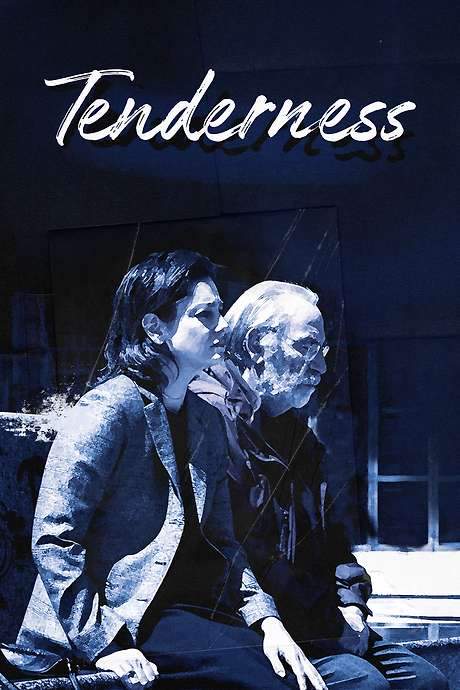
Tenderness (2017) movie poster

Plot Summary

Tenderness (2017) Plot Summary Explained

Release, runtime and language
2017 · 103 mins · Italian
Loading streaming availability…
Directed by
Gianni Amelio
Starring
Greta Scacchi, Renato Carpentieri, Giovanni Esposito, Elio Germano, Giovanna Mezzogiorno, Carmen Pommella

After a heart attack and hospital stay, Lorenzo returns to his apartment in Naples. While heading upstairs, he encounters Michela, a vibrant young woman who’s locked out of her new apartment across the hall. The cynical, reclusive retired lawyer is initially reluctant to help, but her spontaneous charm gradually melts his hardened exterior. He finds himself befriending Michela, her husband Fabio, and their children, rediscovering a sense of connection and empathy he thought he’s lost.

On this page (5)
  1. 1 Where to watch
  2. 2 What happens: full plot
  3. 3 Plot questions answered
  4. 4 Movie threads
  5. 5 Every angle
Loading streaming availability…

Full plot summary · contains spoilers

What Happens in Tenderness: Full Plot Summary

The whole story of Tenderness (2017) explained, from the opening scene to the final frame: every key event, every twist and what it all adds up to. Read it as a quick recap before the sequel, to check a scene you missed, or to finally understand what really happened.

Lorenzo, Renato Carpentieri, an elderly retired lawyer, has just had a heart attack and finds himself adrift in the hospital and at home, where the distance with his two children, Elena and Saverio, is palpable. He has no real connection with them, and the only warmth in his life seems to come from Francesco, Elena's son from a past in Egypt, whom he remembers with a quiet fondness. Back home, a new domestic chapter begins as Lorenzo meets Michela, his neighbor who moved in with her husband Fabio and their two children to the apartment next to his while he was in hospital. Michela, Micaela Ramazzotti with a soft, inviting presence, encourages him to smile again and gradually becomes a comforting, affectionate presence in his solitary routine.

Lorenzo learns that Fabio, a neurotic engineer, struggles to bond with his own children, mirroring the emotional distance that has long marked his own relationship with Elena and Saverio. This discovery deepens Lorenzo’s sense of shared fragility across generations, and he confides, during a quiet moment with Michela, that when his children were small he loved them deeply, but that love faded as they grew up. Michela suggests that this detachment could be a psychological defense against the pain of watching his children suffer, a theory that unsettles him and unsettles the room itself. He leaves the house that Sunday burdened by this realization, setting the stage for what follows.

That evening, the world shifts with shocking suddenness: Fabio, the neighbor’s husband, has massacred his own children and taken his own life. Michela survives but is hospitalized, gravely damaged, and Lorenzo begins visiting her daily in a bid to offer protection and presence. During this painful period, he encounters Aurora, Fabio’s mother, a woman whose paranoia and strained relationships stretch back to her own youth, and he reconnects with Rossana, his former lover, whose recent breakup appears to have intensified Lorenzo’s own sense of loss and missed chances. The revelations keep piling up: Lorenzo is not Michela’s father, a truth that brings him a restraining order and exposes a past where, as a practicing lawyer, he had won many cases while at times aiding false invalids or schemes in service of the state. The calamity of Michela’s death follows, forcing Lorenzo to reckon with the consequences of his life choices, and his daughter Elena—who had long worried about him—begins to feel the weight of unresolved pain and the real risk of losing him.

As the days pass, Lorenzo’s world grows quieter and more unsettled. He goes to court and bears witness to Elena’s work as an interpreter during a trial, a moment that blends professional duty with family ties. When the session ends, Elena steps out of the courthouse, and she finds her father waiting on a bench. They sit together in quiet, and after a long pause he reaches out and shakes her hand, a restrained, hopeful gesture that hints at a fragile possibility of reconciliation and a future where silence might finally bend toward understanding.

Last updated: October 09, 2025 at 15:52

Was this helpful?

Plot questions answered

Tenderness Plot Explained: Your Questions Answered

The questions people ask most about Tenderness (2017): what happens in the confusing scenes, why the characters do what they do, the twists, hidden details and what the ending means. Each answer contains spoilers.

Q1

Why was Lorenzo estranged from his children?

Lorenzo became emotionally detached from his children Elena and Saverio after they grew up. During a conversation with Michela, he admitted that while he loved them deeply when they were small, that love faded as they grew older. Michela suggested this detachment might be a psychological defense against the pain of watching his children suffer, a theory that deeply unsettled him.

  • Lorenzo
  • Elena
  • Saverio
  • estrangement
  • emotional detachment
  • children
Q2

Why did Fabio kill his children and take his own life?

The precise motivation behind Fabio's massacre is not fully explained in the film, but several clues suggest his psychological state. Lorenzo notices that Fabio struggles to bond with his own children, mirroring the emotional distance Lorenzo experienced with his own family. The tragedy occurs on the same Sunday that Lorenzo confesses his own pattern of detachment to Michela, suggesting the evening may have been triggered by Fabio's own crisis or despair.

Foreshadowing: Earlier in the film, Lorenzo observes Fabio's inability to connect with his children, a parallel to Lorenzo's own emotional distance.

  • Fabio
  • massacre
  • children
  • suicide
  • family tragedy
  • psychological breakdown
Q3

Why did Lorenzo get a restraining order?

After the tragedy, it was revealed that Lorenzo is not Michela's biological father. This revelation, combined with evidence of his past conduct as a lawyer, prompted the authorities to issue a restraining order against him. The order suggests the investigation into his relationship with Michela uncovered concerning circumstances beyond simple emotional connection.

  • Lorenzo
  • restraining order
  • Michela
  • legal order
  • investigation
Q4

What did Lorenzo do as a lawyer that came back to haunt him?

During his career as a practicing lawyer, Lorenzo won many cases, but he also aided false invalids and engaged in various schemes that cheated the state. These past sins surfaced after the tragedy with Michela, exposing a darker chapter in his life that he had kept hidden. This revelation adds to his sense of guilt and complicates his attempts at redemption.

  • Lorenzo
  • lawyer
  • fraud
  • state cheating
  • past crimes
Q5

Why did Lorenzo visit Michela every day after the massacre?

After Fabio killed his children and himself, Michela survived but was hospitalized in critical condition. Lorenzo began visiting her daily, acting as a protective figure and offering his presence during her recovery. His visits represented an attempt to provide the warmth and connection he had failed to offer his own family, and to honor the bond they had developed before the tragedy.

Foreshadowing: Michela had been the one to draw Lorenzo out of his isolation with her kindness and affection.

  • Lorenzo
  • Michela
  • hospital visits
  • protection
  • compassion
Q6

How did Michela die?

Michela died in the hospital from injuries sustained during the massacre. Though she survived the initial attack by Fabio, she eventually succumbed to her wounds. Her death marked the final severing of the fragile emotional ties Lorenzo had formed, leaving him devastated and prompting him to withdraw from his home.

  • Michela
  • death
  • hospital
  • injuries
  • massacre
Q7

Why did Lorenzo leave the house after his confession to Michela?

After Lorenzo admitted to Michela that his love for his children faded as they grew up, he abruptly left the house that Sunday evening. This departure signaled his growing impulse to detach from emotional connections, perhaps fleeing from the uncomfortable truth Michela had revealed about his psychological defense mechanisms. The very same evening, Fabio's tragedy occurred.

  • Lorenzo
  • confession
  • Sunday
  • departure
  • emotional retreat
Q8

Who is Aurora and what is her relationship to Fabio?

Aurora is Fabio's mother, a paranoid woman who struggled to maintain healthy relationships even in her youth. Lorenzo encounters Aurora in the hospital corridor during Michela's hospitalization. Her presence broadens the network of people affected by Fabio's tragedy and adds another layer of psychological complexity to the story's exploration of family dysfunction.

  • Aurora
  • Fabio's mother
  • paranoia
  • family
  • hospital
Q9

What happens between Lorenzo and Elena at the end of the movie?

At the end of the film, Lorenzo attends court where his daughter Elena works as an interpreter. After the session ends, Elena finds her father sitting on a bench outside. They sit together in quiet companionship, and after a long pause, Lorenzo reaches out and shakes her hand. This restrained gesture represents a fragile, hopeful moment of reconciliation between the estranged father and daughter.

Foreshadowing: The entire film traces Lorenzo's journey from isolation toward reconnection, beginning with his meeting Michela.

  • Lorenzo
  • Elena
  • reconciliation
  • handshake
  • court
  • ending
Q10

Why did Michela become so important to Lorenzo?

Michela became important to Lorenzo because she represented the warmth and human connection he had lost. After his heart attack and hospitalization, he was living in isolation, even refusing to speak with his children. Michela's spontaneous charm and affectionate presence gradually melted his cynical exterior, helping him rediscover joy and a sense of belonging he thought he had lost.

Foreshadowing: From their first encounter when Michela encouraged him to smile, she began breaking through Lorenzo's emotional walls.

  • Michela
  • Lorenzo
  • connection
  • friendship
  • warmth
  • neighbor

Movie threads

More Movies Like Tenderness, by Mood & Story

Curated lists built around what makes Tenderness tick: the same mood, the same kind of story or the same emotional payoff. Each list explains why these movies belong together.

Movies about intergenerational friendship like Tenderness

Stories where isolated individuals find fragile connections with those much younger or older. If you liked the delicate bond between Lorenzo and Michela in Tenderness, this collection features similar movies about unexpected friendships across generations. These dramas explore themes of aging, loneliness, and the fragile hope that comes from finding connection in unexpected places.

  • tender
  • melancholic
  • introspective
  • quiet
  • reflective
  • hopeful
  • Tone: bittersweet, melancholic, tender
  • Pacing: slow, reflective
Why these movies?

The story pattern: A narrative where a reclusive, often older character, set in their ways and burdened by past losses, has their worldview challenged by a vibrant, younger individual. The story unfolds through small, meaningful interactions, leading to a gradual thawing of the protagonist's heart and a bittersweet acknowledgment of shared humanity, though not always a perfectly happy resolution.

Why they belong together: Movies are grouped here for their shared focus on the emotional dynamics of cross-generational relationships. They share a similar tone of tender melancholy, a slow, reflective pace, and a heavy emotional weight centered on themes of isolation and the redemptive potential of human connection.

Quiet dramas about grief and healing like Tenderness

Character studies where profound loss is met with tentative, incomplete healing. For viewers seeking movies similar to Tenderness that explore heavy themes of loss and the difficult path toward healing. These films share a slow, introspective pace, a bittersweet tone, and a focus on the psychological weight of trauma and the fragile gestures that lead to reconciliation.

  • somber
  • melancholic
  • heavy
  • introspective
  • quiet
  • tender
  • Tone: bittersweet, melancholic, somber
  • Pacing: slow, deliberate
Why these movies?

The story pattern: The narrative pattern follows a protagonist deeply affected by a past or current traumatic loss. The plot unfolds slowly, focusing on their internal struggle and isolation. The journey involves encountering other characters or situations that challenge their despair, leading to a conclusion that is neither fully tragic nor happily resolved, but instead acknowledges a fragile, bittersweet possibility for moving forward.

Why they belong together: These movies are united by their solemn, reflective mood, their handling of heavy themes like tragic loss and loneliness, and their commitment to a realistic, emotionally complex—rather than neatly resolved—ending. The similarity lies in the specific emotional mix of deep sadness tempered by small, earned moments of tenderness.

Every angle

Tenderness (2017) Explained: Plot, Timeline & Characters

Everything about Tenderness in one place: what happens in the plot summary, the timeline in chronological order, the characters and meaning and a spoiler-free summary. What's After the Movie adds the cast, box office and post-credit scenes.

Coming soon on iOS and Android

The Plot Explained Movie Summary App

Plot summaries, endings explained and timelines on your phone. Catch up on any movie in minutes, save your favorites and never miss a twist again.

Be the first to know when we launch. Your email stays private, always.

Learn more about the app