Plot Explained Spoilers guaranteed!
Plot Explained

Browse by genre

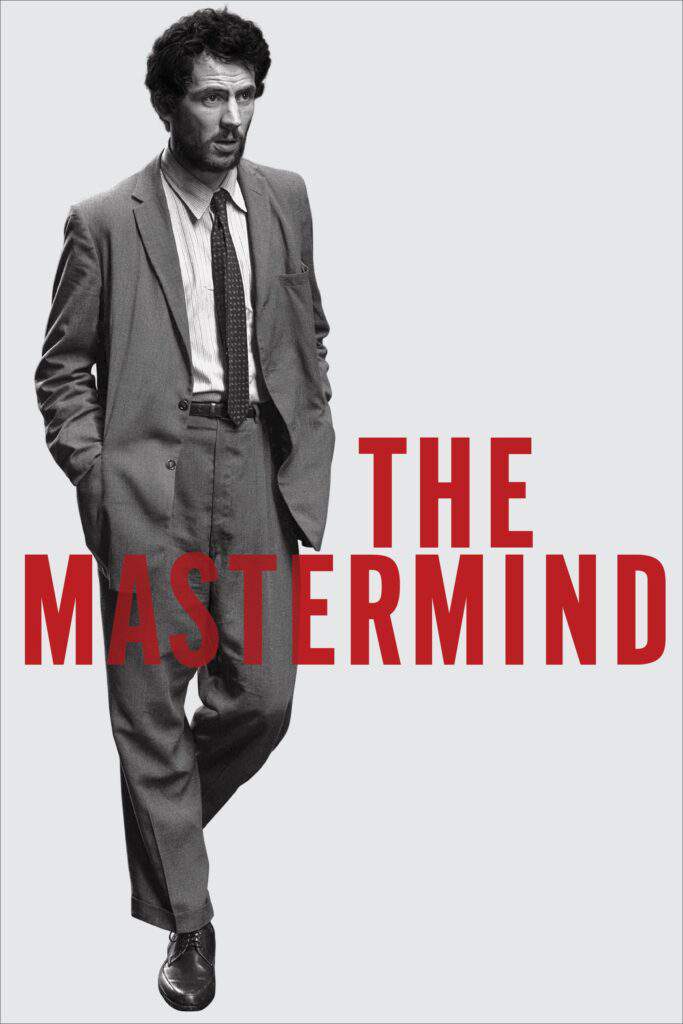
The Mastermind (2025) movie poster

Plot Summary

The Mastermind (2025) Plot Summary & Ending Explained

Release, runtime and language
2025 · 1 h 50 m
Echo score 48
JustWatch #5,529 16
Directed by
Kelly Reichardt
Starring
Bill Camp, Josh O'Connor, Hope Davis, Alana Haim, Matthew Maher, Carrie Lazar
Budget
$2M

Set in a quiet Massachusetts town in 1970, the film follows JB Mooney (Josh O’Connor), an unemployed carpenter who has turned to stealing modest art pieces. He meticulously plans his first major heist, but the job collapses, sending his orderly life into chaos and forcing him to face the consequences.

On this page (7)
  1. 1 Where to watch
  2. 2 What happens: full plot
  3. 3 Plot questions answered
  4. 4 How it ends
  5. 5 Movie threads
  6. 6 Movies like The Mastermind
  7. 7 Every angle

Where to watch

Where to Watch The Mastermind (2025)

Where can you watch The Mastermind? Stream, rent or buy it in the US, including on MUBI, Amazon Video and Apple TV Store: current JustWatch availability with up-to-date prices.

Streaming availability powered by JustWatch

Full plot summary · contains spoilers

What Happens in The Mastermind: Full Plot Summary

The whole story of The Mastermind (2025) explained, from the opening scene to the final frame: every key event, every twist and what it all adds up to. Read it as a quick recap before the sequel, to check a scene you missed, or to finally understand what really happened.

In 1970, James Blaine Mooney, an unemployed carpenter in Framingham, Massachusetts, hatches a plan to steal four Arthur Dove paintings from the town’s art museum. To pull off the heist, he borrows money from his parents and even asks his wife, Terri Mooney, for funds under the pretense of buying supplies for work, so he can pay three men who will help execute the job. The plan runs through two accomplices, Guy Hickey and Ronnie Gibson, while the getaway driver ultimately backs out after stealing a car for the job.

The trio drives to the museum and makes off with the paintings, with Gibson pulling a gun on a student doing homework and assaulting a security guard in the process. Back home, James Blaine Mooney proudly displays one of the stolen works in his living room, only to take it down after his father—who would later be a local judge—criticizes the thieves for their lack of ambition. He then conceals the paintings in a loft above a barn, preparing a container to hide the loot as police and FBI agents descend on his family to investigate.

The investigation intensifies when Gibson names Mooney as the mastermind during his own arrest for a separate bank robbery. Mooney denies any involvement and asks Terri Mooney to move their sons, Carl and Tommy, to his parents’ house, though young Tommy resists leaving. Meanwhile, Guy Hickey presses Mooney for more money, and a roadside meeting with Tommy becomes a trap: an organized crime outfit abducts Mooney and forces him to guide them to the paintings’ whereabouts.

With his role in the heist now public, Mooney goes into hiding with friends from art school, Fred and Maude. While Fred is intrigued by the sensational story, Maude suspects Mooney’s true plan and confronts him, realizing he intended to use their old professor—an admirer of Dove—as a fence to move the paintings. Maude urges him to disappear, but Mooney resists Fred’s suggestion to hide out at his brother’s Toronto commune and instead heads to Cleveland to stay with other friends. There, he learns those friends had left town the day before and ends up hitchhiking toward Cincinnati.

Ultimately, Mooney discovers that the paintings have been recovered and returned to the museum. He phones Terri, attempting to justify his actions and asking for money, but she hangs up. Unable to afford the bus fare to Toronto, he steals an elderly woman’s pocketbook and melts into a crowd of anti-war protesters. The police crack down on the rally, and Mooney is arrested after protesting—and despite his protests—being placed in the back of a squad car.
Last updated: December 04, 2025 at 15:32

Was this helpful?

Plot questions answered

The Mastermind Plot Explained: Your Questions Answered

The questions people ask most about The Mastermind (2025): what happens in the confusing scenes, why the characters do what they do, the twists, hidden details and what the ending means. Each answer contains spoilers.

Q1

Why does J.B. Mooney decide to steal the Arthur Dove paintings?

J.B. Mooney, an unemployed carpenter in Framingham, Massachusetts, hatches the plan to steal four Arthur Dove paintings from the local art museum. Having lost his job, he turns to criminal activity as a way to improve his circumstances, viewing the heist as his opportunity to achieve something significant and escape his dire financial situation.

Foreshadowing: The film establishes early that Mooney is desperate for work and money, setting the stage for his criminal decision.

  • jb mooney motivation
  • art heist
  • unemployed carpenter
  • arthur dove paintings
Q2

Why does the getaway driver back out of the heist?

The planned getaway driver ultimately backs out after stealing a car for the job, forcing J.B. Mooney to drive the two thieves, Guy Hickey and Ronnie Gibson, to the museum himself. This last-minute change creates additional risk and complexity in the already risky operation.

  • getaway driver
  • heist planning
  • framingham museum
Q3

Why does Mooney display the stolen painting then take it down?

Mooney proudly displays one of the stolen Arthur Dove paintings in his living room, showing off his success. However, after his father, a future local judge, criticizes the thieves for their lack of ambition, Mooney removes the painting and conceals all the works in a barn loft. His father's dismissal of the theft as unambitious wounds Mooney's pride.

Foreshadowing: Mooney's sensitivity to his father's opinion reveals his deep need for validation, which drives much of his decision-making.

  • mooney father
  • arthur dove painting
  • barn loft
  • pride
Q4

How does police connect J.B. Mooney to the heist?

Ronnie Gibson, one of the accomplices, is arrested for a separate bank robbery. During his arrest, Gibson names J.B. Mooney as the mastermind behind the art museum heist, directly implicating him in the crime and triggering an FBI investigation into the Mooney family.

  • ronnie gibson arrest
  • fbi investigation
  • mooney arrested
  • heist mastermind
Q5

Why does organized crime abduct J.B. Mooney?

Guy Hickey pressures Mooney for more money from the heist, and a roadside meeting with Mooney's son Tommy turns into a trap. An organized crime outfit abducts Mooney and forces him to guide them to the paintings' location, believing they can steal the valuable artwork for themselves.

Foreshadowing: Hickey's demand for money earlier creates the tension that leads to this dangerous confrontation.

  • organized crime
  • abduction
  • guy hickey
  • paintings location
Q6

Why does Maude confront J.B. Mooney about his plan?

While hiding with Fred and Maude, his art-school friends, Maude privately confronts Mooney and deduces his true intention: he planned to use their old professor, an admirer of Arthur Dove, as a fence to sell the paintings. Maude sees through his scheme and urges him to disappear before things worsen.

Foreshadowing: Maude's ability to read Mooney's true motivations highlights how well she knows him from their shared past.

  • maude
  • art school friends
  • professor fence
  • arthur dove
Q7

Why does Mooney reject the Toronto commune hideout?

Fred suggests that Mooney hide out at his brother's Toronto commune, a relatively safe option. However, Mooney rejects this suggestion and instead travels to Cleveland to stay with other friends, possibly hoping to maintain more independence or believing he can outrun the pursuit through different connections.

  • toronto commune
  • cleveland
  • friends
  • flight
Q8

What happens to the stolen paintings after the heist?

The paintings are ultimately recovered by authorities and returned to the museum. Mooney learns of this recovery upon arriving in Cleveland, meaning all his planning and risk-taking yields nothing, he loses the paintings without any financial gain.

  • paintings recovered
  • museum
  • heist failed
Q9

Why does Terri hang up on J.B. Mooney when he calls?

After the paintings are recovered and returned to the museum, Mooney calls his wife Terri in an attempt to justify his actions and ask for money. Terri simply hangs up on him, signaling the complete collapse of his family support network and her final rejection of his criminal behavior.

Foreshadowing: Earlier, Mooney had asked Terri to move their sons to his parents' house, and young Tommy resisted leaving, hinting at family tensions.

  • terri mooney
  • family rejection
  • money request
Q10

Why does Mooney steal an elderly woman's pocketbook?

Unable to afford the bus fare to Toronto after his plan collapses, Mooney steals an elderly woman's pocketbook on the street. This desperate act marks his further descent into petty crime, as he struggles to survive financially without the resources or support he once had.

  • pocketbook theft
  • desperation
  • finances
Q11

Why is J.B. Mooney arrested at the anti-war protest?

Mooney escapes into a crowd of anti-Vietnam War protesters, hoping to blend in and avoid capture. However, police violently break up the rally and arrest him along with several protesters. Despite his protests, he is placed in the back of a police van, ending the film with his capture for a petty crime rather than the grand theft he originally planned.

Foreshadowing: The film is set in 1970, a time of significant anti-war protests, making this ending feel both random and tragically fitting.

  • anti-war protest
  • arrest
  • 1970
  • vietnam war

Ending explained

What Happens at the End of The Mastermind?

How The Mastermind (2025) ends, in short: the final scene, the last twist and what it means for the characters. The full ending explained, with every spoiler, lives on its own page.

Read the full ending explained

James Blaine Mooney, the self‑styled “mastermind,” finally sees his fantasy crumble. After the daring daylight theft of several Arthur Dove canvases, the police are tipped off when Ronnie Gibson, the one‑handed gunman who helped pull the job, is arrested for an unrelated bank robbery and confesses that James had been the brains behind the art heist. That confession sends detectives to James’s doorstep, but without a warrant they can only question him while his world begins to fall apart.

At the same time, the local gang that Guy Hickey has been talking to learns the whereabouts of the stolen works. They force James to reveal the hidden stash on his family’s farm and then take the paintings for themselves, leaving James with nothing but a ruined reputation. His parents, especially his judge father, dismiss the crime as amateurish, and his wife Terry, oblivious to the whole scheme, is forced to flee with their children to stay with relatives. James watches his son Tommy, confused and scared, as police men haul him away, underscoring how his reckless pride has cost his family dearly.

Continue reading the ending (2 more paragraphs)

Desperate and penniless, James tries to hop from one friend’s house to another, hoping to find a way out. He is turned away by Maude, a former classmate, and even his old college buddy Fred, who admired the audacity of the plan, forces him out. With no money for a legitimate escape, he steals a purse on a street protest and eventually boards a bus that is heading toward the Canadian border, hoping to hide in a commune his friend mentions.

The film’s closing scene shows James caught up in a massive anti‑war demonstration. Police swarm the crowd, arresting everyone indiscriminately, and James is hauled in alongside the protesters. He protests his innocence, insisting he had nothing to do with the political rally, but the officers are uninterested. In that moment his own self‑crafted illusion of being a clever, untouchable mastermind is stripped away; his privilege cannot shield him from the consequences of his own folly. The ending leaves him detained, the stolen paintings gone, his family shattered, and the audience with the stark reminder that his hubris has finally caught up with him.

The Mastermind ending explained in full

Movie threads

More Movies Like The Mastermind, by Mood & Story

Curated lists built around what makes The Mastermind tick: the same mood, the same kind of story or the same emotional payoff. Each list explains why these movies belong together.

Bleak crime spirals like in The Mastermind

Stories of desperate plans collapsing under the weight of their own ambition. If you liked the anxious, regretful tone of The Mastermind, explore other movies about desperate plans that backfire spectacularly. These films share a steady pace, heavy emotional weight, and a focus on the irreversible consequences of a life of crime, leading to sad or bleak endings.

  • downward spiral
  • desperate
  • gritty
  • regretful
  • anxious
  • melancholic
  • Tone: bleak, tense
  • Pacing: steady, methodical
Why these movies?

The story pattern: The narrative pattern centers on a protagonist's ambitious but flawed plan, often a crime, which fails early on. This initial failure triggers a cascade of negative consequences—financial ruin, broken relationships, and psychological collapse—propelling the character on a linear, inescapable path toward a grim conclusion.

Why they belong together: Movies are grouped here by their shared bleak tone, steady pacing that builds dread, and a central theme of self-destruction. They all feature a medium-intensity, character-driven focus on the emotional heaviness of watching a life disintegrate due to poor choices.

Gritty 1970s dramas like The Mastermind

Slow-burn portraits of desperation and failure set against a raw 1970s America. Fans of The Mastermind's 1970s Massachusetts setting and its steady, character-focused pacing will find similar movies here. These films are defined by their gritty, authentic atmosphere and stories of everyday people grappling with financial desperation and personal collapse in a specific historical context.

  • gritty
  • melancholic
  • desperate
  • anxious
  • period piece
  • raw
  • Tone: gritty, melancholic
  • Pacing: steady, deliberate
Why these movies?

The story pattern: These narratives are often straightforward, focusing on a single protagonist's struggle against a harsh socioeconomic backdrop. The era's distinct visual and cultural texture amplifies themes of isolation and the collapse of the American dream, resulting in a melancholic and emotionally heavy journey.

Why they belong together: This grouping prioritizes a coherent aesthetic and mood: the gritty, melancholic feel of 1970s America combined with a steady, character-driven pace. The shared elements are the historical setting as a mood-setter and the focus on internal, personal crises rather than large-scale action.

If you liked this

Movies Like The Mastermind

Similar movies to The Mastermind: the same genre, themes or kind of story. Each one comes with its own plot summary, timeline and ending explained.

Browse all movie summaries

Every angle

The Mastermind (2025) Explained: Plot, Ending, Timeline & Characters

Everything about The Mastermind in one place: what happens in the plot summary, the timeline in chronological order, the characters and meaning, the ending explained and a spoiler-free summary. What's After the Movie adds the cast, box office and post-credit scenes.

Coming soon on iOS and Android

The Plot Explained Movie Summary App

Plot summaries, endings explained and timelines on your phone. Catch up on any movie in minutes, save your favorites and never miss a twist again.

Be the first to know when we launch. Your email stays private, always.

Learn more about the app