










Plot Explained Spoilers guaranteed!
Plot Explained

Browse by genre

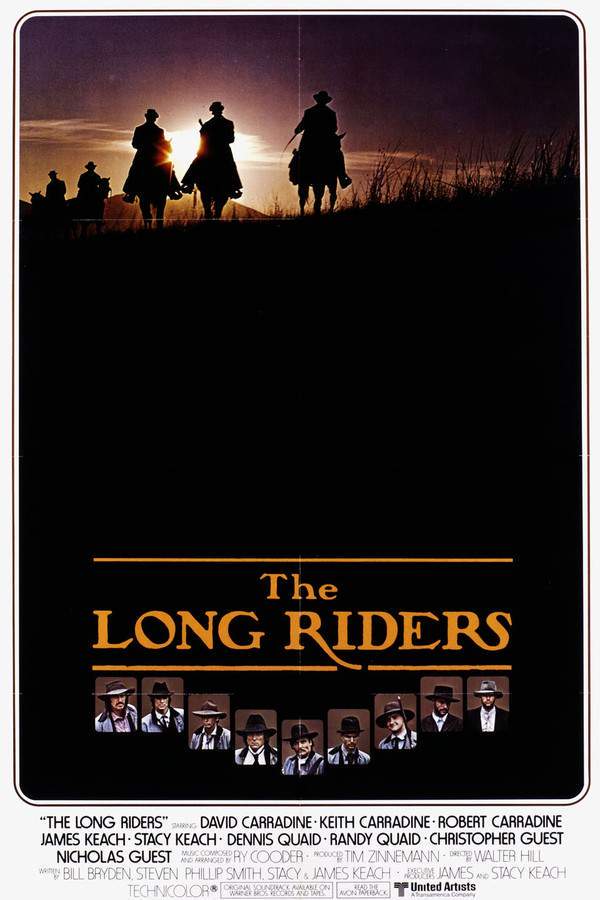
The Long Riders (1980) movie poster

Timeline

The Long Riders (1980) Timeline Explained – Every Event in Order

Release, runtime and language
1980 · 100 min · English
JustWatch #9,419 338
Directed by
Walter Hill
Starring
David Carradine, Dennis Quaid, Stacy Keach

A gritty Western depicts the tumultuous journey of the James-Younger Gang following a disastrous heist. After Jesse James insists they remain hidden, Ed Miller's impulsive actions create division within the group, leading the brothers to pursue individual paths. Drawn by the promise of money and a desire for retribution, they reunite for a risky Northfield bank robbery. The attempt fails, triggering a thrilling and lawless pursuit across the countryside.

On this page (6)
  1. 1 Where to watch
  2. 2 Events in order (13)
  3. 3 Timeline questions answered
  4. 4 Movie threads
  5. 5 Movies like The Long Riders
  6. 6 Every angle

Where to watch

Where to Watch The Long Riders (1980)

Where can you watch The Long Riders? Stream, rent or buy it in the US, including on fuboTV, MGM Plus and Tubi TV: current JustWatch availability with up-to-date prices.

Streaming availability powered by JustWatch

13 events in order · contains spoilers

The Long Riders Timeline: Events in Chronological Order

Every key event of The Long Riders (1980) in order, scene by scene, with when and where it takes place. Use it to untangle flashbacks, time jumps and parallel storylines, to refresh your memory before the sequel or to find the exact scene you are thinking of.

  1. Post-Civil War Rampage

    In the aftermath of the Civil War, the notorious James-Younger gang emerges as a significant threat in the Midwestern United States. Led by Jesse James, the gang begins a series of brazen bank and train robberies that draw the attention of law enforcement.

    Where
    Midwestern United States
  2. Deadly Bank Robbery

    During one such bank robbery, gang member Ed Miller loses his composure and opens fire, accidentally killing a bank clerk. This tragic incident prompts a chaotic shootout, resulting in Jesse sustaining injuries and ultimately leading to Ed's dismissal from the gang.

  3. The Relentless Pursuit

    Mr. Rixley, a determined detective from the Pinkerton agency, takes on the task of tracking the gang. His pursuit leads to the deaths of several individuals, including a Younger cousin and a young James brother, as well as unfortunate losses among his own men.

  4. Unrequited Love

    Jim Younger harbors feelings for a young woman named Beth but faces heartbreak when he learns of her engagement to Ed Miller. During the funeral of Jesse's younger brother, Jim persuades Beth to break off her engagement, leading her to ultimately marry Ed.

  5. The Northfield Heist Plan

    With plans for future robberies underway, Clell Miller proposes a bank heist in Northfield, Minnesota, set for September 1876. As news of their plans leaks, the local community heightens security in anticipation of the gang's arrival.

    When
    September 1876
    Where
    Northfield, Minnesota
  6. The Heist Goes Wrong

    When the gang attempts to rob the Northfield bank, they quickly discover that the vault is on a timer, preventing them from accessing the money. In the ensuing chaos, several shootings occur, resulting in the deaths of a cashier and an innocent bystander.

    Where
    Northfield, Minnesota
  7. Confrontation with Residents

    As the robbers attempt to flee the botched heist, they are met with gunfire from local residents defending their town. This violent confrontation leads to the deaths of two gang members, with Clell Miller suffering fatal injuries and Frank James wounded.

    Where
    Northfield, Minnesota
  8. Temporary Refuge

    The surviving gang members escape to a temporary camp in the woods to regroup and tend to their injuries. As pressure mounts from law enforcement, Jesse makes the difficult decision to abandon the injured members and continue fleeing.

    Where
    Woods near Northfield
  9. Flight to Missouri

    Jesse and Frank James eventually decide to return to Missouri. During their journey home, Jesse reveals plans to reform a new gang, despite Frank's obvious apprehension about the future and the law enforcement on their tail.

    Where
    Missouri
  10. Interrogation and Betrayal

    While Jesse remains on the run, the captured Younger brothers are interrogated by Mr. Rixley in prison. They refuse to divulge Jesse's location, demonstrating their loyalty to him even under pressure from law enforcement.

    Where
    Prison
  11. A Deadly Proposition

    Bob and Charley Ford, eager to join Jesse's new gang, are persuaded by Rixley to undertake a more sinister task. He offers them a substantial bounty of $15,000 to assassinate Jesse, presenting a tempting opportunity amid their perilous lives.

  12. The Assassination

    During a dinner at Jesse's home, Bob takes advantage of a moment when Jesse is distracted to gun him down. This shocking betrayal leads to Jesse's death, marking the end of the infamous outlaw's reign.

    Where
    Jesse's home
  13. Aftermath of Jesse's Death

    In the wake of Jesse's assassination, Frank James is filled with grief and anger. He chooses to surrender to law enforcement, negotiating for the right to take his brother's body home for burial, a request that Rixley reluctantly accepts.

Last updated: November 16, 2024 at 18:30

Was this helpful?

Timeline questions answered

The Long Riders Timeline Explained: Your Questions Answered

When does it happen, and why in that order? The questions people ask about the chronology of The Long Riders (1980): time jumps, flashbacks, cause and effect between scenes and the correct order of events, each answered with spoilers.

Q1

Why did Jesse James kick Ed Miller out of the gang?

Jesse dismissed Ed Miller from the gang after Ed acted impulsively during a bank robbery. When the gang was attempting a heist, Ed lost patience and opened fire, accidentally killing a bank clerk. This caused a chaotic shootout that left Jesse wounded. Jesse considered Ed's reckless behavior a liability that endangered the entire group, so he removed him despite Ed's brother Clell remaining loyal to the gang.

Foreshadowing: Earlier robberies had succeeded precisely because the gang maintained discipline and avoided unnecessary violence, making Ed's outburst a clear violation of their operational rules.

  • ed miller
  • jesse james
  • gang expulsion
  • bank robbery
  • dismissal
Q2

Why did the Northfield bank robbery go wrong?

The Northfield heist failed primarily because the bank's vault was secured with a time lock, making it impossible for the gang to access the money. When the robbers tried to force open the vault, they discovered it could not be opened quickly. This delay allowed townspeople to organize a defense, resulting in a violent confrontation where the gang was trapped and suffered heavy casualties.

Foreshadowing: Clell Miller had warned that the gang was riding into a dangerous situation, and the Pinkertons had already been alerted to their plans, putting the town on high alert before they arrived.

  • northfield heist
  • bank robbery
  • vault timer
  • failure
  • Minnesota
Q3

Why did Jesse James leave the wounded gang members behind?

When the gang was escaping from Northfield and the injured members couldn't keep pace, Jesse made the ruthless decision to abandon them so the rest could escape the closing posse. With law enforcement closing in rapidly, Jesse prioritized the survival of those who could ride rather than wait for the wounded. Frank initially resisted but was pushed by Cole to join Jesse in fleeing, leaving the injured behind to face capture or death.

Foreshadowing: This decision reflects Jesse's pragmatism and willingness to make hard choices for survival, a trait that had earlier helped the gang evade capture but now tested the limits of their brotherhood.

  • jesse james
  • abandoned
  • injured
  • wounded
  • escape
  • posse
Q4

Why did Bob and Charley Ford kill Jesse James?

The Ford brothers killed Jesse James for a $15,000 bounty offered by Pinkerton detective Rixley. Bob and Charley had been invited to join Jesse's new gang, but Rixley offered them a substantial payment to assassinate Jesse instead. During dinner at Jesse's home, Bob waited until Jesse was distracted adjusting a hanging picture, then shot him dead.

Foreshadowing: The Fords' willingness to join Jesse's new gang already suggested their loyalty was transactional, making them susceptible to Rixley's monetary offer.

  • bob ford
  • charley ford
  • assassination
  • bounty
  • betrayal
  • pinkerton
Q5

Why did Jim Younger convince Beth to break off her engagement to Ed?

Jim Younger had romantic feelings for Beth and was devastated to learn she was engaged to Ed Miller. At the funeral for Frank and Jesse's younger brother, Jim persuaded Beth to end her engagement to Ed, using the emotional circumstances of the funeral to convince her. Afterward, Beth married Jim instead of Ed, fulfilling his personal desire despite the complicated circumstances.

Foreshadowing: Jim's unrequited love for Beth had been established earlier, and his emotional manipulation at the funeral reveals how personal desire sometimes overcame loyalty to fellow gang members.

  • jim younger
  • beth
  • ed miller
  • love
  • engagement
  • wedding
Q6

What happened to the Younger brothers after the Northfield heist?

After the Northfield heist failed, the Younger brothers were captured by law enforcement while Jesse and Frank escaped. While imprisoned, they were interrogated by Pinkerton detective Rixley, who tried to force them to reveal Jesse's whereabouts. Despite intense pressure, the Youngers refused to betray Jesse, demonstrating loyalty to the end. They were eventually sentenced to prison for their crimes.

Foreshadowing: The Youngers' unwavering loyalty to Jesse had been a defining trait throughout the film, making their refusal to cooperate with Rixley consistent with their character.

  • younger brothers
  • captured
  • prison
  • interrogation
  • rixley
Q7

Why did Frank James surrender after Jesse was killed?

Frank James surrendered to authorities after witnessing Jesse's assassination by the Ford brothers. Consumed by grief and anger over his brother's betrayal and murder, Frank chose to turn himself in. He negotiated with Rixley to take Jesse's body home for burial, and Rixley reluctantly agreed to this final request. Rather than continuing to flee, Frank accepted the consequences of his life as an outlaw.

Foreshadowing: Frank had always been more cautious and conflicted about the outlaw life compared to Jesse, and his surrender shows how Jesse's death broke his spirit to continue fighting.

  • frank james
  • surrender
  • arrest
  • burial
  • death
  • grief
Q8

Why was Pinkerton detective Rixley so determined to catch the James-Younger gang?

Rixley was a Pinkerton detective tasked with bringing the James-Younger gang to justice. His relentless pursuit was driven by his official duty to apprehend dangerous outlaws. However, his campaign was marked by collateral damage, he killed a Younger cousin and the youngest James brother, and lost several of his own men. His aggressive tactics eventually led to his removal from the case when his blunders forced the Pinkertons to retreat.

Foreshadowing: Rixley's single-minded determination was established early in the film, setting the stage for his increasingly desperate measures that would eventually include bribery and assassination plots.

  • pinkerton
  • rixley
  • detective
  • pursuit
  • law enforcement
Q9

What caused the division within the James-Younger gang?

The division within the gang stemmed from Ed Miller's impulsive actions during the bank robbery that killed a clerk and wounded Jesse. After Jesse expelled Ed for this recklessness, the group's unity was fractured. Later, Jesse's decision to abandon the wounded at Northfield further divided the survivors, with some continuing to follow Jesse while others were captured or killed. The promise of money and retribution drew them back together for Northfield, but the failed heist ultimately scattered them for good.

Foreshadowing: The tension between individual survival and group loyalty had been present since Ed's dismissal, foreshadowing the final breakup of the gang.

  • division
  • split
  • conflict
  • ed miller
  • loyalty
  • northfield
Q10

Why did Cole Younger push Frank to flee with Jesse instead of staying behind?

Cole Younger urged Frank James to escape with Jesse rather than staying behind with the injured gang members. Despite their wounds from Northfield, Cole recognized that Jesse's plan to continue fleeing offered the best chance of survival. Cole understood that staying would mean capture or death, while fleeing, though risky, gave them a possibility of living to fight another day. Cole's push to keep Frank moving reflected his survival instinct even amid the gang's devastating defeat.

Foreshadowing: Cole had always been pragmatic about survival, unlike Jesse's more impulsive leadership, making his calculation to keep fleeing logical for his character.

  • cole younger
  • frank james
  • escape
  • fleeing
  • decision
Q11

How was Jesse James wounded during the bank robbery?

Jesse James was wounded during the disastrous bank robbery when Ed Miller opened fire on the clerk, triggering a shootout. The unexpected violence forced the gang into a rapid retreat, and Jesse was shot during the chaos. This incident not only injured Jesse but also led directly to his decision to remove Ed from the gang, fundamentally changing the group's dynamics.

Foreshadowing: The success of previous robberies depended on careful planning and controlled violence, making Ed's rash action a critical deviation from their operational methods.

  • jesse james
  • wounded
  • bank robbery
  • shootout
  • ed miller

Movie threads

More Movies Like The Long Riders, by Mood & Story

Curated lists built around what makes The Long Riders tick: the same mood, the same kind of story or the same emotional payoff. Each list explains why these movies belong together.

Fatalistic Outlaw Stories like The Long Riders

Stories of criminals whose reckless choices lead inexorably to a bleak, violent end. If you liked the grim, inevitable tragedy of The Long Riders, explore more movies about outlaw gangs and criminals on a collision course with fate. These films share a bleak tone, heavy emotional weight, and a narrative focused on the destructive consequences of a lawless life.

  • fatalistic
  • tragic
  • tense
  • lawless
  • desperate
  • oppressive
  • Tone: bleak, tragic, tense
  • Pacing: variable, building to chaos
Why these movies?

The story pattern: Narratives in this thread typically follow a linear path from ambition or rebellion toward catastrophic failure. The central conflict often stems from internal division, betrayal, or a single, disastrous miscalculation. The journey is one of escalating tension and loss, culminating in an ending that offers no redemption, only the stark consequences of the characters' actions.

Why they belong together: Movies are grouped here for their shared commitment to a fatalistic worldview. They possess a high-intensity, bleak tone, heavy emotional weight, and a straightforward narrative drive toward a tragic conclusion. The common thread is the exploration of how codes of honor and loyalty fracture under the pressure of desperation and greed.

Movies about Fractured Loyalty like The Long Riders

Tense stories where familial or group bonds are tested to the breaking point by violence and greed. For viewers who appreciated the tense brotherly conflicts in The Long Riders, this section features films where strong bonds are shattered by desperation and betrayal. Discover similar stories of group dynamics collapsing under the weight of crime, war, or survival.

  • tense
  • gritty
  • tragic
  • brotherhood
  • betrayal
  • desperate
  • Tone: bleak, tense, gritty
  • Pacing: variable, tense
Why these movies?

The story pattern: The narrative pattern involves a closely bonded group confronted with a crisis that exposes their underlying tensions. Initial unity gives way to suspicion and division as characters make desperate choices for money, power, or self-preservation. The story arc is often a downward spiral, moving from camaraderie to isolation and culminating in a emotionally heavy conclusion where the bonds are irrevocably broken.

Why they belong together: These films are united by their exploration of loyalty as a central theme. They share a high-intensity, gritty mood, a variable pacing that alternates between tense action and character-driven drama, and a tone that is predominantly bleak. The emotional core is the heavy cost paid when personal bonds fracture.

If you liked this

Movies Like The Long Riders

Similar movies to The Long Riders: the same genre, themes or kind of story. Each one comes with its own plot summary, timeline and ending explained.

Browse all movie summaries

Every angle

The Long Riders (1980) Explained: Plot, Timeline & Characters

Everything about The Long Riders in one place: what happens in the plot summary, the timeline in chronological order, the characters and meaning and a spoiler-free summary. What's After the Movie adds the cast, box office and post-credit scenes.

Coming soon on iOS and Android

The Plot Explained Movie Summary App

Plot summaries, endings explained and timelines on your phone. Catch up on any movie in minutes, save your favorites and never miss a twist again.

Be the first to know when we launch. Your email stays private, always.

Learn more about the app