





















Plot Explained Spoilers guaranteed!
Plot Explained

Browse by genre

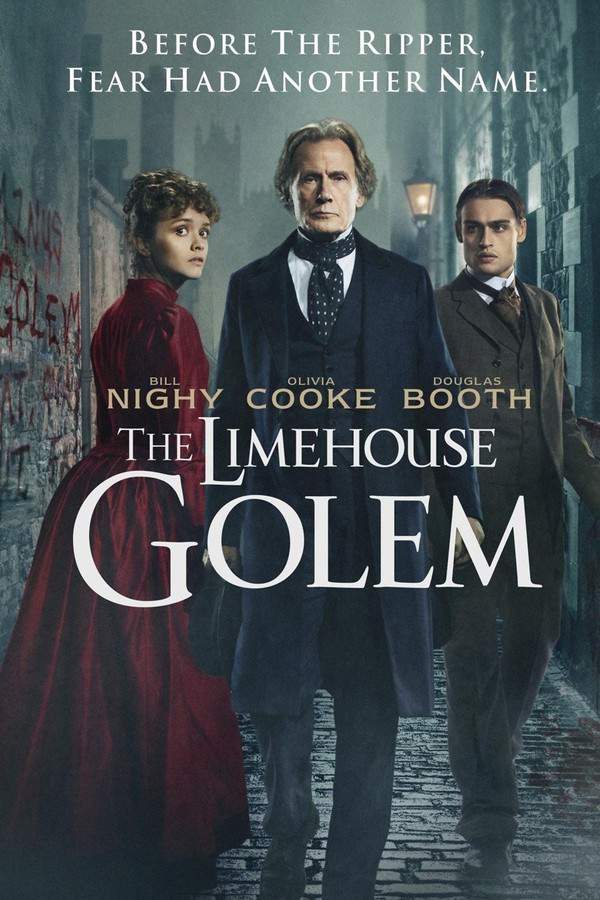
The Limehouse Golem (2017) movie poster

Timeline

The Limehouse Golem (2017) Timeline Explained – Every Event in Order

Release, runtime and language
2017 · 109 min · English
Echo score 73
JustWatch #5,066 8
Directed by
Juan Carlos Medina
Starring
Eddie Marsan, Daniel Mays, Bill Nighy, Olivia Cooke, David Bamber, María Valverde

In Victorian London, a brutal killer known as the Limehouse Golem terrorizes the city, leaving behind disturbing clues. Inspector Kildare, a detective haunted by his own past, leads the investigation, quickly finding himself entangled in a complex web of suspects and perplexing messages. As public fear escalates and the body count rises, Kildare must confront his personal demons to decipher the killer's motives and bring an end to the reign of terror.

On this page (6)
  1. 1 Where to watch
  2. 2 Events in order (15)
  3. 3 Timeline questions answered
  4. 4 The book behind the movie
  5. 5 Movie threads
  6. 6 Every angle

Where to watch

Where to Watch The Limehouse Golem (2017)

Where can you watch The Limehouse Golem? Stream, rent or buy it in the US, including on Acorn TV, AMC+ and Philo: current JustWatch availability with up-to-date prices.

Streaming availability powered by JustWatch

15 events in order · contains spoilers

The Limehouse Golem Timeline: Events in Chronological Order

Every key event of The Limehouse Golem (2017) in order, scene by scene, with when and where it takes place. Use it to untangle flashbacks, time jumps and parallel storylines, to refresh your memory before the sequel or to find the exact scene you are thinking of.

  1. Murderous Terror in Limehouse

    The community of Limehouse in Victorian London is plunged into fear as gruesome murders begin to unfold. The atmosphere thickens with desperation, creating a chilling backdrop for the unfolding mystery.

    Where
    Limehouse, Victorian London
  2. Elizabeth Cree's Crisis

    Elizabeth Cree, a popular music-hall star, becomes the prime suspect in the poisoning of her husband, John Cree. As the latest victim of the Golem is discovered, all evidence points to Elizabeth, deepening the community's mistrust.

  3. Inspector Kildare's Dedication

    Inspector John Kildare is determined to uncover the truth behind the murders and save Elizabeth from her ominous fate. His quest leads him into a complex web of evidence layered with treachery and revelation.

  4. Discovery at the British Museum

    During a visit to the British Museum, Kildare makes a significant breakthrough when he finds a handwritten diary attributed to the Golem. This diary is tucked away in a treatise by Thomas De Quincey, uncovering clues that could decipher the killer's identity.

    Where
    British Museum
  5. Identifying the Suspects

    Kildare narrows down the suspects to four individuals who visited the library on the night of the murders: Dan Leno, Karl Marx, George Gissing, and John Cree. Each character brings their own intrigue and potential motivation, complicating Kildare's investigation.

  6. Elizabeth's Humble Beginnings

    Elizabeth's journey is marked by resilience, beginning as the daughter of an unmarried mother and working in the docks. Her hard work and determination lead her to become a celebrated star on the music-hall stage against all odds.

  7. Struggles in Fame

    Despite her rise to fame, Elizabeth faces oppression from Uncle, the theater owner, who demands immoral favors as payment for her success. This complex relationship adds layers to her ongoing struggle for empowerment and independence.

  8. Tensions with John Cree

    As Elizabeth flourishes, her marriage to John becomes strained, filled with bitterness and resentment. John, unable to cope with her success, grows increasingly jealous, further complicating their relationship.

  9. Rivalry with Aveline Ortega

    Elizabeth's path crosses with rival Aveline Ortega, who sabotages one of her key performances, showcasing the cutthroat nature of the entertainment industry. This rivalry adds significant stress to Elizabeth's career.

  10. The Catalyst of John's Death

    John Cree's unexpected death becomes a pivotal moment in the narrative, prompting Kildare's investigation to delve deeper into the complex lives of Elizabeth and John. This incident intertwines their fates in ways not yet seen.

  11. Kildare's In-depth Investigation

    Kildare examines John's play script, uncovering an eerie connection to the ongoing murders. The timing of the script's appearance raises suspicions and leads Kildare to seek the truth behind John's actions and Elizabeth's involvement.

  12. Elizabeth's Shocking Confession

    In a shocking twist, Elizabeth confesses in writing, declaring herself as the Golem. This revelation alters the course of Kildare's investigation and unveils the tragic depths of Elizabeth's character, leaving Kildare reevaluating everything.

  13. Kildare's Devastating Decision

    Faced with the truth, Kildare decides to destroy Elizabeth's confession to safeguard her reputation and legacy. By allowing her to face the gallows, he chooses to preserve the image of the woman he once believed innocent.

  14. Theatrical Resurrection

    As John's play is reimagined by Dan Leno's troupe, it serves as a poignant tribute to Elizabeth's life. The staging evokes powerful emotions and reflections on the nature of fame and the gravitas of Elizabeth's journey.

  15. A Surreal Final Performance

    In a surreal conclusion, Leno takes on Elizabeth's identity during the closing performance, exchanging a significant glance with Kildare. As the narrative wraps up, Elizabeth embraces her legacy, symbolically reclaiming her narrative amidst the chaos.

Last updated: November 22, 2024 at 11:41

Was this helpful?

Timeline questions answered

The Limehouse Golem Timeline Explained: Your Questions Answered

When does it happen, and why in that order? The questions people ask about the chronology of The Limehouse Golem (2017): time jumps, flashbacks, cause and effect between scenes and the correct order of events, each answered with spoilers.

Q1

Why does Elizabeth Cree confess to being the Golem?

Elizabeth confesses to being the Golem to protect herself from further investigation into her past. When Kildare finds a copy of John's play script and prepares to exonerate her by proving John was the Golem, Elizabeth shocks everyone by writing a confession. The handwriting matches the diary found at the British Museum, confirming she is the actual killer. Her confession is an attempt to control her own narrative and prevent the expose of her traumatic past with Uncle and the abuse she suffered.

Foreshadowing: Earlier scenes showing Elizabeth's resilience and determination hint at a woman capable of extreme actions to protect her hard-earned reputation.

  • elizabeth cree
  • golem confession
  • handwriting match
  • british museum diary
Q2

Why does Inspector Kildare destroy Elizabeth's confession?

Kildare destroys Elizabeth's confession because he believes exposing her as the Golem would destroy her legacy. Elizabeth is already facing execution for poisoning her husband, and Kildare decides that allowing her to die as a murderer while being remembered as the woman who conquered the Golem is preferable to having her publicly exposed as the actual killer. This preserves her fame and heroic image in history, even though it means she still faces the gallows.

Foreshadowing: Kildare's personal demons and his dedication to finding the truth are established early, making his choice to hide the truth a significant character moment.

  • kildare decision
  • confession destroyed
  • elizabeth legacy
  • gallows execution
Q3

Who are the four suspects in the Golem investigation?

The four suspects are Dan Leno (a music-hall performer and colleague of Elizabeth), Karl Marx (the famous philosopher), George Gissing (a writer), and John Cree (Elizabeth's husband). Kildare identifies them as the only people who visited the British Museum reading room on the night the Golem diary was hidden inside Thomas De Quincey's treatise on murder as an art form.

Foreshadowing: The suspects are introduced through Kildare's investigation, each with potential motive and opportunity based on their presence at the library.

  • dan leno
  • karl marx
  • george gissing
  • john cree
  • four suspects
  • british museum
Q4

How does Elizabeth Cree become a music-hall star?

Elizabeth rises from humble beginnings as the daughter of an unmarried mother, working alongside other seamstresses at the docks. Through sheer determination and talent, she transforms into a celebrated music-hall performer. However, her success comes at a terrible cost, Uncle, the theater owner, demands she pose nude for his gratification and later assault him physically in exchange for his support and her career advancement.

Foreshadowing: The opening scenes establish Elizabeth's determination and resilience, traits that both enable her rise and later drive her darker actions.

  • elizabeth rise
  • fame
  • uncle abuse
  • music hall
  • docks seamstress
Q5

What role does Uncle play in Elizabeth's life?

Uncle is the shadowy theater owner who controls Elizabeth's career through exploitation and abuse. He demands sexual favors, initially requiring her to pose nude for his twisted desires, then physically assaulting him for his gratification. This oppressive relationship represents the systemic abuse women faced in the entertainment industry of Victorian London and explains Elizabeth's deep-seated trauma and desperate need to protect her reputation.

Foreshadowing: Early references to Elizabeth's struggles hint at the price she paid for fame, creating motivation for her later actions.

  • uncle theather owner
  • abuse
  • exploitation
  • sexual favors
  • music hall abuse
Q6

Why is Elizabeth Cree accused of poisoning her husband?

Elizabeth becomes the prime suspect in her husband John's poisoning because she had the motive, opportunity, and means. John harbored bitterness and resentment toward Elizabeth's success, and their marriage had become strained and filled with jealousy. When John is found poisoned, all evidence points to Elizabeth as the culprit, especially as she was also suspected of being the Golem responsible for the ongoing murders in Limehouse.

Foreshadowing: Tensions between Elizabeth and John are shown throughout the film, with John unable to cope with her success.

  • john cree poisoning
  • elizabeth suspect
  • murder accusation
  • marriage tension
Q7

What is the connection between the diary found at the British Museum and the Golem?

The handwritten diary discovered tucked inside Thomas De Quincey's treatise is attributed to the Golem itself. This diary becomes the crucial piece of evidence that Kildare uses to identify the killer. The diary entries are written in a distinctive hand, and Kildare realizes the author must be one of the four people who visited the library that night. Ultimately, the handwriting matches Elizabeth's, confirming she wrote the diary and is the actual Golem.

Foreshadowing: Kildare's discovery of the diary is presented as a major breakthrough, and its connection to Elizabeth is revealed through handwriting analysis.

  • handwritten diary
  • thomas de quincey
  • british museum
  • diary evidence
  • handwriting match
Q8

Why does the final performance feature Dan Leno taking Elizabeth's place?

After Elizabeth's execution, Dan Leno's theatrical troupe stages John's play as a tribute to Elizabeth's life. During the hanging scene, Aveline Ortega (Elizabeth's rival who sabotaged her career) plays Elizabeth and dies in an accident during the performance, ironically paralleling Elizabeth's fate. For the closing performance, Leno himself assumes Elizabeth's role, exchanging a knowing look with Kildare, while the real Elizabeth, now free, watches from the shadows and ultimately reclaims the stage. This surreal ending symbolizes Elizabeth's legacy being both memorialized and distorted by theater.

Foreshadowing: The theatrical setting is established early through Elizabeth's career, and the meta-theatrical nature of the ending ties back to themes of performance and identity.

  • dan leno final performance
  • aveline death
  • theater tribute
  • stage return
Q9

What is the relationship between Elizabeth Cree and her husband John?

Elizabeth and John's marriage becomes increasingly strained as Elizabeth's fame grows. John is bitter and resentful about her success, unable to cope with being overshadowed by his wife. Their relationship is marked by jealousy and resentment from John's side, while Elizabeth remains focused on advancing her career. John's unexpected death (which Elizabeth is accused of) becomes the catalyst for the investigation, though it later emerges he was not the Golem.

Foreshadowing: Tensions between the couple are visible throughout, with John shown envious of Elizabeth's success.

  • john cree marriage
  • jealousy
  • strained relationship
  • fame resentment
Q10

How does Kildare discover that Elizabeth is the Golem?

Kildare discovers Elizabeth is the Golem through handwriting analysis. After finding John's play script and preparing to prove John was the Golem to save Elizabeth, she unexpectedly writes a confession declaring herself the Golem. Kildare then compares her handwriting to the diary found at the British Museum and realizes they match perfectly, confirming Elizabeth wrote both and is therefore the actual killer.

Foreshadowing: The investigation repeatedly circles back to Elizabeth, and the twist subverts audience expectations about John's guilt.

  • kildare investigation
  • handwriting analysis
  • discovery
  • truth revealed
Q11

Why does Aveline Ortega die during the final performance?

Aveline Ortega, Elizabeth's rival who previously sabotaged her career during a critical performance, plays Elizabeth in the commemorative staging of John's play. During the hanging scene, she meets her own tragic end, dying in an eerie parallel to her character's fate. This occurs due to the theater's dangerous negligence with the prop, creating a grim irony where the actress who profited from Elizabeth's downfall meets a fate similar to the character she plays.

Foreshadowing: Aveline's earlier sabotage of Elizabeth's performance establishes her as a rival who faces consequences.

  • aveline ortega death
  • rival
  • performance accident
  • ironic fate

Movie threads

More Movies Like The Limehouse Golem, by Mood & Story

Curated lists built around what makes The Limehouse Golem tick: the same mood, the same kind of story or the same emotional payoff. Each list explains why these movies belong together.

Gothic Victorian crime thrillers like The Limehouse Golem

Moody murder mysteries set in the foggy, shadow-filled world of Victorian-era cities. If you liked the grim atmosphere and procedural investigation of The Limehouse Golem, explore more movies that feature murder mysteries set in Victorian London or similar historical periods. These films share a dark tone, complex plotting, and a deeply immersive, period-specific sense of dread.

  • gothic
  • tense
  • oppressive
  • mysterious
  • grim
  • historical
  • Tone: dark, mysterious, grim
  • Pacing: steady, methodical
Why these movies?

The story pattern: These stories typically follow a dogged investigator, often haunted by personal demons, as they untangle a web of clues and suspects in a society rife with secrets. The narrative uses the historical context to explore themes of justice, identity, and the darkness lurking beneath civilized surfaces, often leading to shocking reveals.

Why they belong together: They are grouped by their shared commitment to a historically authentic, gothic-tinged atmosphere and a plot-driven mystery that is intrinsically linked to its time period. The experience is defined by a steady-paced, intellectually engaging investigation set against a visually rich and morally complex backdrop.

Complex crime procedurals with tragic endings like The Limehouse Golem

Investigations that unravel into deeply personal, morally ambiguous, and ultimately tragic conclusions. For viewers who appreciated the intricate plot and emotionally heavy, bittersweet conclusion of The Limehouse Golem, this list features similar movies where a criminal investigation leads to a morally complex and tragic resolution, rather than a simple victory.

  • tragic
  • complex
  • melancholic
  • grim
  • morally ambiguous
  • bittersweet
  • Tone: dark, tragic, melancholic
  • Pacing: steady, building
Why these movies?

The story pattern: The narrative pattern involves a methodical investigation that initially appears straightforward but gradually peels back layers to expose deep-seated trauma, societal injustice, or the investigator's own flaws. The resolution often subverts expectations, offering a 'solution' that is legally sound but emotionally devastating, leaving a lasting sense of melancholy.

Why they belong together: These films are connected by their shared focus on the emotional and moral weight of a crime investigation, where the pursuit of justice unveils a deeper, more tragic human story. The experience is defined by a steady pacing that builds to a conclusion emphasizing loss and ambiguity over closure.

Every angle

The Limehouse Golem (2017) Explained: Plot, Timeline & Characters

Everything about The Limehouse Golem in one place: what happens in the plot summary, the timeline in chronological order, the characters and meaning and a spoiler-free summary. What's After the Movie adds the cast, box office and post-credit scenes.

Coming soon on iOS and Android

The Plot Explained Movie Summary App

Plot summaries, endings explained and timelines on your phone. Catch up on any movie in minutes, save your favorites and never miss a twist again.

Be the first to know when we launch. Your email stays private, always.

Learn more about the app